Some trips are about seeing things. This one was mostly about getting away — and it turned out to be exactly the break I needed.
In the first week of October, a close friend and I flew to Belgrade for three nights and four days. No big plan, no checklist, no early alarms. A historic walk on the first afternoon, a lot of strolling, one very good Vietnamese lunch, one very good night out, one long lazy morning, and a Balinese massage to finish. We never left the city, and we never felt we needed to.
Belgrade had been on the list for a while without ever quite getting booked. It is a city people tend to describe in one word — “gritty”, “lively”, “underrated” — and none of those quite cover it. It is all of them, plus green, plus cheap to eat well in, plus sitting on top of two of Europe’s great rivers.
The short version
- Thursday — fly Memmingen to Belgrade, historic walking tour of the centre and the fortress, late lunch at Istok, the Church of Saint Sava, dinner at Ima dana in Skadarlija.
- Friday — bakery breakfast, Dorćol and the Belgrade Design District, an afternoon in Kalemegdan park and fortress, then a pub crawl into the small hours.
- Saturday — a proper sleep-in, a long breakfast, cafés, and a Balinese massage in the evening.
- Sunday — fly home.
Getting there: the Memmingen trick
We flew from Memmingen, which markets itself as “Munich West” and is roughly 110 km from the city — about an hour and a half by the airport bus. It is the budget airlines’ base for this corner of Bavaria, and it is how a lot of these short Balkan breaks become possible on a whim. The flight to Belgrade is under two hours, and you land with most of the day still ahead of you.
Day one: a walk through two thousand years
We dropped our bags and went straight out on a historic walking tour of the centre. If you only have a few days in Belgrade, do this first. The city has been knocked down and rebuilt so many times that very little explains itself, and a good guide turns a pleasant but slightly confusing street into a story.
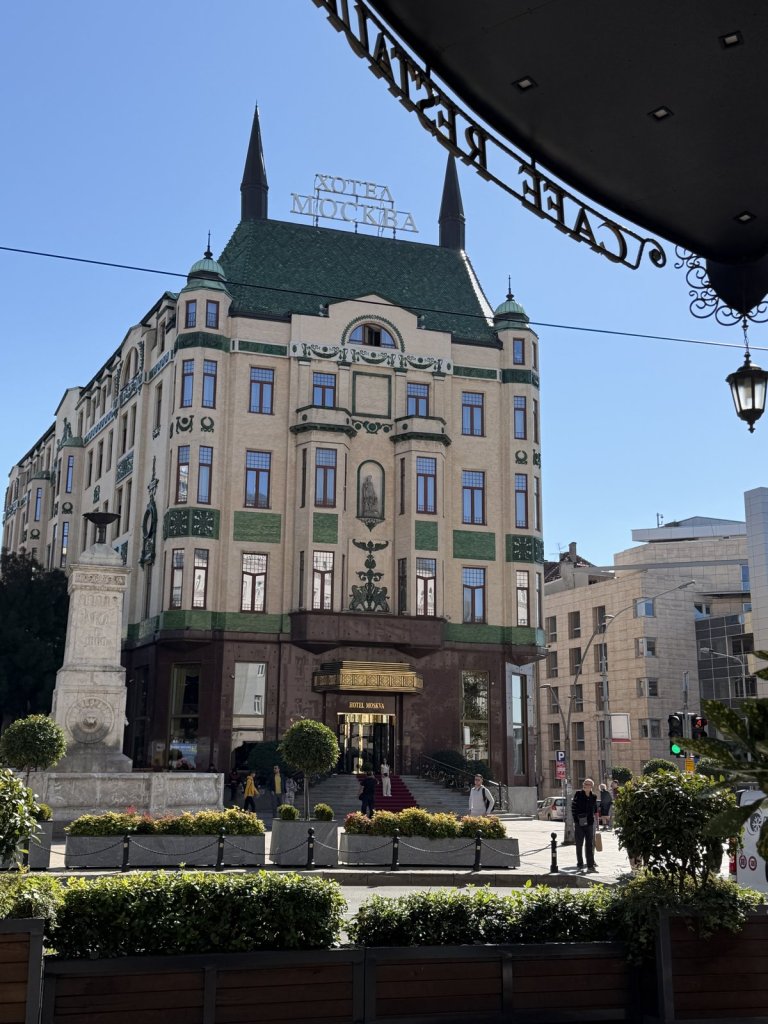
We started around Terazije and the Hotel Moskva, a wedding cake of a building that has hosted pretty much everyone who passed through Belgrade in the last century, and worked our way down through the pedestrian streets towards the old town.
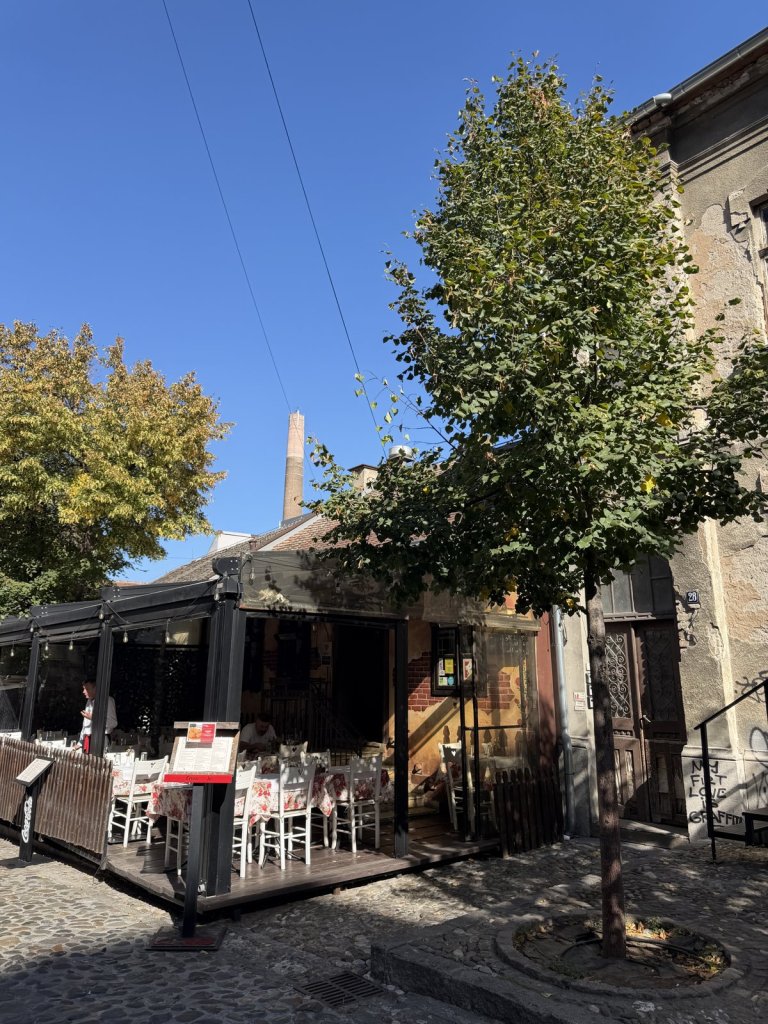
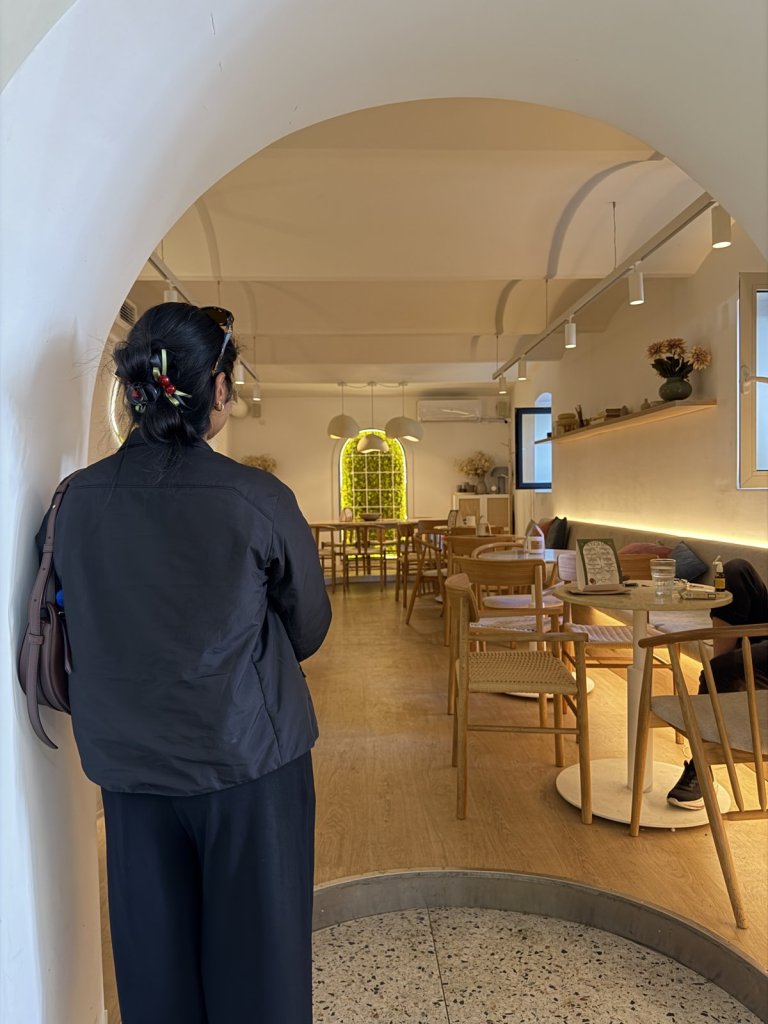
Vietnamese at Istok
Before dinner, we ate at Istok, on Gospodar Jevremova in Dorćol. It holds a Michelin Bib Gourmand — the guide’s nod to very good cooking at a fair price — and it serves modern Vietnamese food alongside a few Korean and Thai dishes. Vietnamese comfort food was not what I expected to be writing about from Serbia, but here we are, and it lived up to the badge.
The fortress, first look
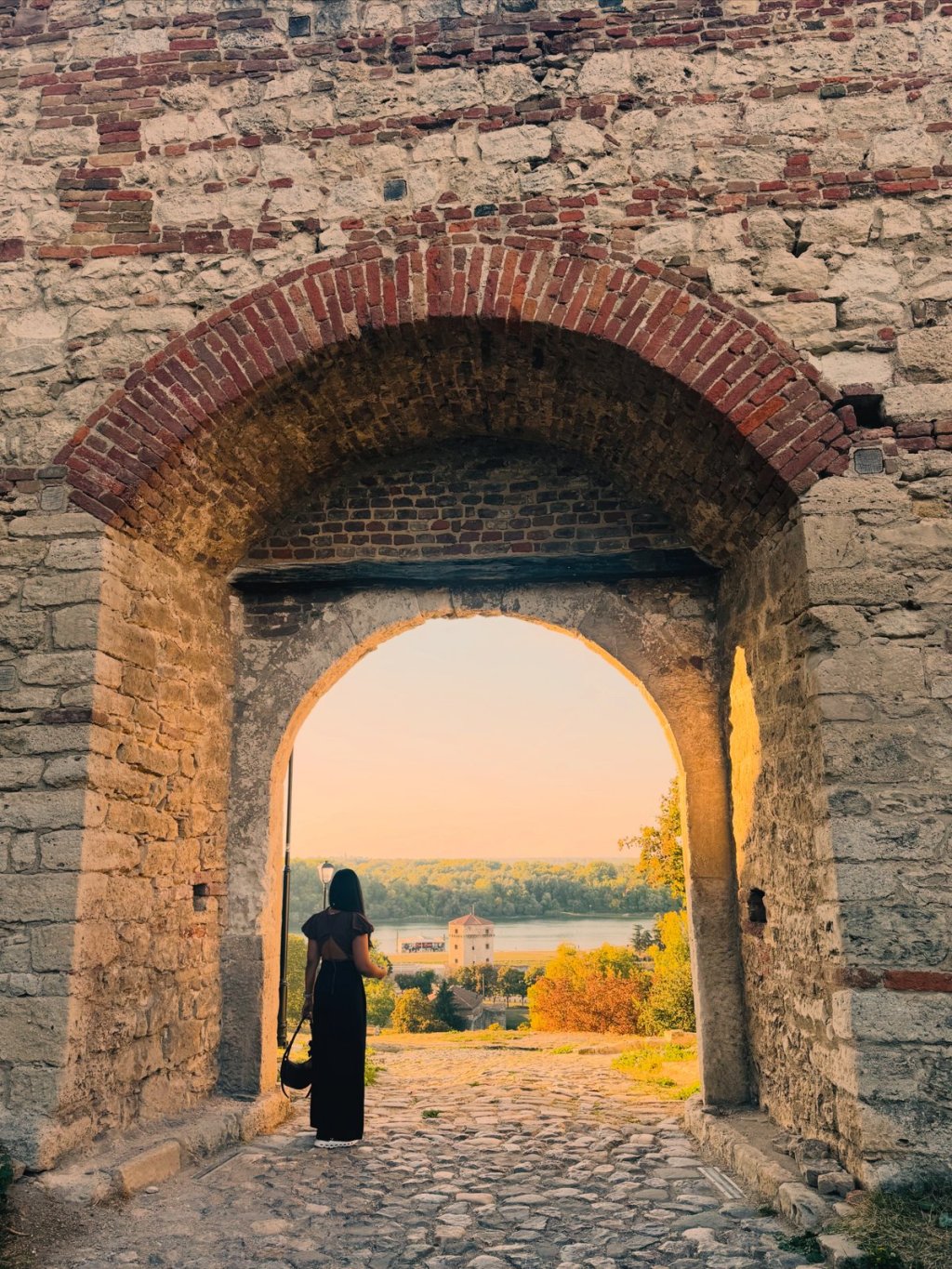
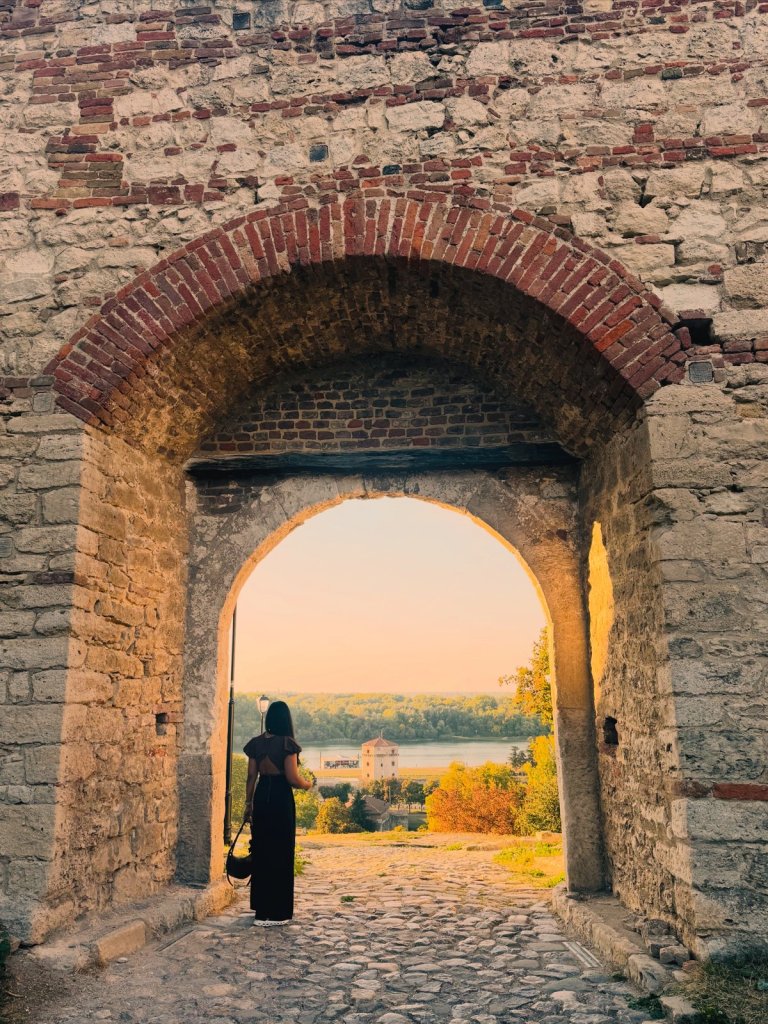
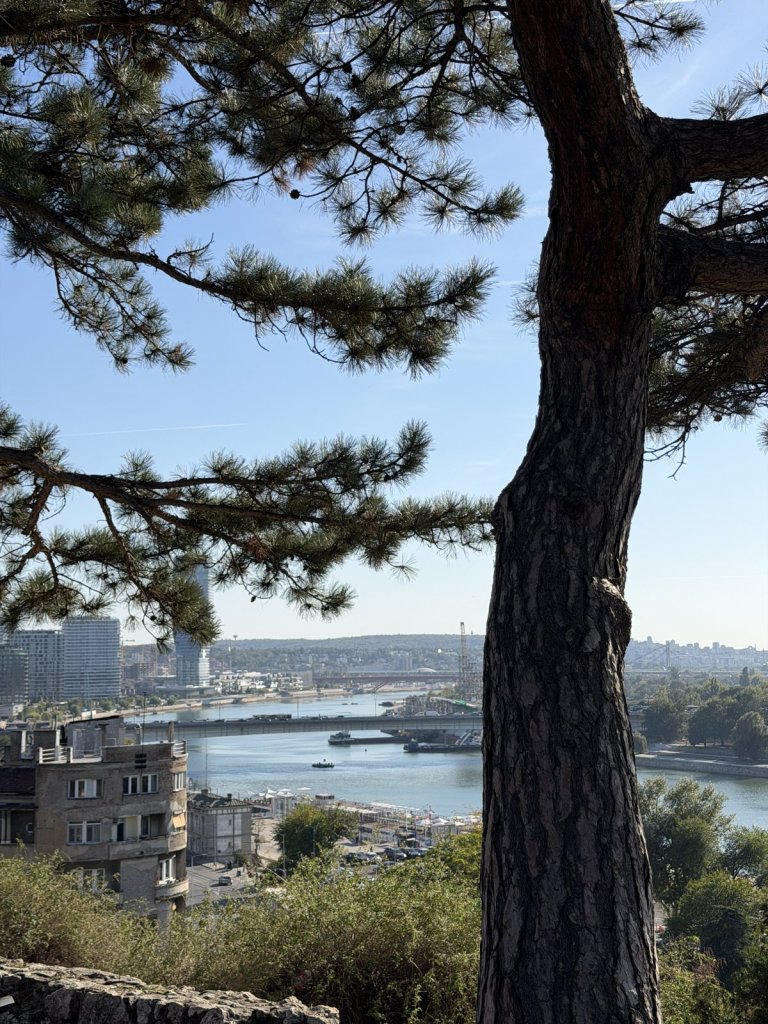
The walk ended up at Belgrade Fortress, on the ridge where the Sava meets the Danube. There has been a fortification on this spot since the Celts and the Romans, who called the town Singidunum, and it has changed hands between Byzantines, Hungarians, Serbs, Ottomans and Austrians more times than anyone can comfortably list. Standing at the top, looking down at the rivers, you understand immediately why everybody wanted it.
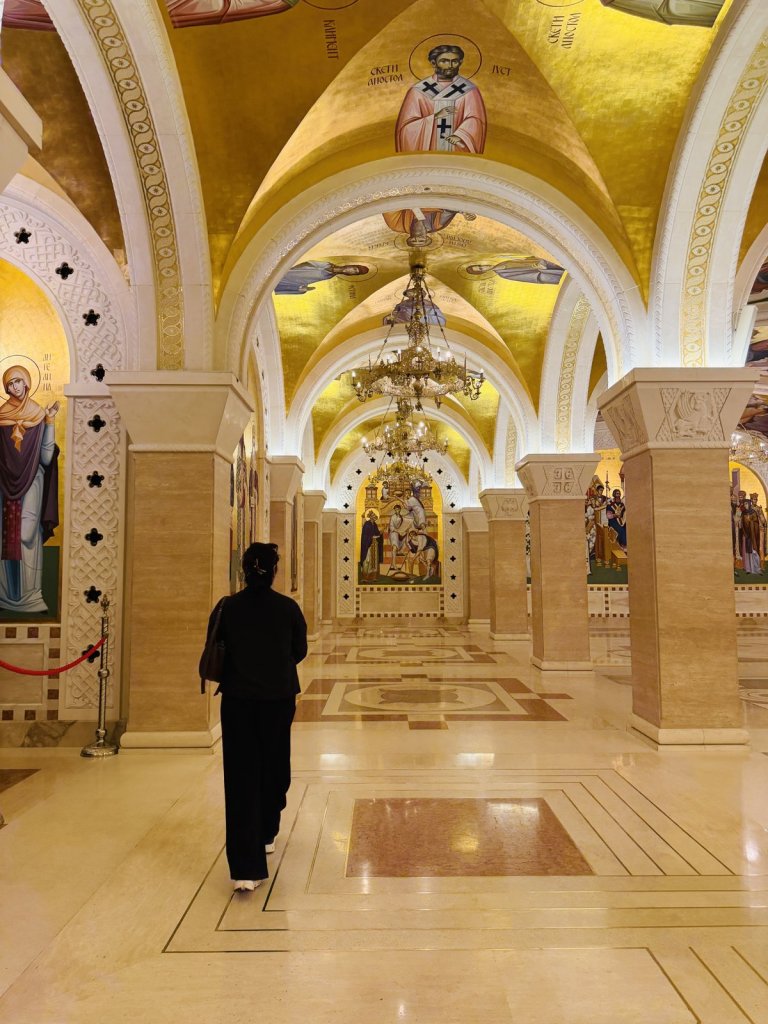
The Church of Saint Sava
Later we went south to the Church of Saint Sava, one of the largest Orthodox churches in the world, built on the spot where the Ottomans are said to have burned the relics of Serbia’s patron saint in 1595. Outside it is white marble and green domes. But go down to the crypt: it is gold from floor to ceiling, every arch painted with saints, and almost silent. It is one of the most beautiful interiors I have walked into anywhere.
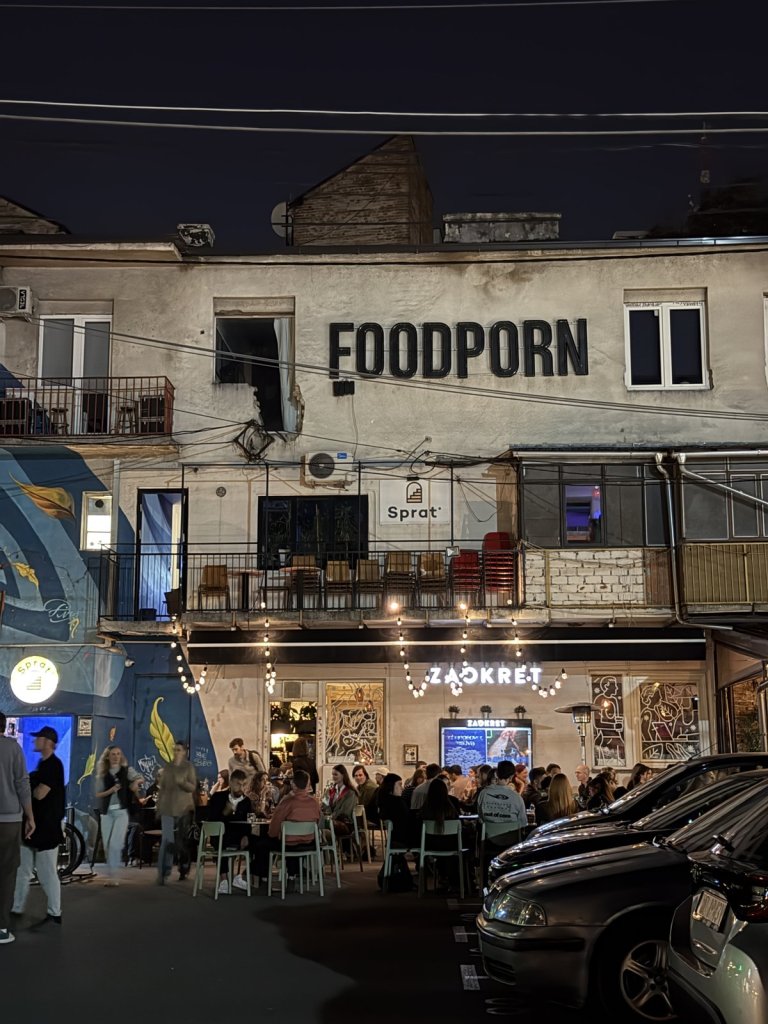
Dinner at Ima dana
For the evening we went to Ima dana, in Skadarlija — Belgrade’s old bohemian quarter, a short cobbled street of kafanas that has been compared to Montmartre (the two are officially twinned). Ima dana has been there since 1969, and the name translates roughly as “there will be days” — which is about as good a motto for a long dinner as I have heard. It was one of the nicest evenings of the trip: good Serbian food, a warm room, and absolutely no rush.
Day two: strolling, and Kalemegdan properly
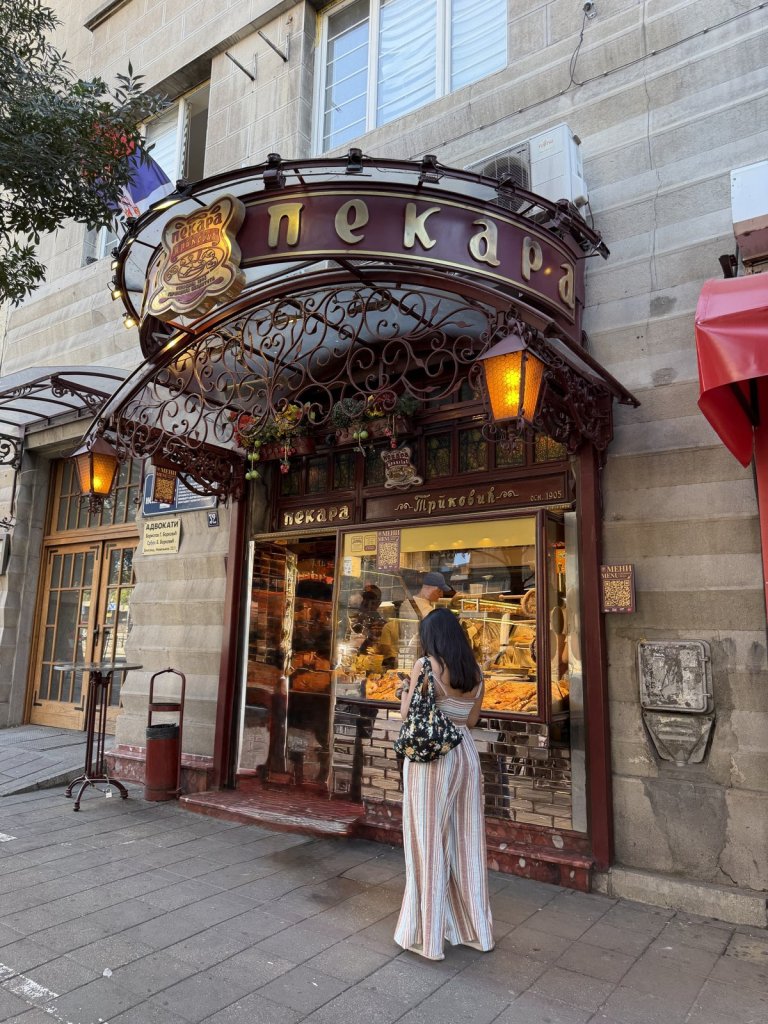
Day two had no plan at all, which was the plan. We started at a pekara — the Serbian bakery, which is a national institution: burek, pastries, cheese pies, all of it warm and ridiculously cheap — and then wandered.
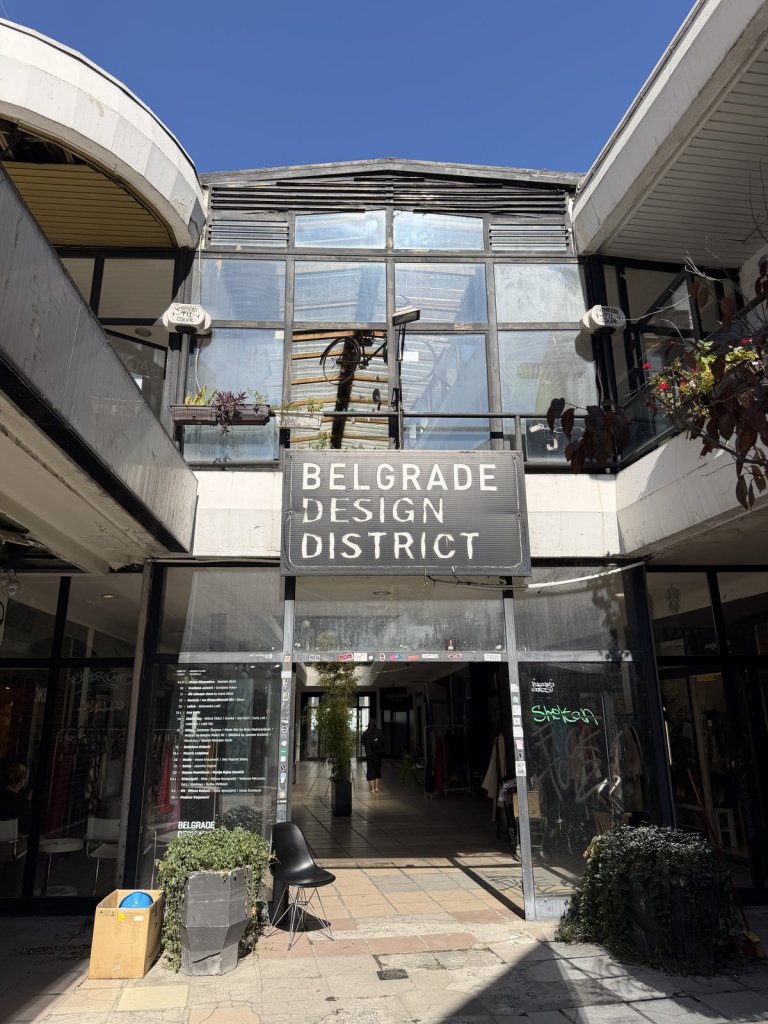
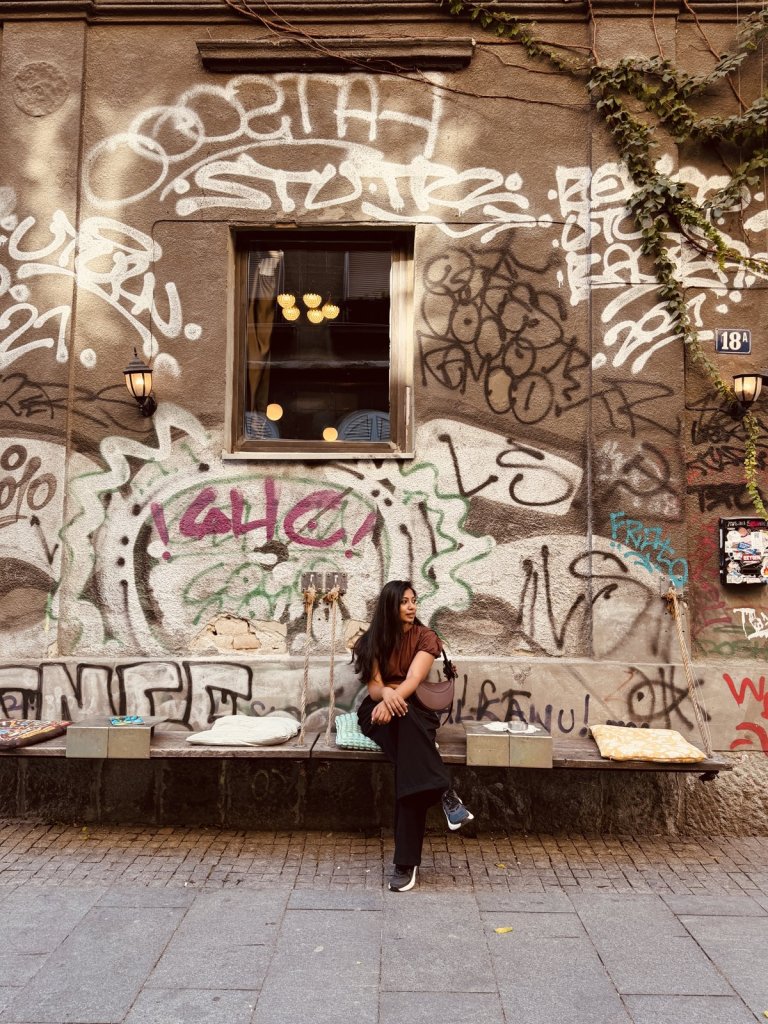
Through Dorćol and the old centre, past the Belgrade Design District — an old shopping arcade that local designers have taken over with small studios and shops — and down streets where every wall seems to carry several layers of graffiti. Belgrade does not tidy itself up for visitors, and it is better for it.
An afternoon at Kalemegdan
In the afternoon we went back to the fortress, this time to actually spend time there. Kalemegdan park wraps around the fortress walls, and in early October it was golden — trees turning, sun still warm, people out walking dogs and sitting on the walls. We walked the ramparts, sat at the lookout over the confluence, and talked. A lot.
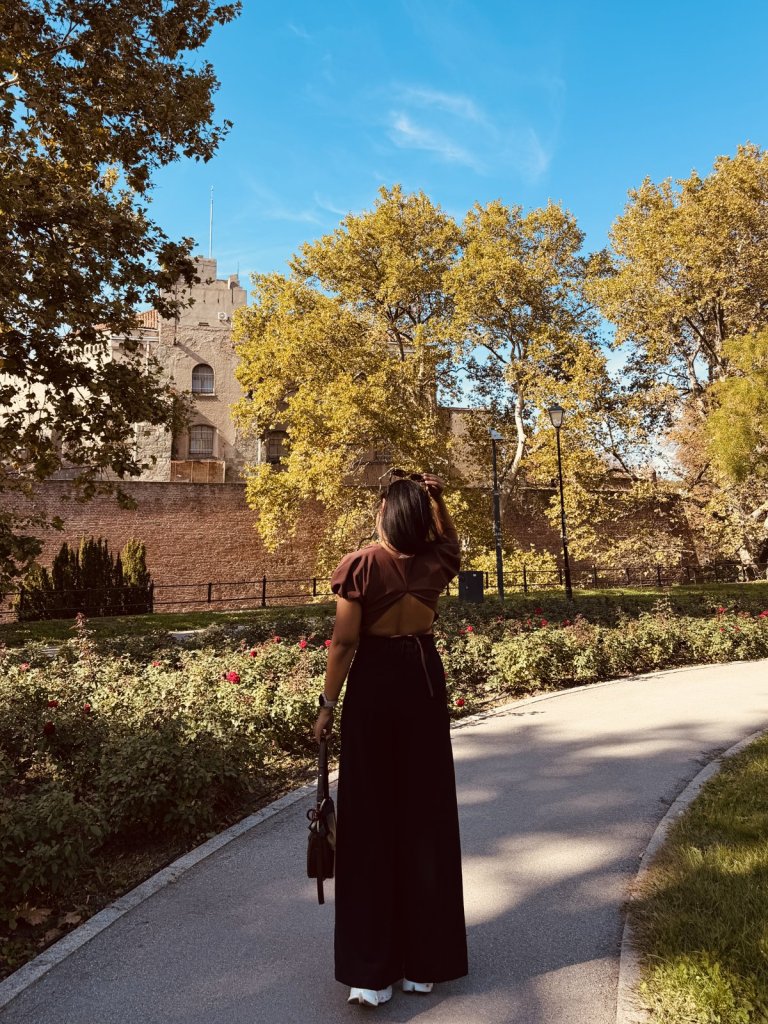
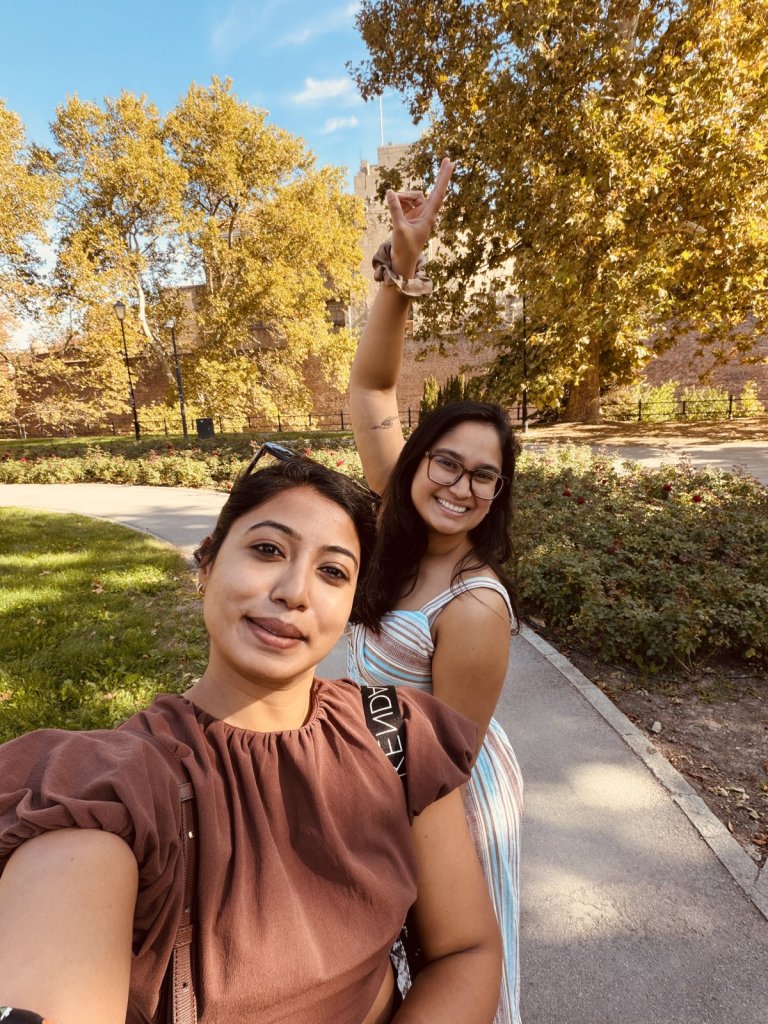
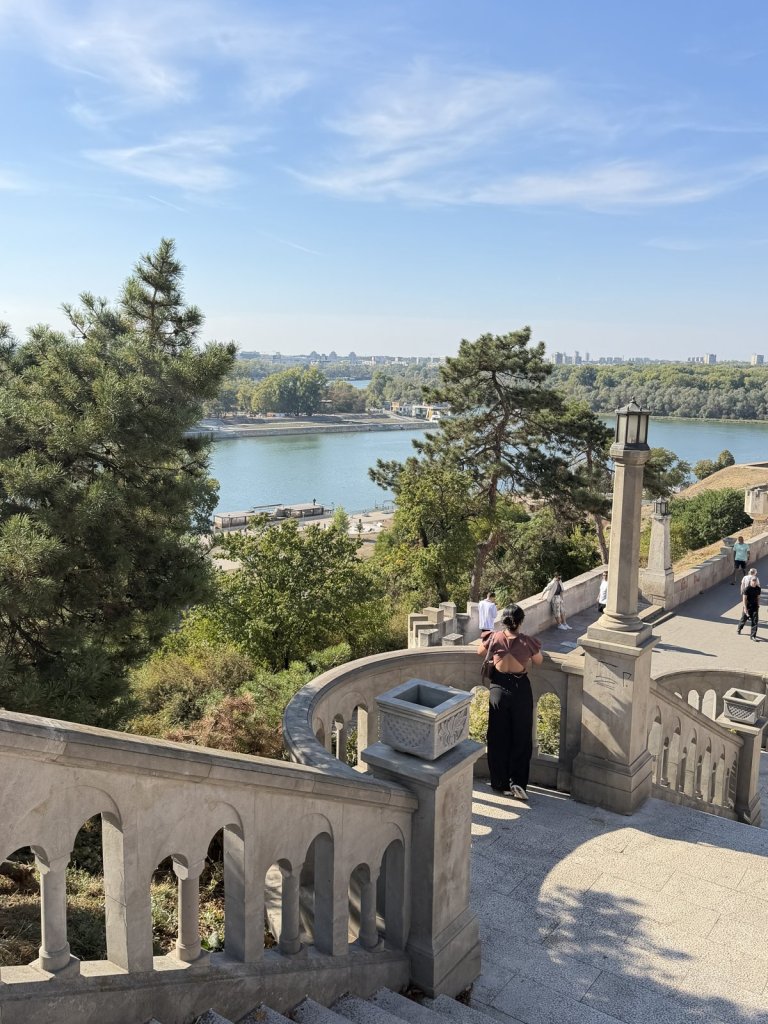
We stayed until the light went gold and then orange. If you do one thing in Belgrade, do this: get to the fortress in the late afternoon and stay for sunset over the rivers.
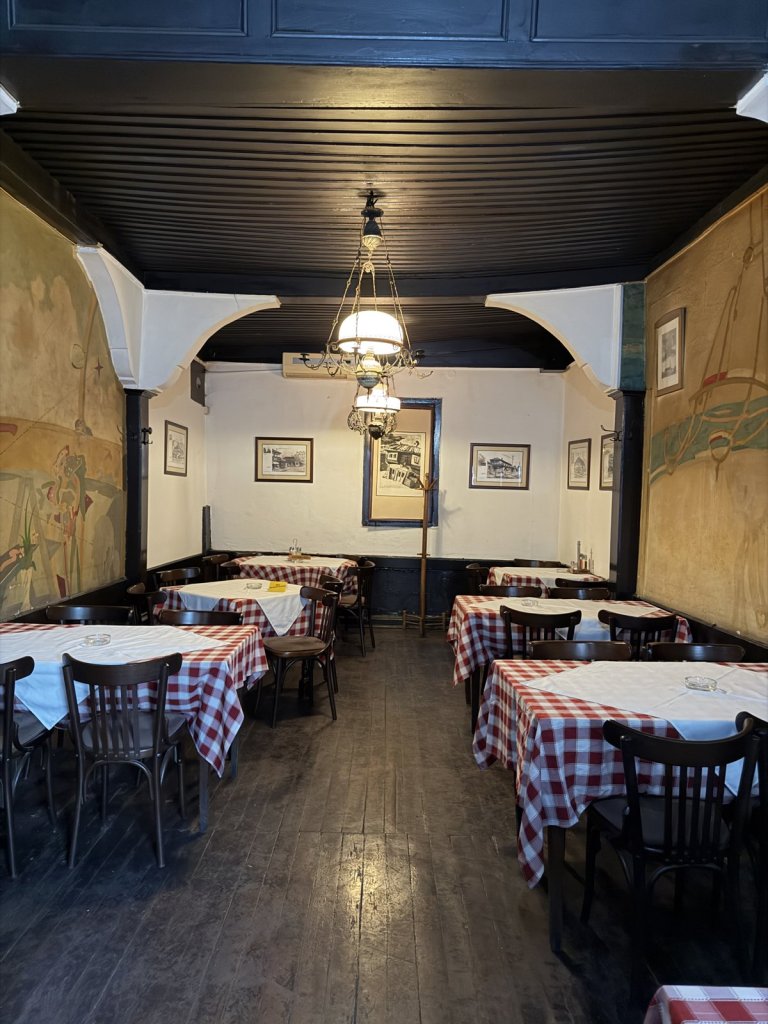
Dinner that evening was at an old-style kafana — checked tablecloths, dark wood, paintings on the walls, and the kind of hearty Serbian cooking that sets you up nicely for a long night.
The pub crawl
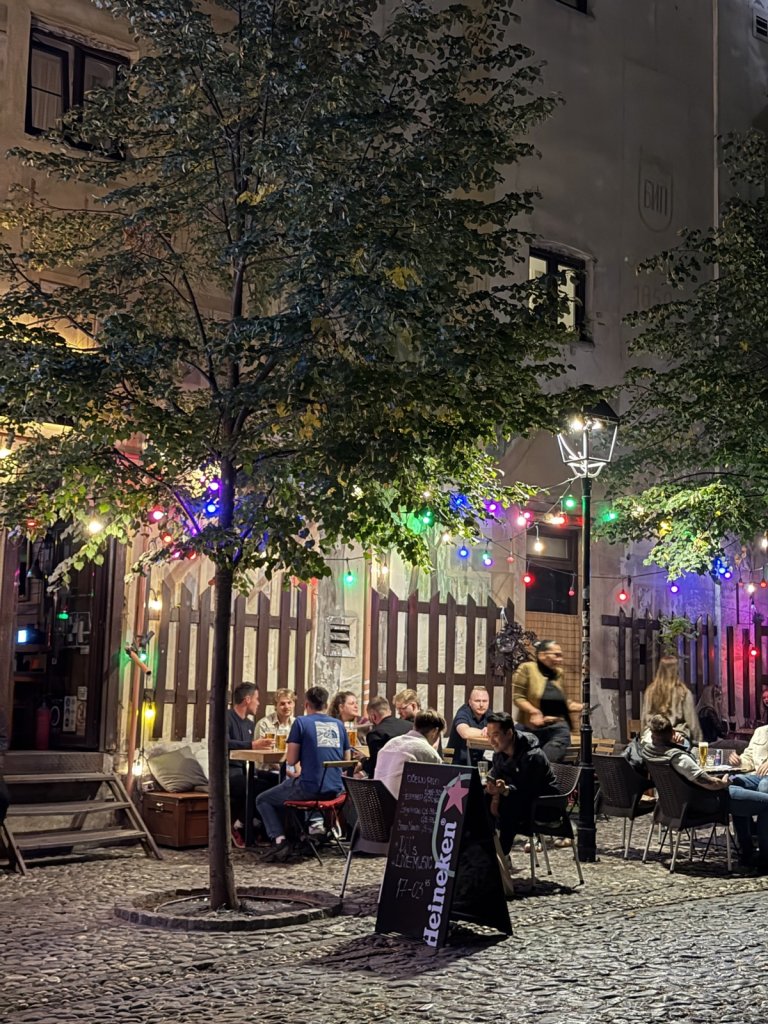
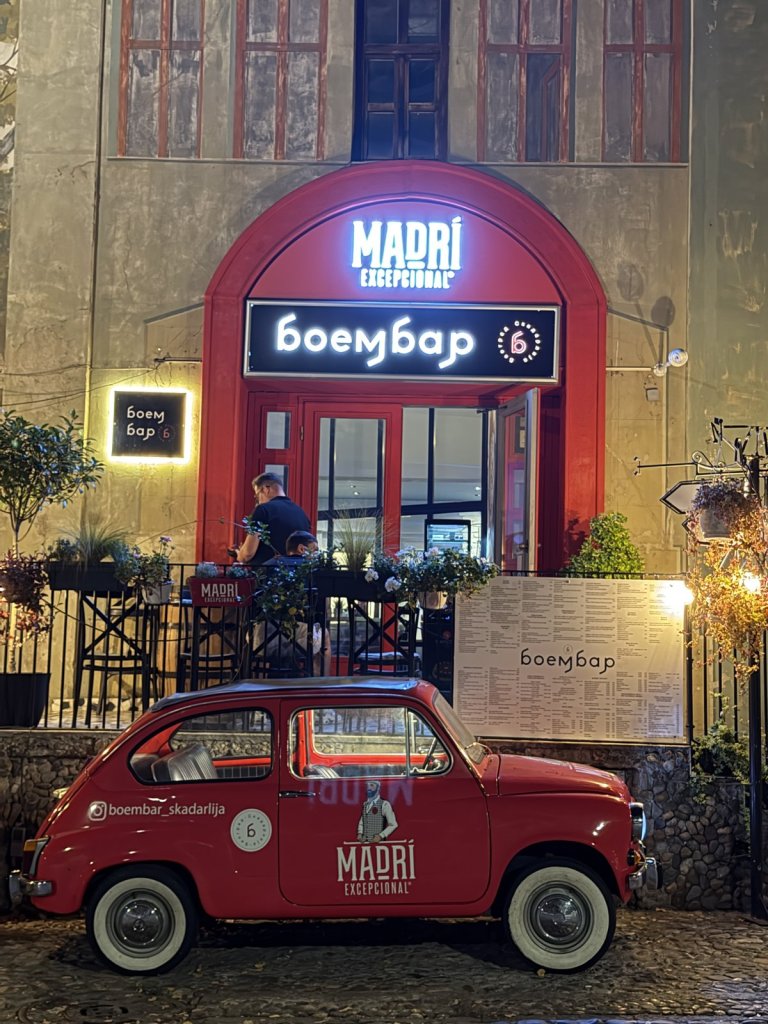
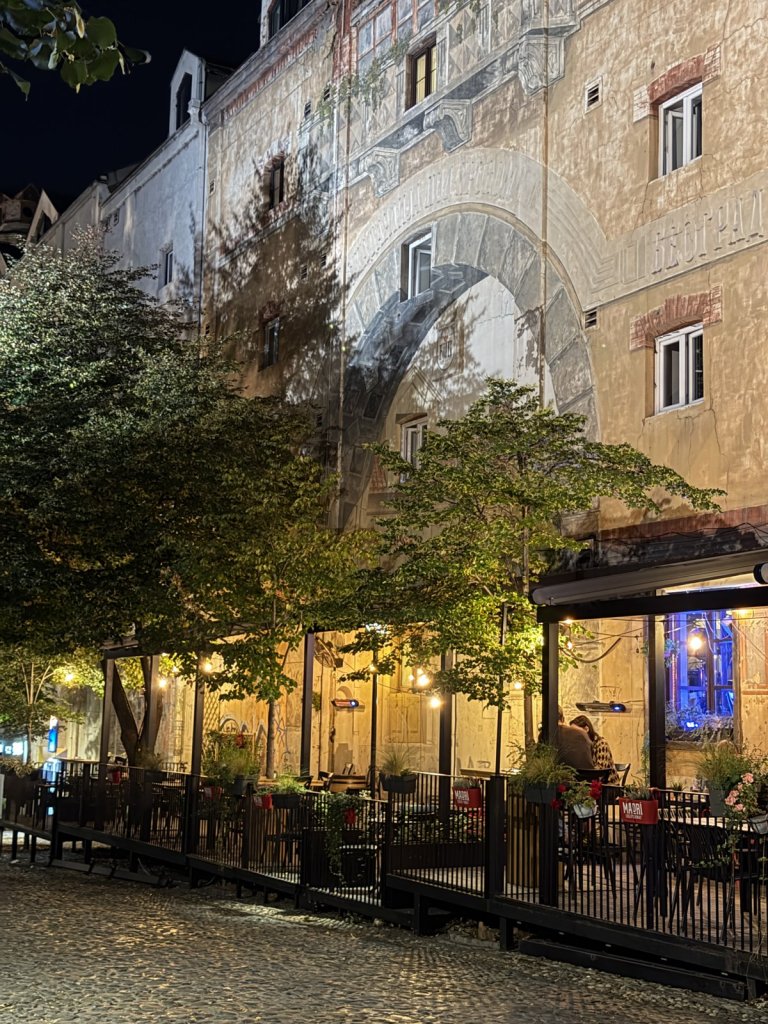
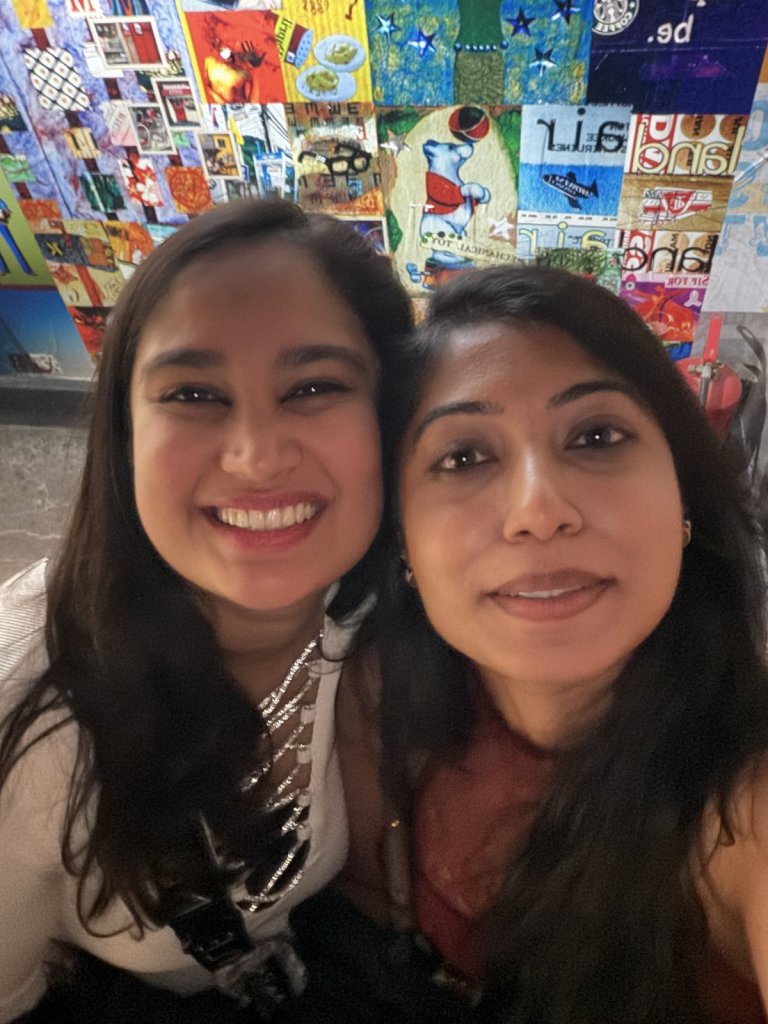
That night we joined a pub crawl, which I would not normally have picked — and it was one of the highlights of the whole trip. A group of people from everywhere, a few bars, a lot of laughing, and the kind of easy conversation with strangers you only seem to have on holiday. Belgrade’s nightlife has a big reputation, and from one night’s evidence, it has earned it. We got back well after midnight and did not regret a minute.
Day three: doing very little, on purpose
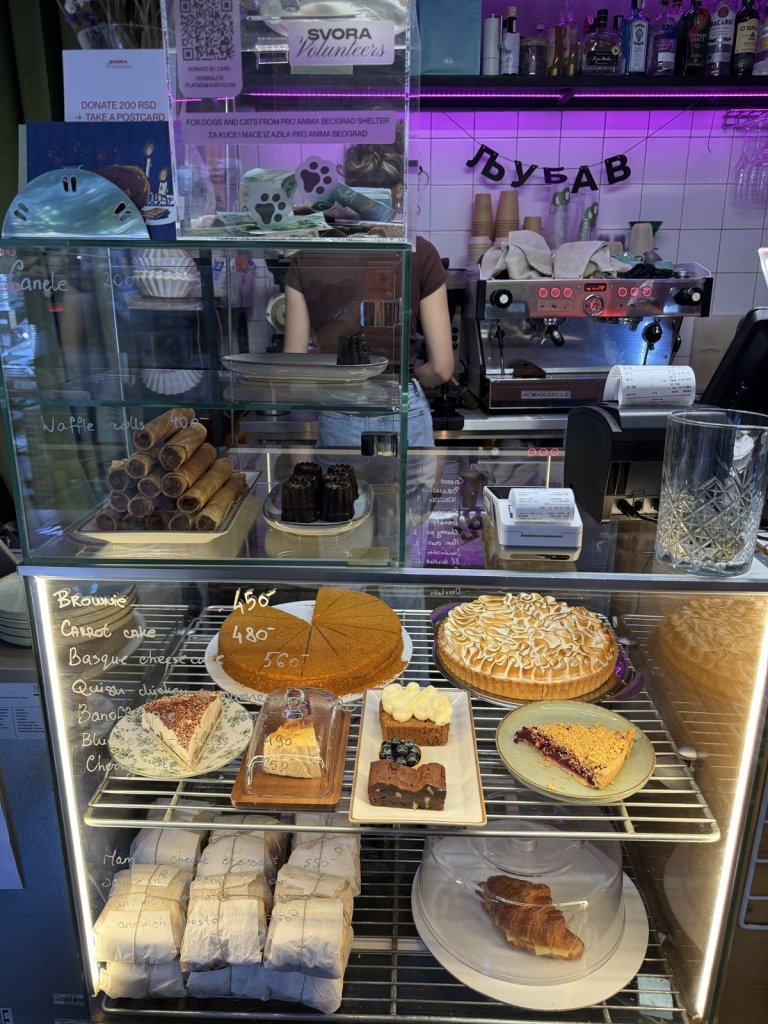
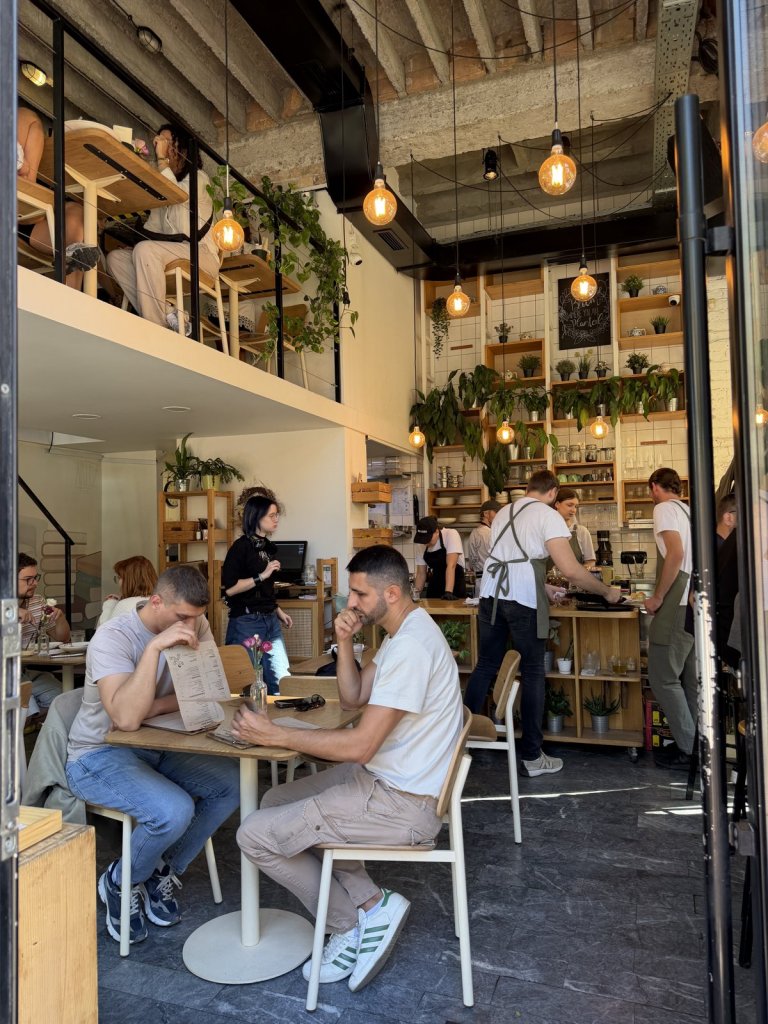
The next morning, we slept. Properly. Then a long, slow breakfast, coffee, and a wander between cafés with no destination in mind. Belgrade’s café culture is excellent for this: everywhere seems built for sitting for an hour without anyone hurrying you along.
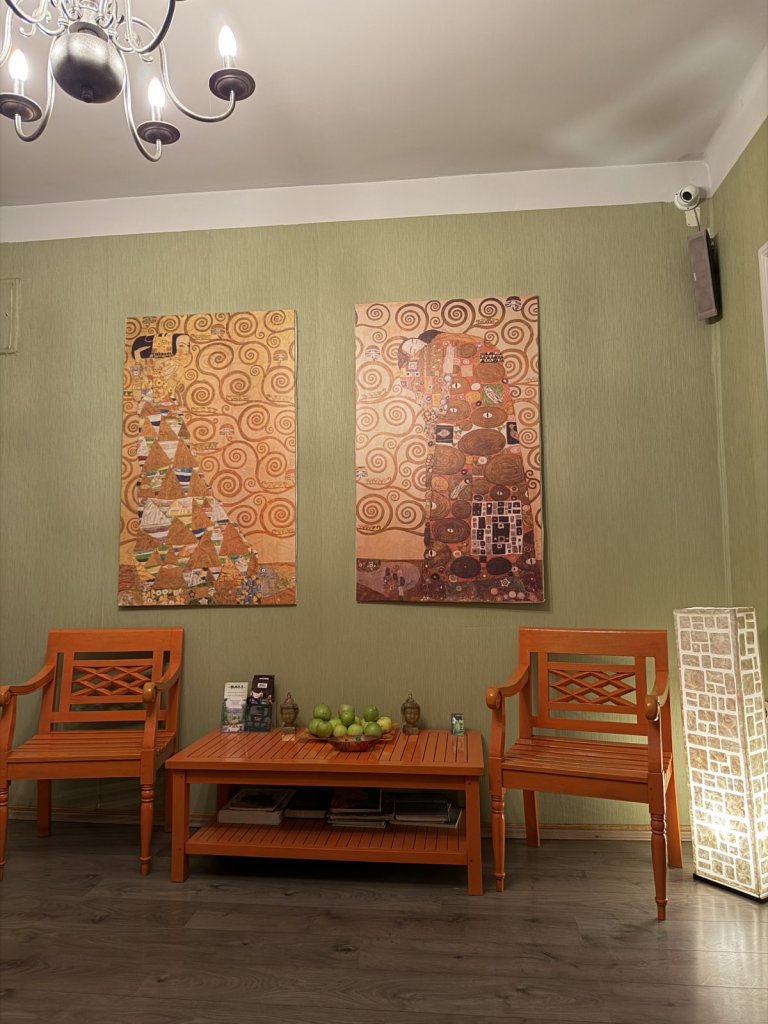
And to finish, a Balinese massage in the evening. After three days of walking on cobbles, it was exactly the right ending — I walked out of there half asleep and completely content.
On Sunday, we flew home.
A small thing I learned
Small personal aside: I didn’t realise how much I needed this break until I was on it. Nothing dramatic, just — a lot going on, and no space. And then three days with nothing to do but walk, eat and talk, and suddenly there’s space.
Also — not everyone is a good travel partner. Even people you love. You find that out fast on a trip. But there are a few friends you can travel with where it just works: same pace, same “let’s just sit here a bit longer”, no negotiating every meal. We got to know each other better in four days than in a lot of months at home. I’m really grateful for that.
Practical notes
- Getting there from Munich: direct budget flights run from Memmingen (“Munich West”), about 1h30 from Munich by airport bus. Allow for that when you compare prices.
- How long: three nights is a good first visit if you stay in the city. Add a day if you want Novi Sad or a trip out of town.
- Money: Serbia uses the dinar (RSD), not the euro. Cards are widely accepted in the centre, but keep a little cash for bakeries and small places.
- Do first: a walking tour of the centre and the fortress on day one. It makes the rest of the city make sense.
- Eat: Istok (Dorćol) for a Bib Gourmand lunch; Ima dana or any of the Skadarlija kafanas for a long Serbian dinner — book ahead at weekends; a pekara for breakfast.
- Don’t miss: the crypt at Saint Sava, and Kalemegdan at sunset.
- Note: Serbia is not in the EU or Schengen — check the entry rules for your passport before you book.
Belgrade turned out to be exactly what I needed: a city that doesn’t demand anything from you, with good food, a lot of history, and rivers at the end of every walk. Go with someone you like spending time with. That’s most of it.


Leave a Reply