Three weeks in Patagonia and the Atacama, starting with an airport strike.
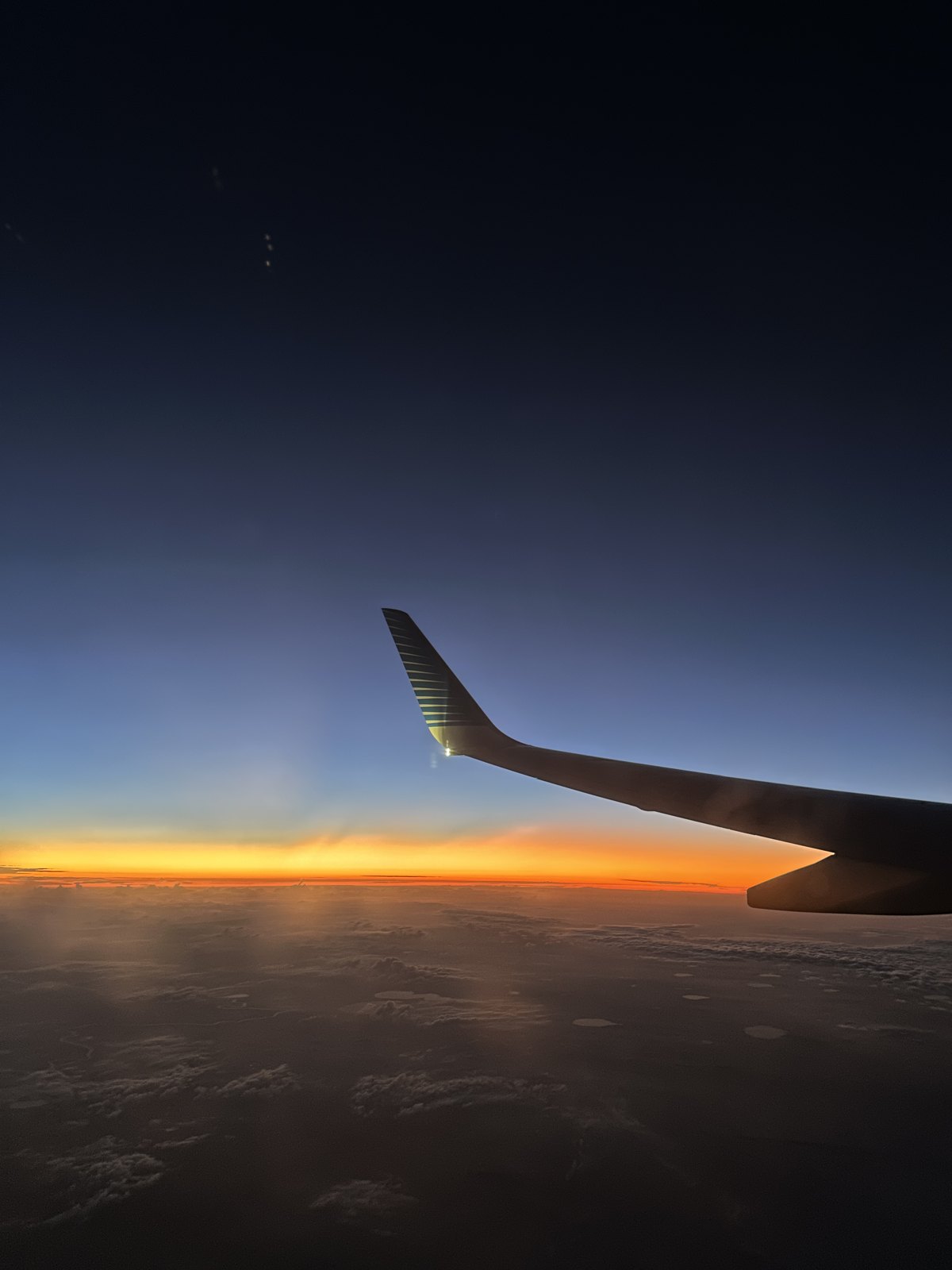
We had the whole thing booked for months: Munich to Madrid, Madrid to Buenos Aires, Buenos Aires to Ushuaia. Then Munich airport went on strike for the day we were meant to fly.
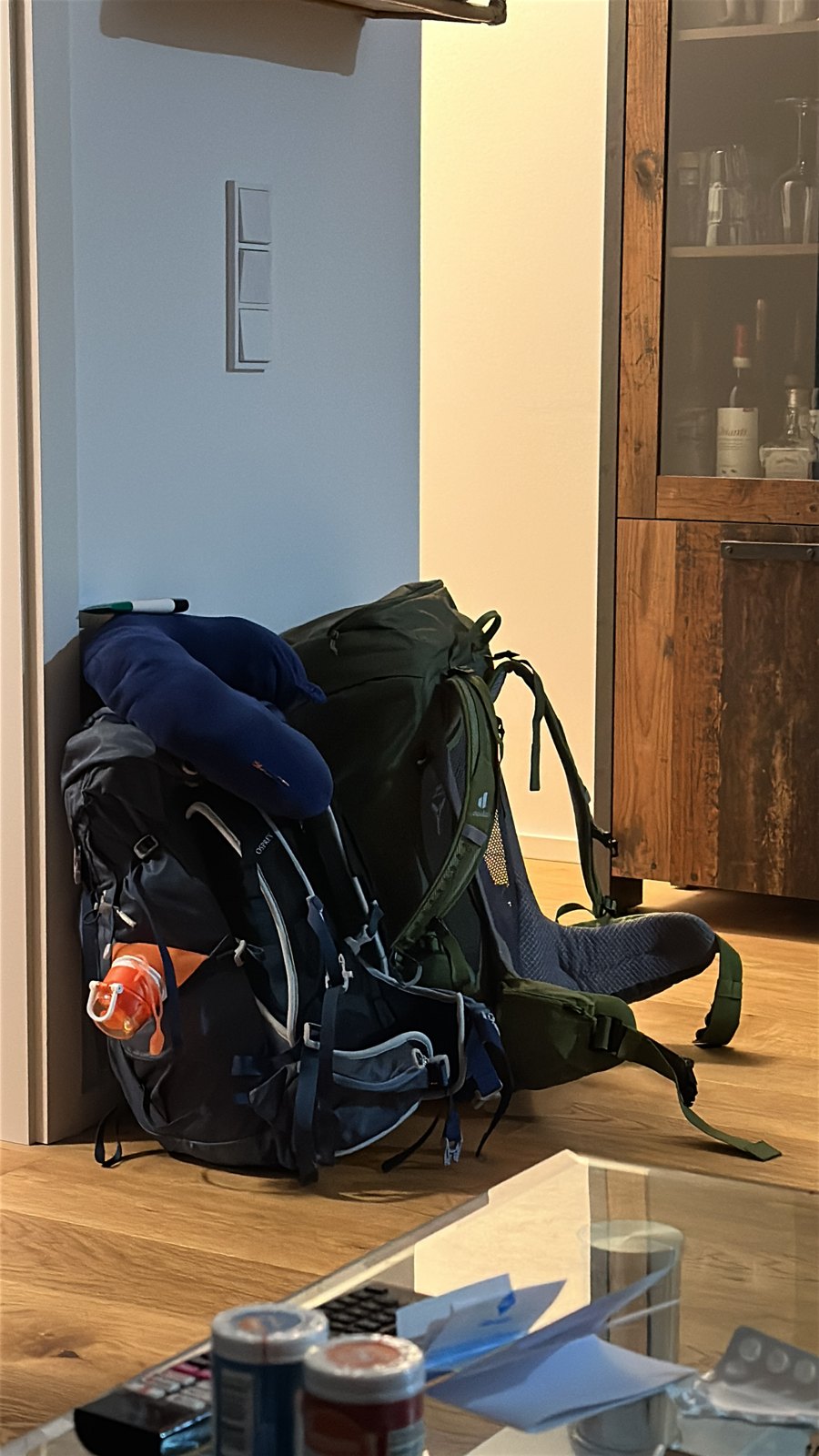
We found out with barely enough notice to do anything sensible about it, spent a few hours on the phone and on a laptop, and flew to Madrid a day early instead — new ticket, extra night, whole itinerary saved. It cost us money we had not budgeted and a night we had not planned, and it remains the single best travel decision either of us has ever made. Everything downstream of that flight — the connection in Buenos Aires, the flight south, a booked trek with fixed dates — would have collapsed like dominoes.
More on that at the end. First, the good part.
This is part one of two.
Where this trip came from
Small aside before the itinerary, because this one was not our idea.
A dear friend sent me a postcard from Ushuaia. An actual postcard, in the actual post, from the bottom of the world — which took weeks to reach Munich and which I stuck up and then kept looking at. And separately, a friend who lives near us had wanted to do Patagonia for years, and talked about it the way people talk about the thing they are definitely going to do one day.
Between the two of them it stopped being a place on a map and became something we were actually going to book. That is really all it takes — one person who has been, one person who wants to go, and the idea gets loose.
So: thank you both. The postcard is the reason there is a blog post.
The route
| Stop | Nights | Getting there |
|---|---|---|
| Madrid | 1 | Flight from Munich, about 3h — a day early, see above |
| Buenos Aires | — | Flight from Madrid, about 12h 30m |
| Ushuaia | 2 | Flight from Buenos Aires, about 3h 30m — landed 28 February |
| El Calafate | 3 | Flight from Ushuaia, about 1h 15m |
| — El Chaltén / Mt Fitz Roy | day trip | 3h each way by road |
| — Perito Moreno glacier | day trip | 1h 30m each way by road |
| Onward to Chile | — | Bus to Puerto Natales, about 5h 30m with the border |
Ushuaia: the southernmost city in the world, and it knows it
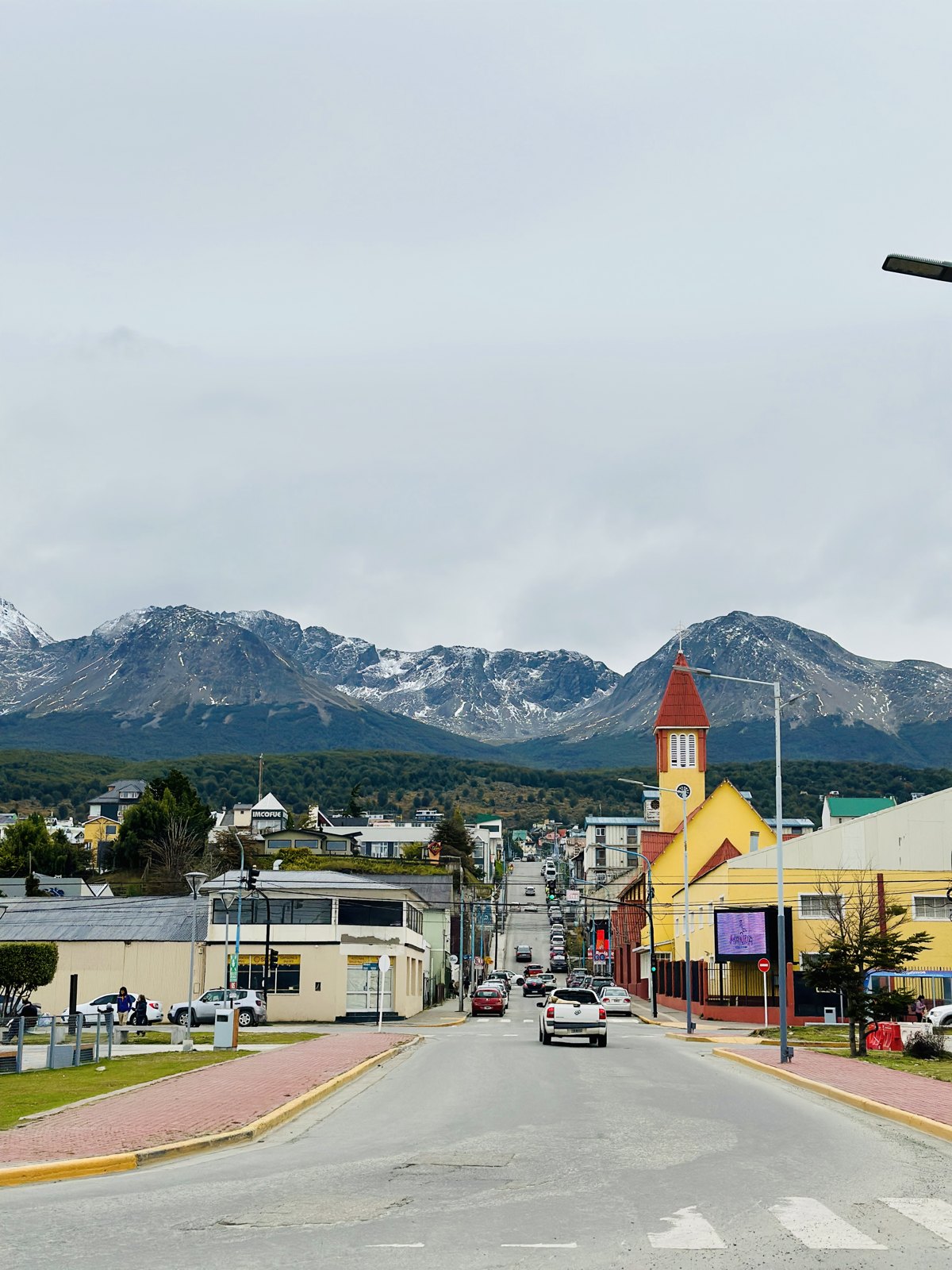
Ushuaia sits on the Beagle Channel with the Martial range directly behind it, and the geography does something unusual to the place — snow-topped mountains on one side, a working port on the other, and the town squeezed onto the slope in between. Everything is signposted fin del mundo. The end of the world. They lean into it entirely and honestly, having flown eleven hours to get there, so did we.
We had two and a half days, which is about right for the town and not enough for the region.
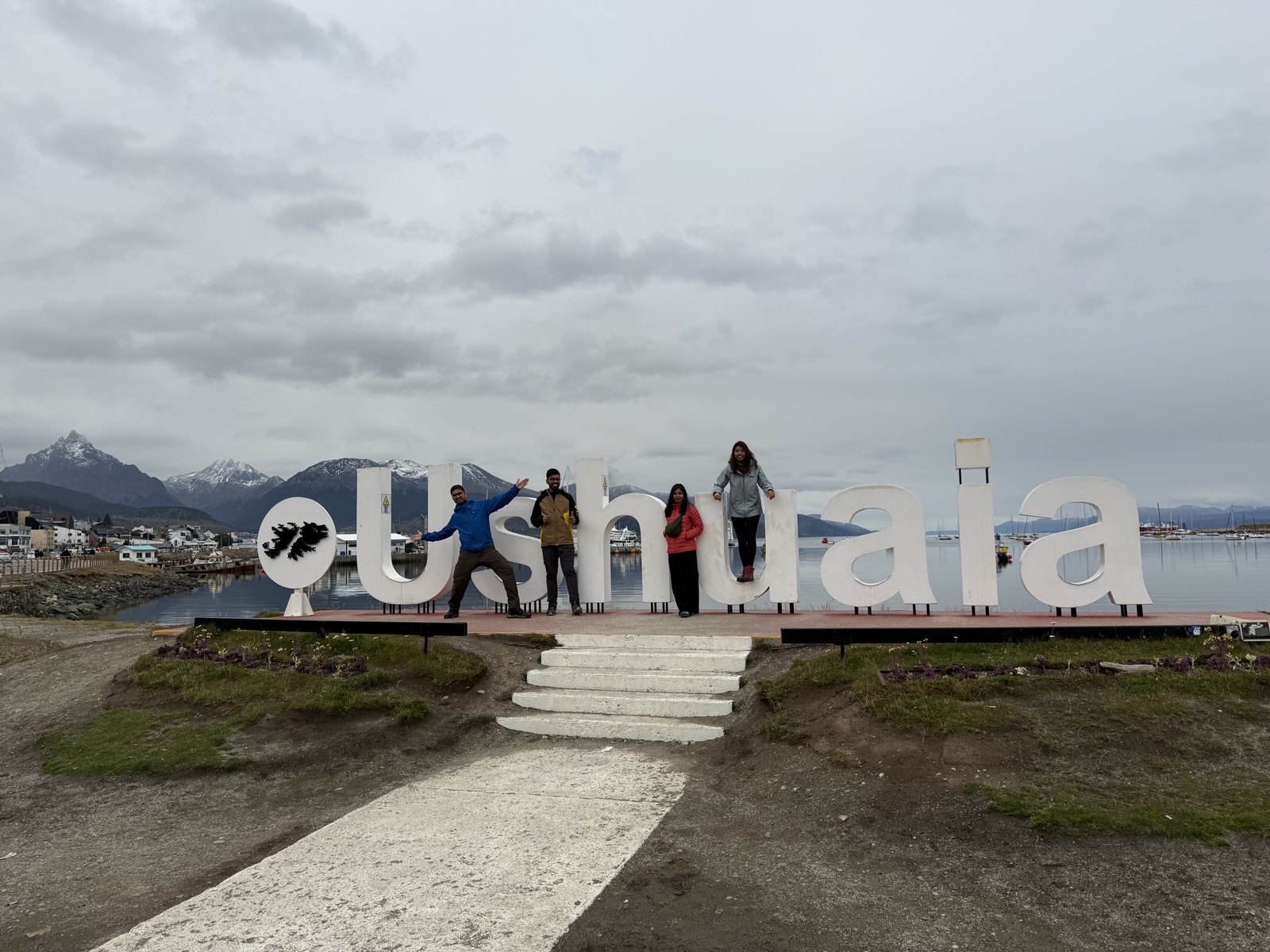
The Beagle Channel
The thing to do here is get on the water, so we did — out into the channel on a boat, past islands stacked with sea lions and rocks white with cormorants, to the Les Éclaireurs lighthouse, the red-and-white one on a bare islet that shows up on every postcard of the place.
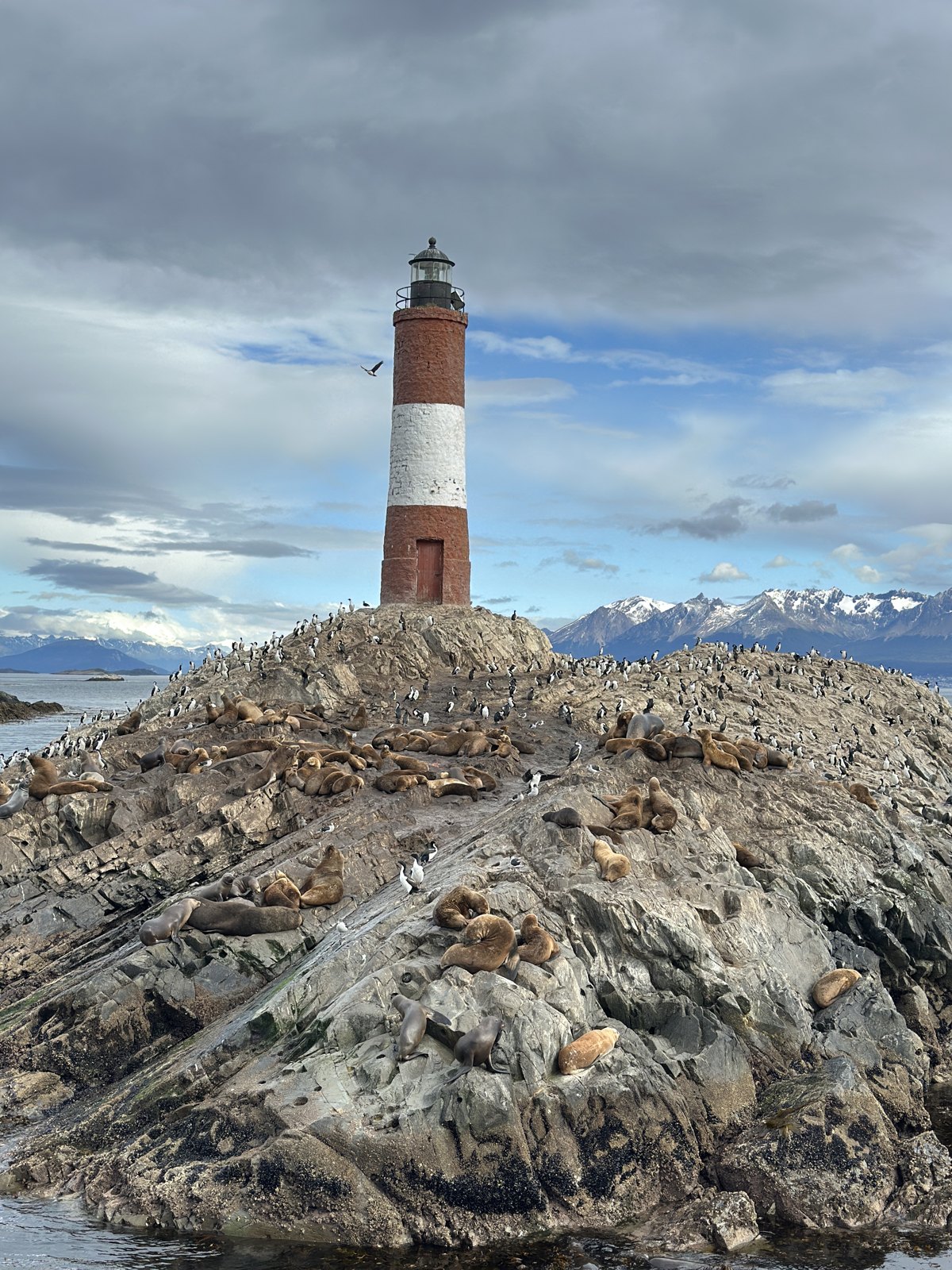
It is cold. It was the very end of February, the tail end of the southern summer, and it was still cold enough on deck that we came in every fifteen minutes to thaw. Go on deck anyway. The light on that channel is extraordinary, and the whole point of the trip was to be somewhere that felt like the edge of something.
Looking south from the deck, the next land is Antarctica. That is not a figure of speech, and it is quite hard to stop thinking about once you have had the thought.
And then, unexpectedly, penguins
This is the part of the day we had not properly understood when we booked it. The longer Beagle Channel trips run east down the channel to Isla Martillo, and on the right kind of tour you land and walk along the beach — with a guide, on a marked line, at a distance — through a working penguin colony.
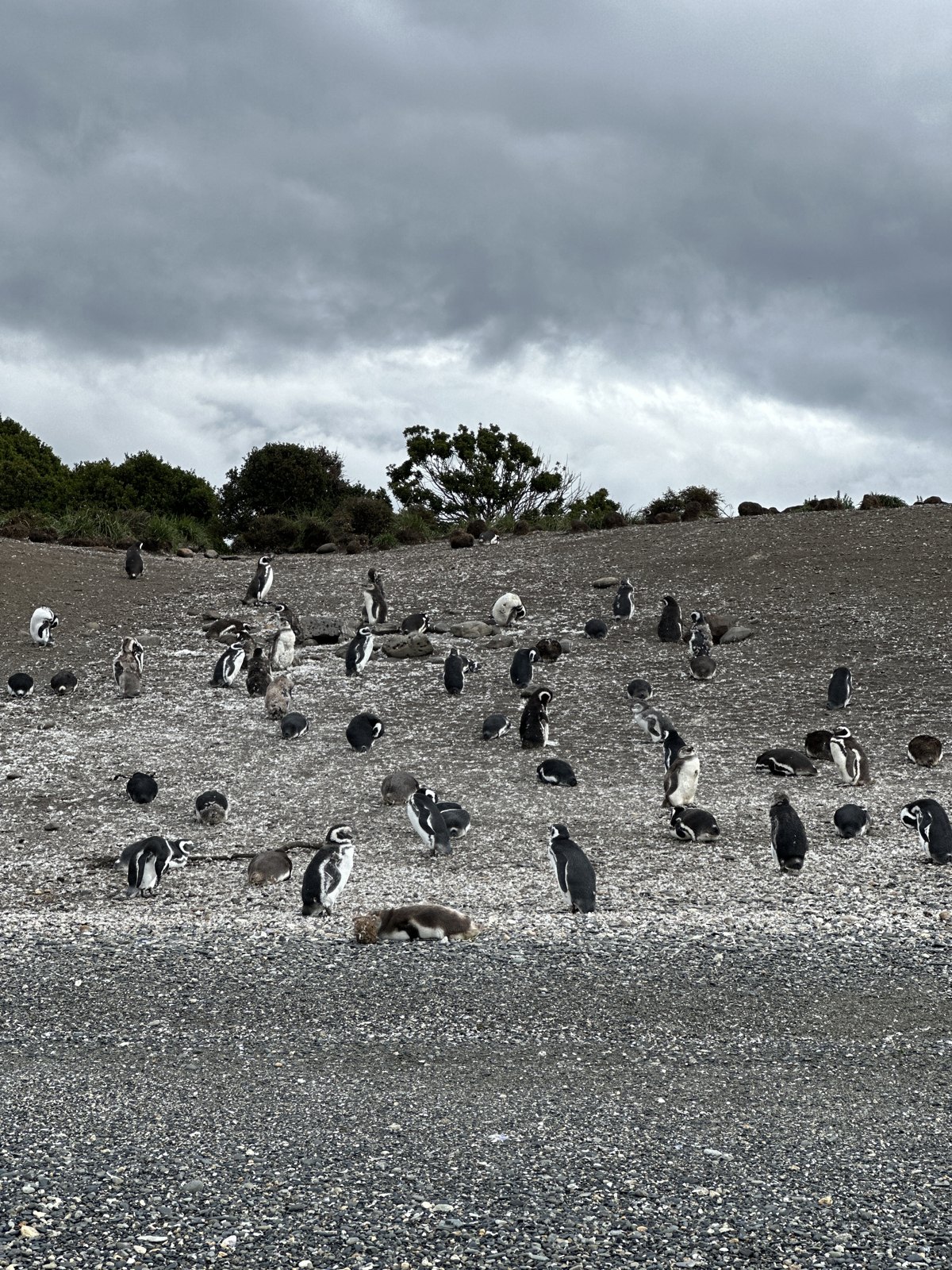
Hundreds of Magellanic penguins — the ones with the black band across the chest — nesting in burrows up the slope and standing about on the stones. And among them, unmistakably taller and with orange feet and a white flash over the eye, a handful of gentoos, which are the Antarctic species and which come this far north in only a couple of places in South America.
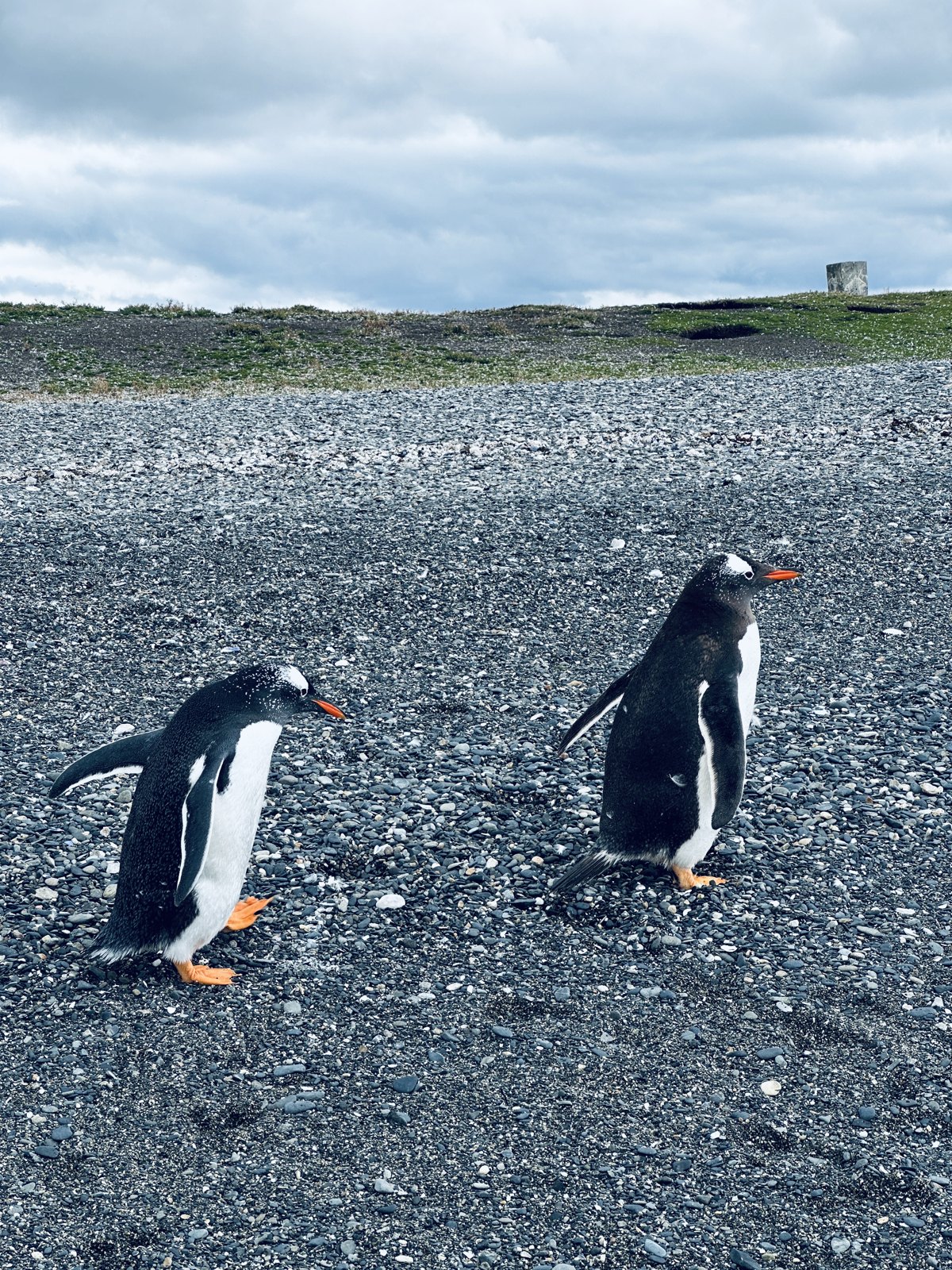
They walk past you. That is the whole thing. You stand still and a bird that lives on the edge of Antarctica goes about its afternoon a couple of metres away and does not care about you at all. If you are choosing between Beagle Channel tours, this is the one to pick, and it needs booking ahead — the number of people allowed onto the island each day is capped.
What Ushuaia is actually like
Small, windy, expensive by Argentine standards, and much more of a real working town than we expected — fishing, the naval base, and the ships loading for Antarctica at the pier. The Antarctic cruises leave from here, which gives the whole port a slightly restless atmosphere, everybody either going somewhere serious or just back from it.
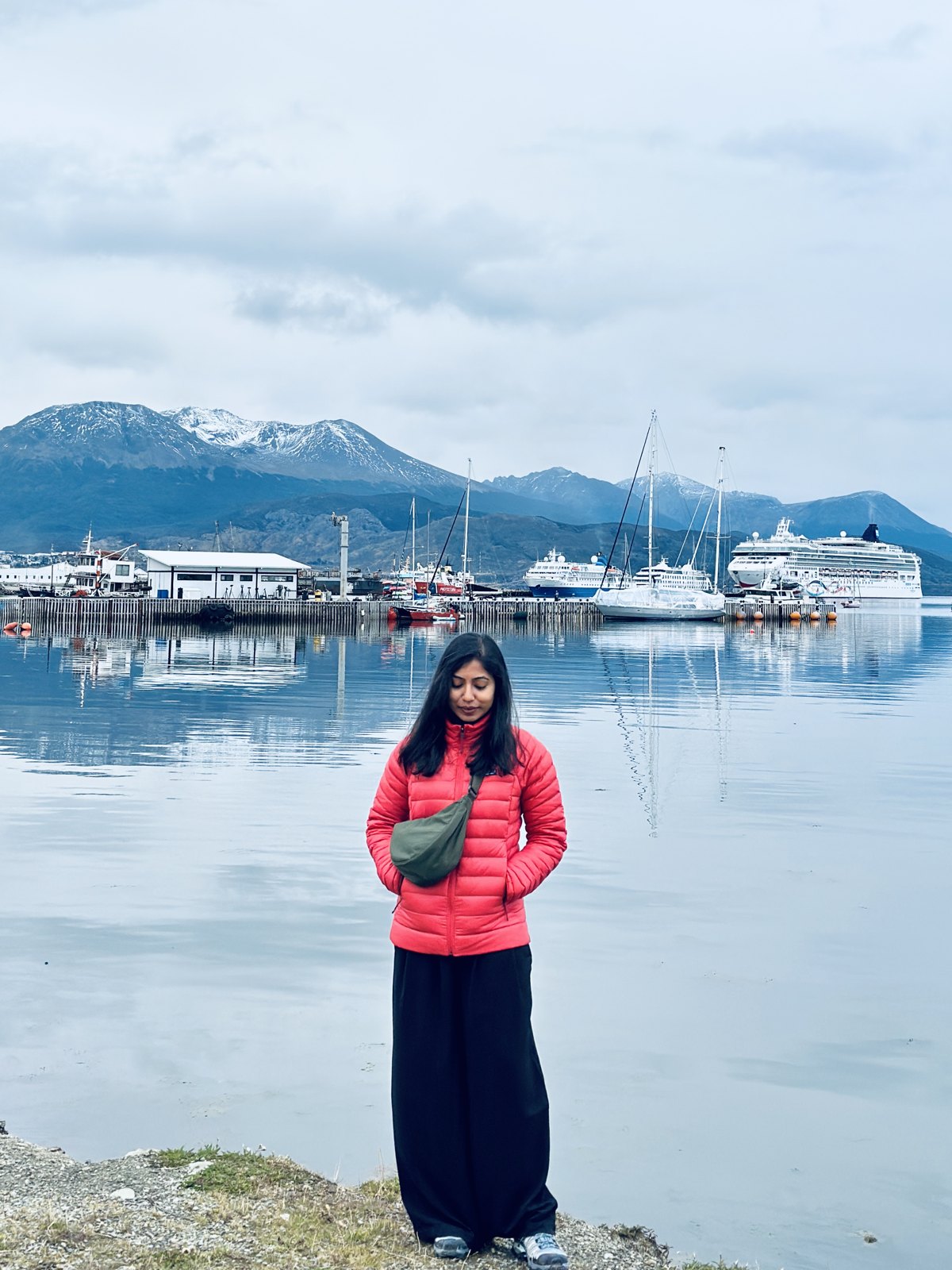
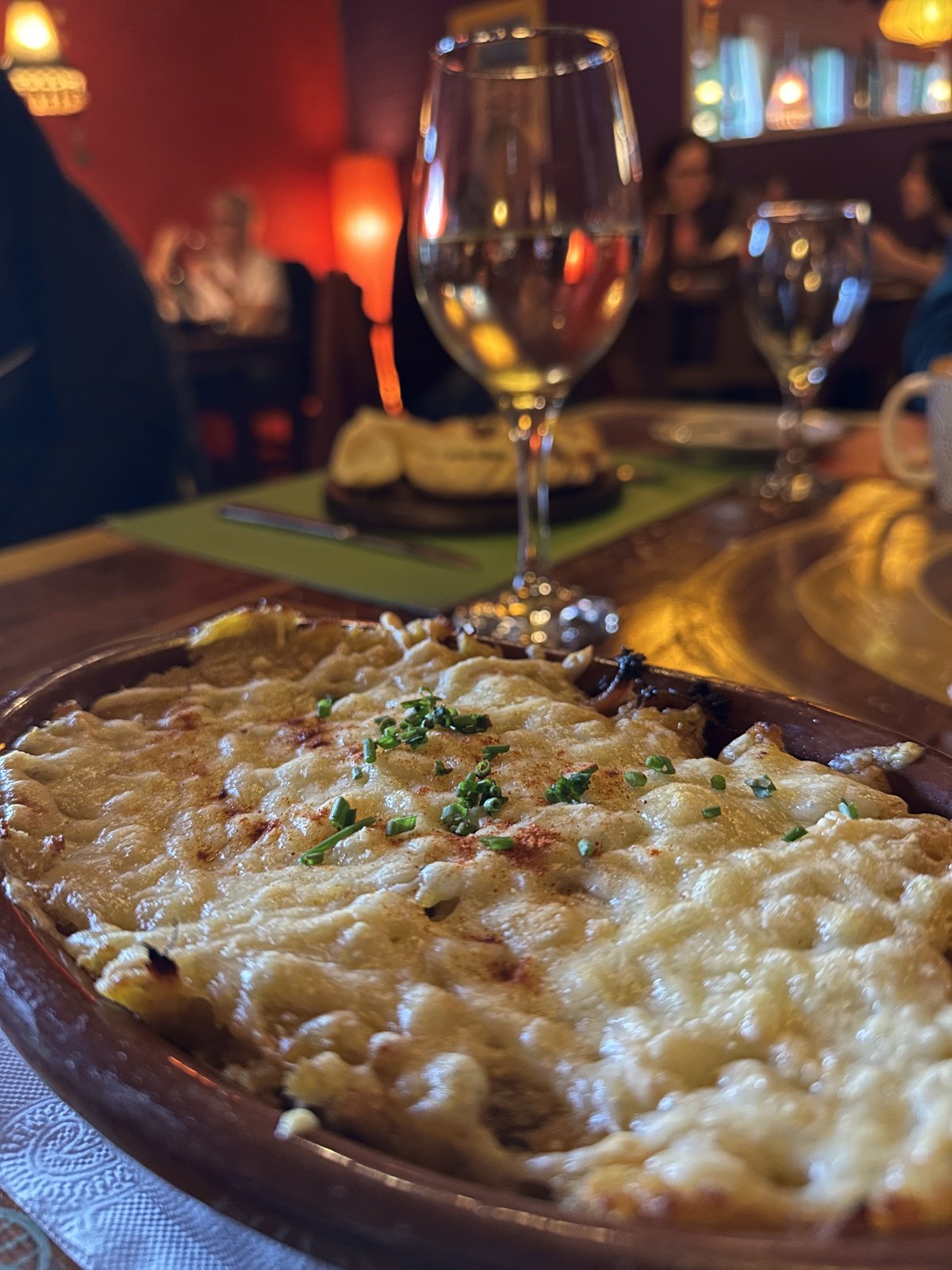
We ate a great deal of king crab, which is the local speciality and is worth the fuss, and drank the local beer, and walked the waterfront in wind that went through three layers.
And the postcard. I had been looking at a picture of this town on my wall for a long time before I was standing in it, and walking around trying to work out which bit of the waterfront it had been sent from is a strange and very good feeling. I did not find the exact spot. It did not matter.
Two and a half days was the right length for us but only just. If we went again we would give it four and get properly into Tierra del Fuego National Park, which we saw far too little of.
El Calafate: a base, not a destination
A short flight north-west and the landscape changes completely — off the mountains and onto the Patagonian steppe, which is flat, dry, enormous and the colour of straw, with Lago Argentino sitting in the middle of it in a blue that does not look like it belongs to the same photograph.
El Calafate is a one-street town that exists to sell you excursions. That is not a criticism. We used it exactly as intended: three nights, one bed, two big days out, no packing and unpacking in between. After a fast start it was a relief to have somewhere to come back to.
Mount Fitz Roy: the long day
This is the one we would tell you to plan properly, because we did not.
Fitz Roy is not in El Calafate. It is above El Chaltén, three hours north by road, and doing it as a day trip from El Calafate means roughly six hours in a vehicle bracketing whatever walking you manage in between. We left in the dark and got back in the dark.
The classic walk from El Chaltén is up to Laguna de los Tres, which puts you at the foot of the massif — about ten kilometres each way with a final kilometre that is essentially a staircase of loose rock climbing steeply to the lake. It is a full day on its own. From a day trip you are working against the clock the entire time, so we walked in as far as the time allowed and turned round.
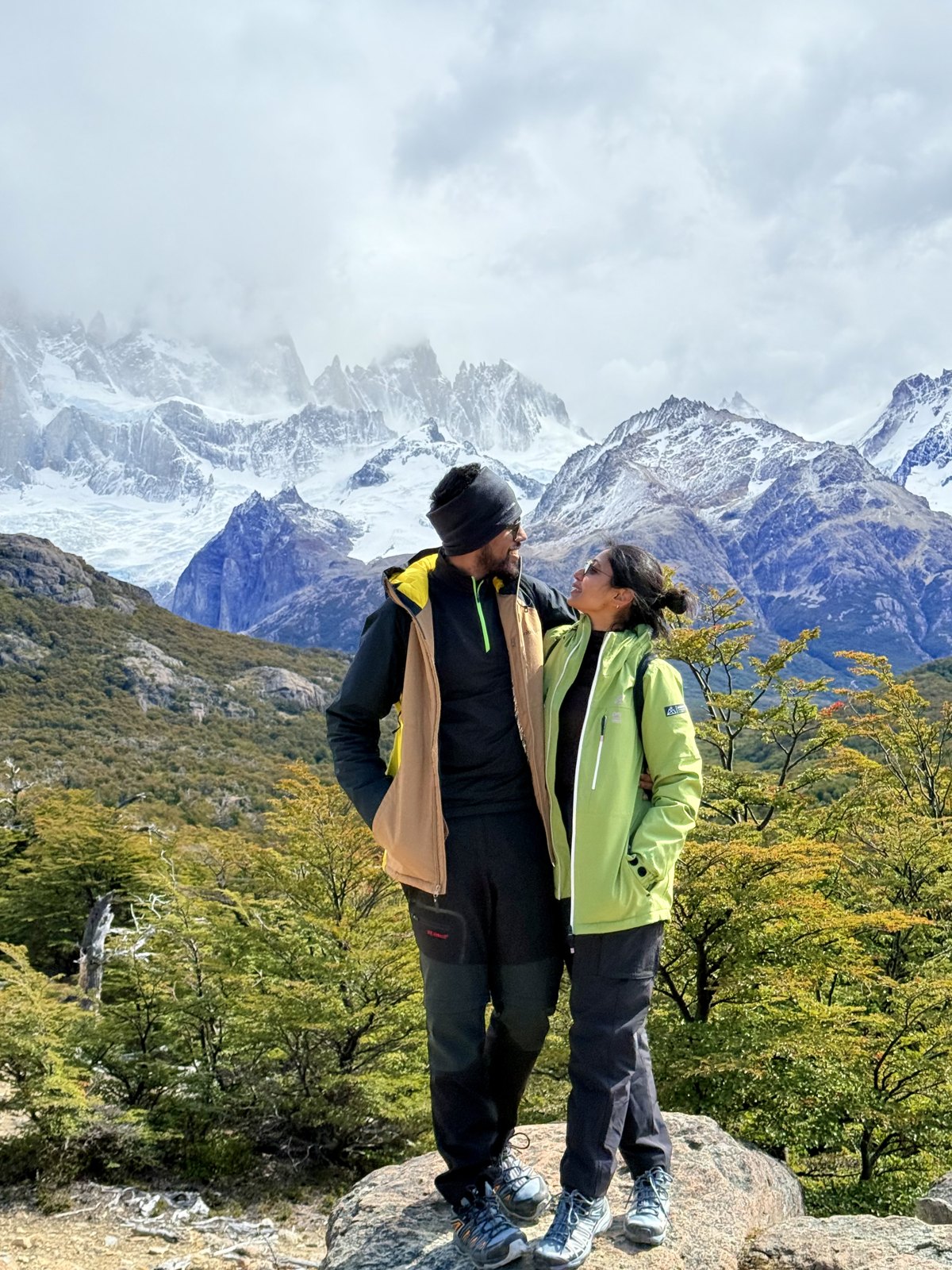
So: we saw it, we did not finish with it, and we are not going to pretend that counts as having done Fitz Roy.
What we would do instead: two nights in El Chaltén. It is a tiny trekking village with trailheads at the end of the street, and having two mornings means having two chances at the weather. Day-tripping the most famous mountain in Argentina from three hours away is a way of seeing it, not a way of doing it.
Perito Moreno: the one that delivered
The next day made up for everything.
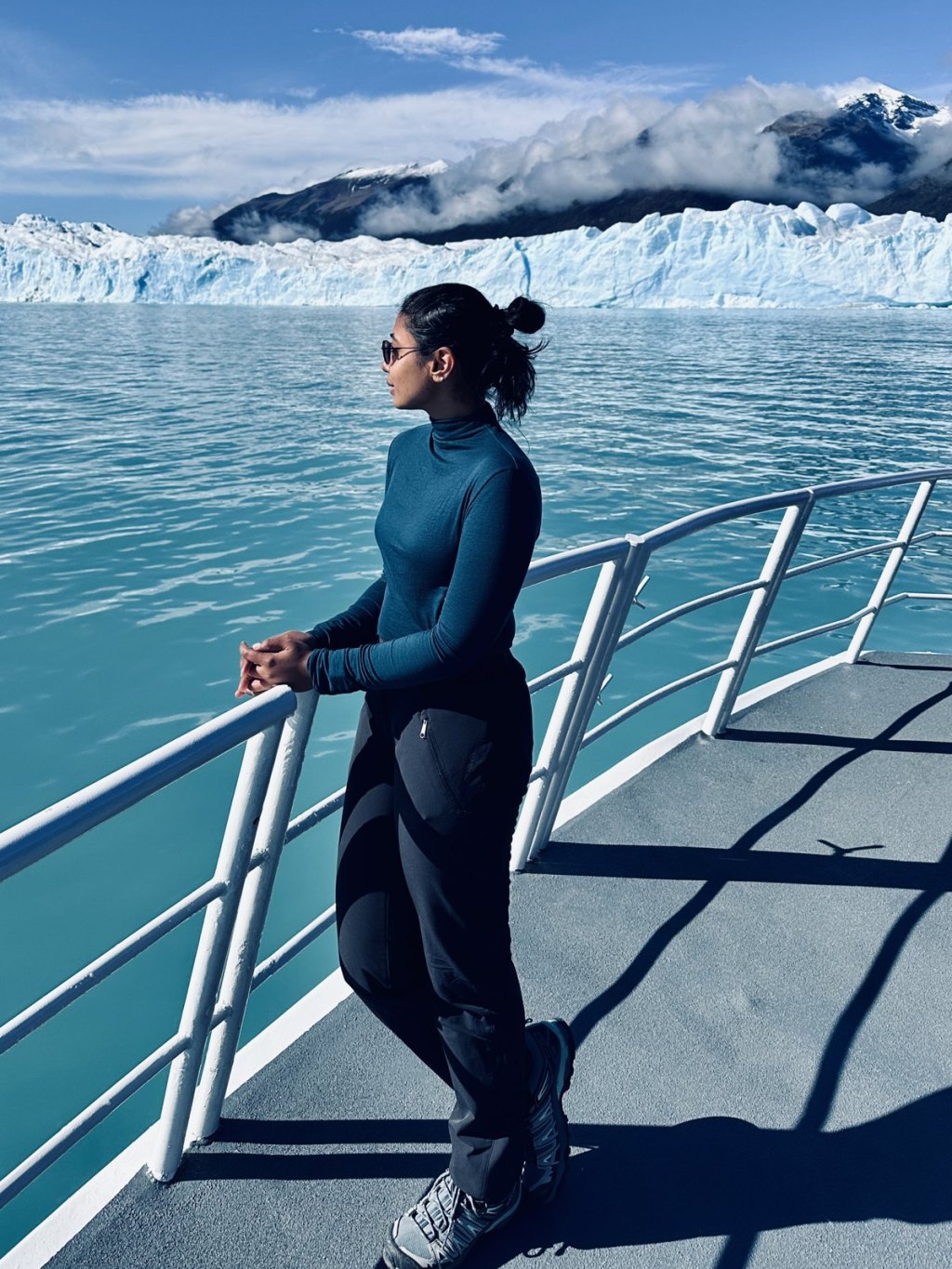
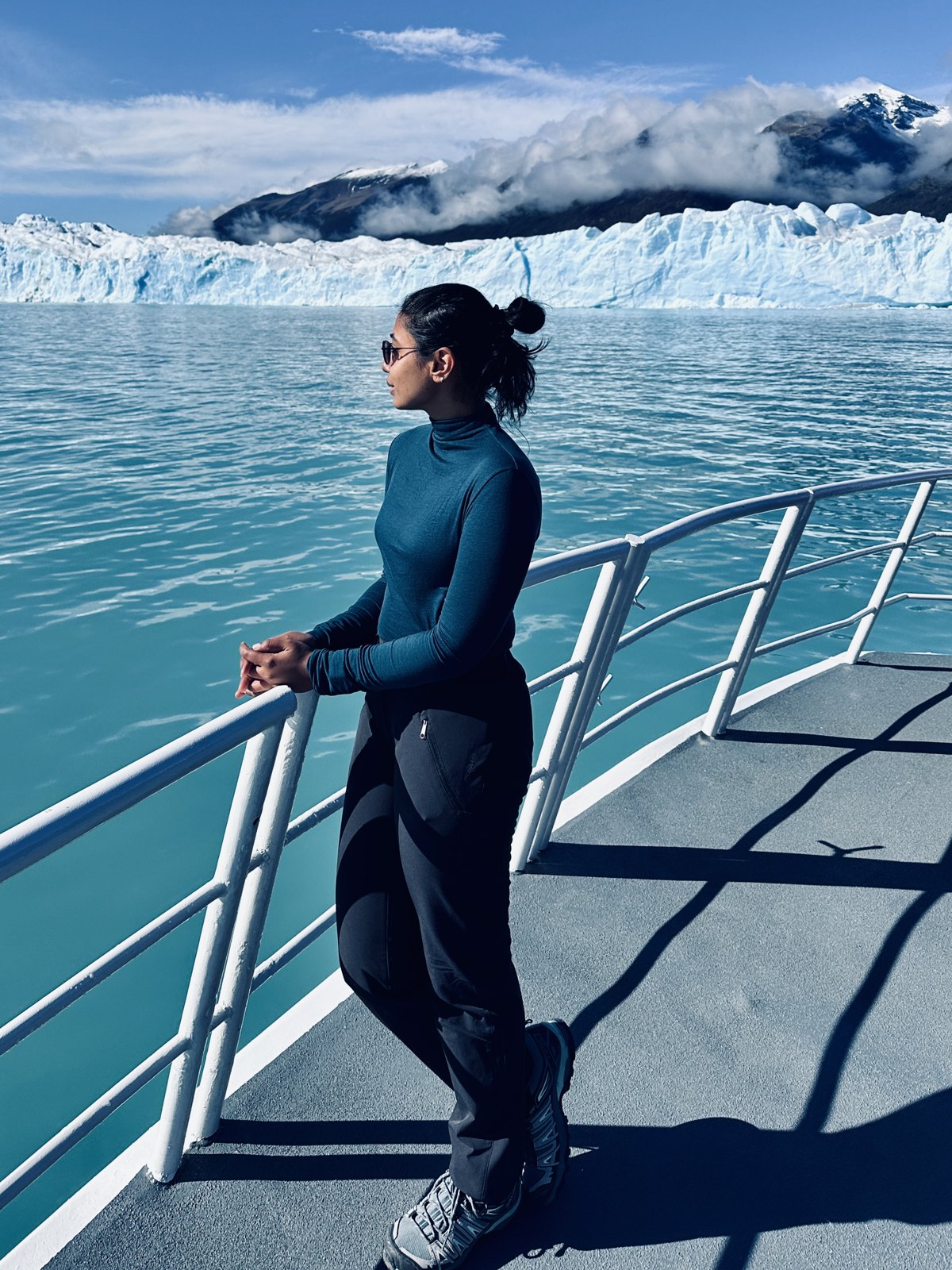
Perito Moreno is about an hour and a half from El Calafate, inside Los Glaciares National Park, and it is one of the very few glaciers on the planet that is not in retreat. It is roughly five kilometres across at the face and stands something like seventy metres above the water — a wall of blue and white ice the height of a twenty-storey building, running from one side of the channel to the other.
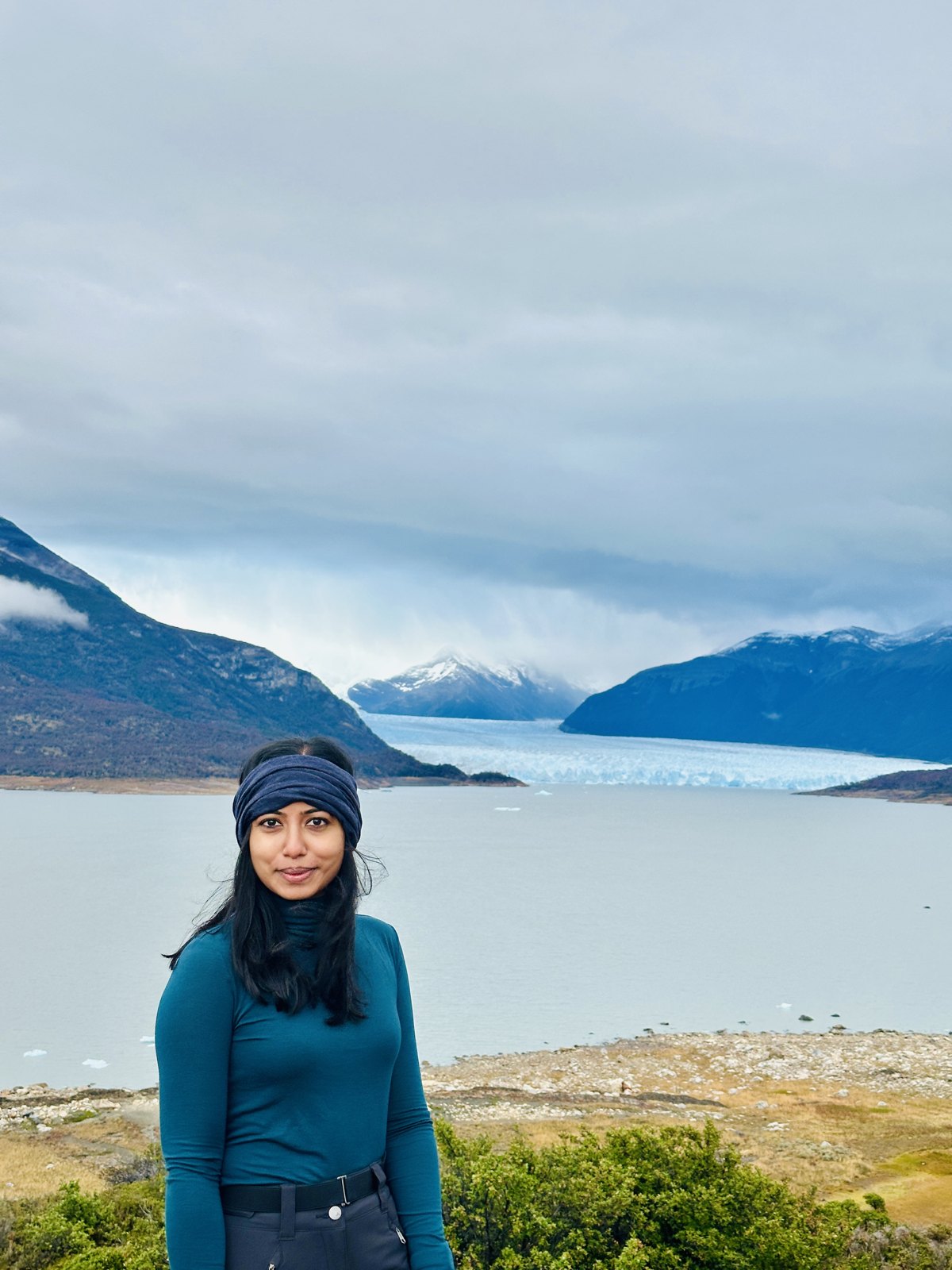
We did both halves of the standard day and would tell you to do the same. The boat first — an hour on the water that takes you along the face at what feels like an unwise distance, until the wall stops being scenery and becomes a physical thing with a top edge somewhere above you.
Then the boardwalks, a system of steel walkways on the peninsula opposite that lets you stand in front of it at several heights. You can spend hours going up and down them, which we did.
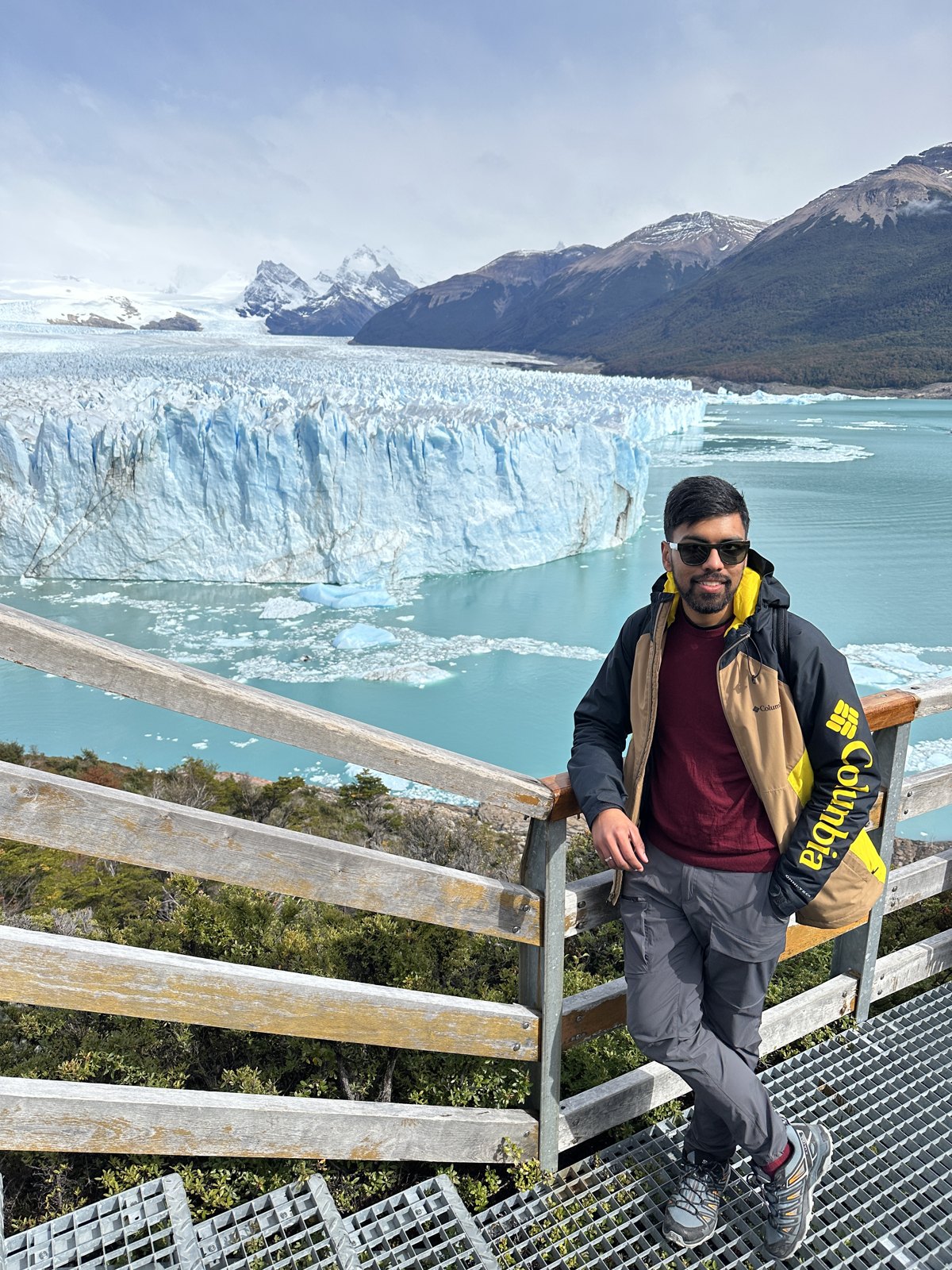
Because here is the thing nobody quite prepares you for: it is loud. The glacier cracks and groans continuously — deep structural noises like a building settling, coming from somewhere inside the ice. And every so often, with no warning at all, a piece the size of a house shears off the face and drops into the lake. You hear it before you see it, everybody on the boardwalk turns at once, and you have almost no chance of pointing a camera at the right part of the wall in time.
We stood there most of the day. It is the only place on the whole trip where doing nothing but watching was obviously the correct plan.
Crossing into Chile
From El Calafate we took the bus to Puerto Natales — about five and a half hours, most of it across empty steppe, with a border crossing in the middle at Cerro Castillo.
The crossing is straightforward but slow: everybody off, exit Argentina, back on, drive a few minutes, everybody off again, enter Chile, bags scanned. Chile is serious about agricultural imports — no fresh fruit, no vegetables, no meat, no dairy, no seeds. This is not a formality and the fines are real. Eat your apple in the queue.
Then out the other side into Chilean Patagonia, with a trek waiting.
What we would do differently
Two nights in El Chaltén, not a day trip from El Calafate. The single clearest lesson of the Argentine half. Six hours of driving for a rushed walk under cloud, when the alternative is sleeping at the trailhead and getting two shots at the mountain.
Four days in Ushuaia rather than two and a half. We did the channel and the town well and the national park barely at all.
We would keep El Calafate exactly as it was. Three nights in one bed with two enormous days either side of a lie-in is a good rhythm, and we were glad of it later.
Book flights with a buffer at the front. Not a Patagonia lesson, a general one, and see below.
Where the money goes
Argentine Patagonia is not the cheap South America of everybody’s backpacking stories. Ushuaia and El Calafate are remote tourist towns at the end of very long supply chains and they are priced accordingly — accommodation and restaurants cost roughly what a mid-range European city would.
The big spends are the excursions and the internal flights. Park entry at Los Glaciares, the transfers, the boats — each is a real amount of money and there are two or three of them per stop. The internal flights (Buenos Aires–Ushuaia, Ushuaia–El Calafate) are the other large line, and they are not optional; the distances down there are absurd.
The cheap parts are the buses and the food you buy in supermarkets. Long-distance buses are good and reasonably priced. Empanadas are a couple of euros and are everywhere.
And the unbudgeted line: the strike. A last-minute one-way to Madrid plus an unplanned hotel night. Worth every cent, but if you are travelling on a schedule that cannot flex, hold something back for exactly this.
Practical summary
Fly in a day early if the itinerary is a chain. Ours had four flights before the first bed, and a trek with immovable dates at the far end. When Munich went on strike, a spare day was the difference between a trip and a refund claim.
Take the Beagle Channel trip that lands on Isla Martillo. Not all of them do, daily numbers are capped, and walking through a penguin colony is worth planning around.
Book El Calafate excursions ahead in high season. February and March are peak. Perito Moreno transfers, the glacier boat and the Fitz Roy day trips all sell out.
At Perito Moreno, do the boat and the boardwalks. They are different experiences of the same wall and the day is built to take both.
Layers, and a proper windproof. Patagonian wind is the real weather. Temperature is not the problem; the wind is.
Fitz Roy needs a night in El Chaltén. Say it a third time.
Nothing fresh across the Chilean border. Fruit, veg, meat, dairy, seeds — declare or dump it before the queue.
March is a good month to go. Late summer in the far south: the crowds have thinned, everything is still open, and the weather has not turned yet. It gets you shoulder-season prices without shoulder-season closures.
Next: part two, Chile — a puma on the first day, five days and a hundred kilometres through Torres del Paine, a thirtieth birthday spent in the Andes, and then a very long way north to the driest desert in the world.


Leave a Reply