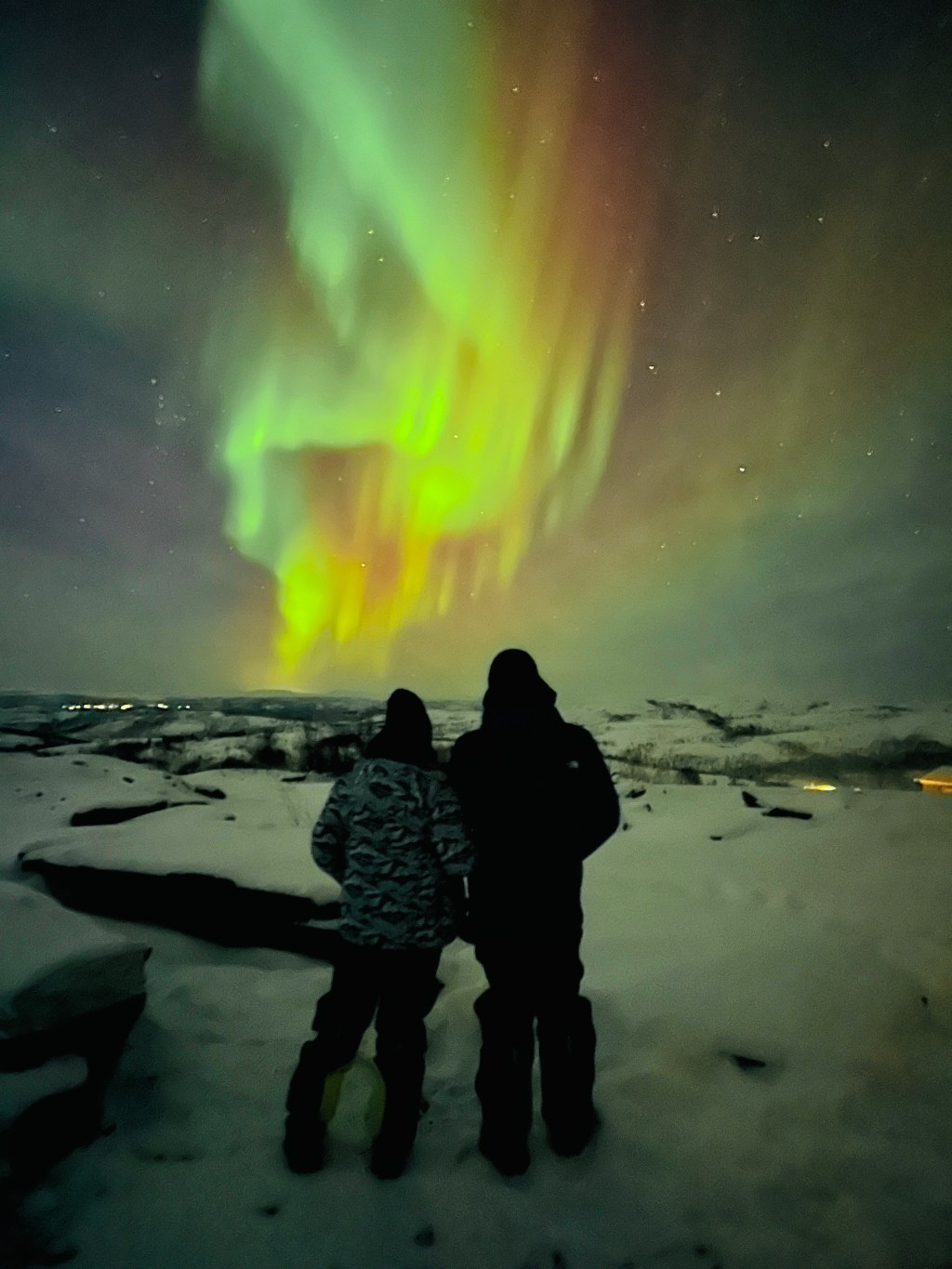
Paritosh turned thirty on 7 January, and what he wanted for it was the northern lights. Not a party, not a city, not a beach. So in the first week of January we flew to Alta, at 70° north in Norwegian Finnmark, and spent the week about as far inside the Arctic as scheduled flights will take you.
We got them, and on his birthday we got them properly.
The route
| Where | Nights | Getting there |
|---|---|---|
| Alta, Finnmark | 7 | Fly to Alta via Oslo or Tromsø; then a hire car |
| — Alta Museum, Hjemmeluft | half day | 15 min from town |
| — Fjord boat, orca watching | day | From the coast north-west of Alta |
| — North Cape (Nordkapp) | day | About 240 km each way, 3h in winter conditions |
Why Alta, and not Tromsø
Everyone goes to Tromsø. Tromsø is lovely and has direct flights and a lot of tour operators — and it sits on the coast, where the weather comes in off the Atlantic and the cloud can sit for a week.
Alta is inland, on a fjord but tucked behind the mountains, and it has a genuinely drier, clearer winter climate. That is not a marketing claim: the world’s first permanent aurora observatory was built on the Haldde mountain above Alta in 1899, precisely because this was the best place anyone could find to watch the sky. The town calls itself the town of the northern lights and has the receipts.
It is also directly under the auroral oval — the ring around the magnetic pole where the lights actually happen. In Alta you are not waiting for a big storm to push the aurora far enough south to reach you. You are standing underneath the thing.
Daylight, or the lack of it
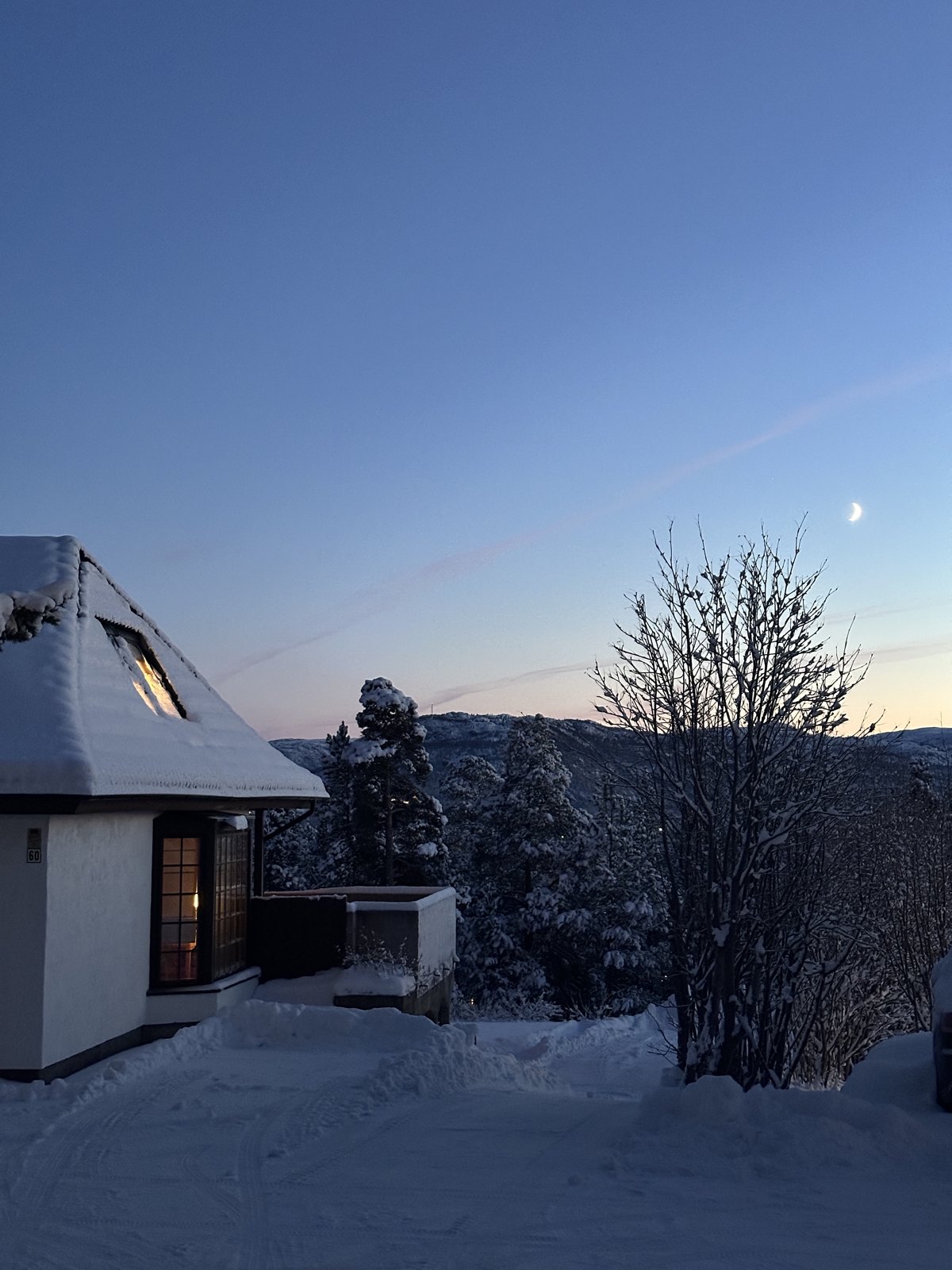
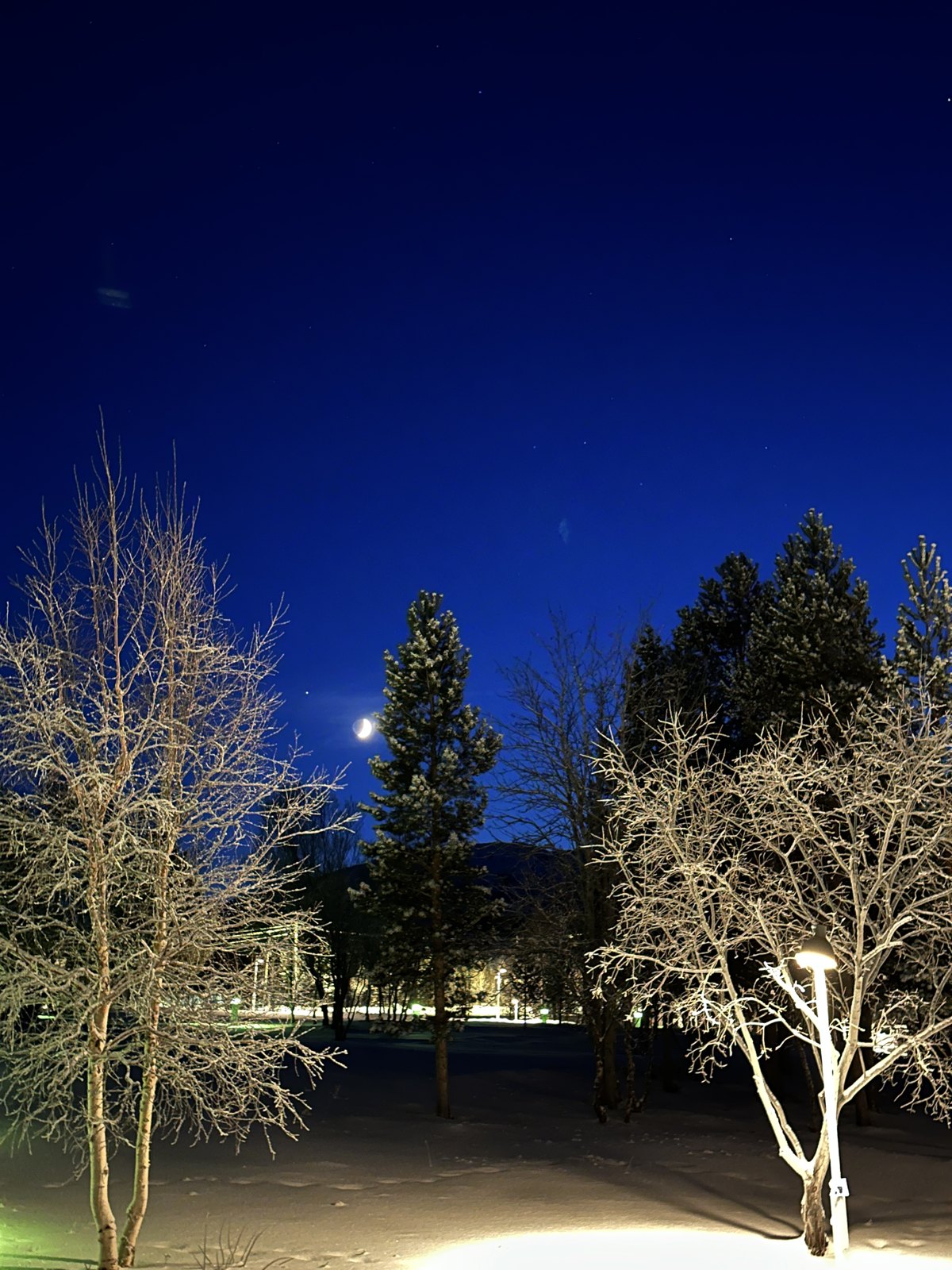
Do not come here expecting a day. In early January the sun does not clear the horizon at all — Alta’s polar night runs from late November to roughly the third week of January — so what you get is about four or five hours of extraordinary blue twilight in the middle of the day, going pink at the edges, and then it is dark again.
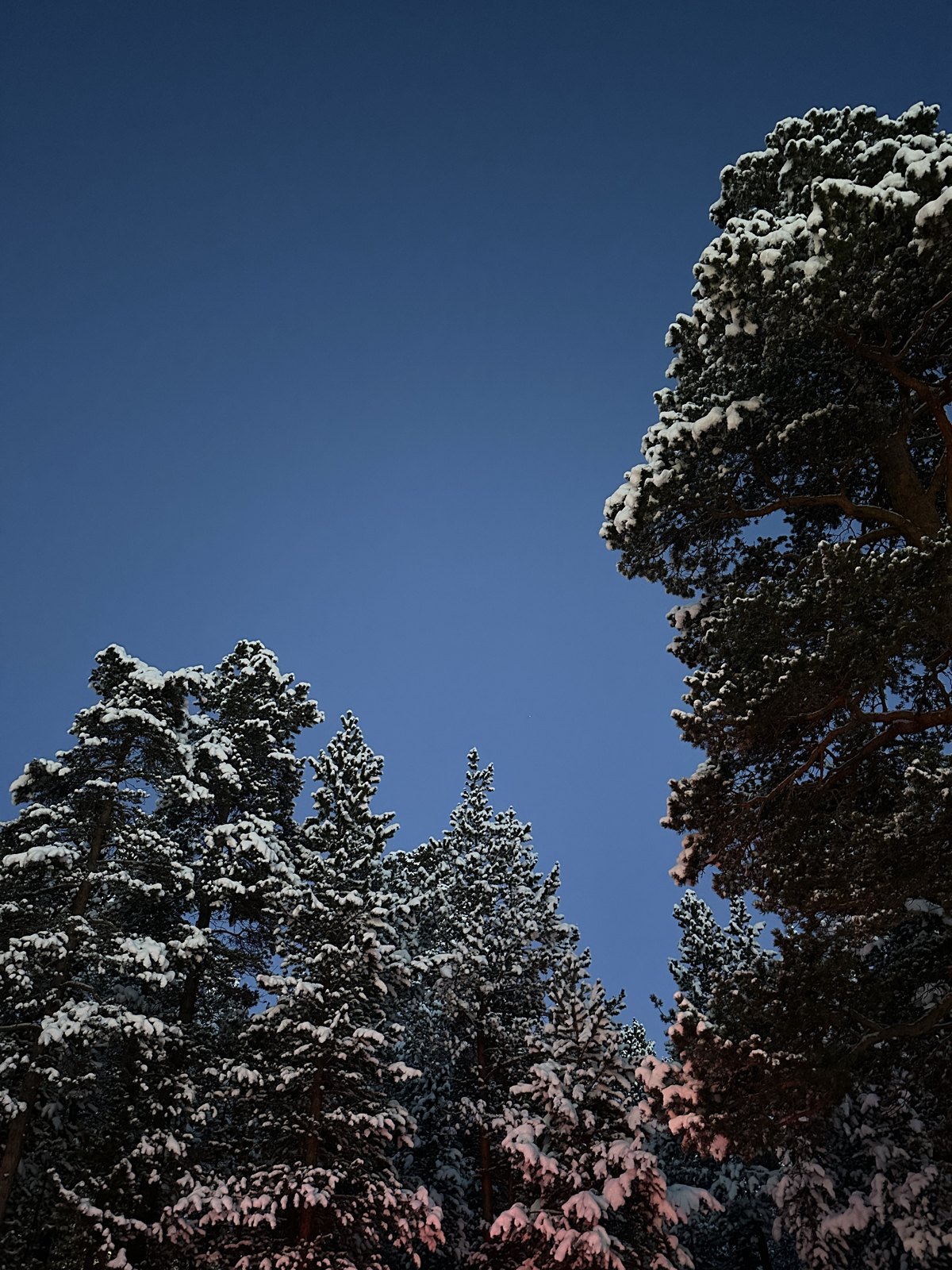
It sounds grim and it is the opposite. The light is soft, blue and pink and gold all at once, everything is under half a metre of snow, and because there is no real daylight to waste you stop trying to fill the day. You go out for a few hours, you come back, you eat, and then you go out again at night — which is when the place actually performs.
The lights themselves
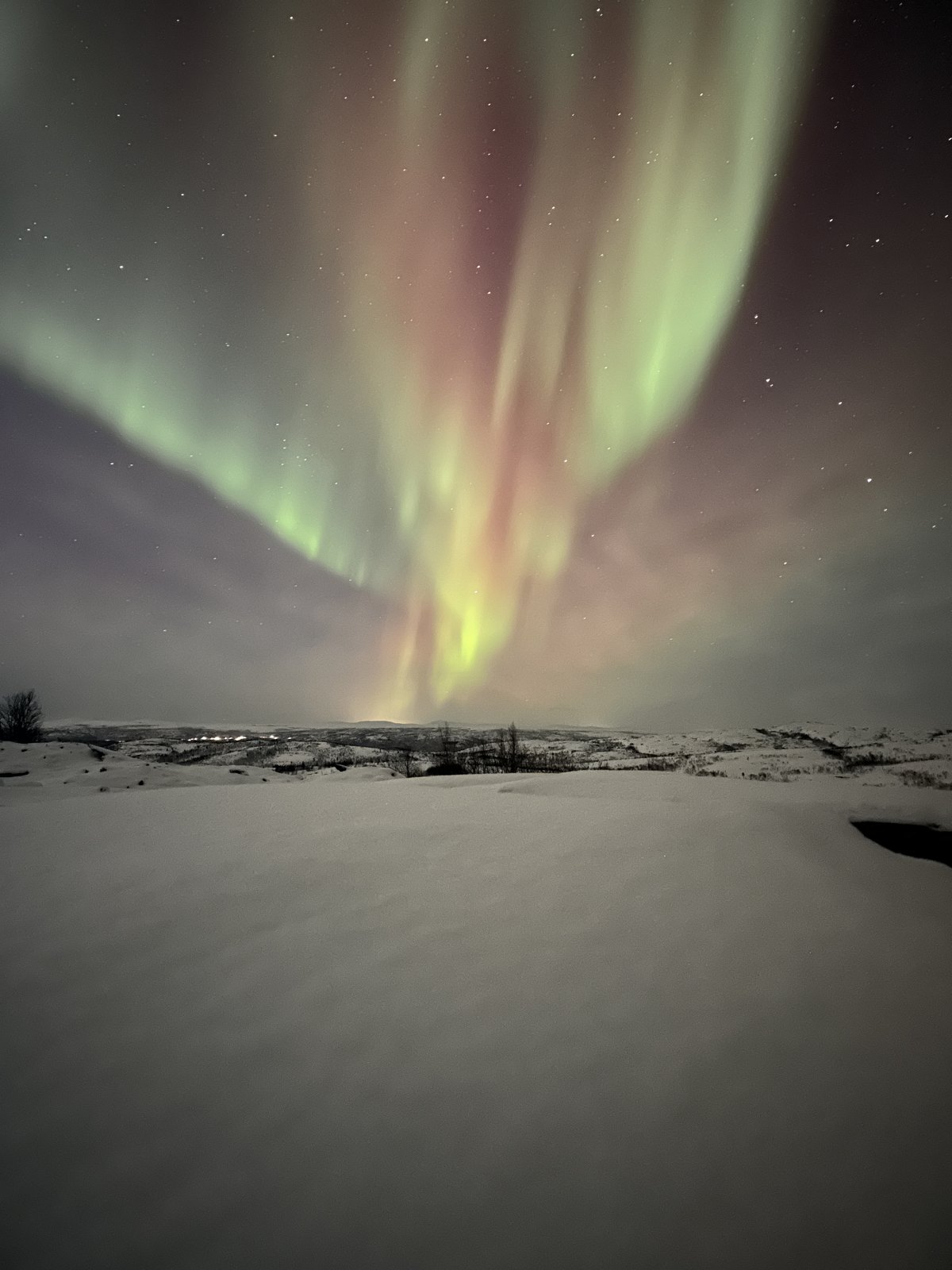
Here is the thing nobody tells you, so we will. When the aurora is faint, your eyes see grey. The first thing you notice is what looks like a thin band of cloud that is the wrong shape and in the wrong place, and your phone camera sees it as green before you do. That is normal, and it is not a disappointment — it means something has started.
And then, if you are lucky, it switches on. When it goes strong you do see the colour with your naked eye, and more importantly you see the movement: curtains sliding sideways, pillars rising and dropping, the whole sky reorganising itself every few seconds. Nothing in the photographs prepares you for the fact that it moves.
The night it came straight overhead
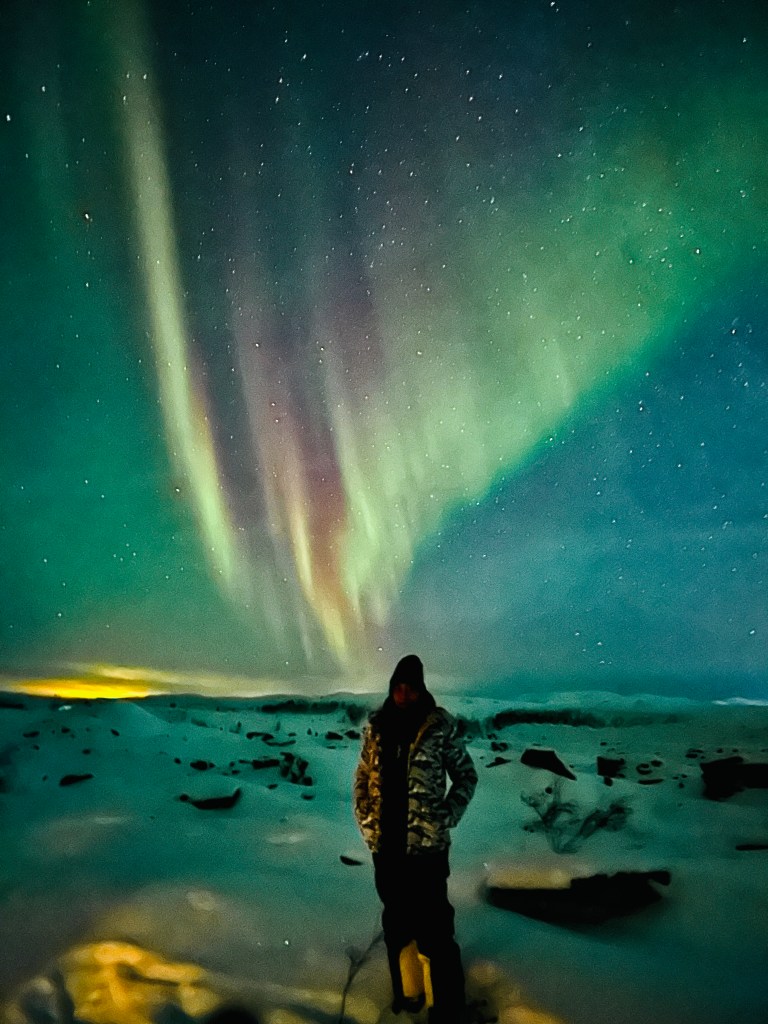
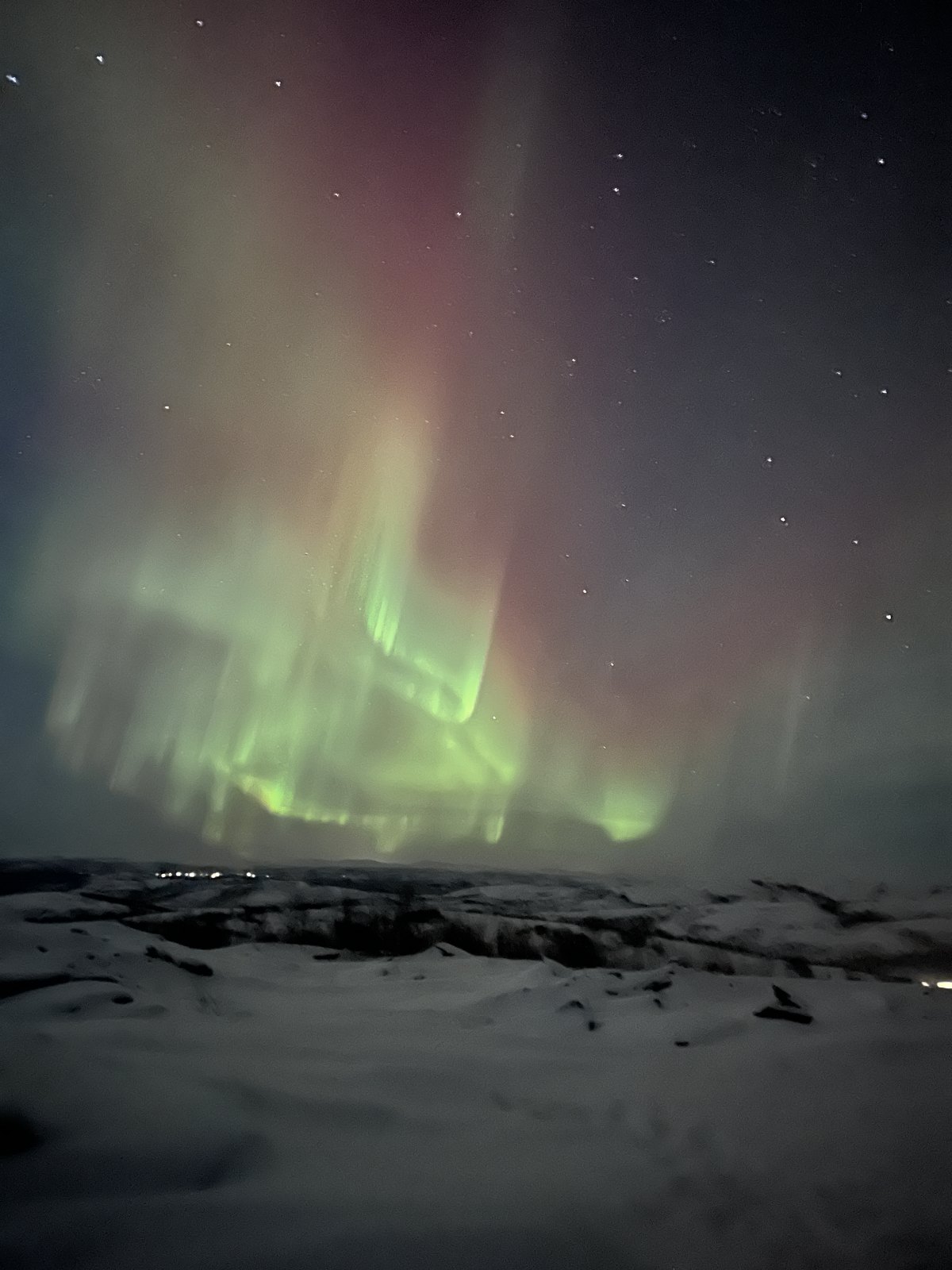
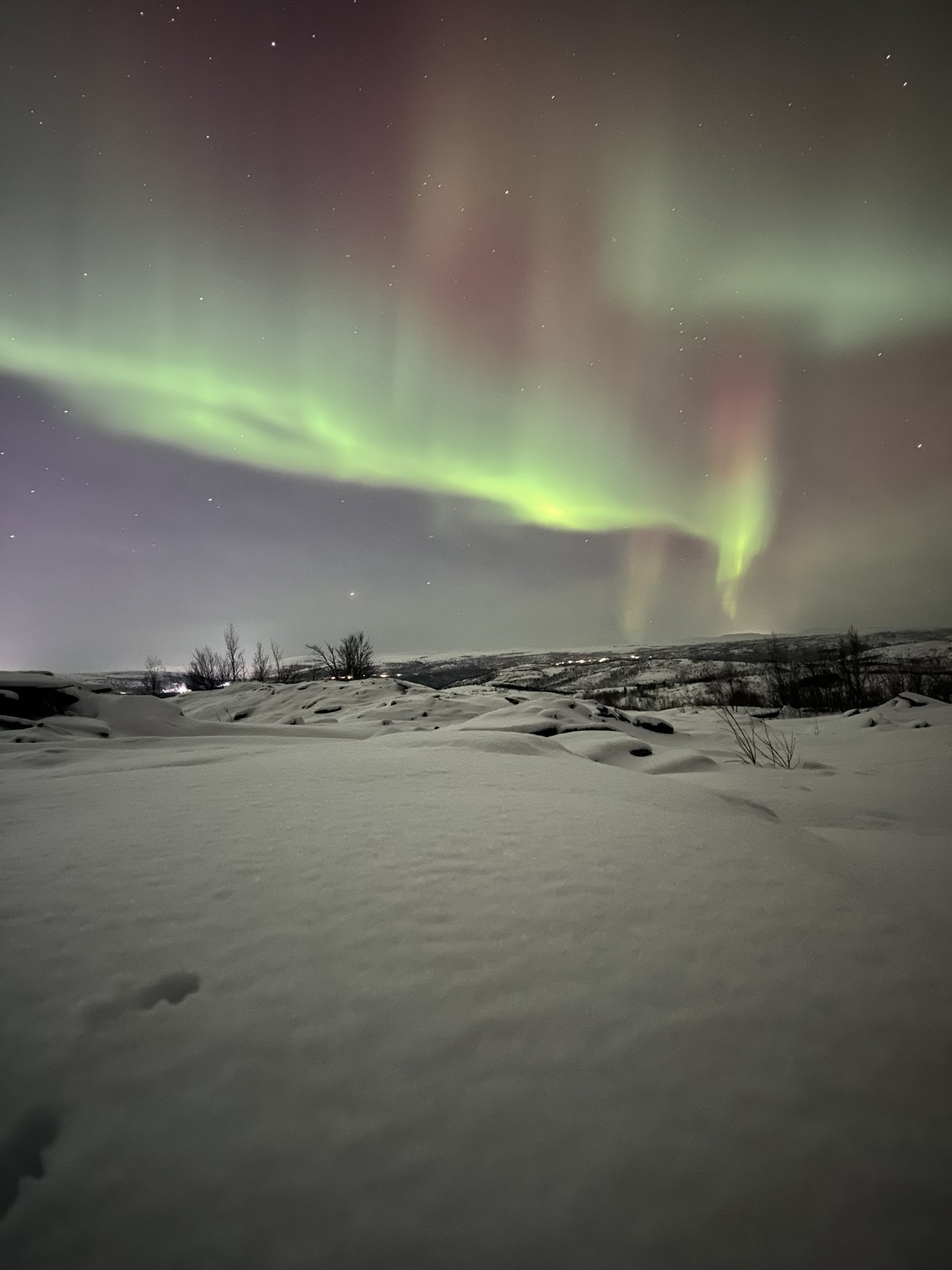
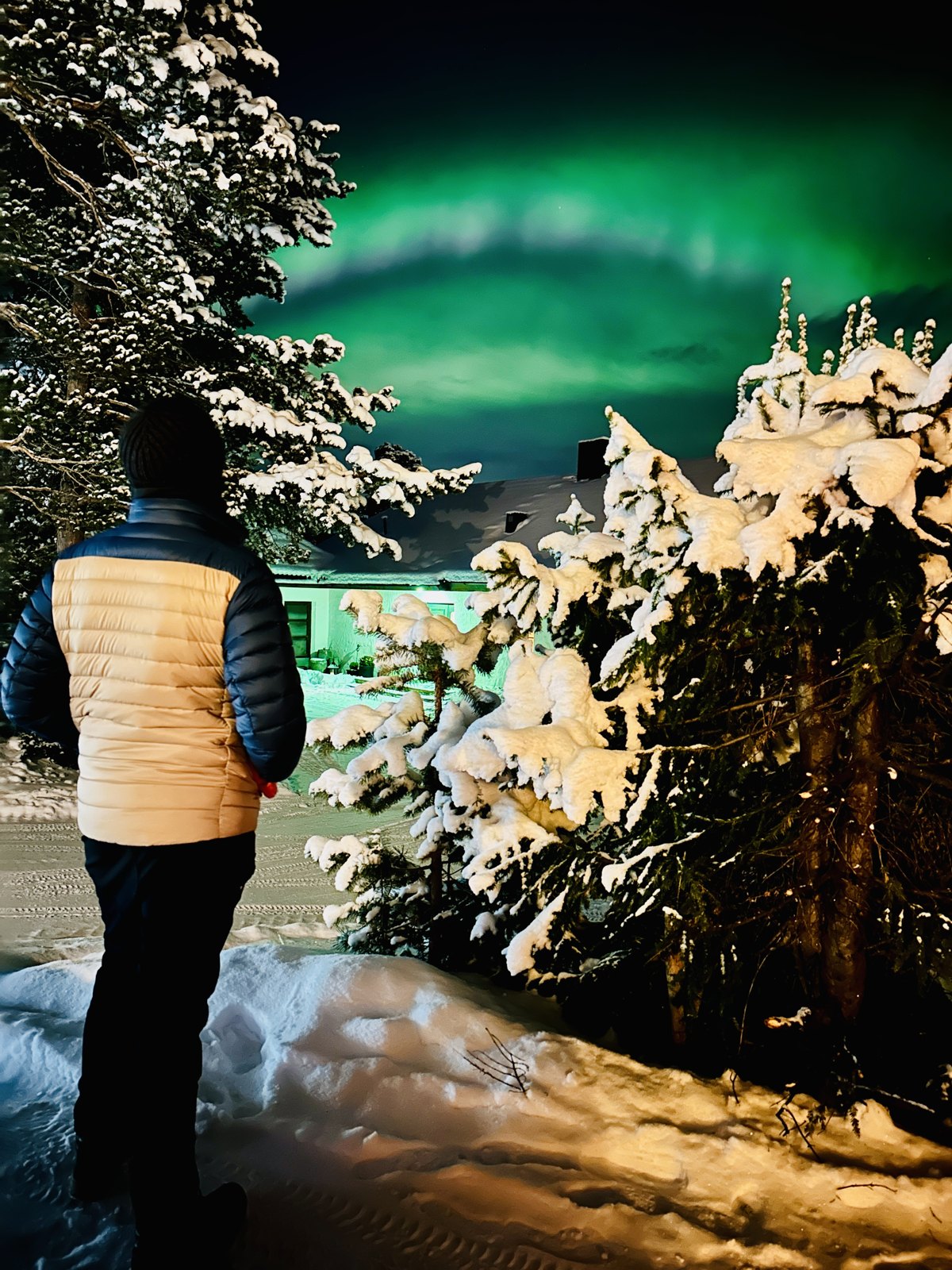
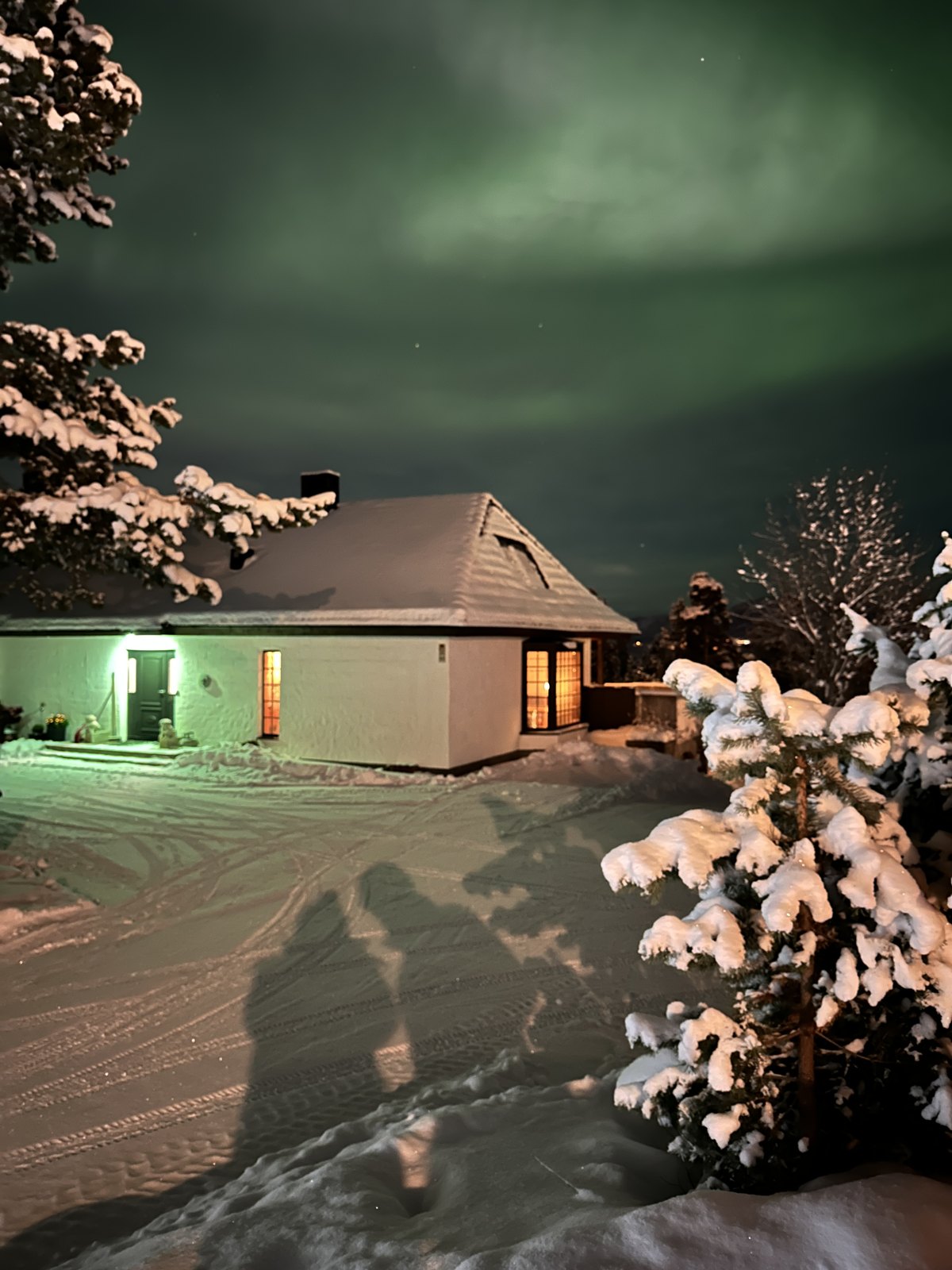
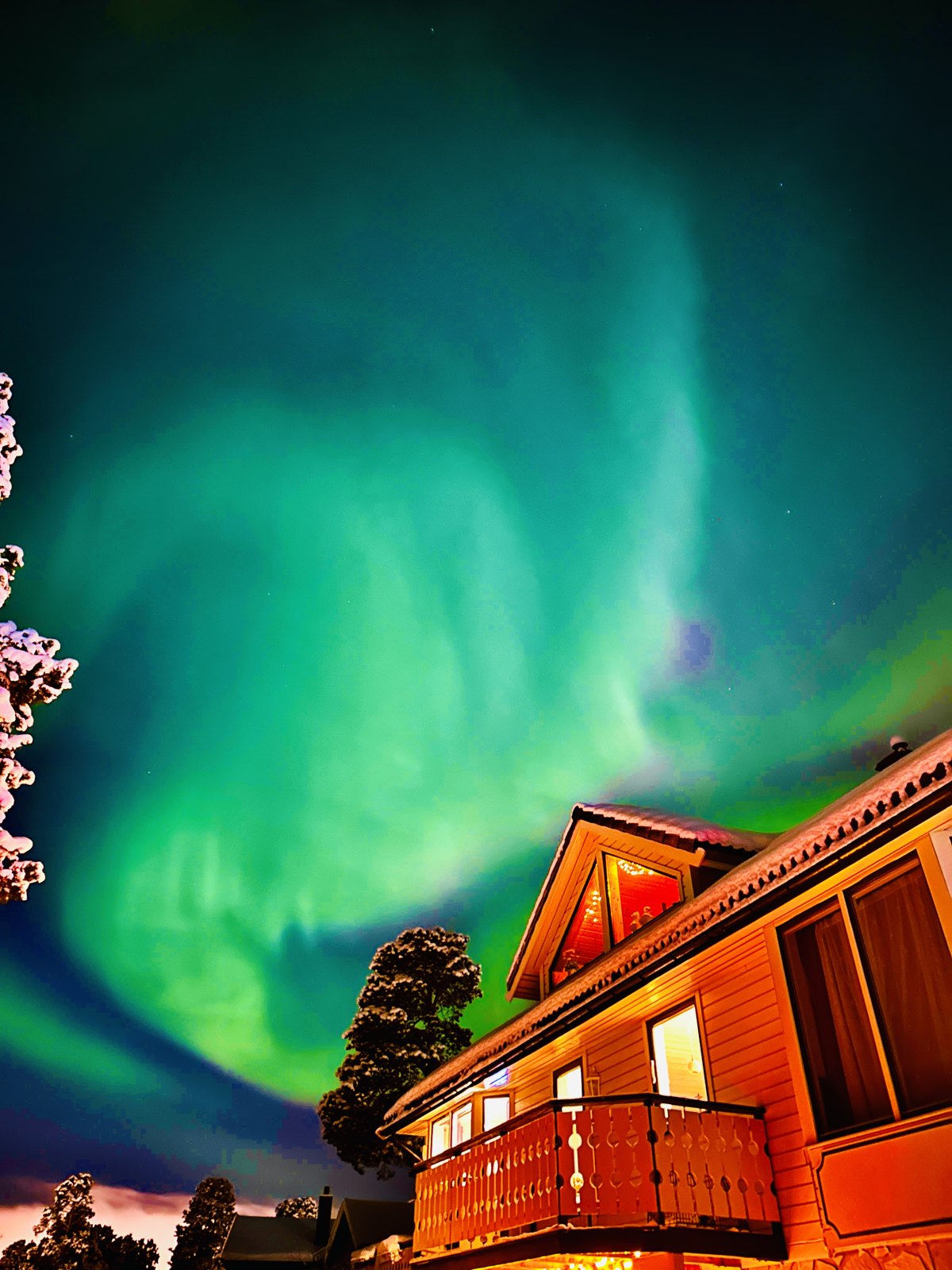
On the big night it did the thing we had read about and not really believed: it came directly overhead.
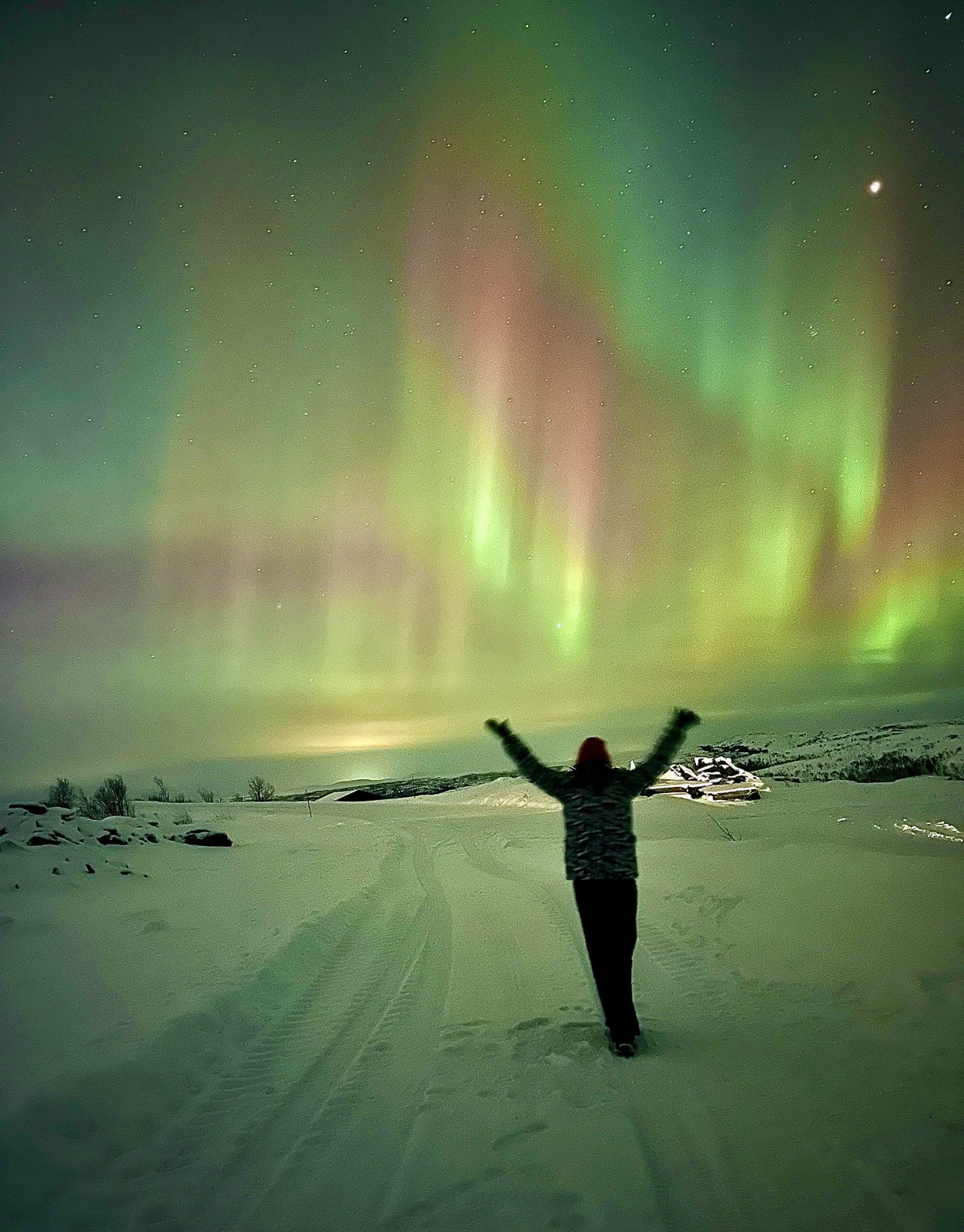
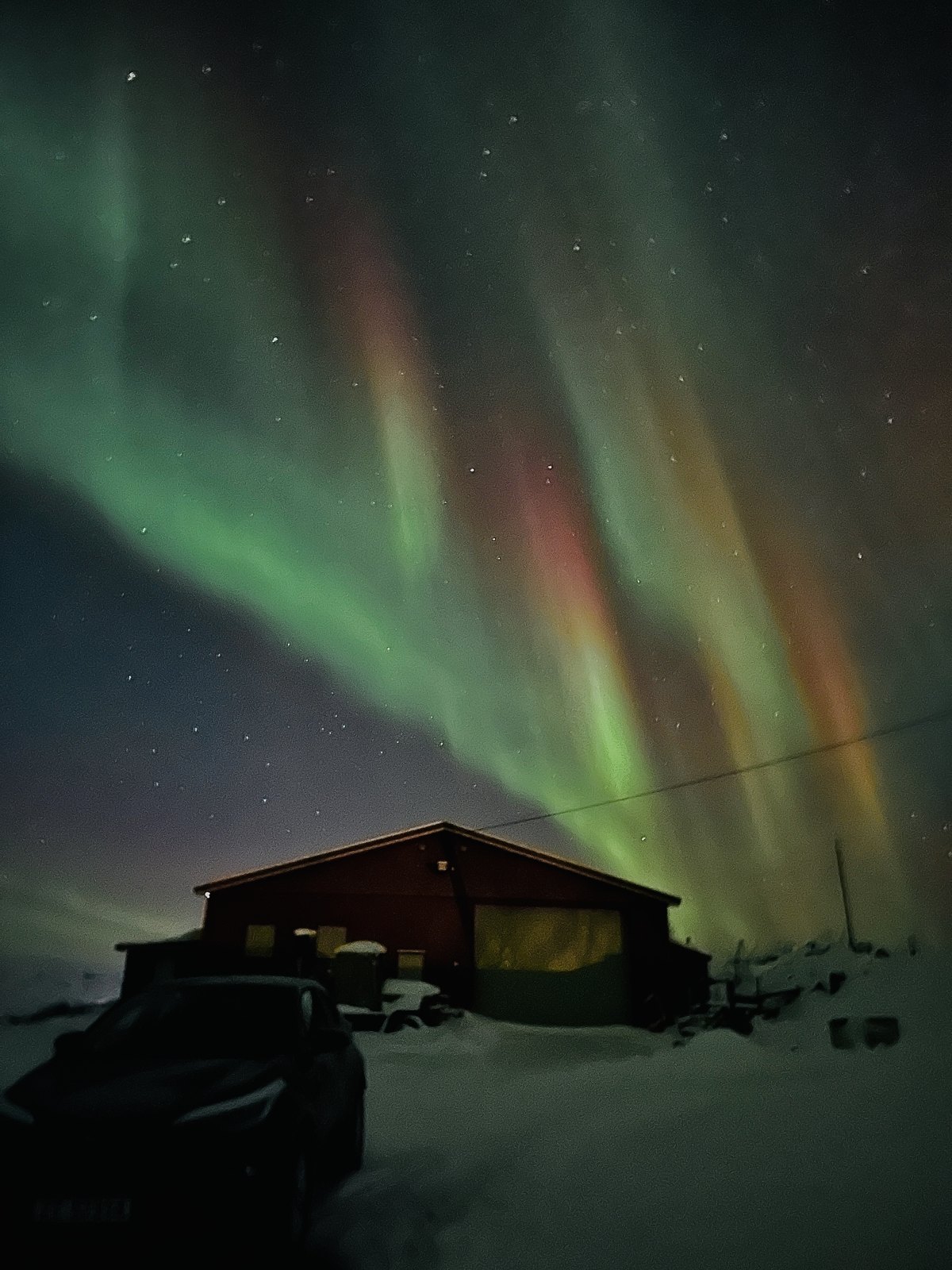
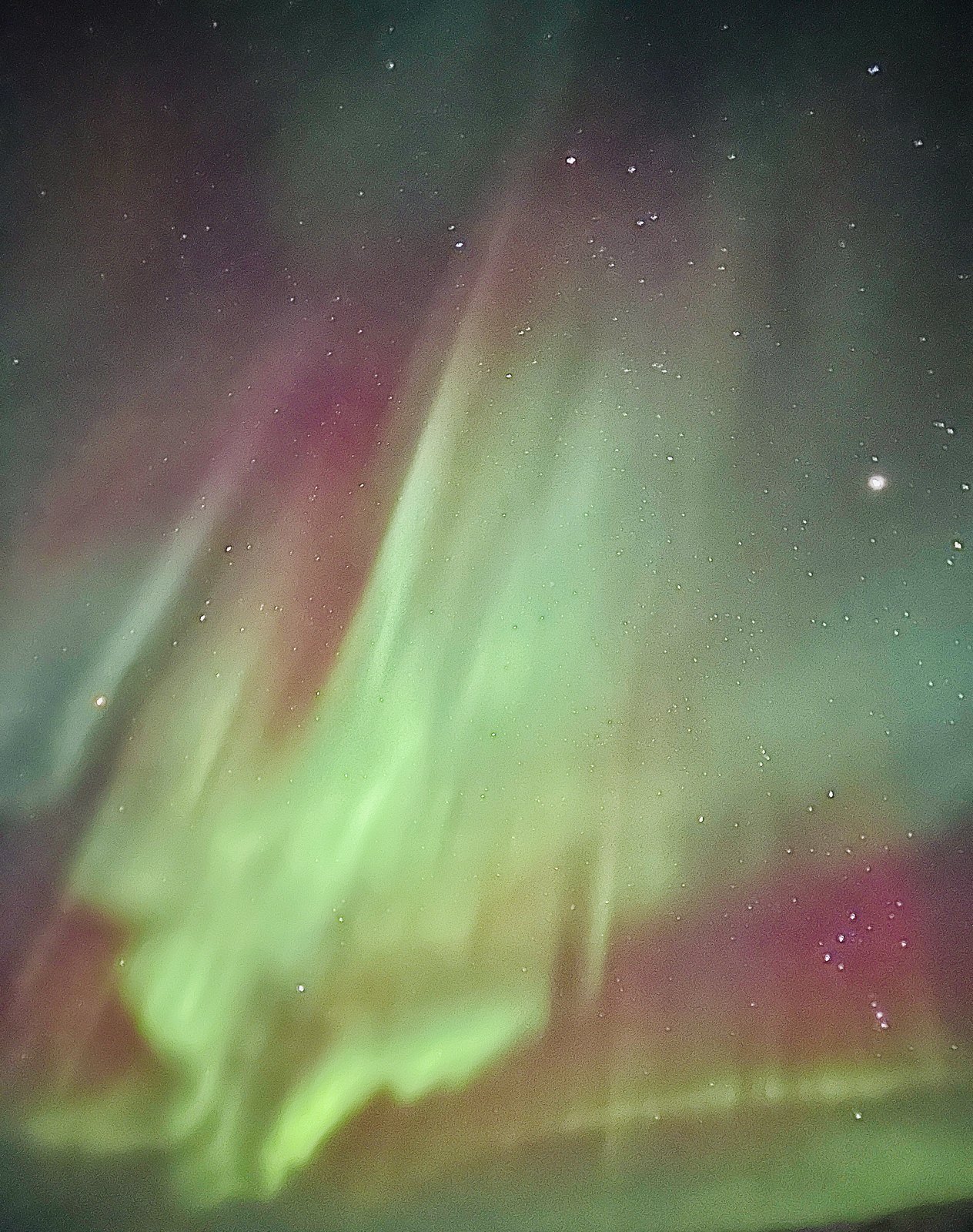
That last shape has a name — a corona. It happens when the aurora is directly above you and the rays appear to converge on a single point, like looking up the inside of a tent. It lasted a couple of minutes. Nobody said anything the entire time.
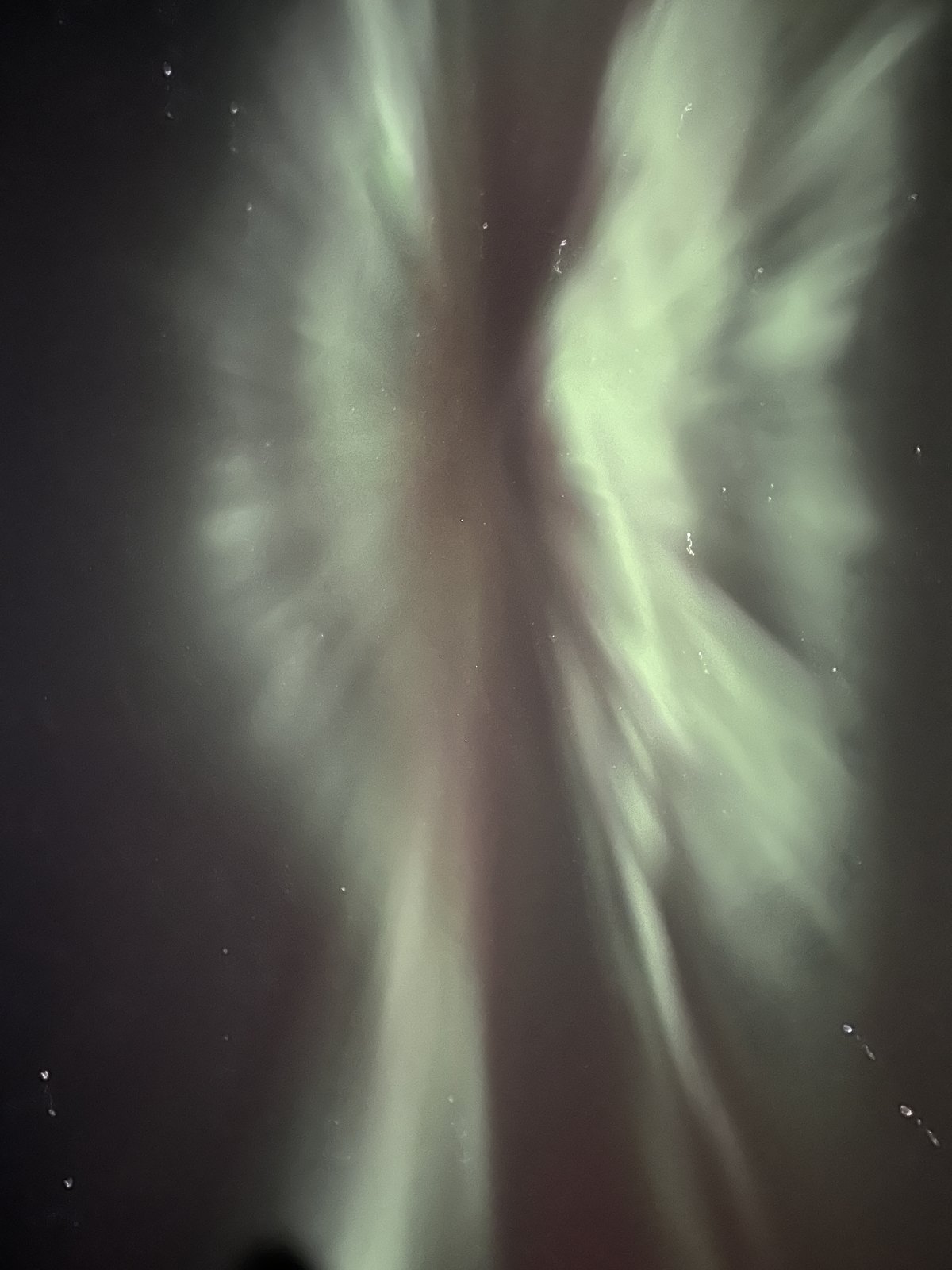
As a thirtieth birthday present it is quite hard to beat, and — this is the part that still makes me laugh — it was free. We did not book a tour, we did not drive anywhere special. We walked out of the door of the cabin and looked up.
Orcas in the fjord
The unexpected best day. In winter the herring come into the fjords of northern Norway, and the whales follow them — orcas and humpbacks, in numbers, close to shore, in the middle of the polar twilight.
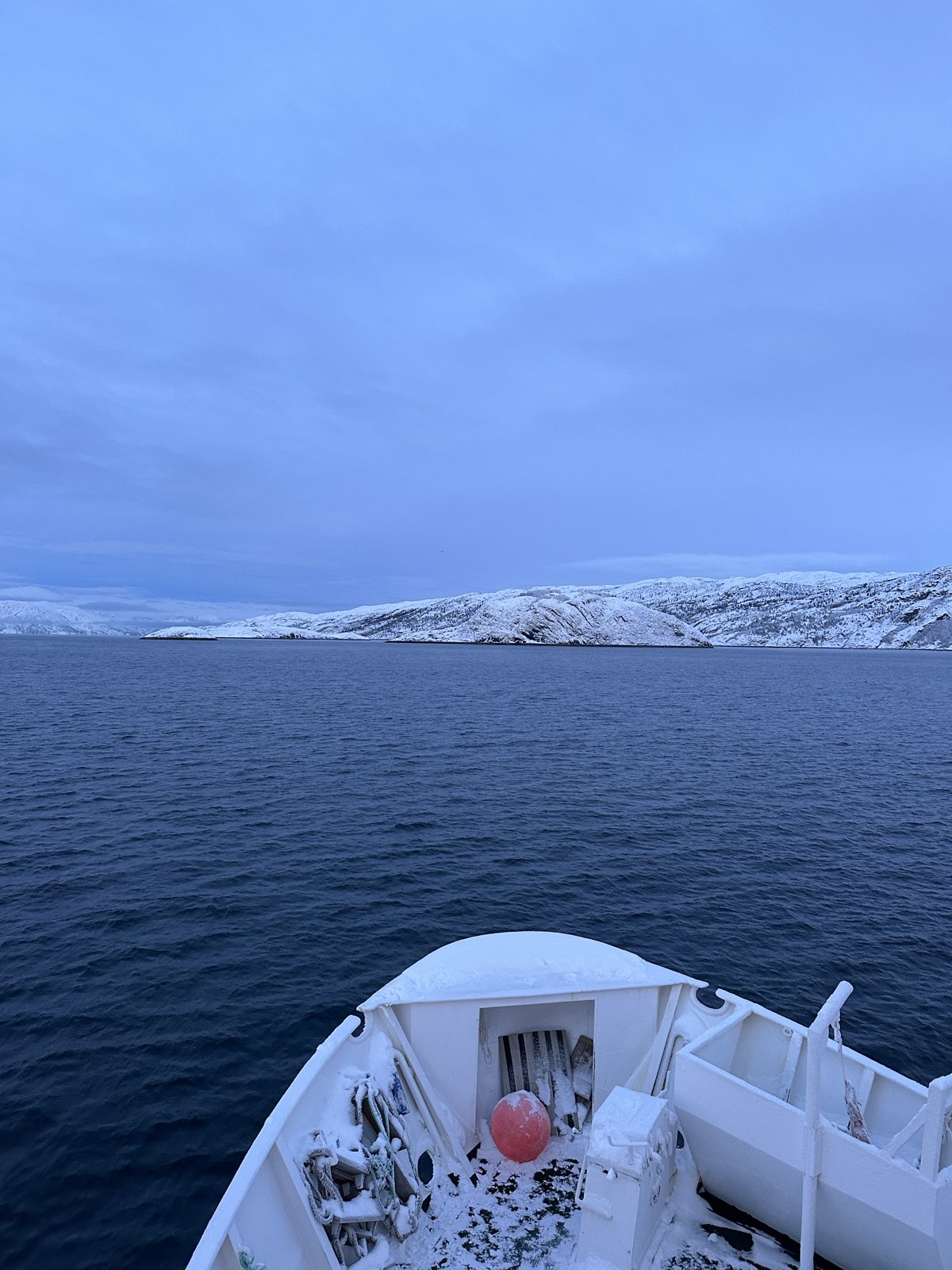
You stand at the rail in every layer you own, and the light never really rises, and then somebody points.
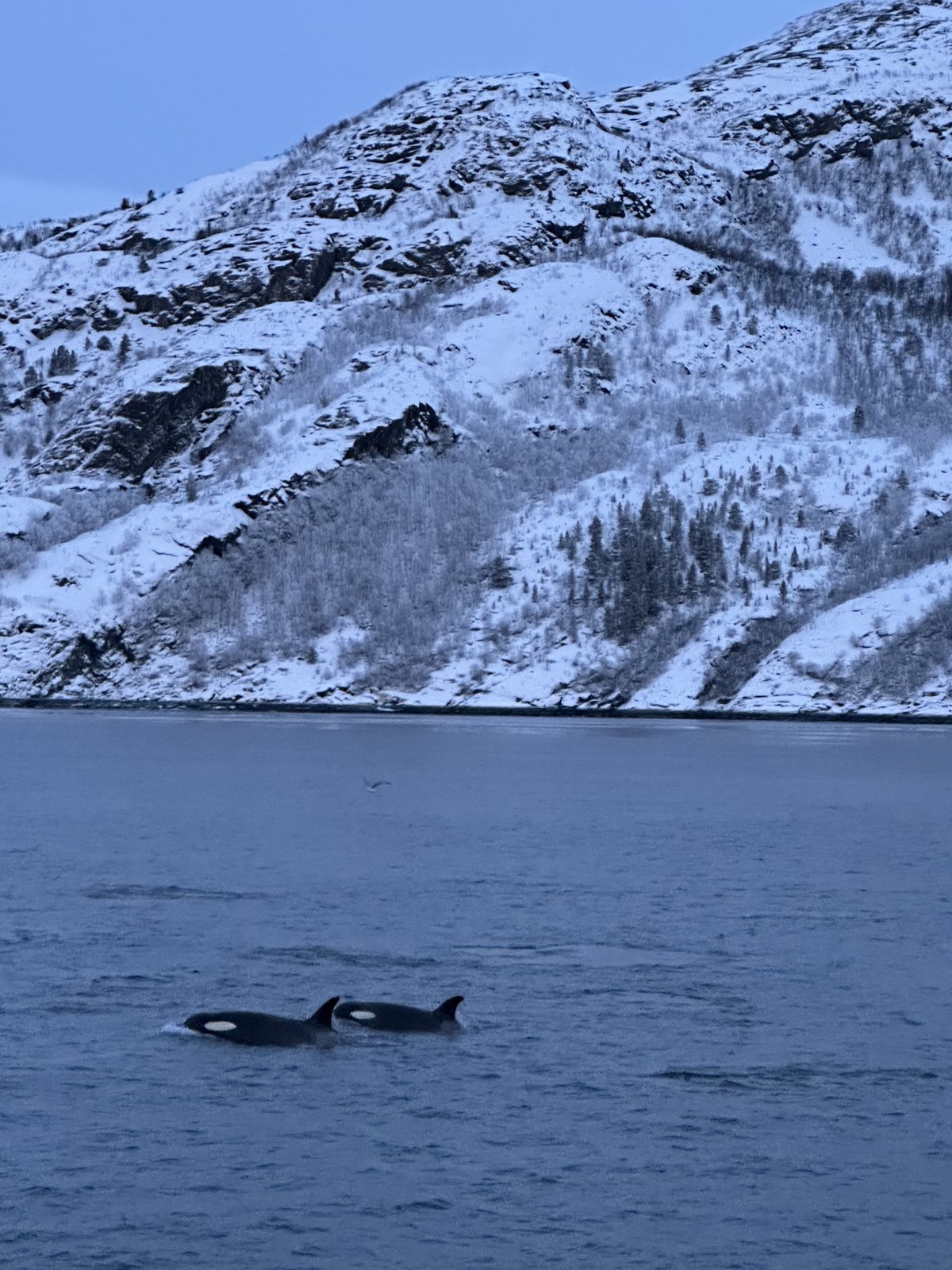
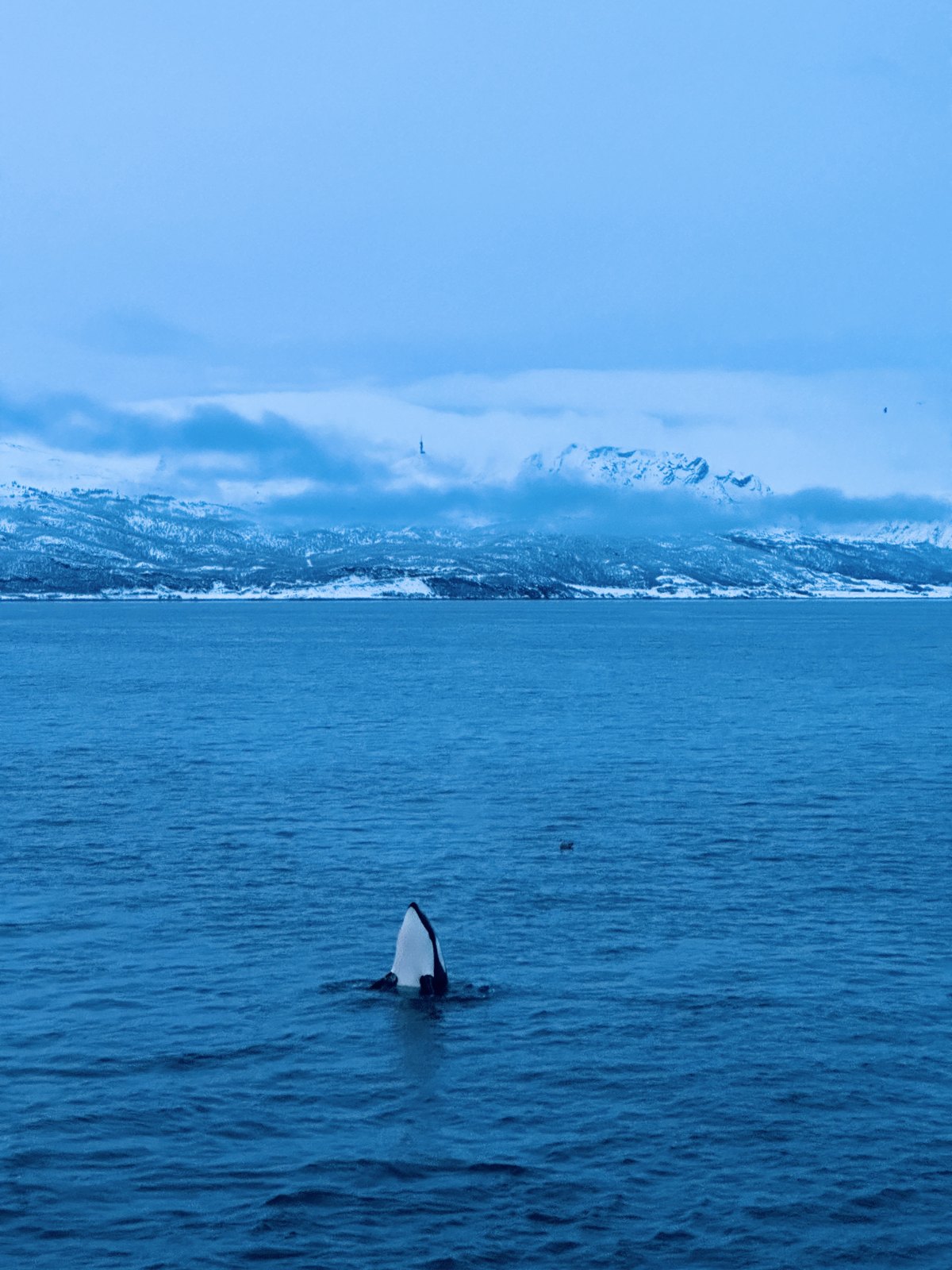
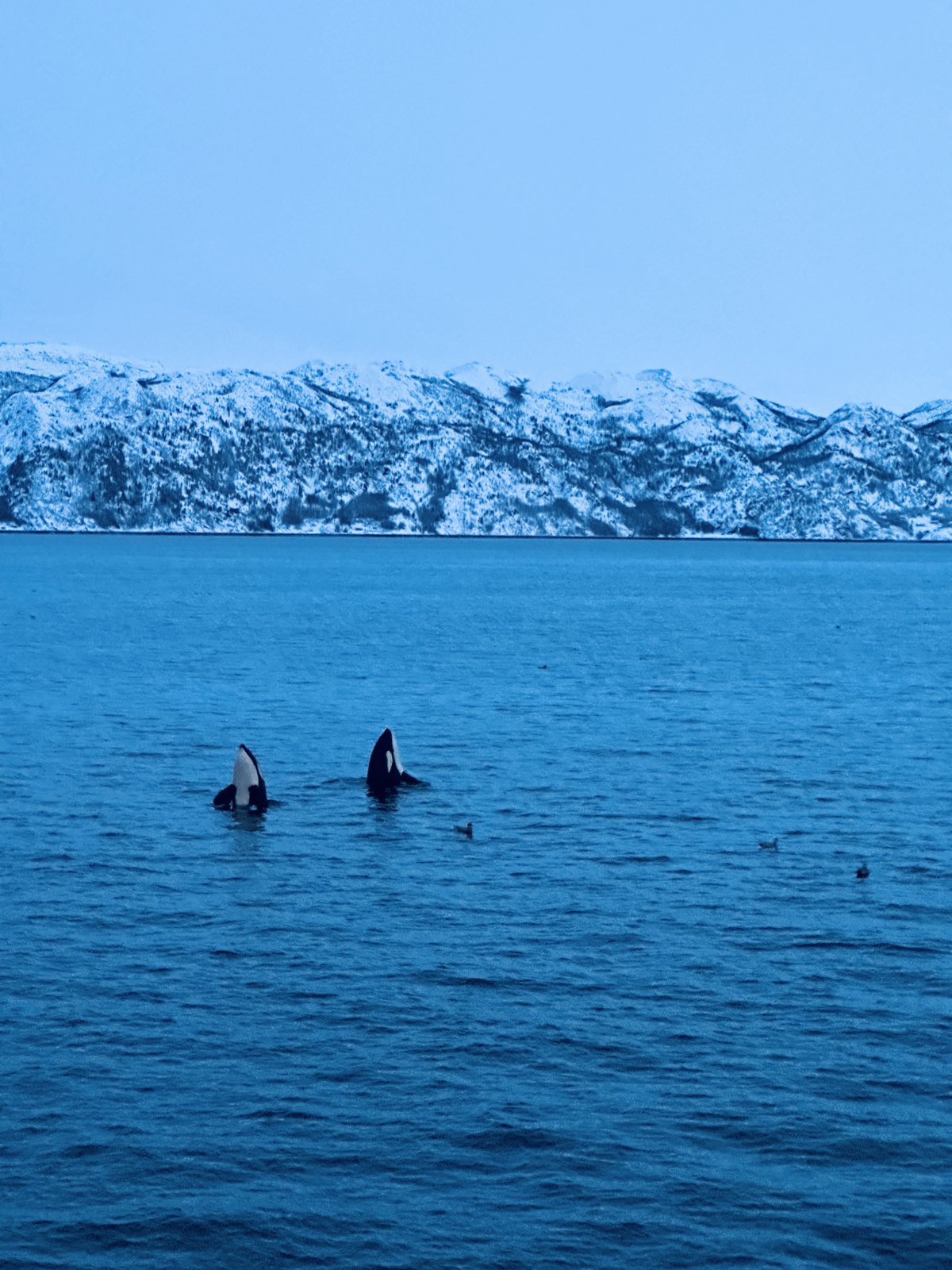
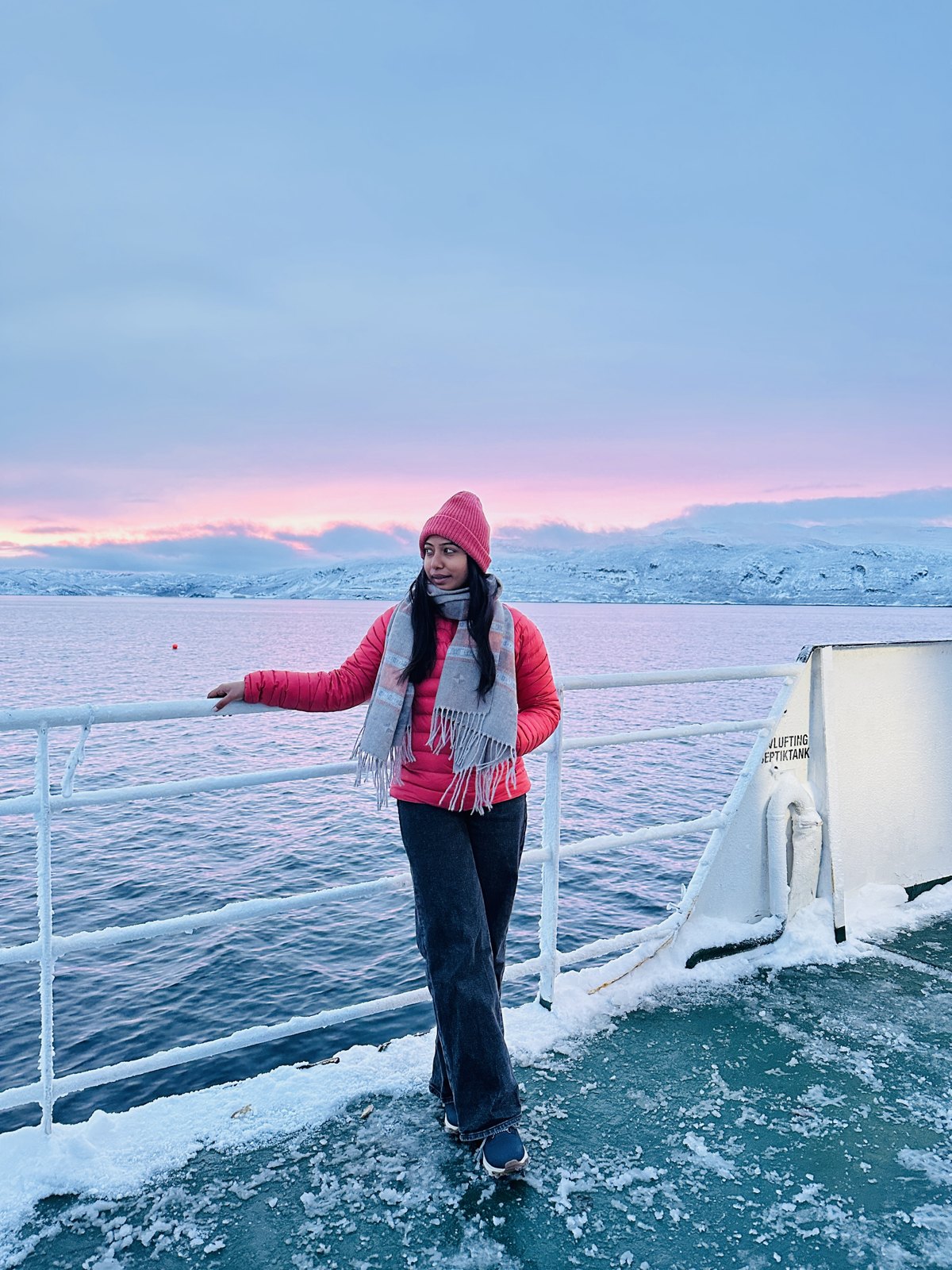
If you are going to Alta in winter, look for a whale trip while you are there. The season and the exact fjord move around from year to year — the herring decide, not the operators — so ask locally when you arrive rather than booking blind months ahead.
North Cape, in the dark — and this one we would think twice about
From Alta it is about 240 kilometres to Nordkapp, the cliff at the top of Europe. In summer it is a scenic drive. In January, in the dark, it was the most frightening and most adventurous thing we have ever done in a car, and I am not sure we would do it again.
Everything was white. Not the road white and the verges white — everything. Snow over the tarmac, snow over the markings, snow banked up on both sides, and then a snowstorm on top of it, with wind coming across hard enough to move the car. For long stretches we genuinely could not tell where the road ended and the land began, or which side of us was the sea. You drive on the poles and the reflectors and a lot of hope.
And it is empty. At one point we went a very long time without passing another vehicle in either direction — no lights ahead, no lights behind, no phone signal worth anything, and a real conversation in the car about what would actually happen if we went off the edge. We kept going because we were already in it and turning round felt no safer than carrying on.
We made it, obviously. We stood at 71° north in a gale with the hall lit up behind us and it was extraordinary. But I want to be honest about the drive rather than pretend it was charming, because looking back at it now it frightens me more than it did at the time. In the moment you just drive. Afterwards you think about it properly.
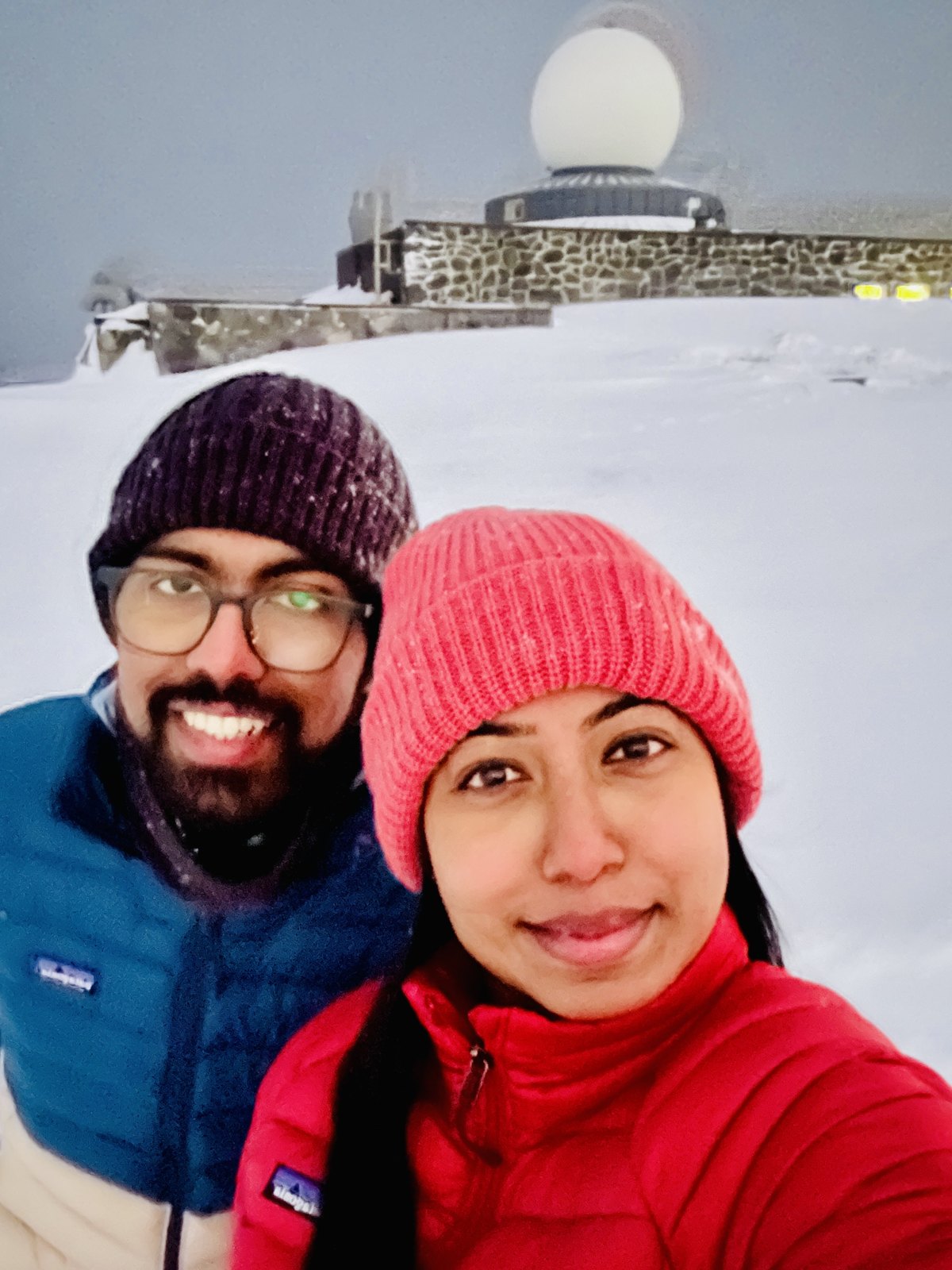
There is no sunset to watch in January and no midnight sun either — you go for the strangeness of it. A snow-blown plateau, a hall on the cliff edge, a globe monument buried to its base, and a sea somewhere below in the dark that does not stop until the ice.
Alta itself
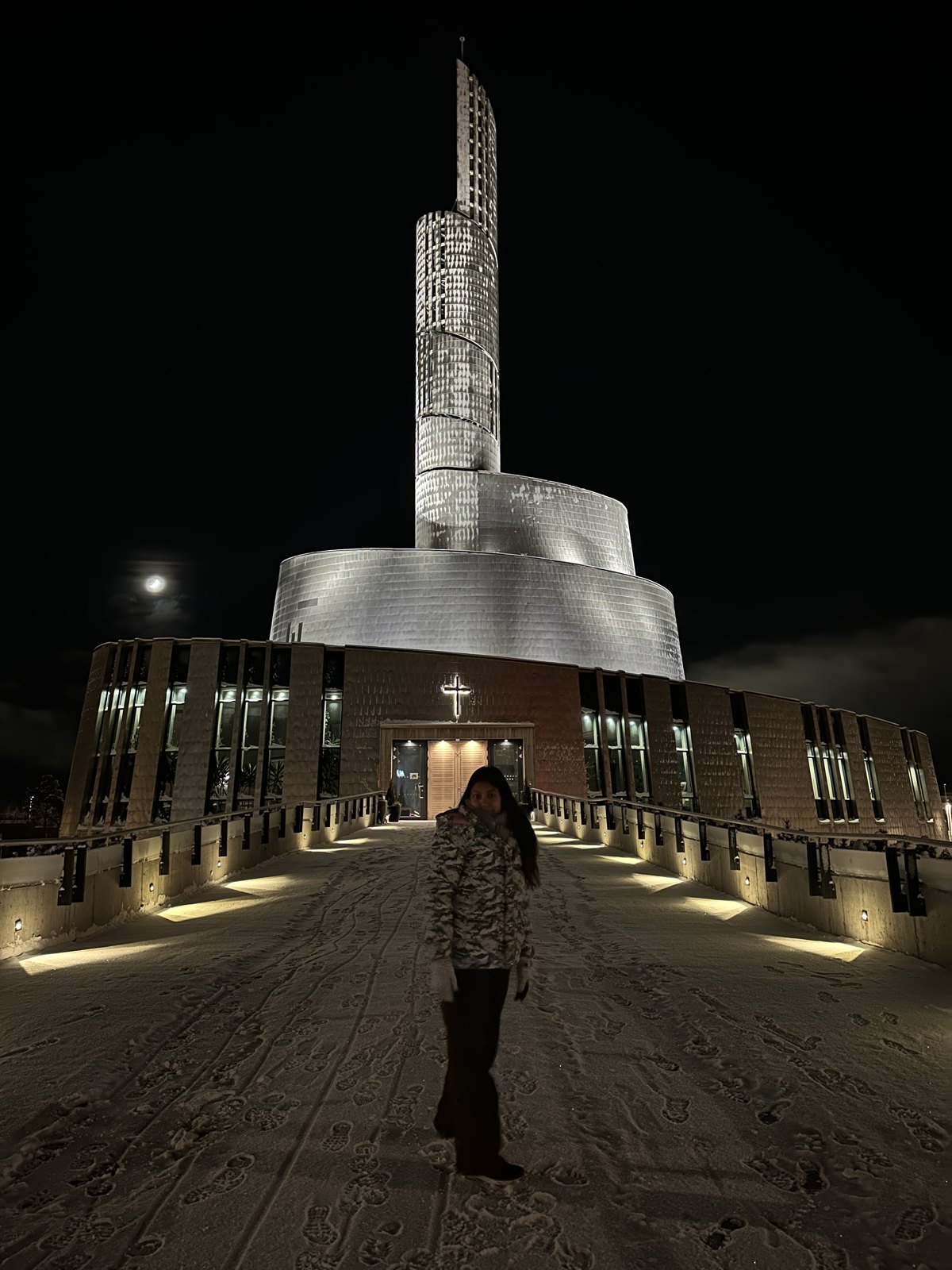
The town is small, functional and friendly, and it has one genuinely lovely building: the Northern Lights Cathedral, clad in titanium and twisted into a spiral so that it catches whatever light there is.
The other thing to do in daylight — such as it is — is the Alta Museum at Hjemmeluft, which exists because of the rock carvings: thousands of figures pecked into the coastal rock between about 5,000 and 2,000 BC, and Norway’s first UNESCO World Heritage site. Be warned that in winter the outdoor carvings are under snow; the indoor exhibition is open and worth an hour.
The night he turned thirty
The night of the sixth, running into his birthday on the seventh, was the one.
Everything before it had been beautiful — arcs, bands, curtains, the corona overhead. That night it did something else entirely. It came out at full strength and it danced: not drifting, not fading in and out, but whipping across the sky in folds, brightening and collapsing and rebuilding, fast enough that you could not follow one part of it without losing another.
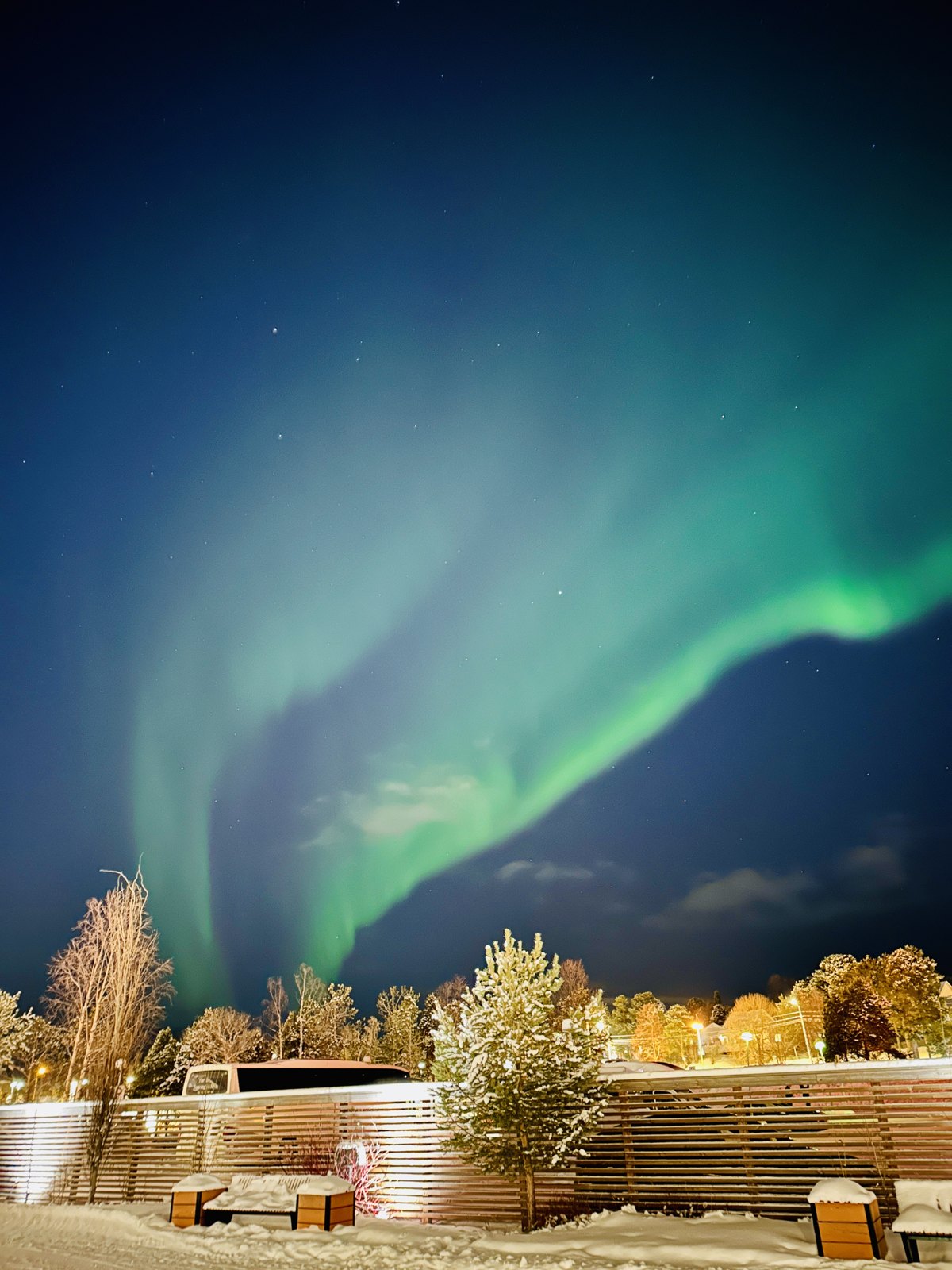
We have both looked back at the photographs since and they do not come close. They are lovely photographs and they are the wrong medium entirely — a still image of an aurora is like a still image of a piece of music. What was in front of us was movement and speed and scale, and thirty seconds of it was worth the whole trip.
So: he turned thirty standing in the snow at seventy degrees north, in silence, watching the sky go completely mad. He is not going to get a better one.
What we would do differently
We would stay a night further out. We saw the aurora from the doorstep, but the darkest skies are away from Alta’s lights, and there are cabins and wilderness camps twenty minutes out that would have made the faint nights better.
We would book the whale trip first and build the days around it. It turned out to be the best daytime thing we did and we nearly did not do it.
We would give North Cape two possible days, and pick the calmer one. We drove it in a snowstorm because it was the day we had. Having a spare day would have turned the scariest drive of our lives into an ordinary one.
We would not chase the lights by car. We saw people driving for hours looking for a gap in the cloud. Check the forecast, dress properly, walk outside every half hour, and be patient. Alta rewards patience.
Where the money goes
Norway is expensive and there is no getting around it. Eat breakfast and lunch out of a supermarket, cook in the cabin, and save the restaurant meals for the ones you actually want.
The flights are the other big line. Alta is served via Oslo or Tromsø and it is not cheap in high season — and Christmas and New Year is high season.
A hire car pays for itself instantly. It replaces every aurora tour you would otherwise book, and up here that is the single biggest saving available. Take the winter tyres and the extra insurance, and get one with heated seats.
What we spent money on and would again: the whale boat, the fuel to North Cape, and thermal layers we still use.
Practical summary
Go between late September and late March, and if you want the polar-night version, December and January. Late January onwards you get aurora and some daylight, which is the easier trip.
Give it at least three or four nights, and a week if you can. Cloud is the only thing that beats you, and the more nights you have the better your odds — and the one that finally performs may well be near the end.
Dress for standing still, not for walking. Thermal base layer, fleece, down, a proper windproof shell, snow boots rated well below freezing, two pairs of gloves. You will be motionless in the snow for an hour at a time.
Your phone battery will die in minutes. Keep it inside your jacket between shots, take a power bank, and use night mode with something solid to lean on — every photograph in this post is a phone.
Watch the forecast, not the hype. Check the aurora forecast for activity and the ordinary weather forecast for cloud, and trust the second one more. A clear sky with weak activity beats a big storm behind cloud every time.
Take the road warnings seriously, and check the Nordkapp road before you set off. The main roads are ploughed and drivable. The last stretch across the plateau to North Cape is not the same thing: it closes in bad weather, it is sometimes driven in convoy behind a snowplough at set times, and in a storm it is genuinely dangerous. Check status on the Norwegian roads service that morning, take the convoy if there is one, and if it is blowing, do not go — the cape will still be there tomorrow.
And go outside at 2am. The best hour is almost always the one you were going to sleep through.
A week at seventy degrees north: a sky that finally danced on the right night, a pod of orcas in a frozen fjord, and the top of Europe in the dark. If somebody in your life turns thirty and asks for the northern lights, take them to Alta.


Leave a Reply