Eight days. Sixteen hundred kilometres, near enough, from the Red River delta to the edge of the Mekong. Three flights, two day trips, and a great deal of walking in between.
We knew going in that eight days is not enough for Vietnam. It is a country people give a month to and still leave with a list. But eight days was what the shape of the trip allowed, and the honest question is not whether we saw it properly — we did not — but whether we spent the eight well.
Mostly. There is one day we would take back and give to somewhere else, and we will tell you exactly which.
This is part three of six. Here is the north, the centre and the south, what it cost, and what we got wrong.
The route
| Stop | Nights | Getting there |
|---|---|---|
| Hanoi | 3 | Flight from Luang Prabang |
| — Ninh Binh | day trip | About 2h each way by road |
| — Ha Long Bay | day trip | About 2h 30m each way by road |
| Hoi An | 2 | Flight Hanoi to Da Nang, then 45 min by road |
| Da Nang | 1 | 45 min by road from Hoi An |
| Ho Chi Minh City | 2 | Flight from Da Nang, about 1h 20m |
| Onward to Cambodia | — | Flight from Ho Chi Minh City |
Hanoi as a base for the north is the structural decision worth copying. Both of the famous northern sights are day trips from the city, so you unpack once and let the driving happen around you. After that it is a straight run south by air.
We went north to south, which we would recommend. The country gets warmer, louder and easier as you go, and finishing in Saigon on New Year’s Eve was an accident of timing we would now engineer on purpose.
Ninh Binh: the day trip nobody puts on the shortlist
Most people land in Hanoi and go straight to Ha Long. We went south first, to Ninh Binh, and it was the best day of the week.
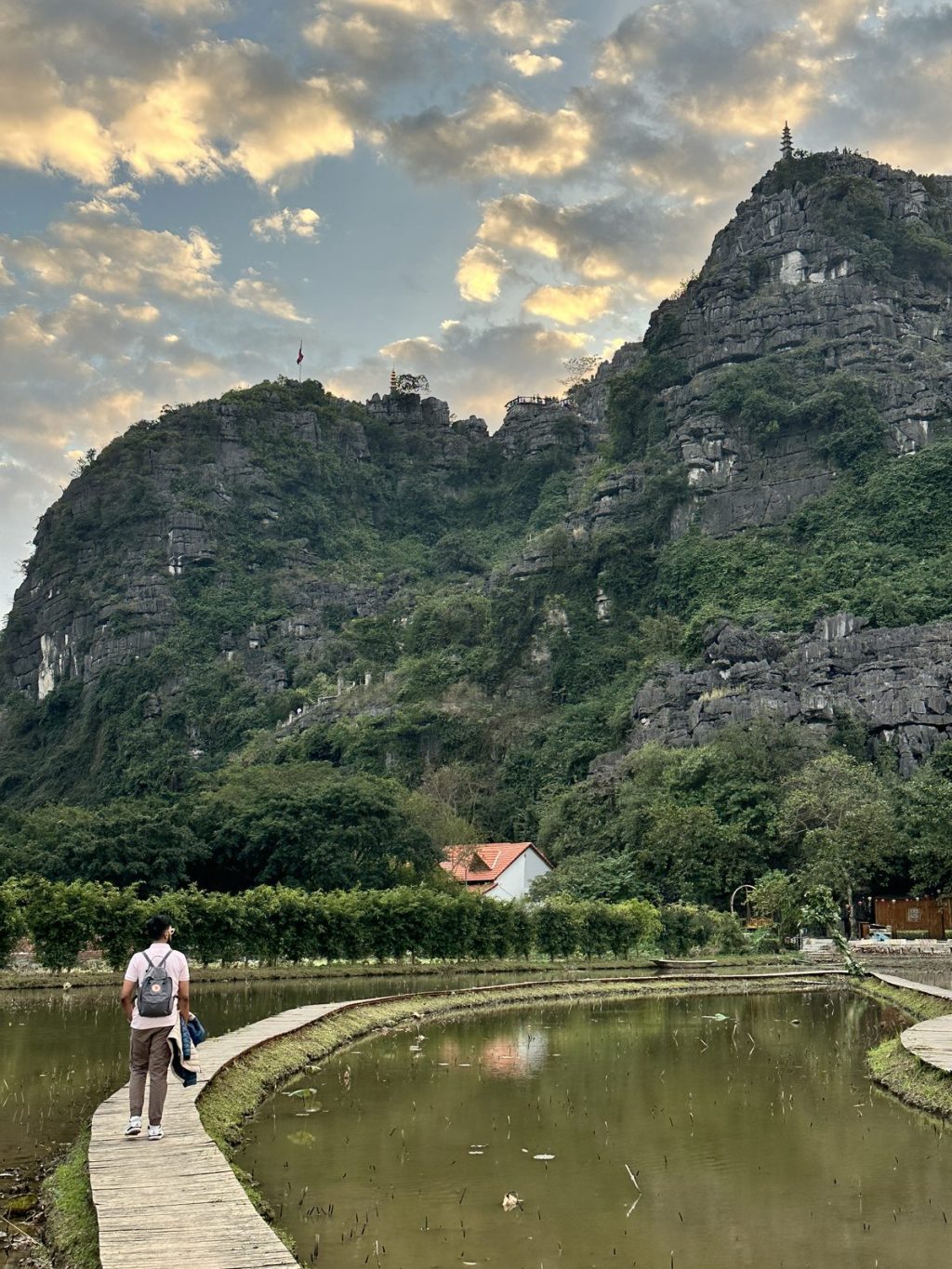
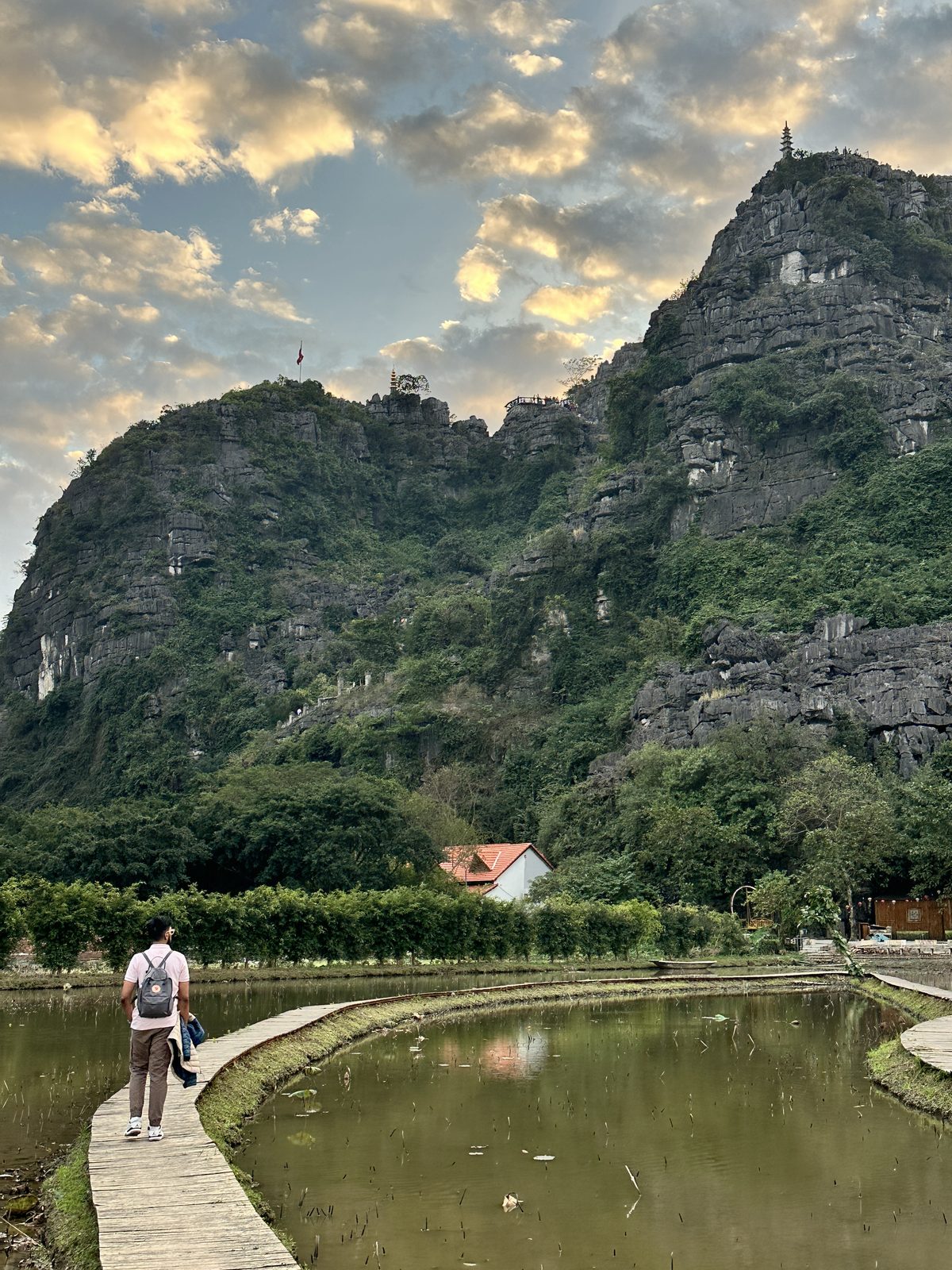
It gets called the inland Ha Long Bay, which undersells it. The same limestone towers, but rising out of rice paddies and slow green rivers rather than the sea, and with a fraction of the boats. You sit low in a little metal rowing boat and someone rows you for two hours through caves and under cliffs, and for long stretches there is nobody else in sight at all.

Then, at the end of the afternoon, Hang Mua — a few hundred uneven stone steps up a karst to a dragon coiled along the ridge, and a view back down over the whole valley. Go for the last hour of light. The steps are steep and there is no shade, which is exactly why most people do them at midday and regret it.
If you take one thing from this post: if you only have time for one of the two northern day trips, do this one.
Ha Long Bay: the day we would take back
We did Ha Long the next day, and this is the part of the week we got wrong.
The bay is not overhyped as a view. Nearly two thousand limestone islands standing out of jade water, and when the light goes late in the afternoon it turns to silhouette and becomes genuinely one of the great sights in Asia.

But the day of it was not our kind of day. The cruise fleet moves between the same handful of caves and swimming stops in a loose convoy, and at every one of them you are queueing behind three other boats. It is heavily, professionally touristed in a way that nothing else we did in Vietnam was, and by mid-afternoon we had rather stopped looking at the islands.
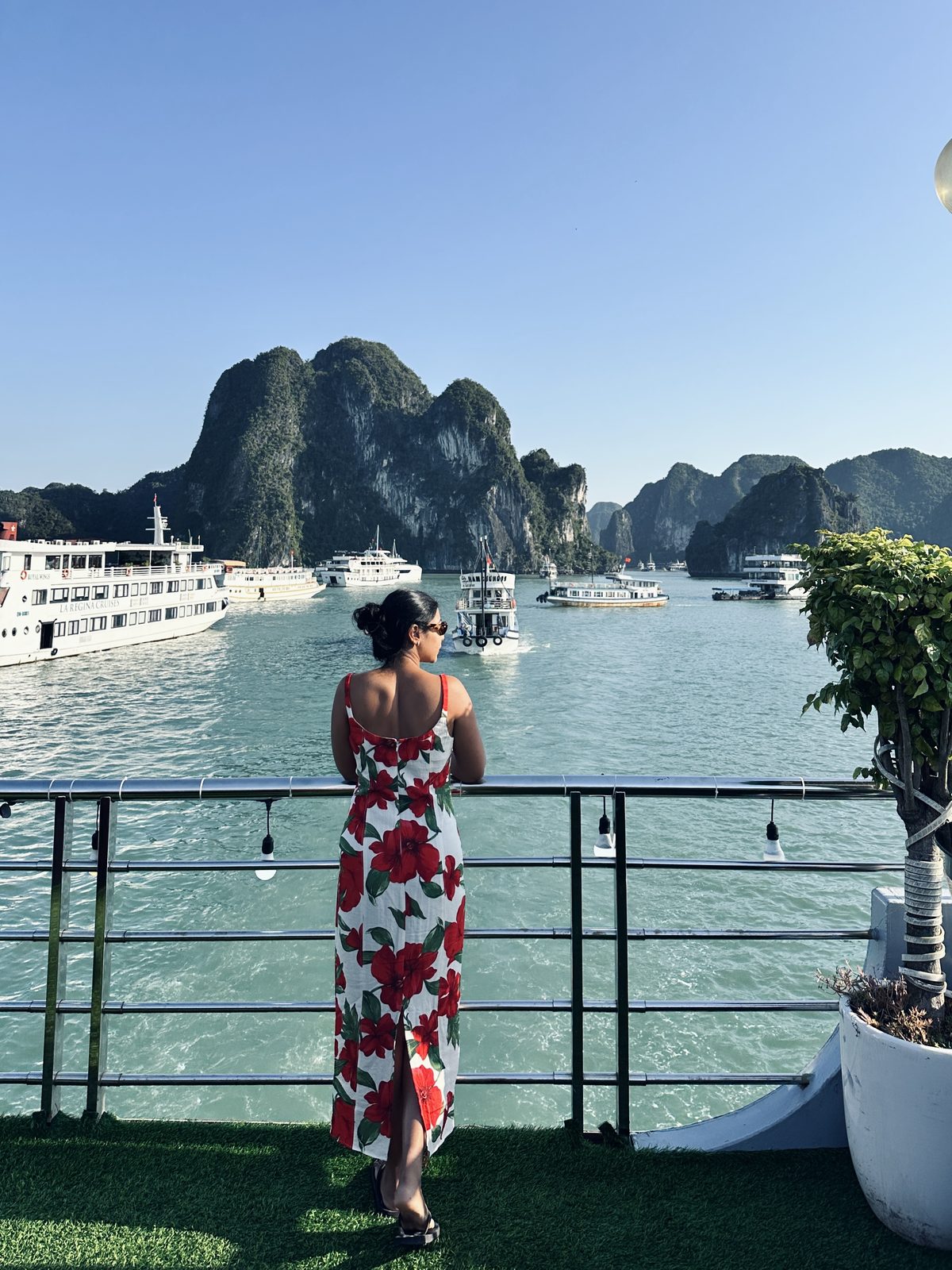
We would skip it. Not soften it, not do the overnight version instead — skip it, and put the day into Hoi An. Ninh Binh gives you the same landscape at a tenth of the traffic, and once you have done one of them you have had the idea. If your instinct is that a big organised boat day is not your sort of thing, trust the instinct. It was not ours.
Hanoi: the loudest place, and the best food
We came back into Hanoi in the dark each evening and ate almost immediately, which turned out to be the right way to use that city.
The Michelin thing
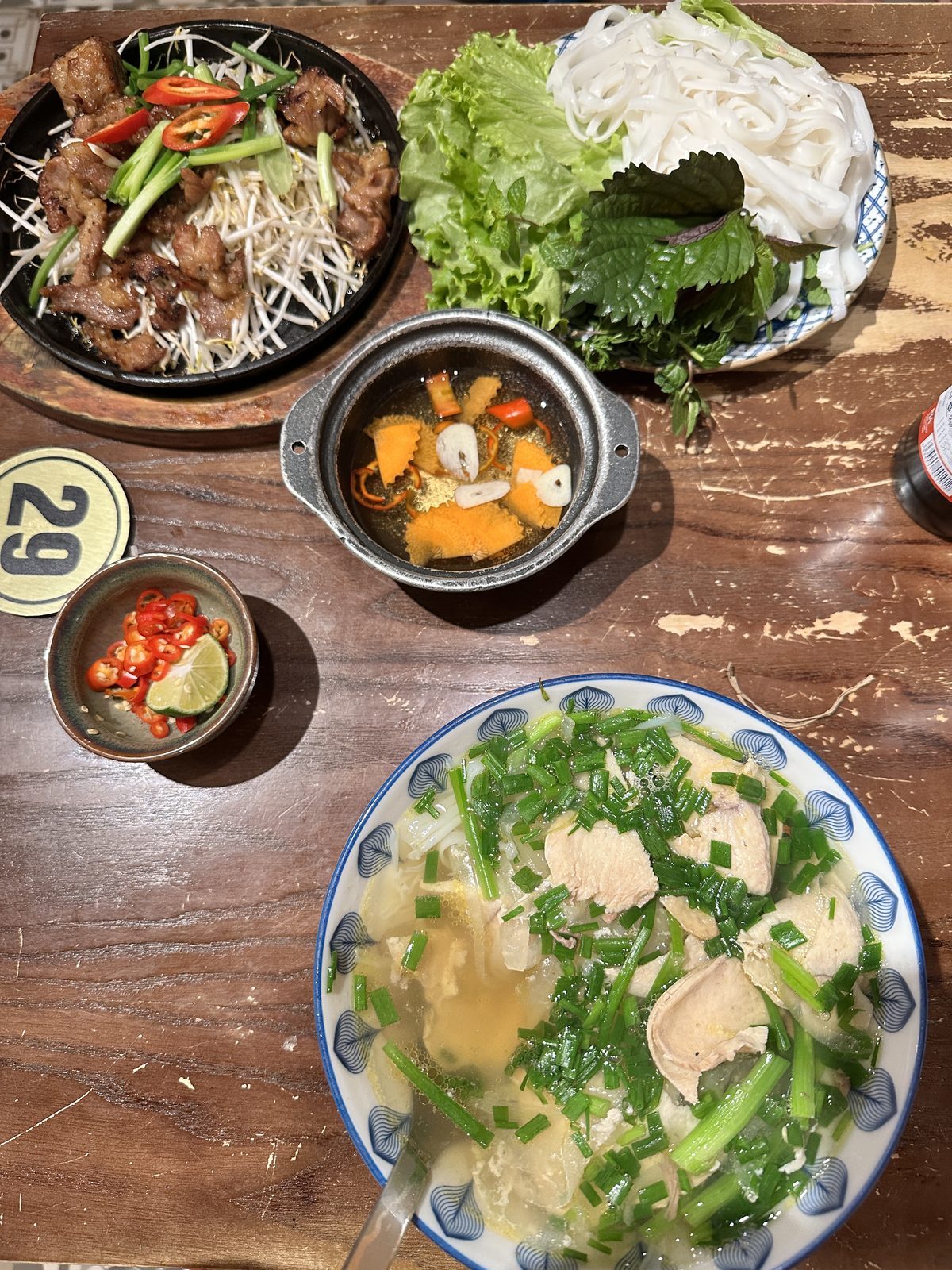
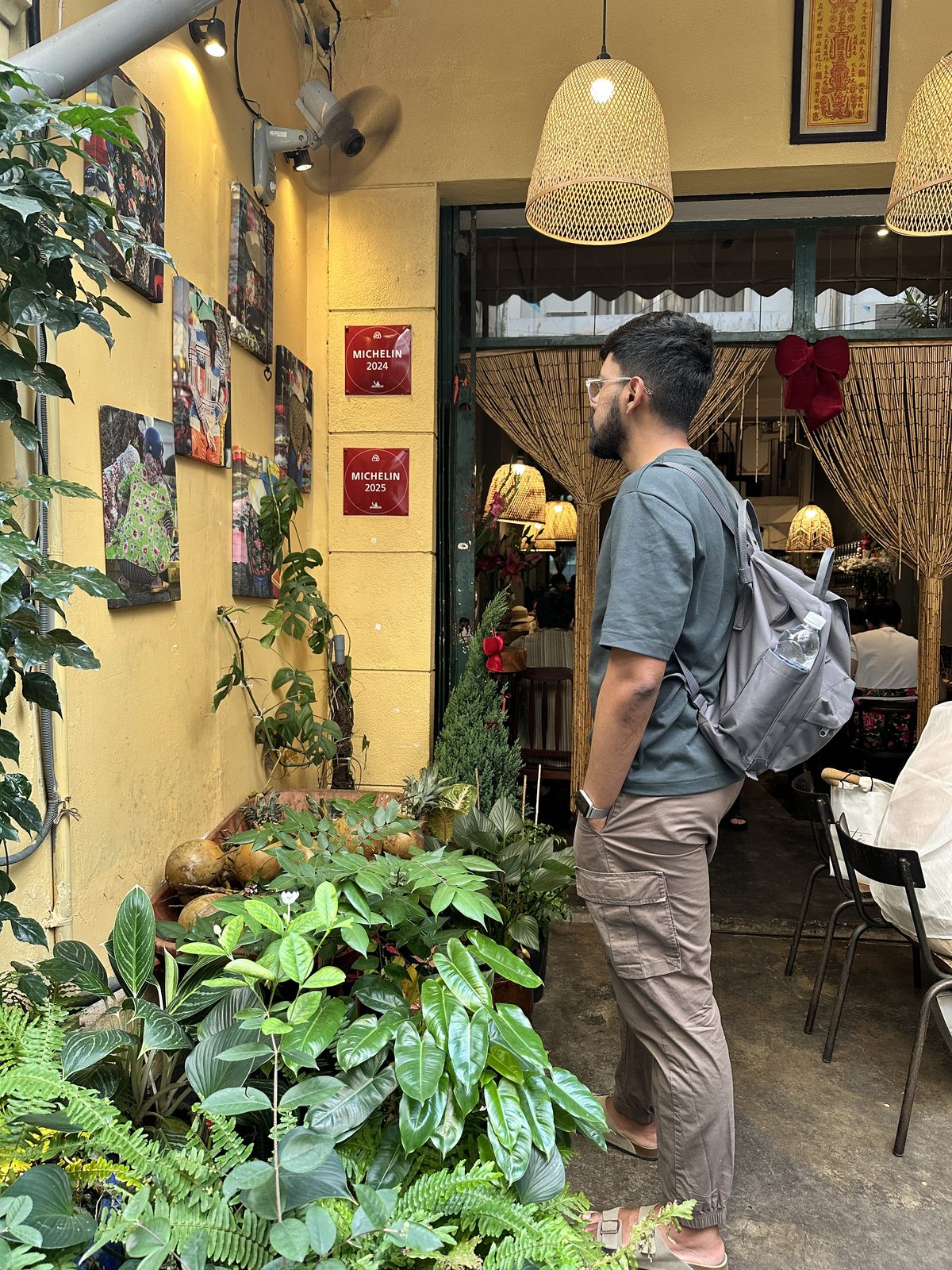
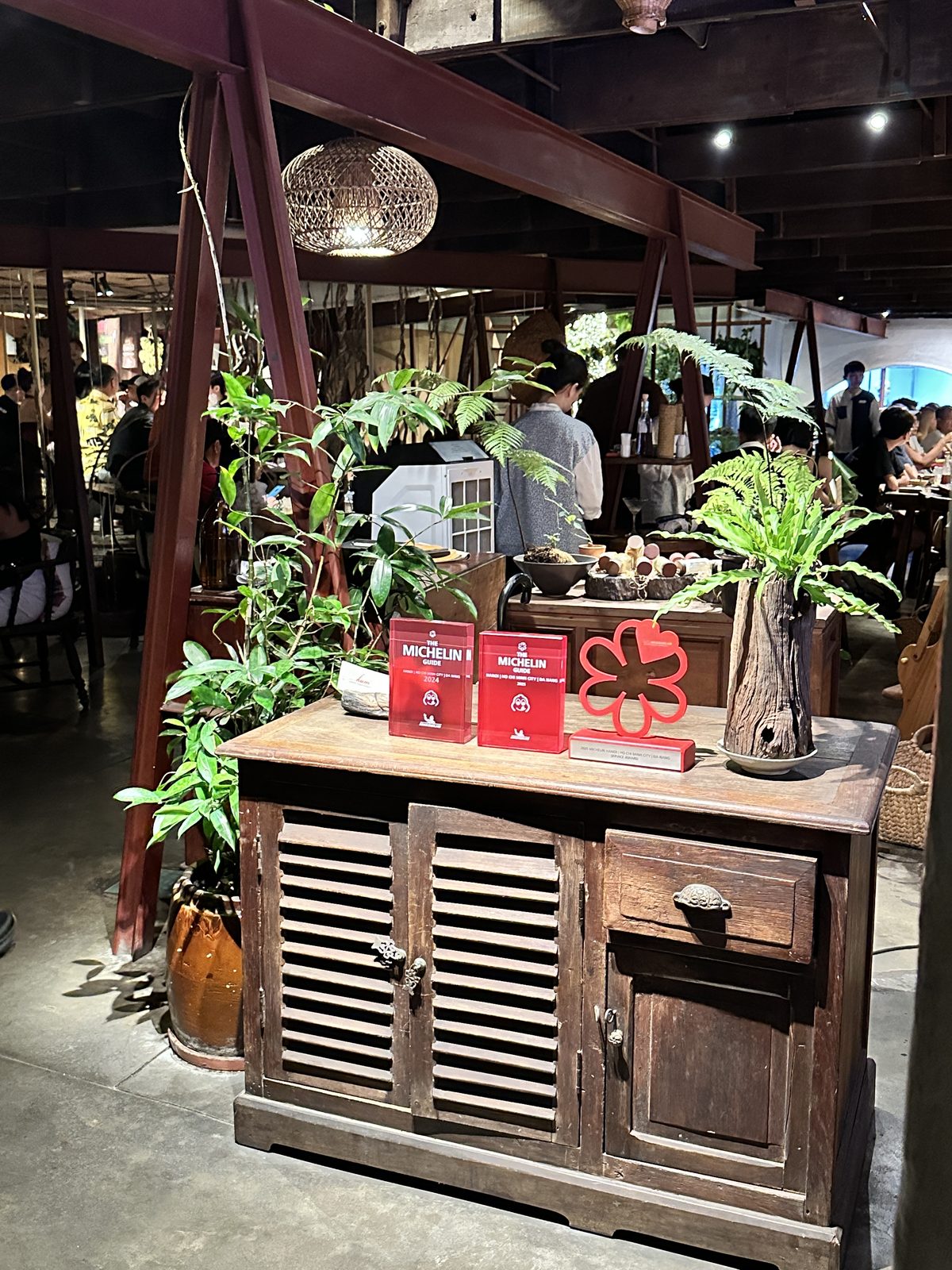
We ate at Luk Lak, just south of Hoan Kiem, with Michelin plaques for 2024 and 2025 mounted by the door. It cost us roughly what a mediocre pizza costs at home.

This became the theme of our week. In Vietnam we ate almost exclusively at Michelin Guide restaurants, deliberately, and it barely touched the budget.
A note on what that actually means, because it matters: a red plaque by the door is a Guide listing, not a star. Vietnam has very few starred restaurants. What it has, in quantity, is Guide-selected and Bib Gourmand places — small, often family-run, frequently serving one thing extremely well. That is precisely why they are cheap. If you have been avoiding the guide-listed restaurants abroad because you assume they are the expensive option, in Vietnam that assumption costs you the best meals of your trip.
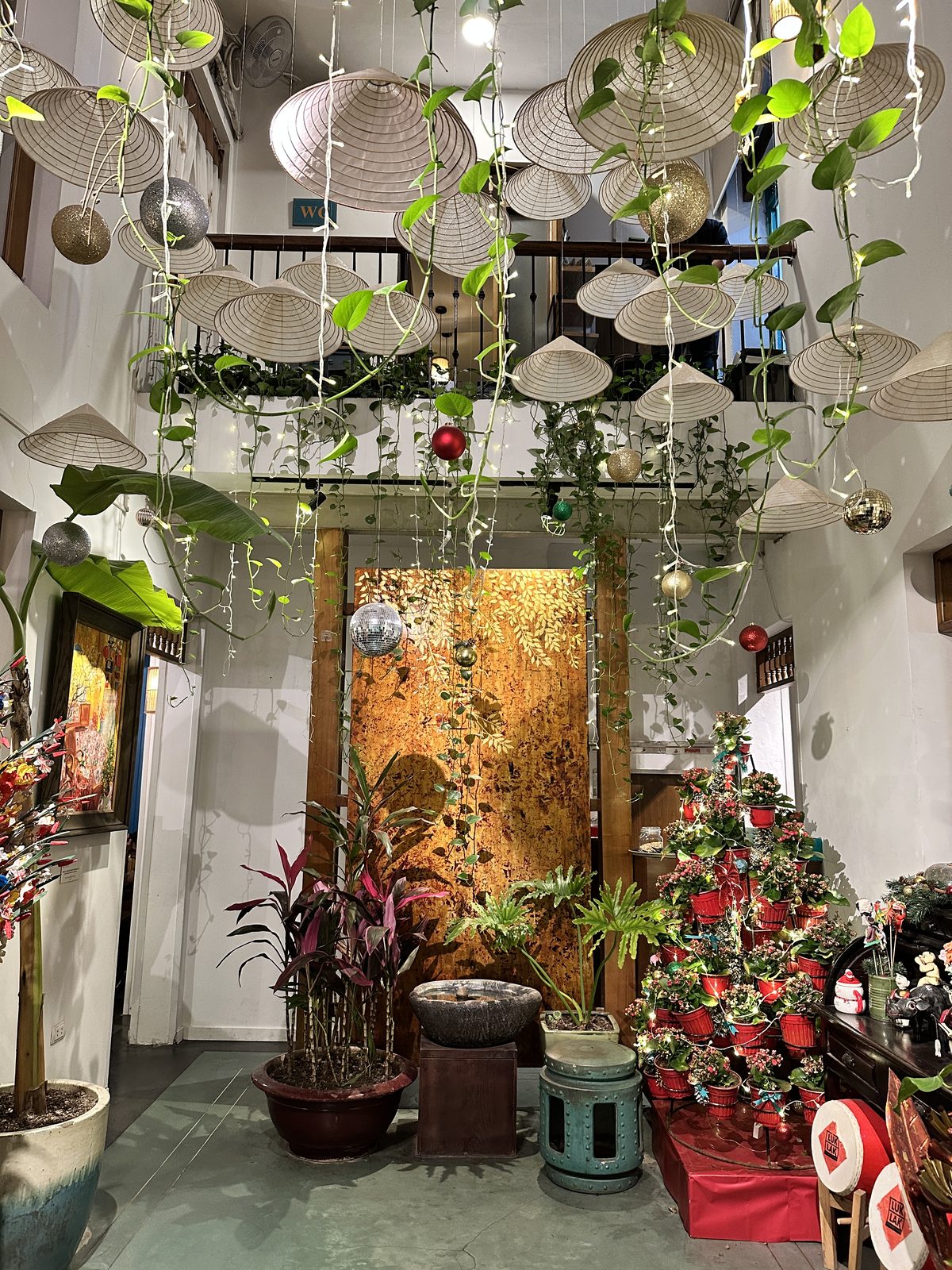
The lake, after dark
Then Hoan Kiem Lake at about ten at night, where a laser show runs out over the water with the Turtle Tower lit gold in the middle of it. We had walked down expecting a quiet circuit of a lake.
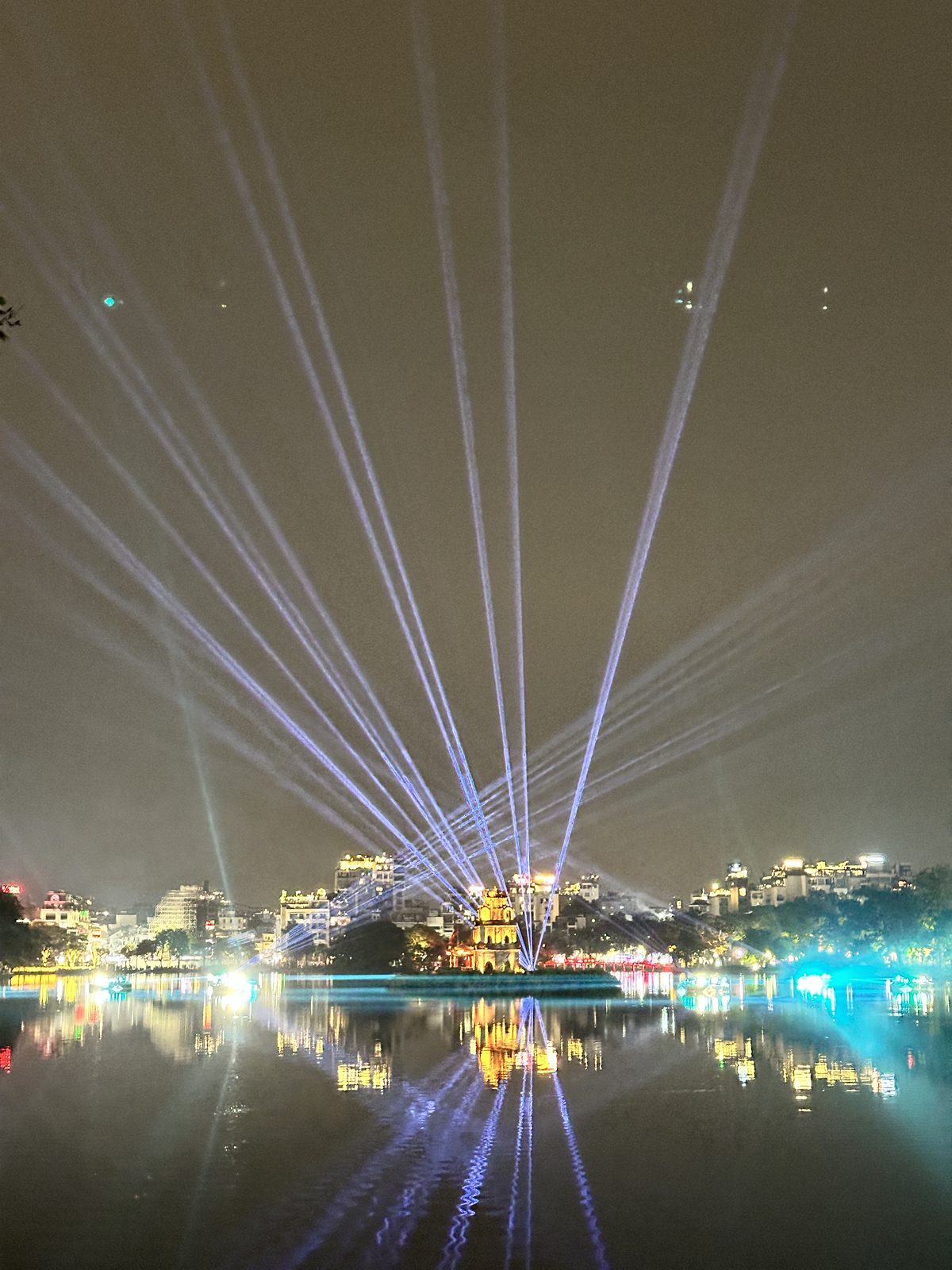
Practical: the Old Quarter is walkable and the traffic is the thing everyone warns you about. The technique is real and it works — walk at a slow, constant, entirely predictable pace and do not stop. The scooters flow around you. Stopping is what causes accidents.
Hoi An: the one we would give more days to
Hoi An has a reputation for being the prettiest town in Vietnam and a slight reputation for being a theme park. The first is true. The second we stopped believing after about an hour.
We fell for it, properly and a bit unexpectedly, and two nights was not enough.
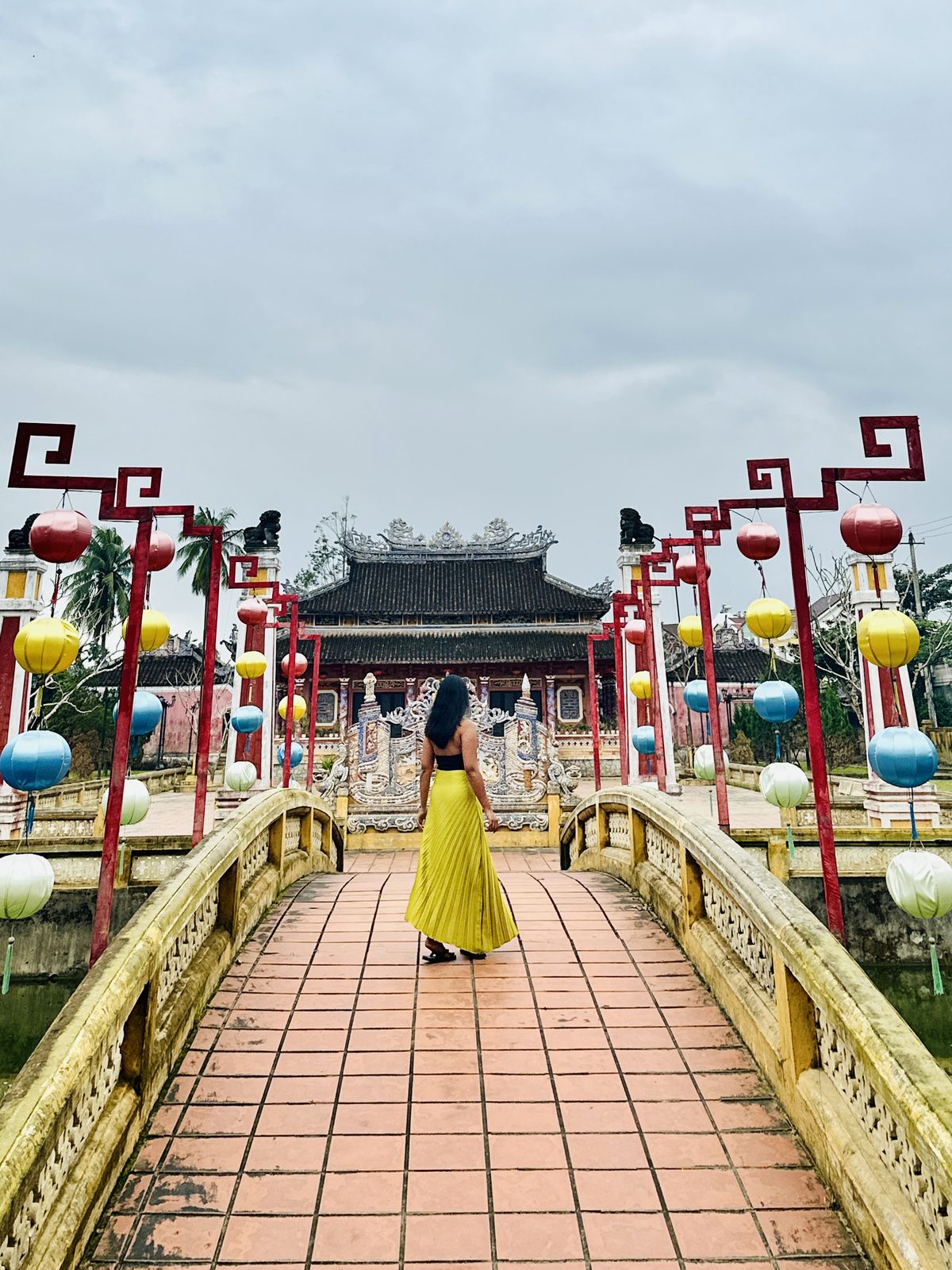
The coffee, and the reason to stay longer
What we did not anticipate is that the best thing about Hoi An is not a sight. It is that the town is built for sitting still.
The cafés are extraordinary — warm, wooden, first-floor rooms with windows open over the tiled roofs, and nobody minds at all how long you occupy a table. We spent an entire afternoon at one window with two egg coffees and a paperback, watching the roofs go gold, and it was the best hour of the month.
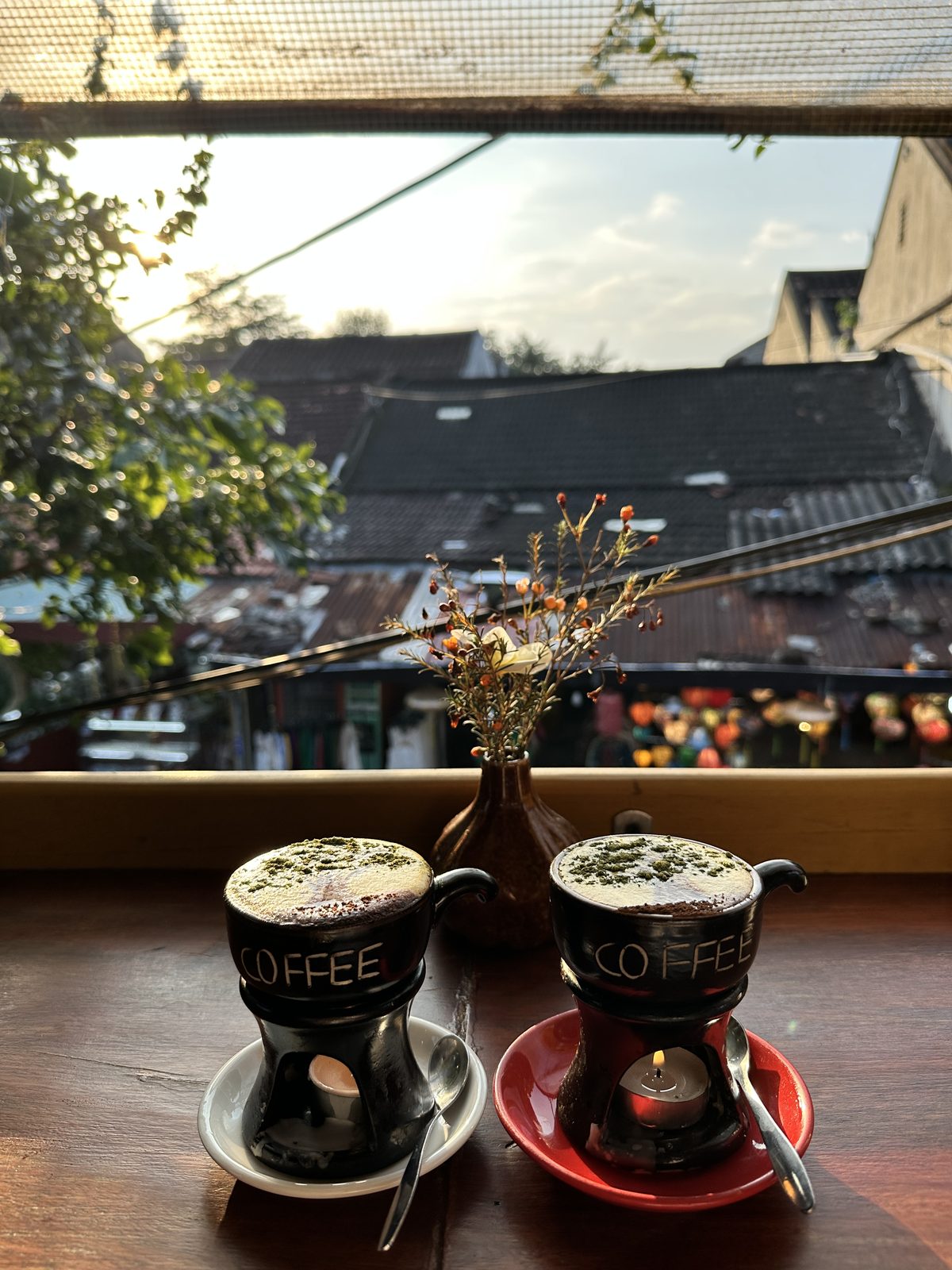
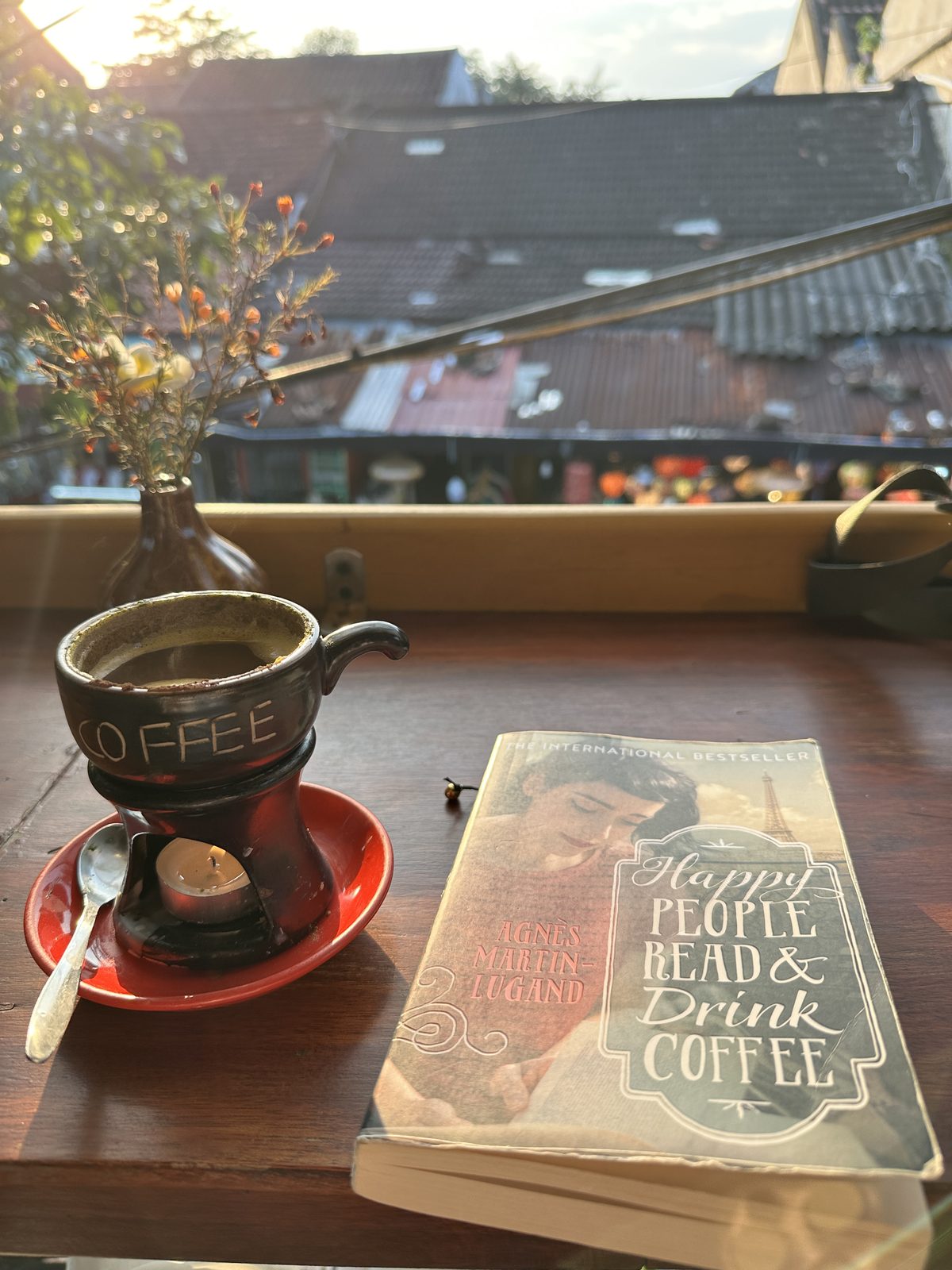
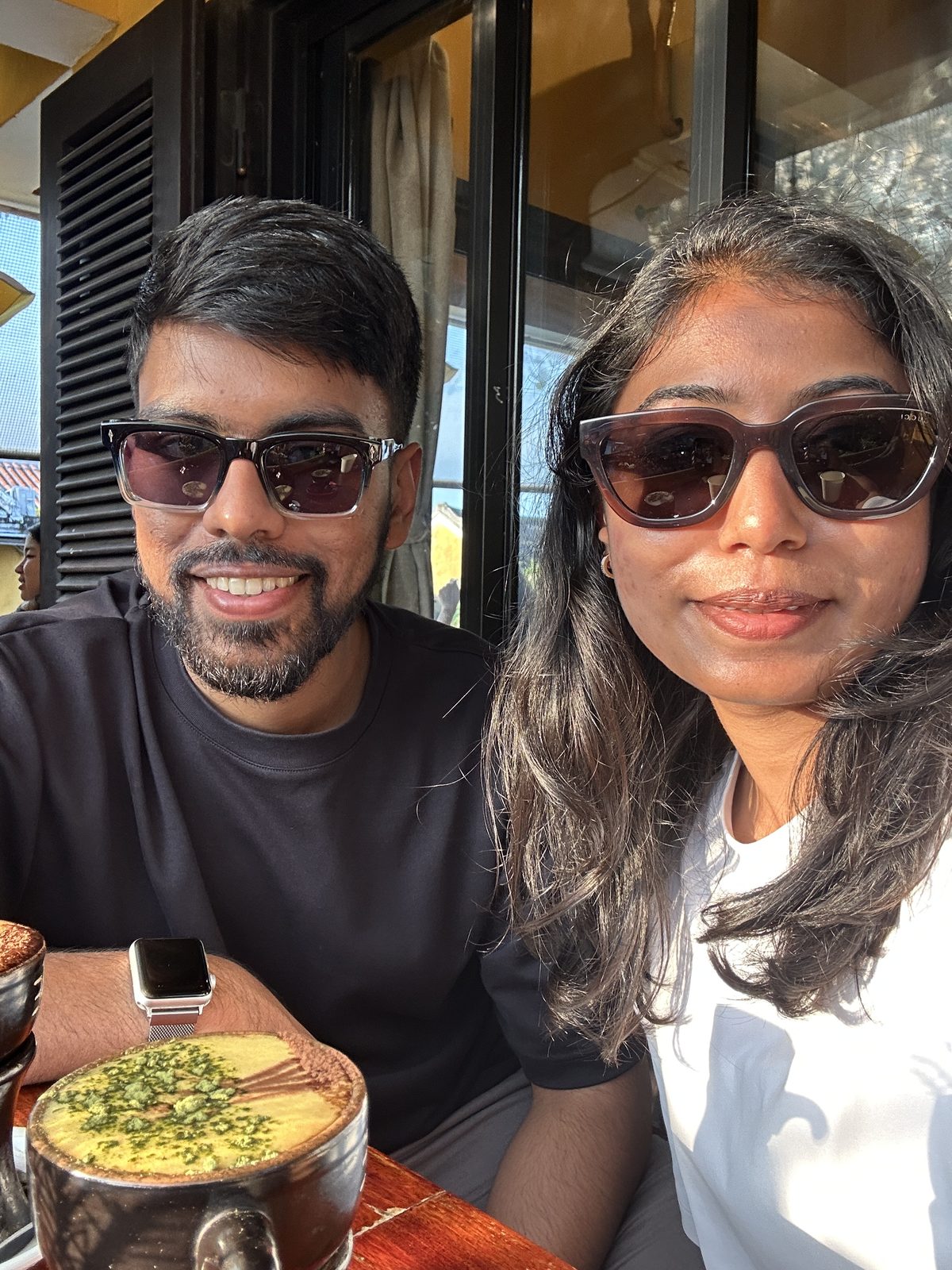
This is the argument for more days here rather than fewer. Hoi An is small — you can walk the whole ancient town in an afternoon — but that is the point. The pleasure is in repetition and in slowness: the same three streets at different hours, a long breakfast, a long coffee, an evening with no plan. It is the one town on the whole month-long route we would have happily stopped in for a week.
The river, at night
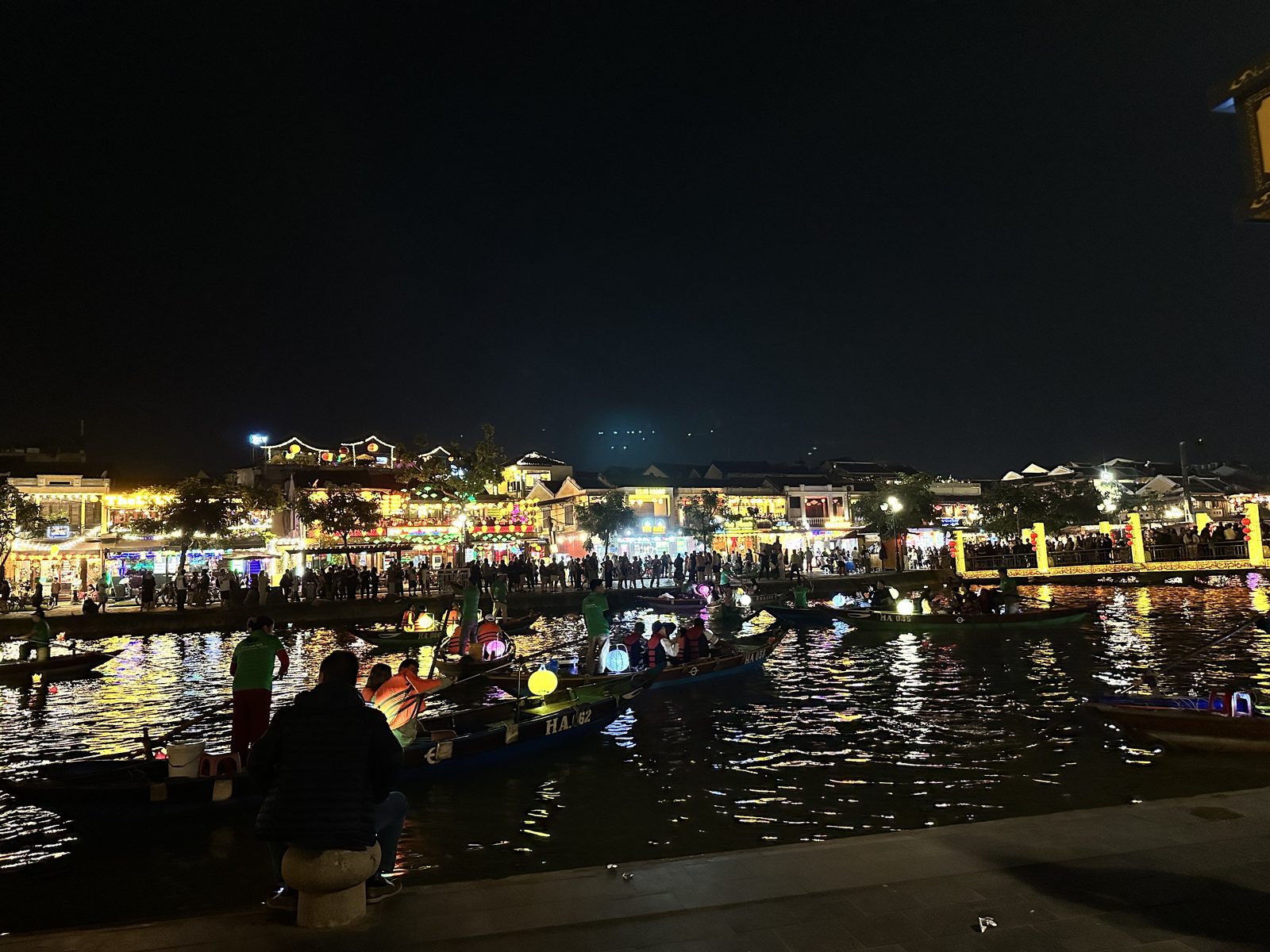
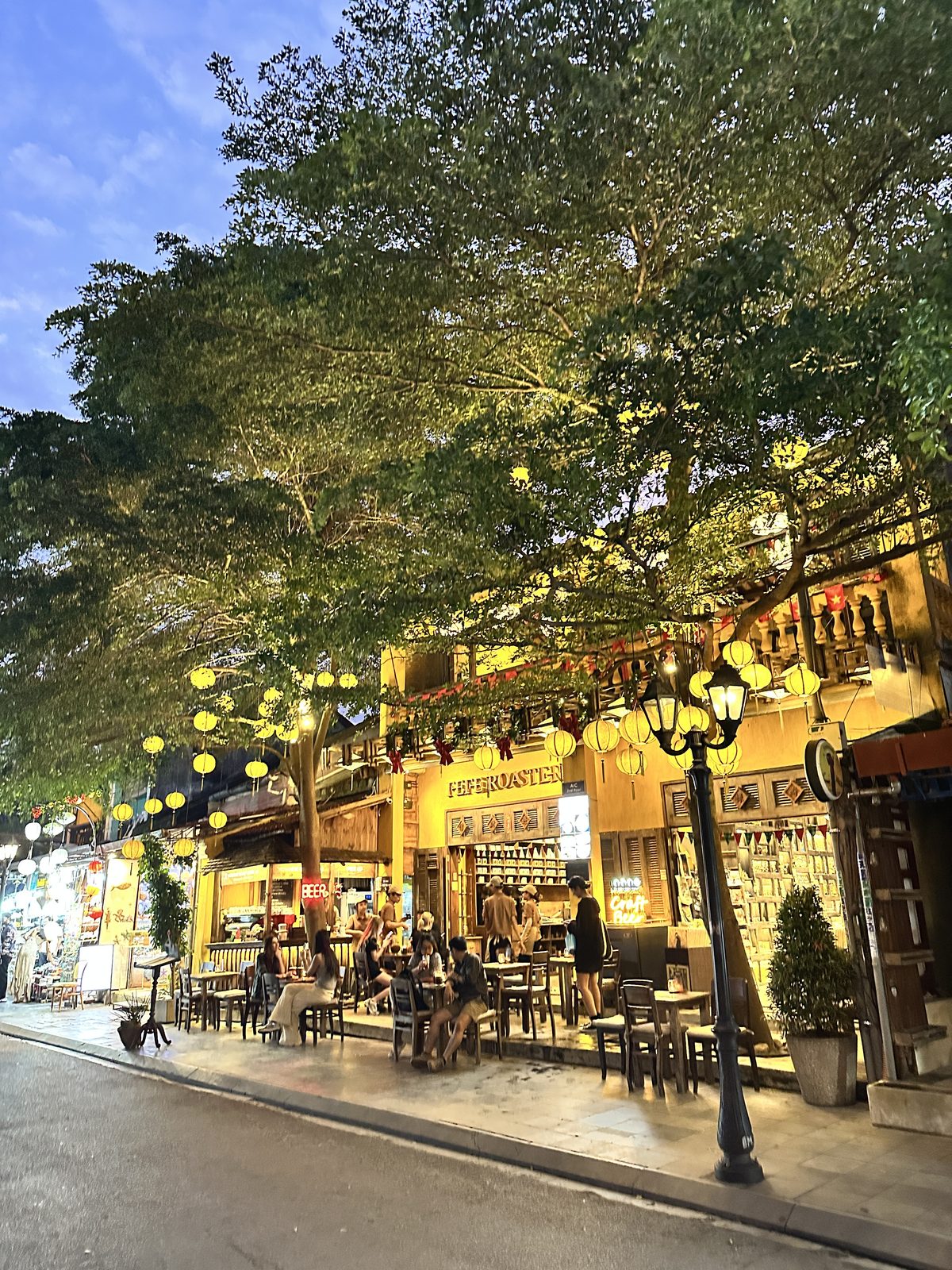
And then the Thu Bon after dark, which is the postcard and entirely lives up to it — lantern boats, the whole waterfront lit yellow, hundreds of people setting paper lanterns onto the water.

Da Nang: one night, one bowl
Da Nang got a single night on the way south, and we are not going to pretend we did it justice. We ate, we walked by the river, we went to bed.
But the meal was the best single dish of the eight days.
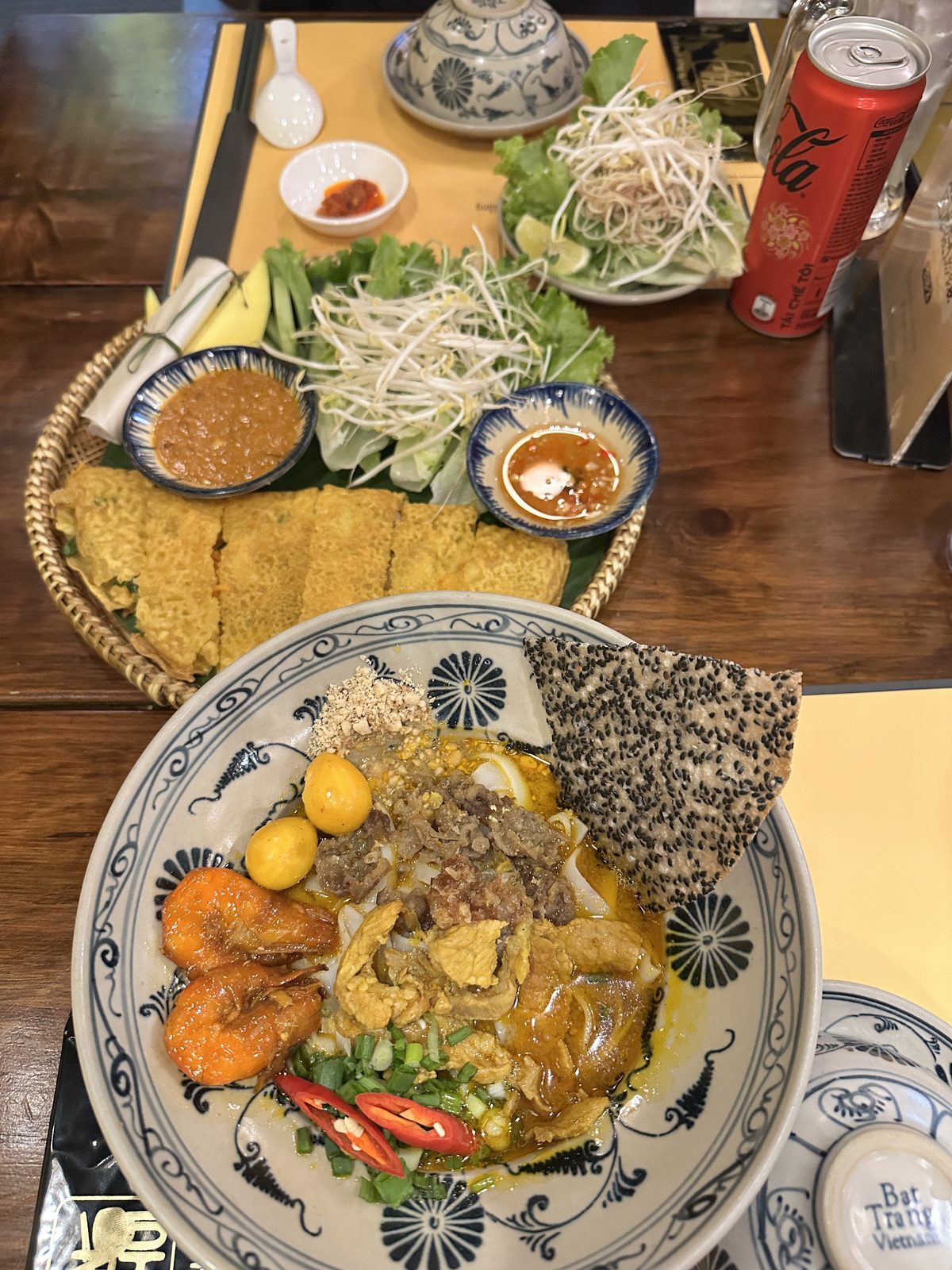
Mi Quang belongs to this region and is not really done properly anywhere else in the country. If you pass through Da Nang or Hoi An and eat one thing, eat this rather than another pho. Alongside it, banh xeo — turmeric crepes you tear up, wrap in lettuce and herbs, and dip in peanut sauce.
Saigon: New Year’s Eve on a plastic stool
We landed in Ho Chi Minh City on the 31st of December, which we had not planned and would now plan.
Saigon is the opposite of Hanoi in nearly every respect — wider, newer, hotter, more forward-facing — and on New Year’s Eve the whole of District 1 is outdoors.
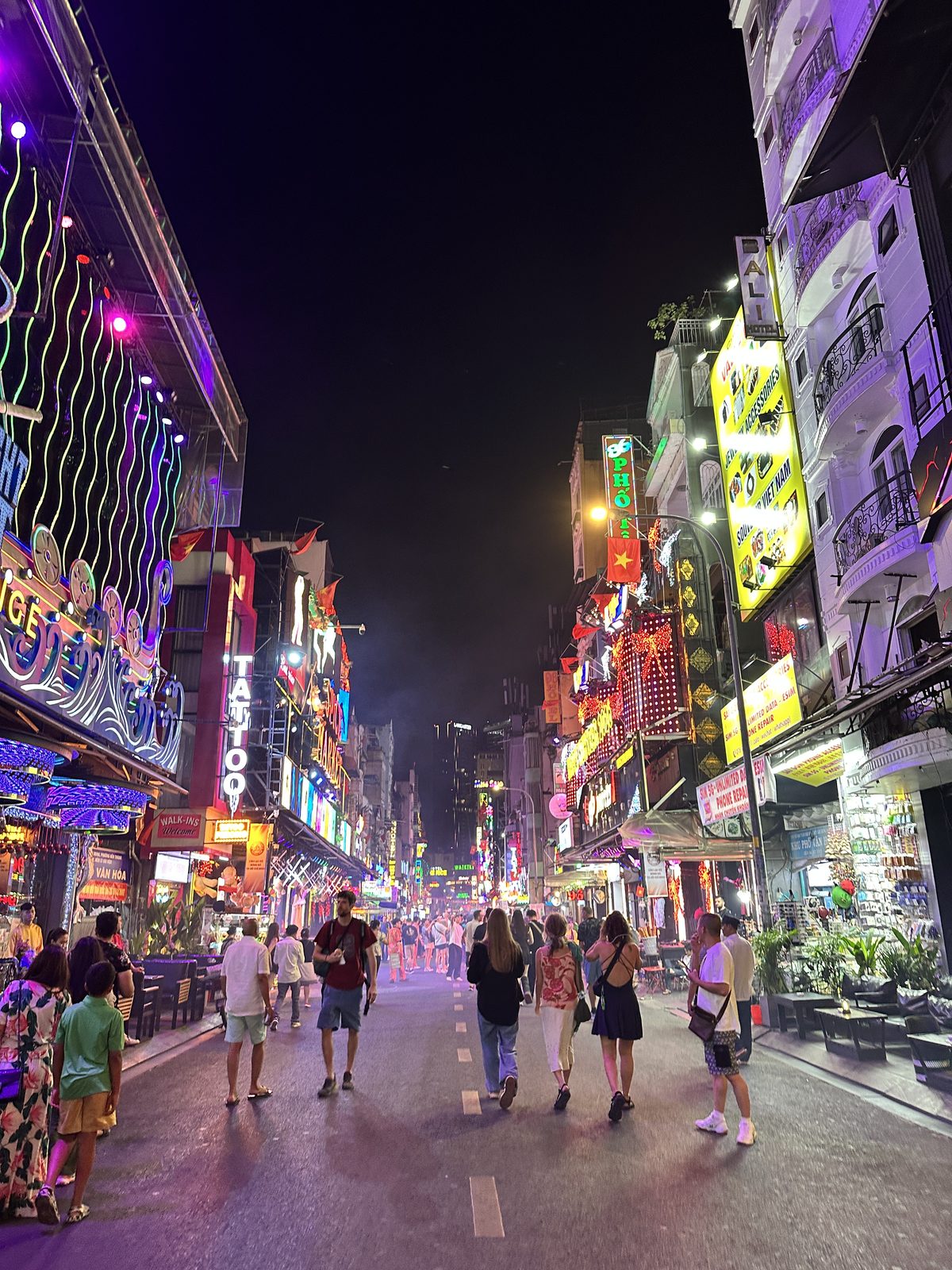
We lasted an hour on Bui Vien and then did the thing we would actually recommend, which was to walk two streets away and sit down on a plastic stool.
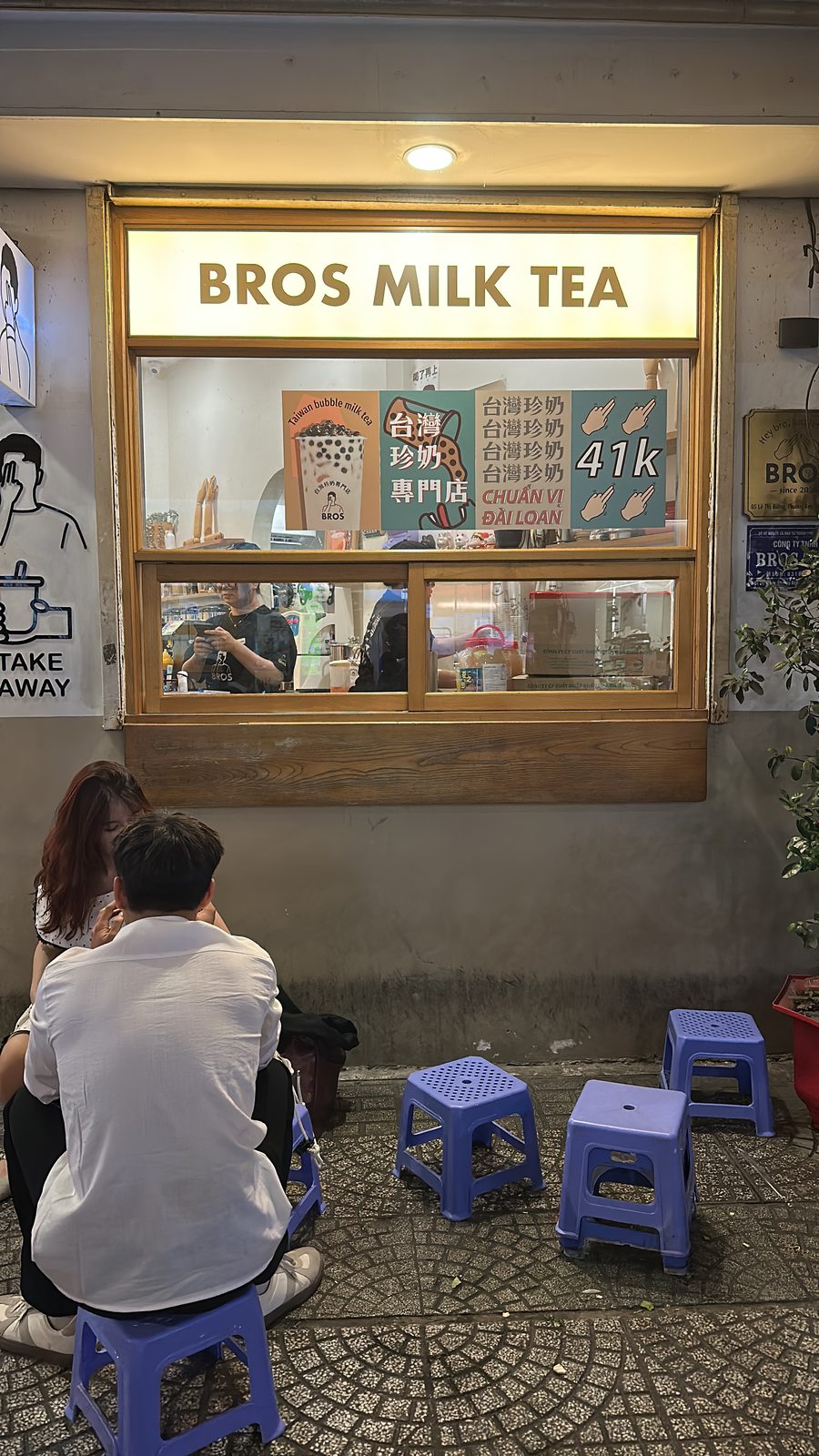
That is the real texture of Saigon — kerbside stools, low tables, everybody eating and drinking on the pavement — and it is available on nearly every street for almost nothing.
Where we ate
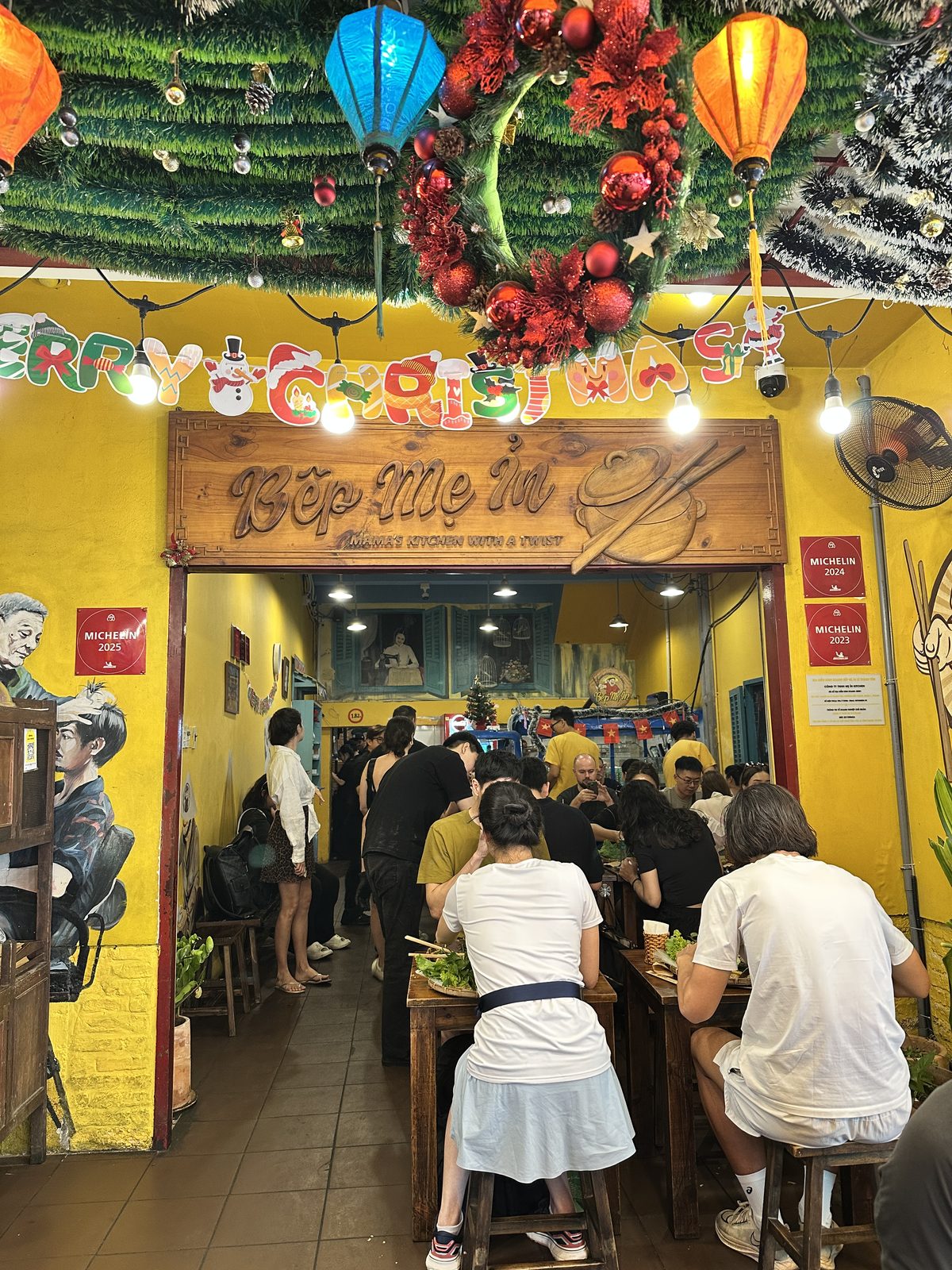
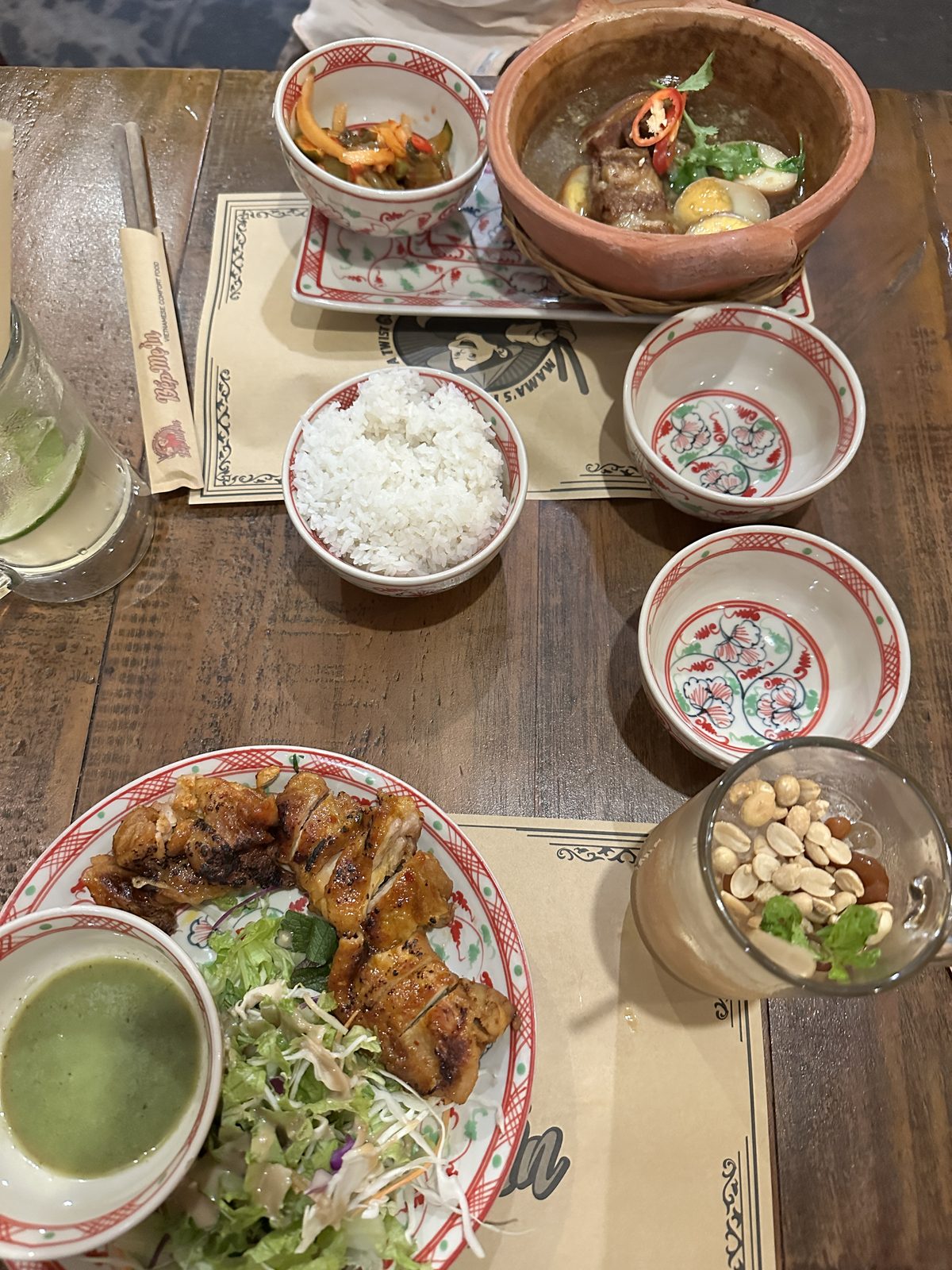
Bep Me In for lunch, which translates roughly as Mama’s kitchen, carries Guide plaques for 2023, 2024 and 2025, and had a queue out of the door on New Year’s Eve.
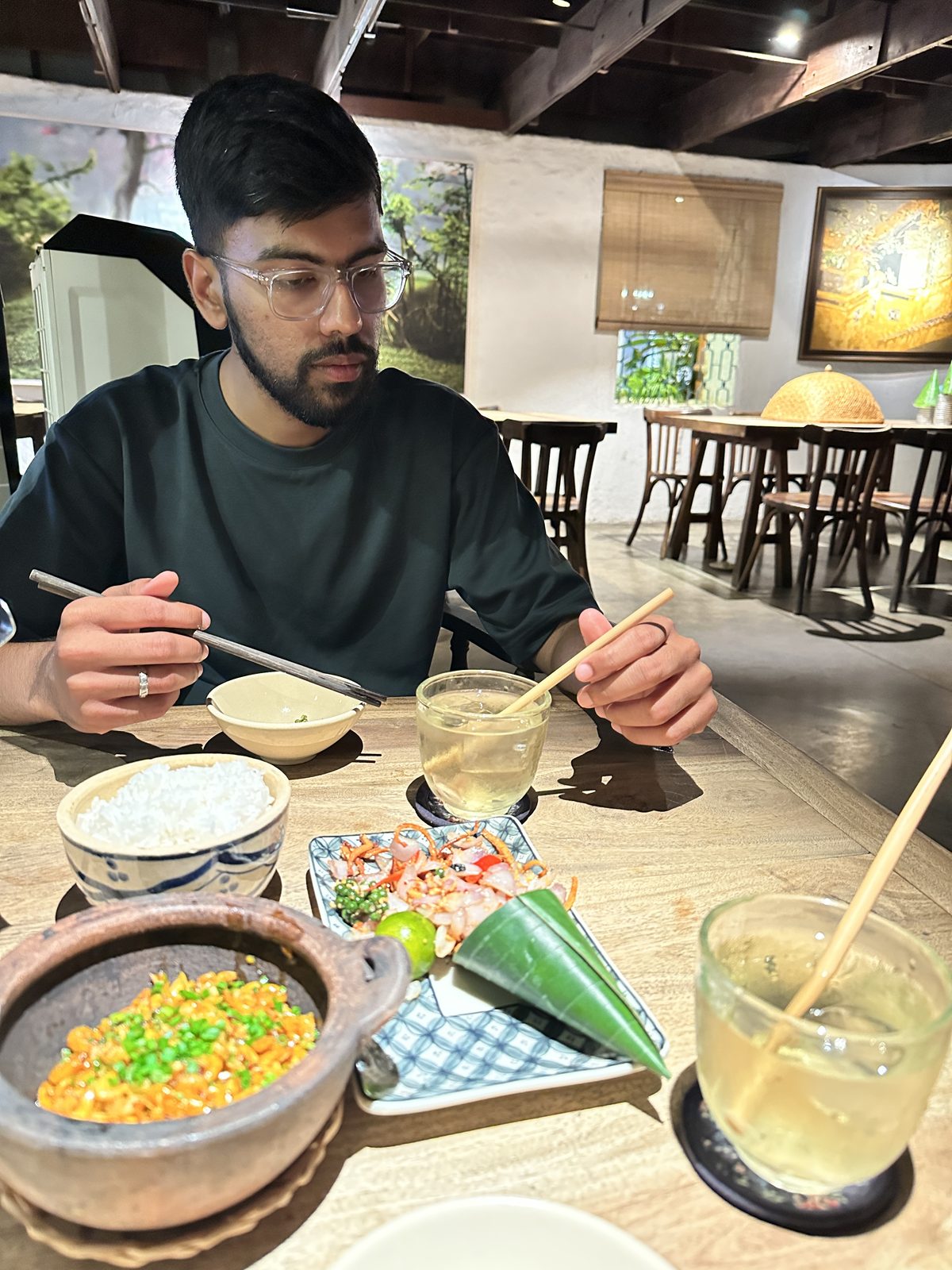
And then two more on New Year’s Day.
The massages, and the case for a schedule
One thing ran through every country on this trip and belongs in all six of these posts: we had a massage every three or four days, the whole way through, and it was among the best decisions we made.
It started as a one-off in Bangkok and turned into the structure the month hung on. A month of moving is harder on you than it sounds — long travel days, heavy bags, unfamiliar beds, and a very great many steps — and the difference between arriving somewhere fresh and arriving somewhere wrecked came down almost entirely to whether we had stopped for an hour in the previous few days.
In Vietnam it suited the week better than anywhere. This is a country you cover ground in — two internal flights, a lot of walking, and the sort of days that start early. An hour flat on a table on the afternoon between two of them is worth more than another sight.
Book them on a rhythm rather than waiting until you need one. Every third or fourth day, ideally on an afternoon that sits between two travel days. It costs very little across all of these countries, and it is the reason we were still functioning in week four.
What we would do differently
We would skip Ha Long Bay entirely. It felt heavily touristed in a way nothing else on this trip did, and it simply was not our sort of day — a big organised boat, a fixed circuit, a queue at every stop. Ninh Binh gives you the same landscape at a tenth of the traffic, and once you have done one of them you have had the idea. This is the single change we would make.
And we would give that day, and probably another, to Hoi An. It is the town we fell for. There is more to do there than two days allows, and — more to the point — it is the one place on the whole month-long route that rewards doing nothing. Long breakfasts, an afternoon at a café window with a book, the same streets at a different hour. We left wishing we had four nights instead of two.
Where the money goes
Vietnam was slightly more expensive than Thailand and noticeably more expensive than Laos, and nearly all of the difference was internal flights. Hanoi to Da Nang and Da Nang to Saigon are two separate tickets, and booked late they are the largest single line in the week. Book them the moment your dates are fixed — the gap between six weeks out and six days out is substantial.
Everything on the ground is cheap, and the ceiling is remarkably low. Street food and pavement stools cost almost nothing. Guide-listed restaurants cost slightly more than almost nothing, which is the single most useful thing we learned in Vietnam. We ate at Michelin Guide places nearly every day for eight days and it made no meaningful difference to the budget.
The two things that do cost real money are the flights and the Ha Long day trip, and we have already told you what we think of the second one.
Practical summary
The e-visa is straightforward but do it early. Vietnam issues e-visas online to most nationalities, valid up to 90 days, single or multiple entry. Apply through the official government portal and nothing else — there is a whole industry of look-alike sites charging several times the real fee. Allow a few working days. Rules change; check the current position for your passport before booking.
Book internal flights early. This is the main lever on what a week here costs.
Grab works everywhere and removes every argument about the fare. Grab bikes are cheaper again, and are how the cities actually move.
Crossing the road: slow, constant, predictable. Do not stop.
Base yourself in Hanoi for the north. Ninh Binh and Ha Long are both day trips; there is no reason to move hotels.
Do at night: Hoan Kiem Lake in Hanoi, the Thu Bon riverfront in Hoi An, and a pavement stool anywhere in Saigon.
Do at the end of the day: Hang Mua in Ninh Binh, for the light and the absence of everybody else.
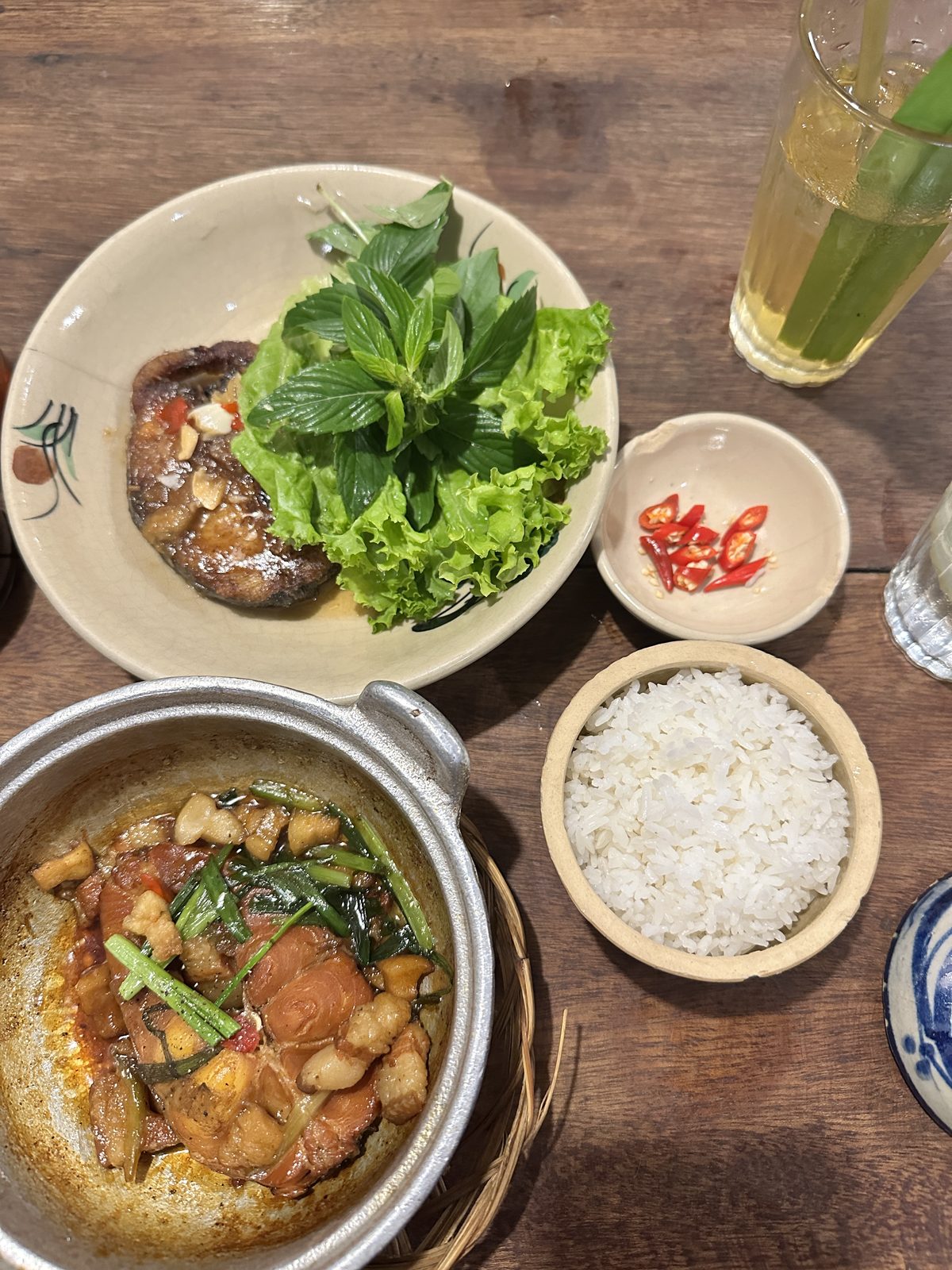
Eat: mi Quang in Da Nang, egg coffee in Hoi An, thit kho trung and ca kho to in Saigon. And go to the Michelin Guide places — in Vietnam they are not the expensive option, they are the good-value one.
Next: part four, Cambodia.


Leave a Reply