One month, six countries. Thailand, Laos, Vietnam, Cambodia, Malaysia, Qatar — in that order, overland where we could manage it, in the air where we could not. We went in December.
Everyone we told about it did the same thing. A pause, and then some version of that is not very long for six countries. They were right, and we went anyway, and we have never once regretted it. What a month like this gives you is not depth. It gives you contrast — the way a country announces itself in the first hour, before you have had time to get used to it.
Thailand was where it began, and Thailand turned out to be the easiest place in the world to begin.
This is part one of six. Here is Bangkok, Railay and Chiang Mai — what we did, what we would change, and what it cost us.
The route
| Stop | Nights | Getting there |
|---|---|---|
| Bangkok | 3 | Direct from Munich |
| Ayutthaya | — | Day trip from Bangkok, about 1h 30m by train |
| Krabi / Railay | 3 | Domestic flight, then longtail boat |
| Chiang Mai | 2 | Domestic flight, about 2h |
| Onward to Laos | — | Covered in part two |
Eight nights in Thailand, three bases, and one decision we would repeat: city, then water, then the north. The beach sits in the middle where it does the most good, and Chiang Mai gets to be the ending.
Bangkok: louder than you expect, and then suddenly not
Bangkok does not ease you in. You land, you step outside, and the heat arrives like something physical. Then the traffic, then the noise, then the smell of charcoal and lemongrass from a cart you have already walked past.
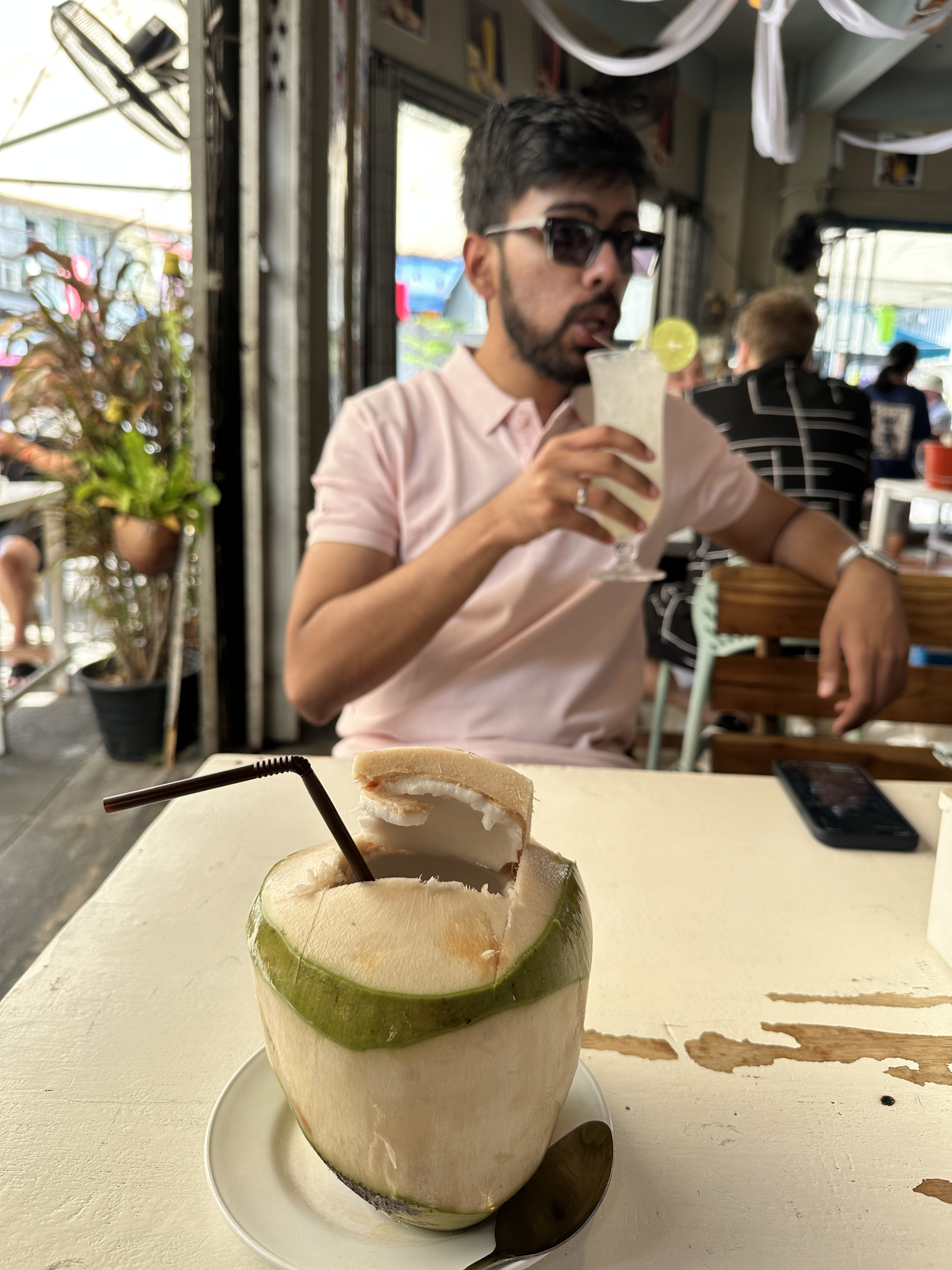
We gave it three days and spent most of them walking, which in that heat is a slightly absurd way to see a city, and still the right one. It is also a city that rewards stopping — repeatedly, in the shade, with something cold.
But the thing we would actually press on you is not a temple or a market. It is the canals. Late one afternoon we ended up along Khlong Ong Ang, the restored canal near Chinatown, and the whole tempo of the city dropped by half. Lanterns coming on, a little arched footbridge, a shrine glowing on the water’s edge, and almost nobody about. Ten minutes earlier we had been in the middle of the loudest street either of us had ever stood in.
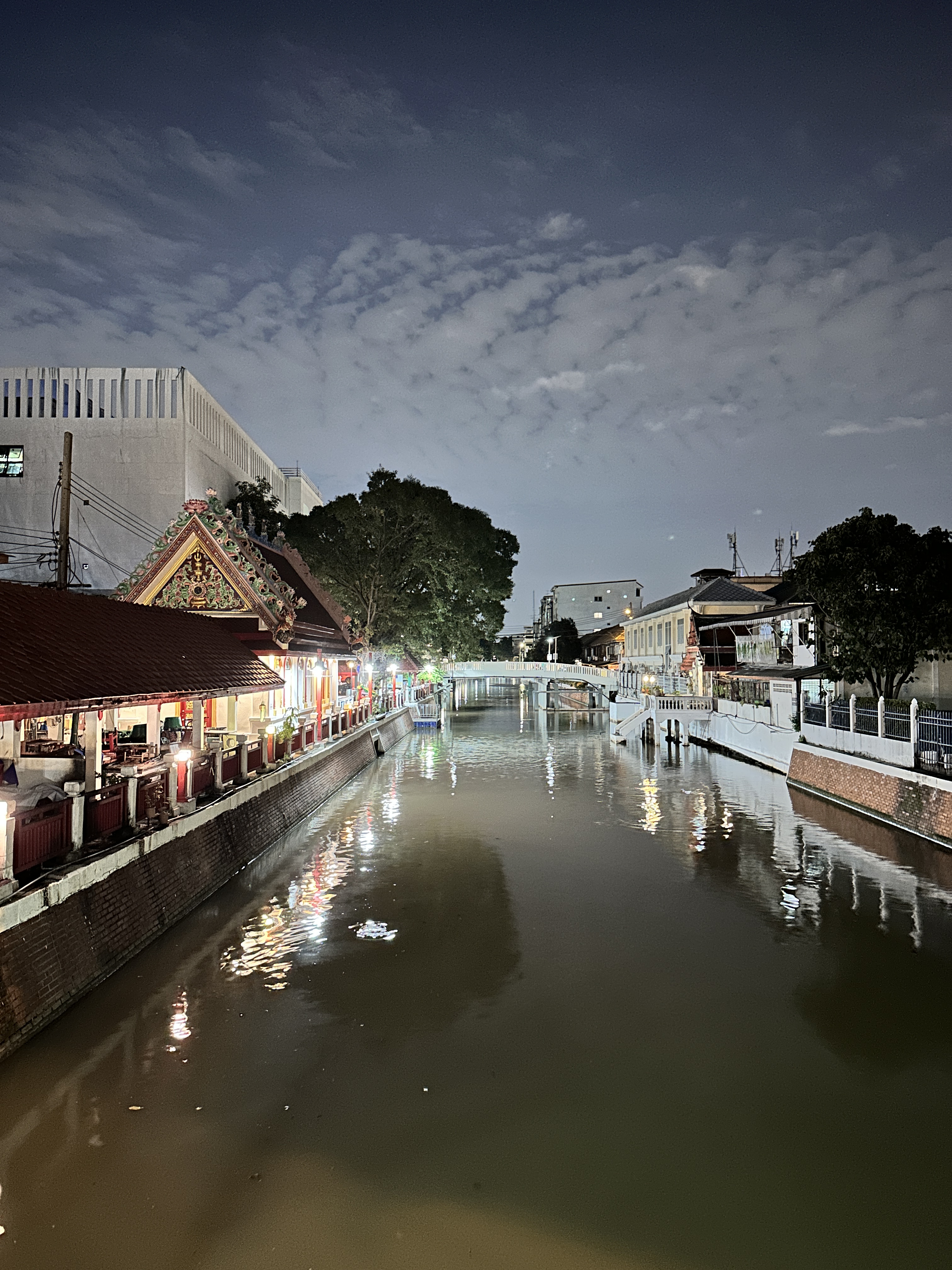
That gap — deafening to peaceful in the space of a few streets — is the thing we remember about Bangkok. Go and find a canal at the end of a hot day.
The food, and one dessert in particular
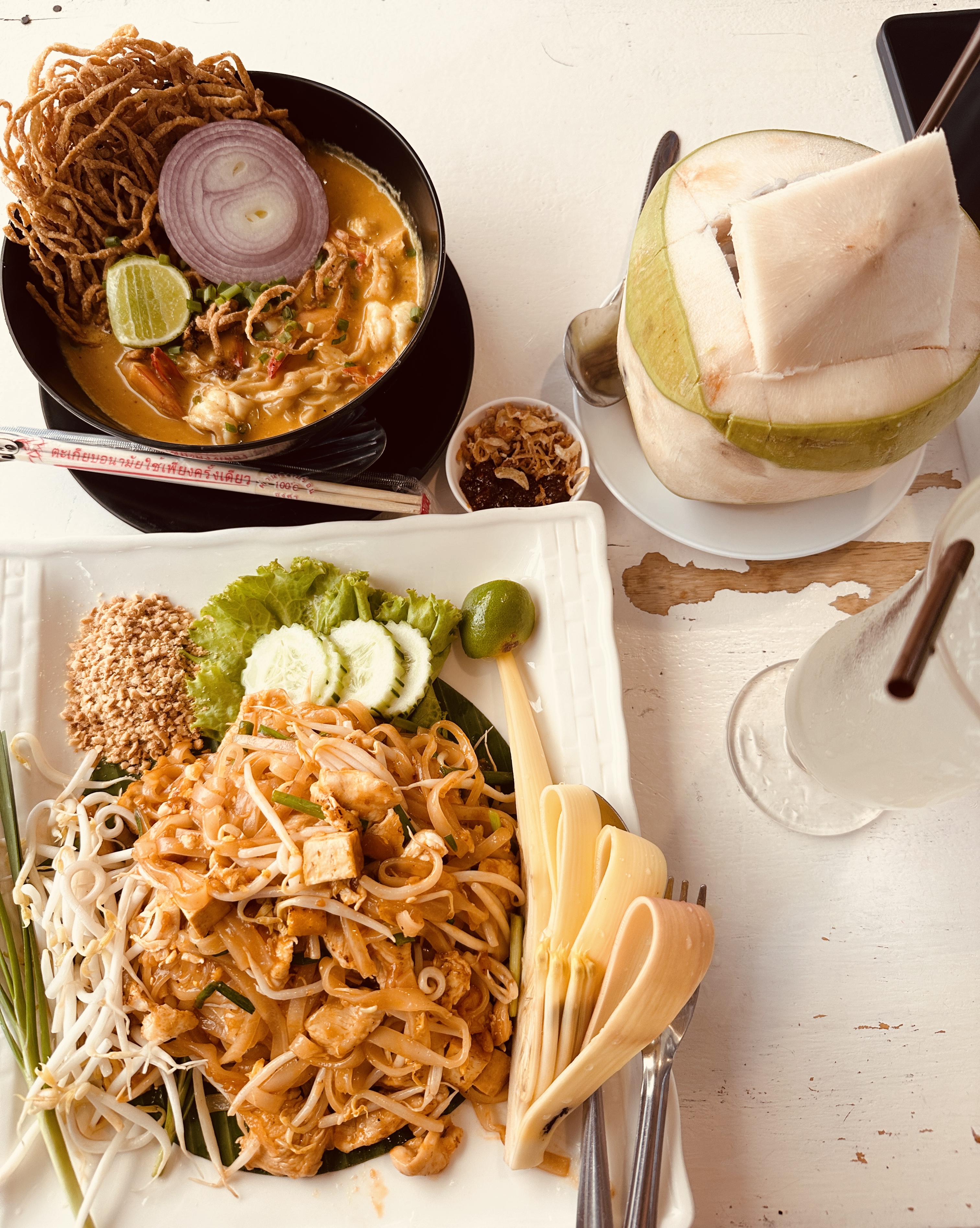
Pad thai, a coconut, a curry, and whatever else arrived — we ate constantly and barely spent anything doing it.
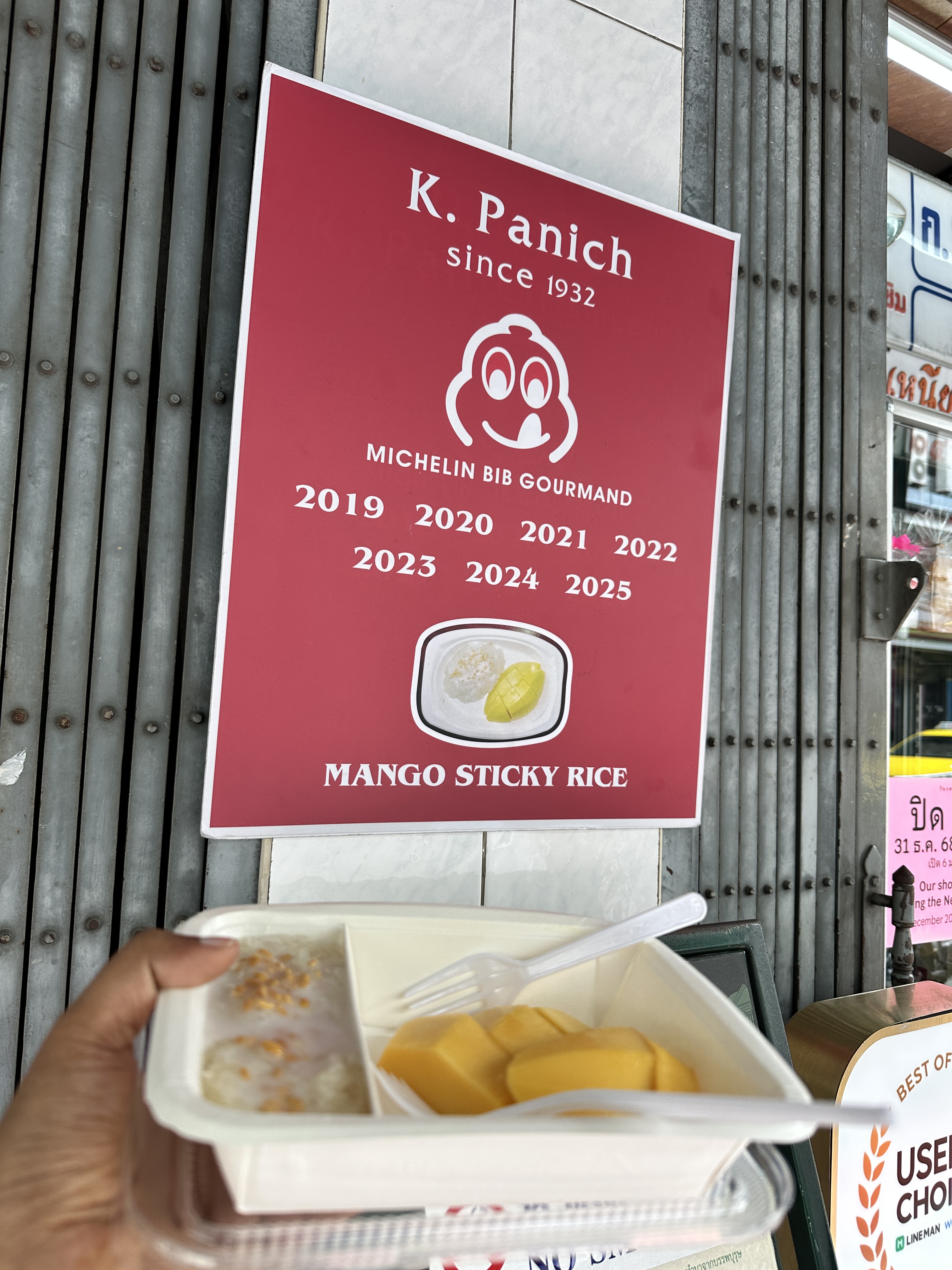
And then K. Panich, which has been making mango sticky rice since 1932 and has the Bib Gourmand plaques to prove it — 2019 through 2025, printed on the sign by the door. It comes in a takeaway box, you eat it standing in the street, and it is worth crossing the city for. The rice is the point: warm, salted, properly soaked in coconut cream.
And after dark
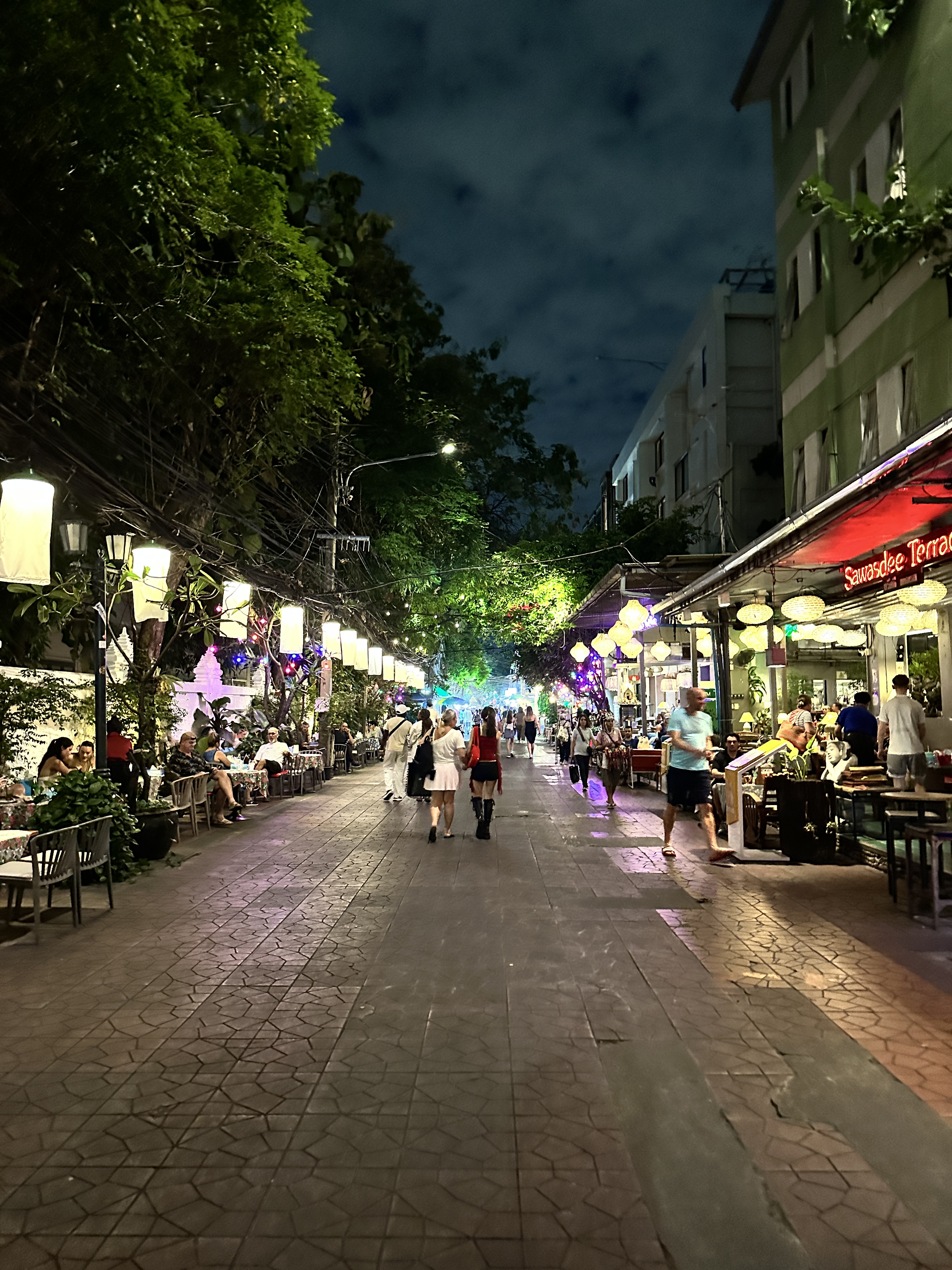
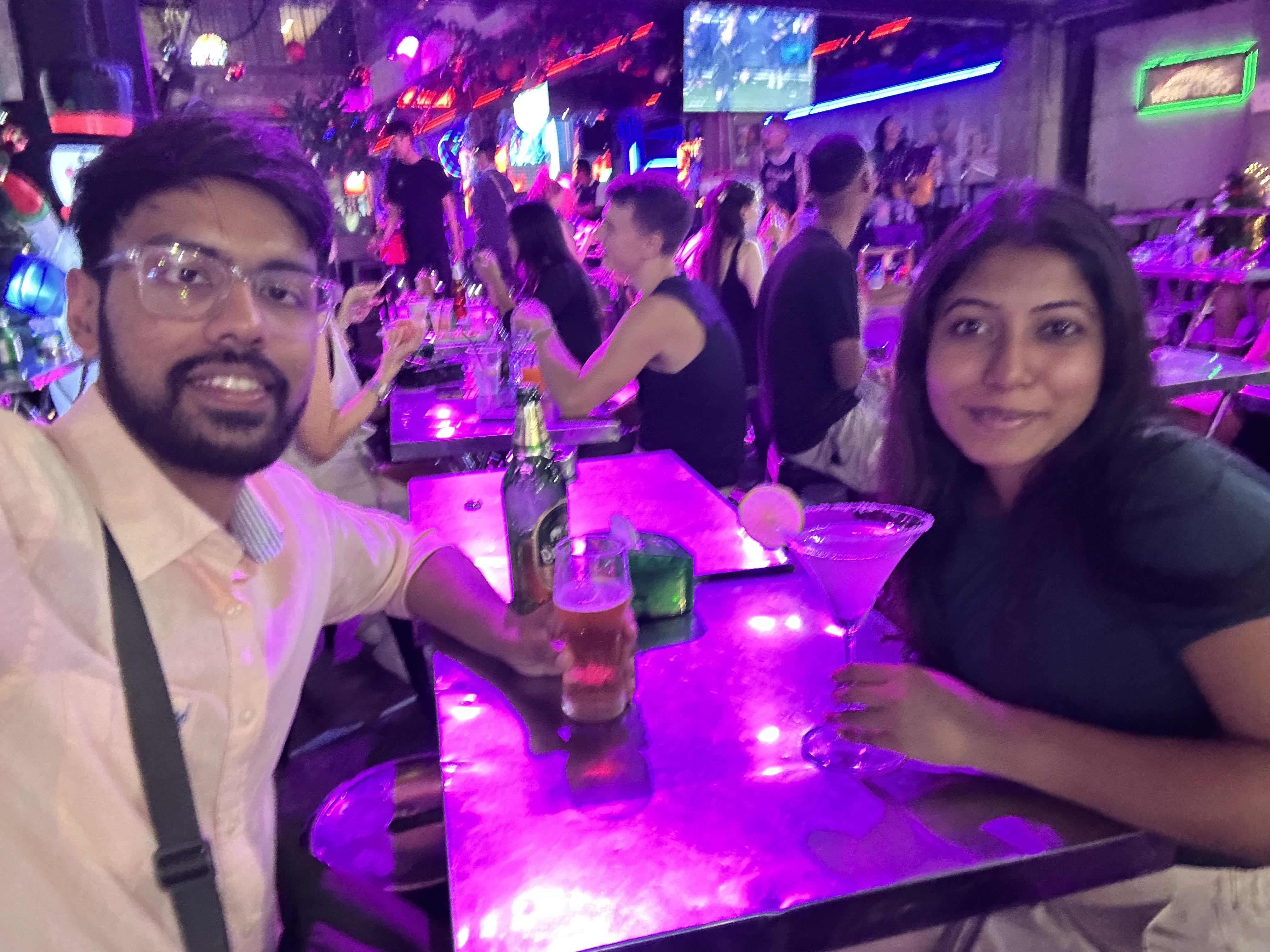
The old backpacker streets are exactly as advertised — neon, noise, buckets, everybody about nine drinks deep by ten in the evening — and we are glad we went once. Go with a sense of humour and low expectations of dignity.
Practical: the boats and the BTS beat taxis comfortably at rush hour, and rush hour in Bangkok is most of the day.
Ayutthaya: the day trip we nearly skipped
An hour and a half north of Bangkok by train sits the old capital, and it is the best day trip out of the city by a distance. Ayutthaya was sacked in 1767 and never rebuilt, so what you walk through is a field of brick — prangs, headless Buddhas, and long vaulted corridors, all of it slowly going back to the ground.
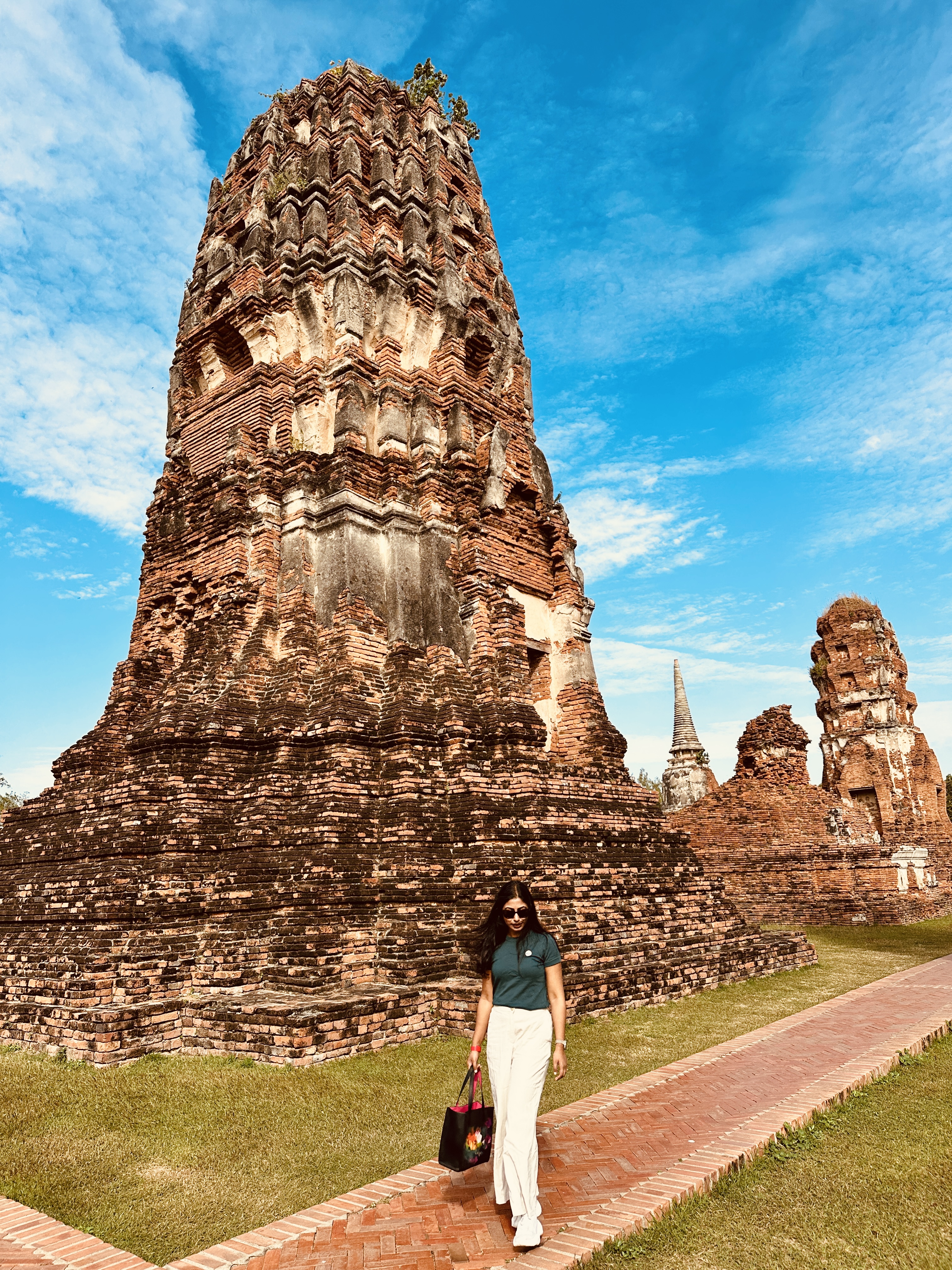
It is quieter than anything in Bangkok, and hotter. Go early, take more water than you think you need, and hire a bicycle or a tuk-tuk for the day rather than trying to walk between the temple groups.
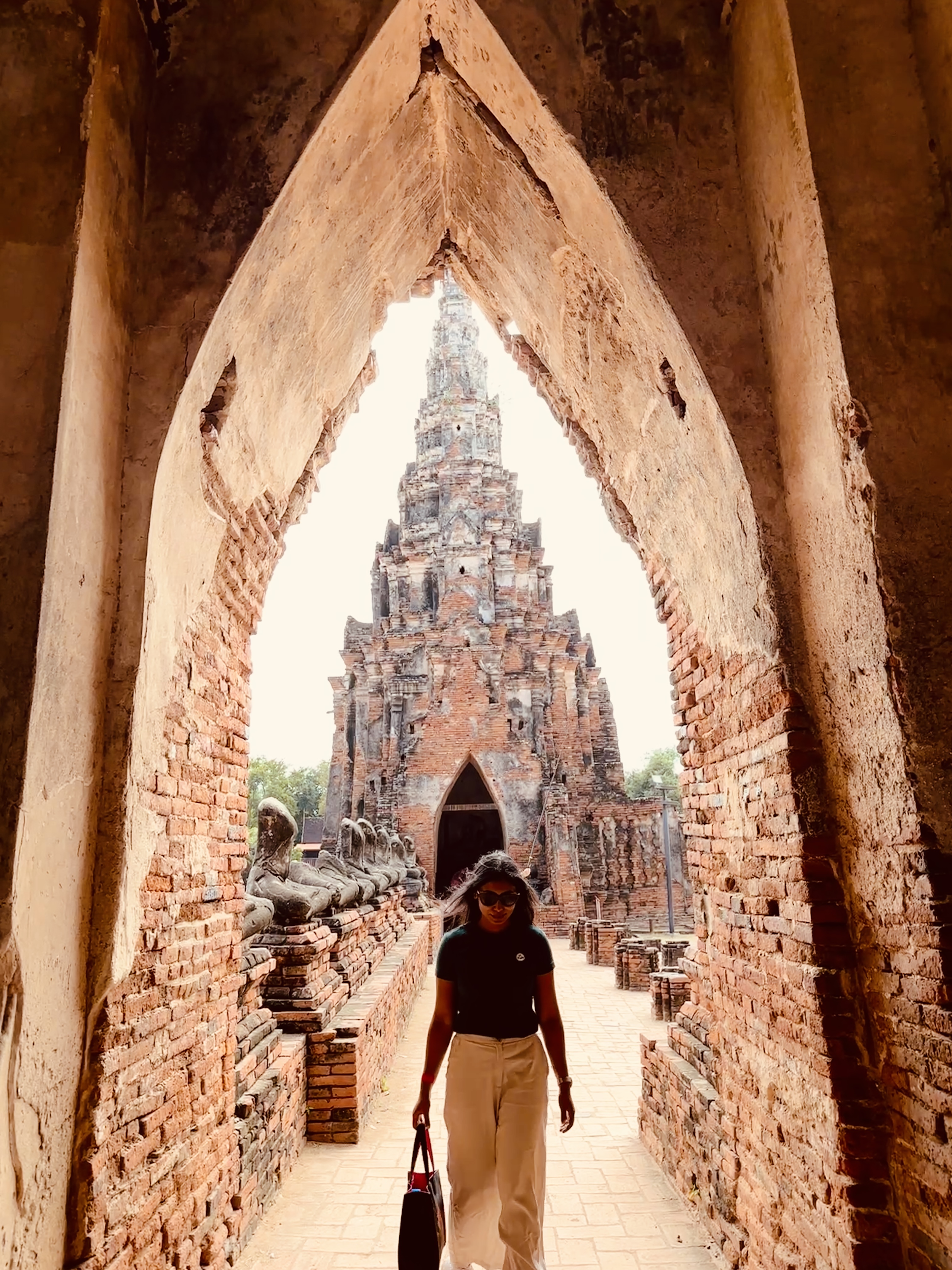
If you only have one spare day in Bangkok, spend it here.
Railay: the part of the trip where we stopped moving
We flew south with our legs already gone, and Railay did the one thing we needed it to do. It made us stop.
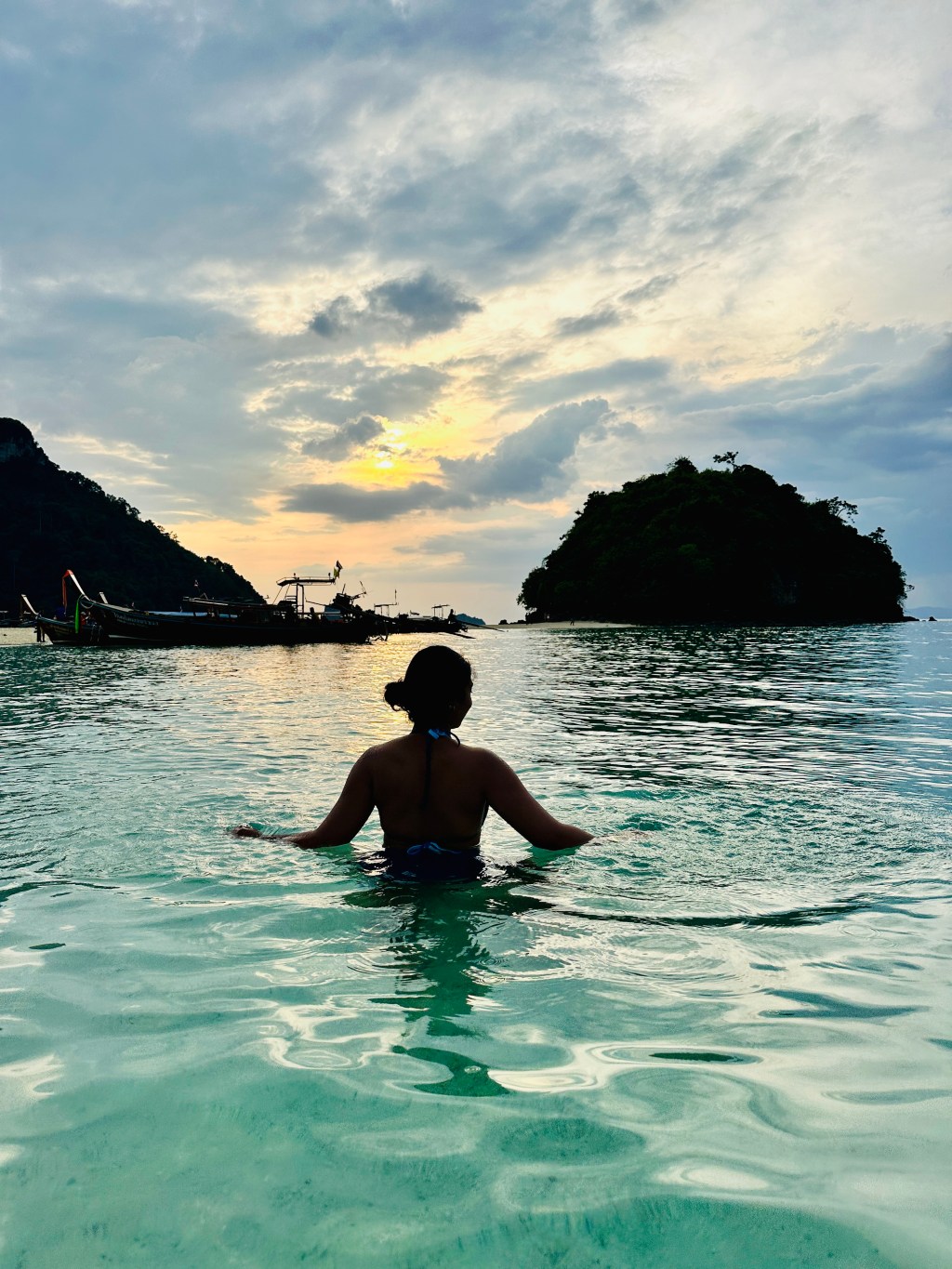
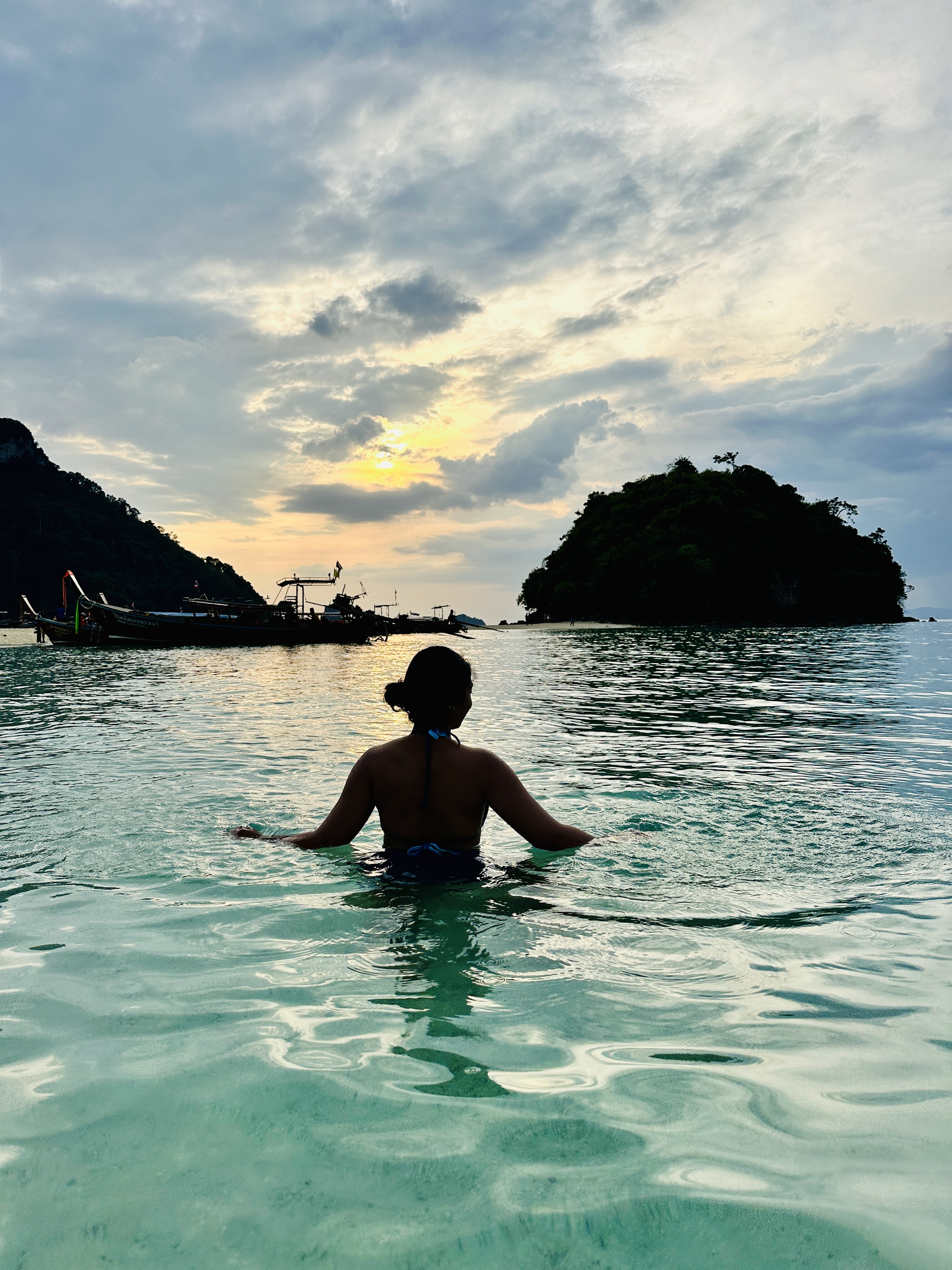
You cannot drive there — the limestone cuts the peninsula off from the road, so you arrive by longtail boat, which is a rather wonderful way to be told to slow down. Then it is just cliffs, very calm water, and a beach you walk everywhere on.
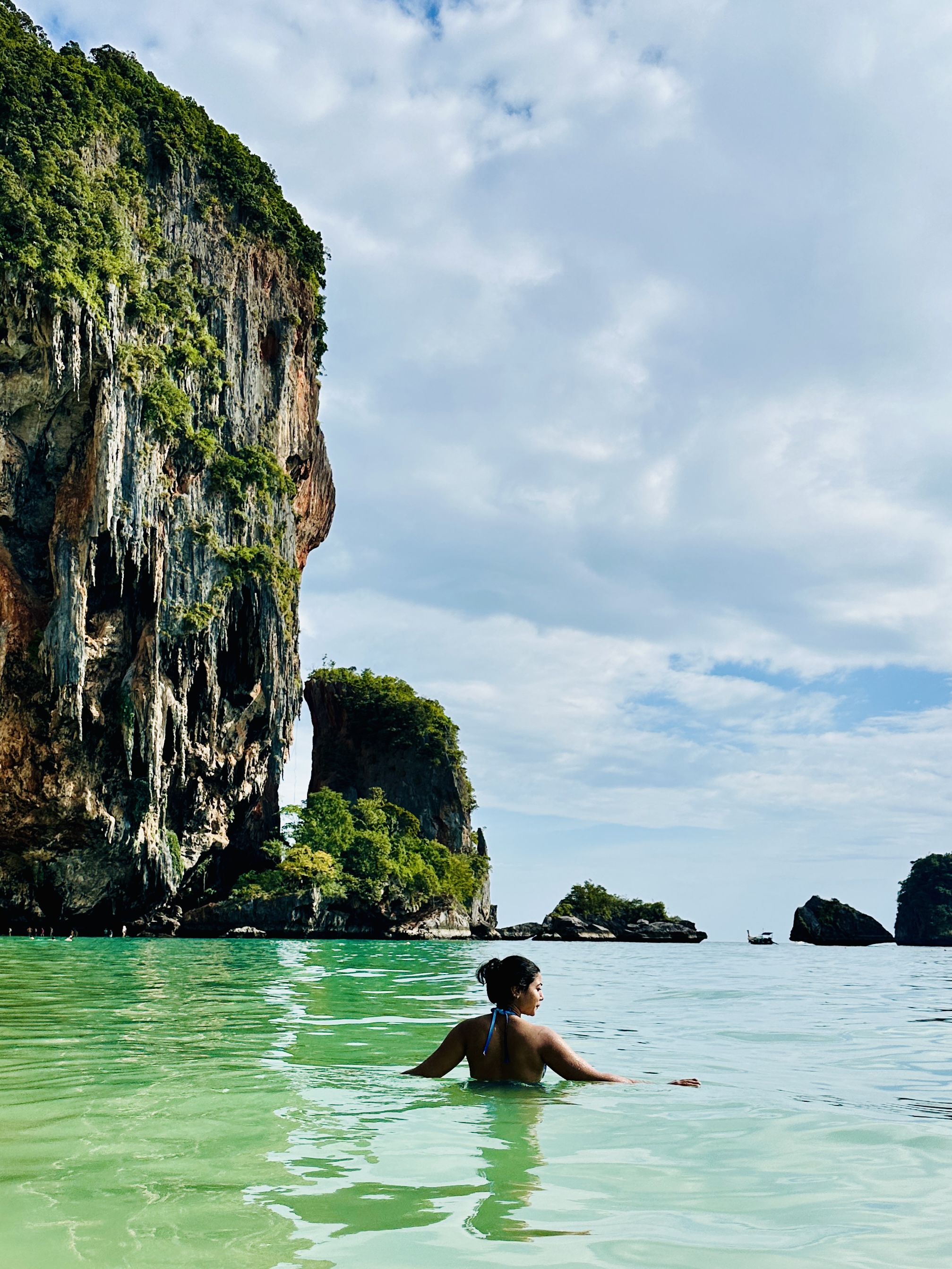
We swam, and then swam again, and did very little else. There is a particular kind of holiday guilt about doing nothing in the middle of a month you have planned to the hour, and it lifts about twenty minutes into the first swim.
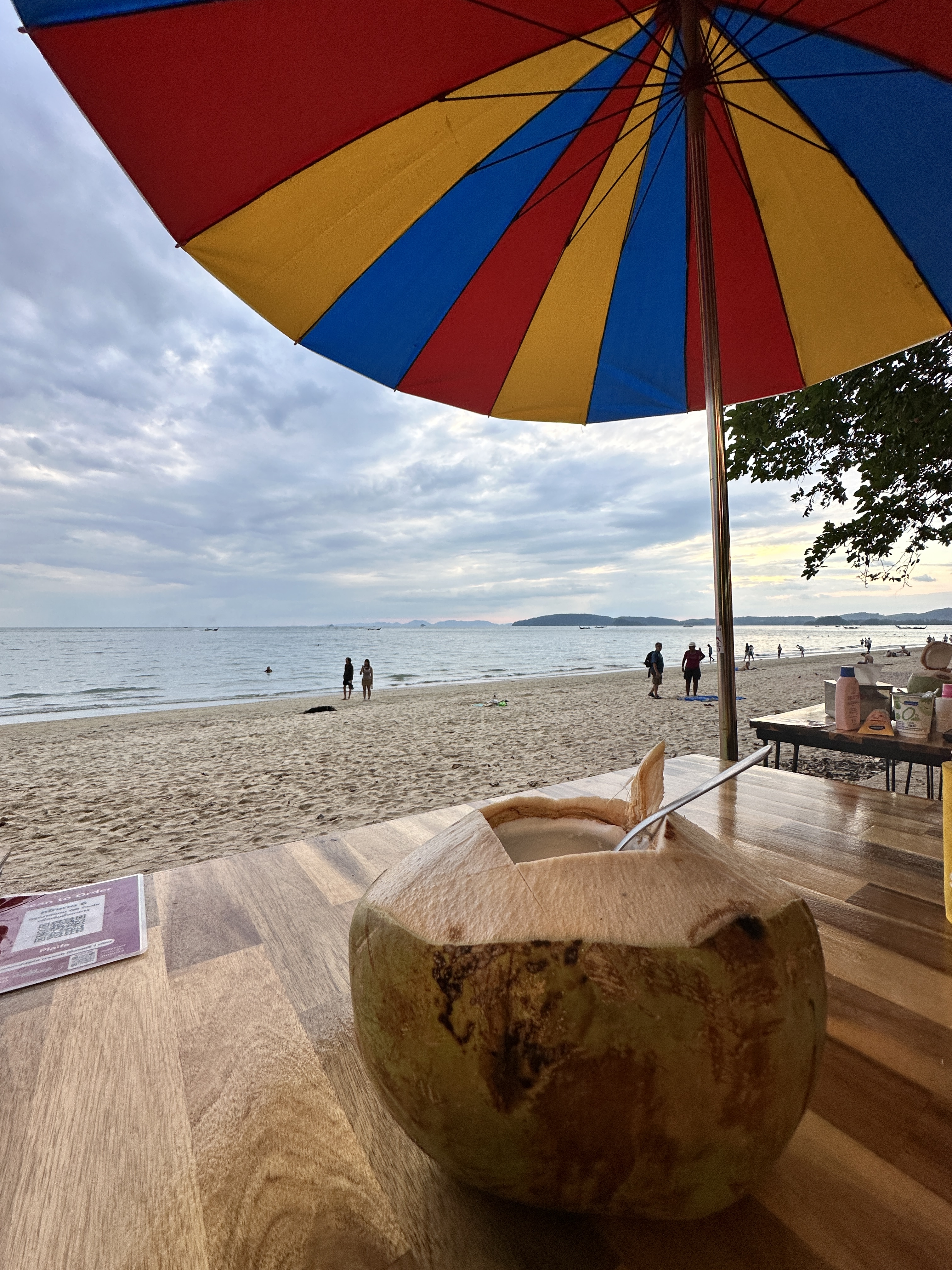
Because we were there in December, the whole beachfront was strung with Christmas decorations — paper snowflakes hanging in the trees over the sand, which is a genuinely strange and lovely thing to walk under at twenty-eight degrees.
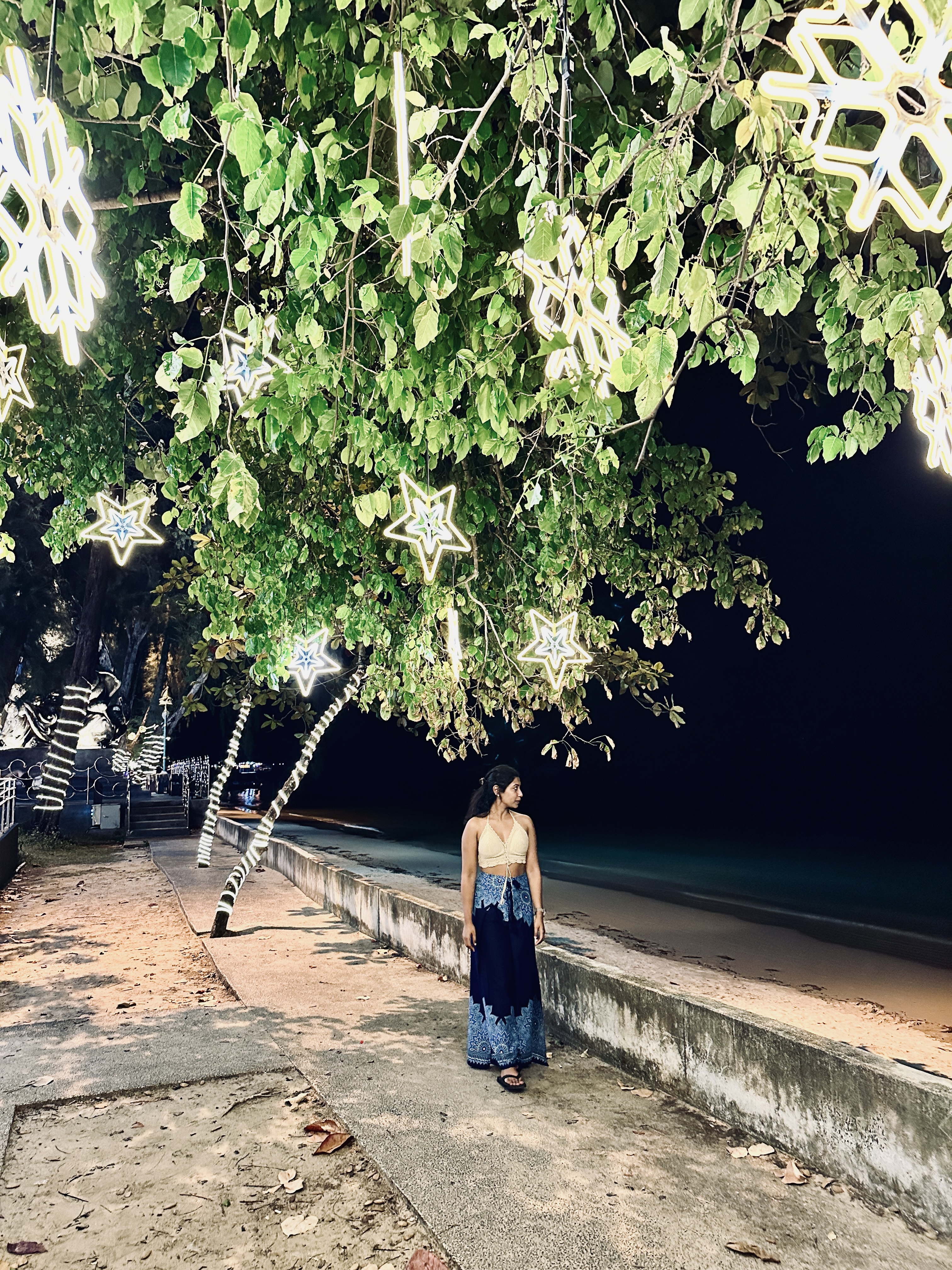
Putting this in the middle rather than at the end was the right call. It reset us, and everything afterwards we arrived at with fresh legs.
One honest note: the four-island boat trips run to a schedule and you will share every stop. Going out early, or hiring a longtail privately for a few hours, changes the day completely for not very much more money.
Chiang Mai: the one we did not want to leave
If Bangkok is volume, Chiang Mai is the opposite, and it was the part of Thailand that got properly under our skin. Ending here rather than passing through it early is the single thing we would tell you to copy.
The temples, at night
We saw Wat Phra Singh after dark, almost by accident, and it turned out to be the best hour we spent in the city. The whole Lanna facade lit gold against a deep blue sky, the roofline stacked in those long low tiers, and the courtyard nearly empty. In the daytime it is busy and hot and you shuffle. At night it is yours.
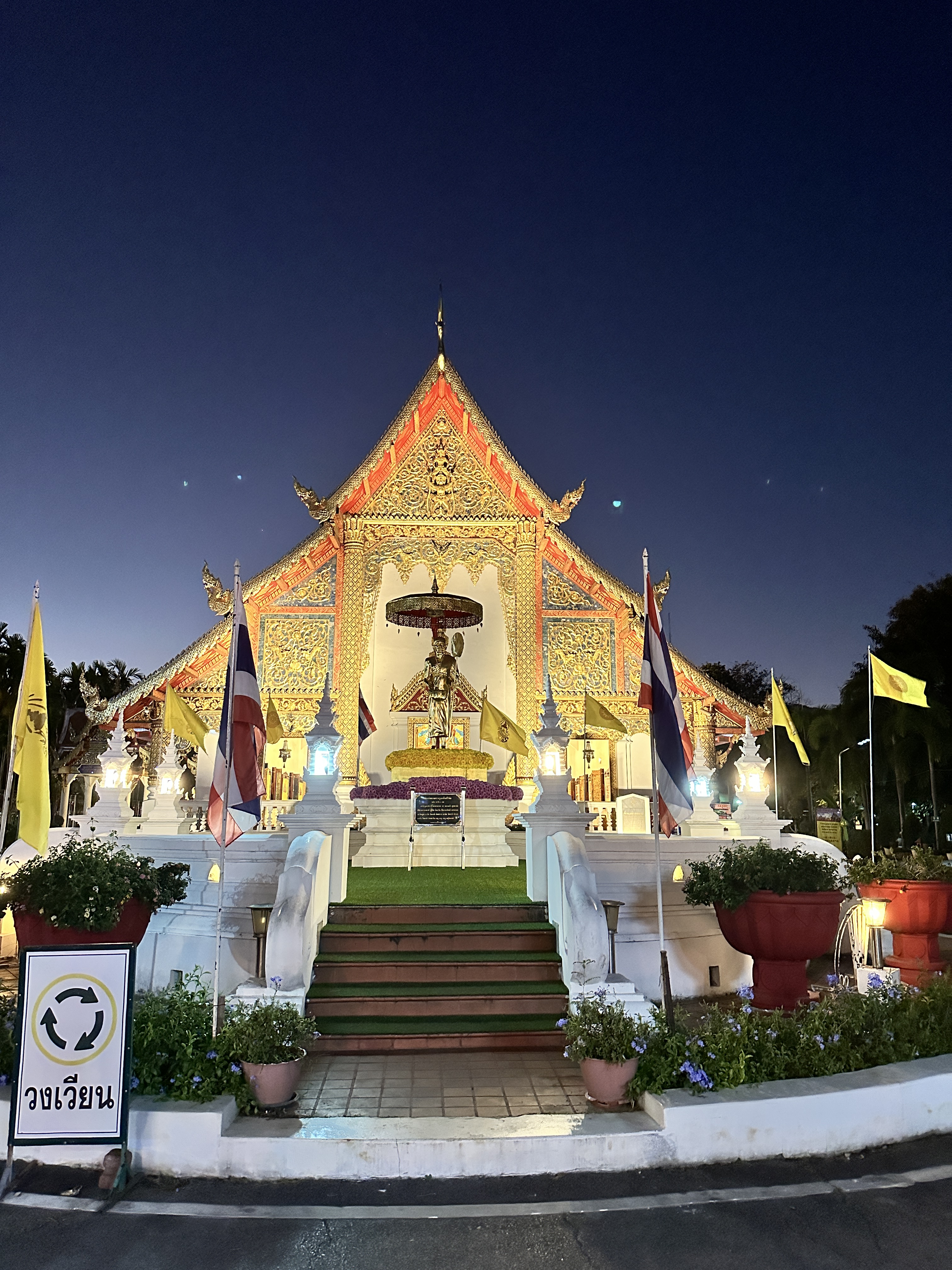
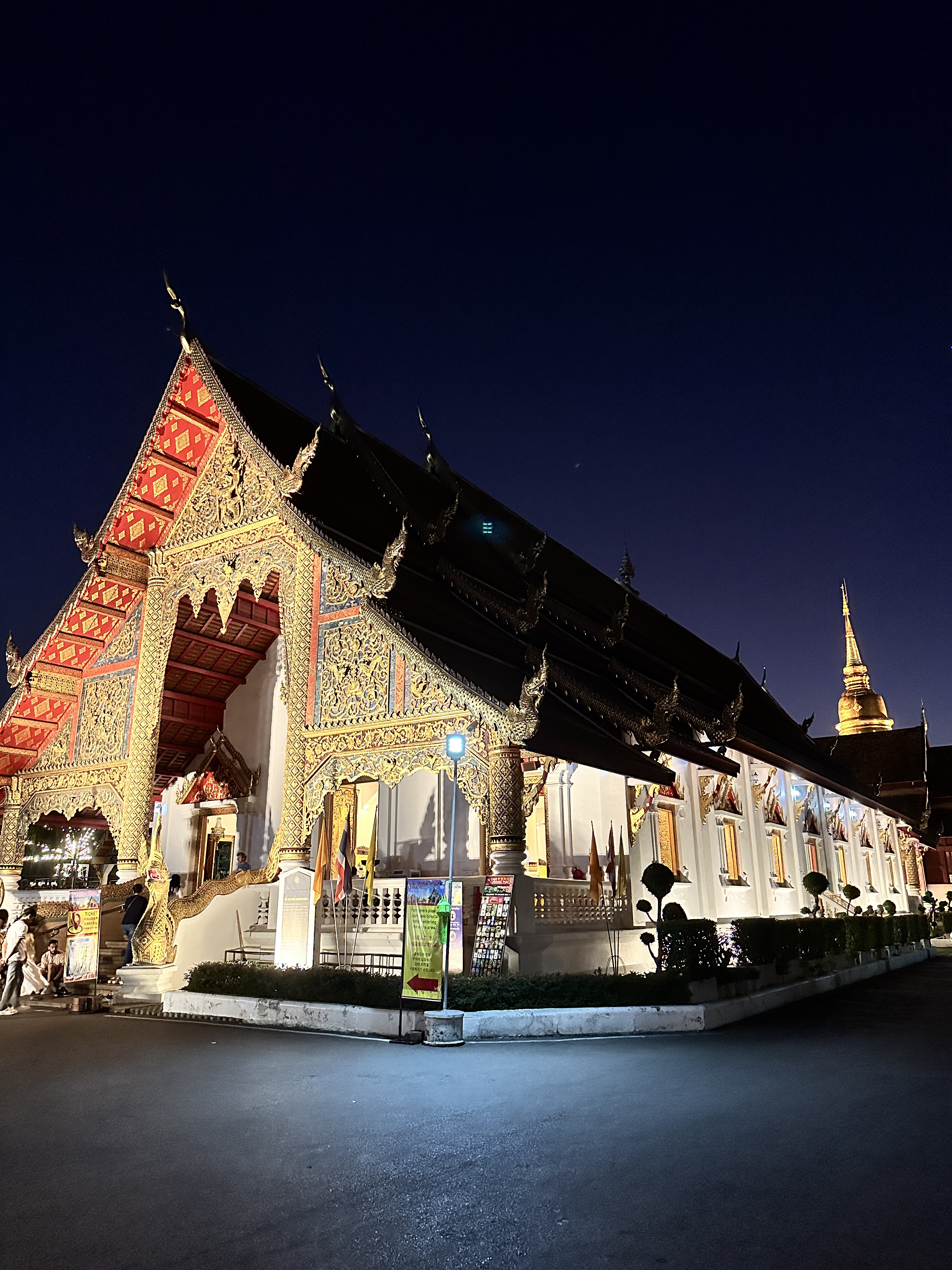
This is our single best tip for Chiang Mai and it costs nothing: do the old city temples in the evening.
The elephants
We spent a day at an elephant sanctuary an hour and a half outside Chiang Mai, and it was the day of the whole month that I keep coming back to.
No riding. Nobody sits on them, nobody performs. You walk out into the forest with a bag of food and you meet them where they already are.
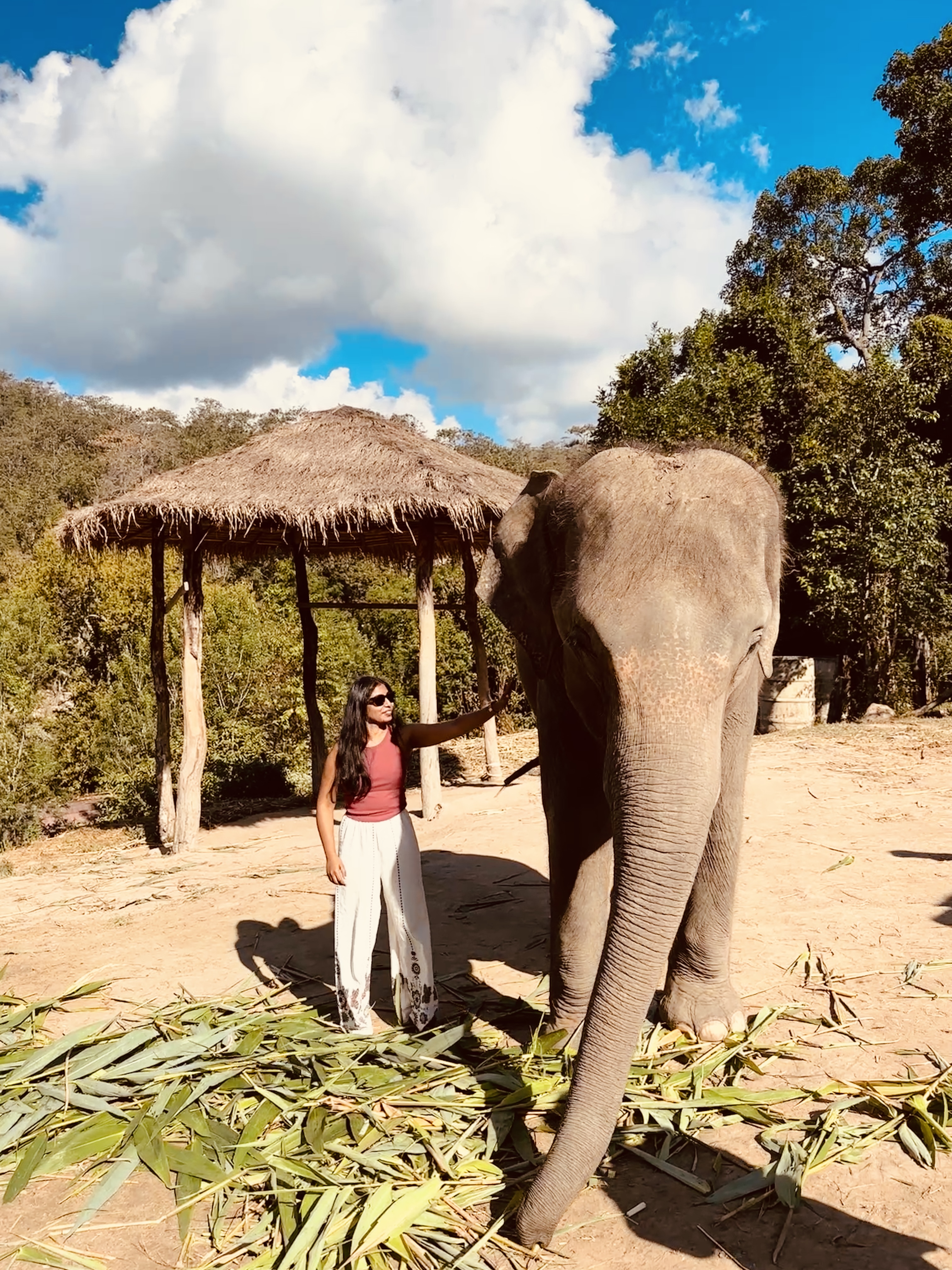
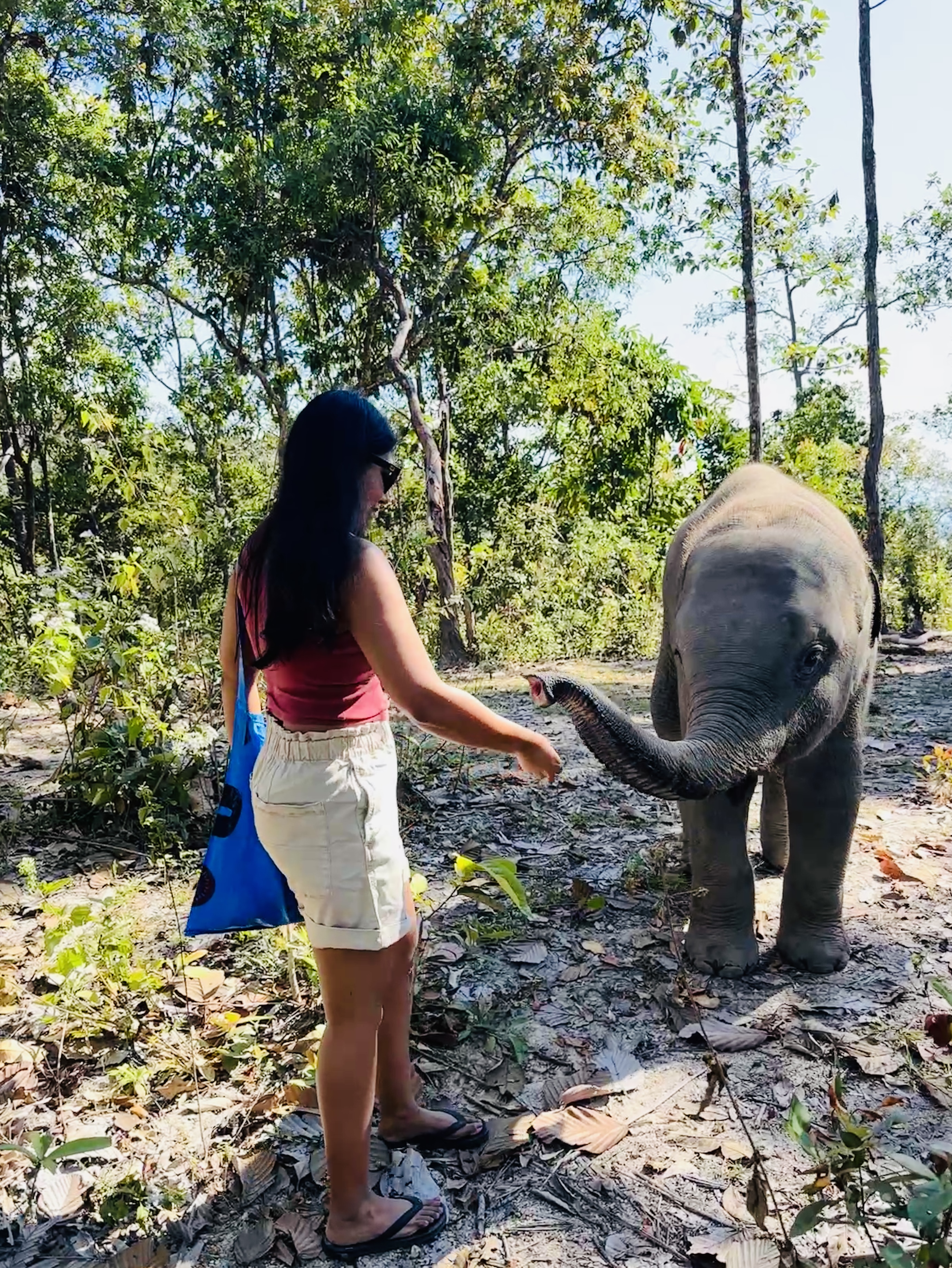
A calf came straight over to investigate, trunk out, entirely unbothered by us, and then wandered off again the moment something more interesting appeared.
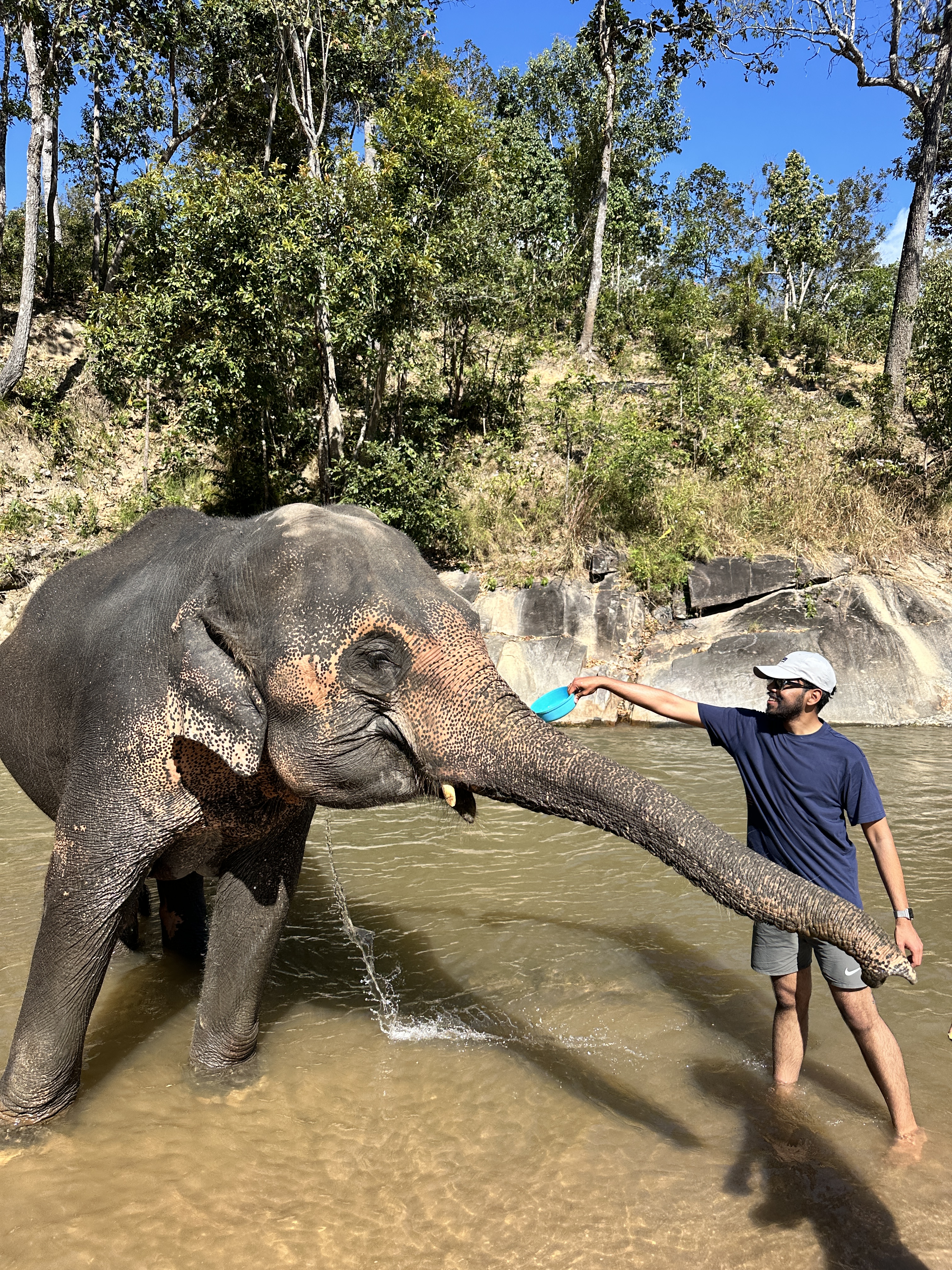
Later, down at the river, one of the older ones took a bowl of food out of Paritosh’s hand with the delicacy of someone accepting a teacup.
Please choose carefully. “Sanctuary” is not a protected word, and plenty of places using it still offer rides, or bathing sessions that exist for the photograph rather than the animal. Look for no riding, no shows, no forced bathing, small groups, and elephants that are allowed to walk away from you. If a place lets you sit on one, that tells you what you need to know.
The food
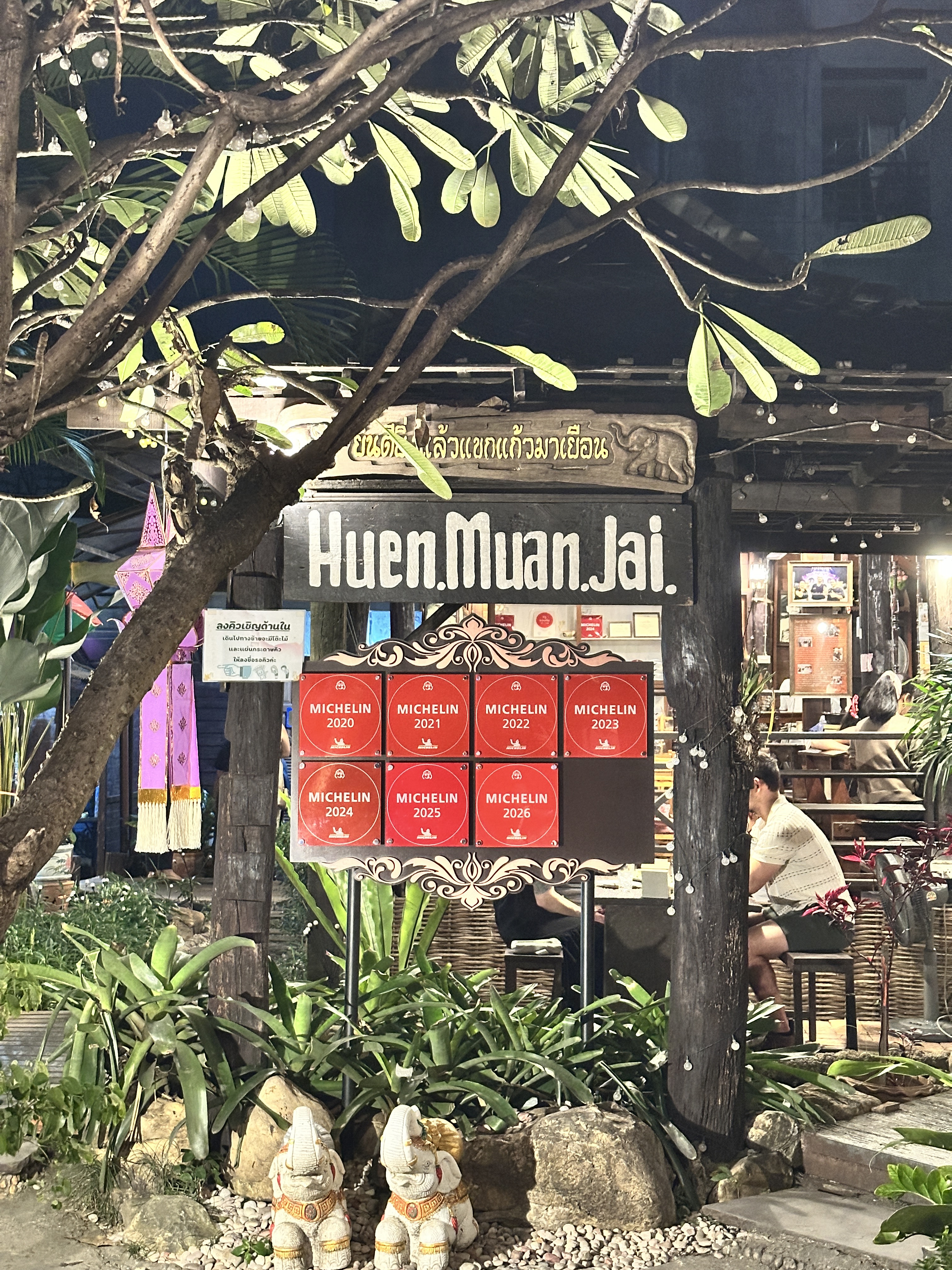
Huen Muan Jai for northern Thai, which has been Michelin-recognised every year since 2020 — the plaques are lined up by the gate in a neat red grid, and by now there are seven of them. There is a queue and a clipboard and you write your name down and wait, and you should simply do that.
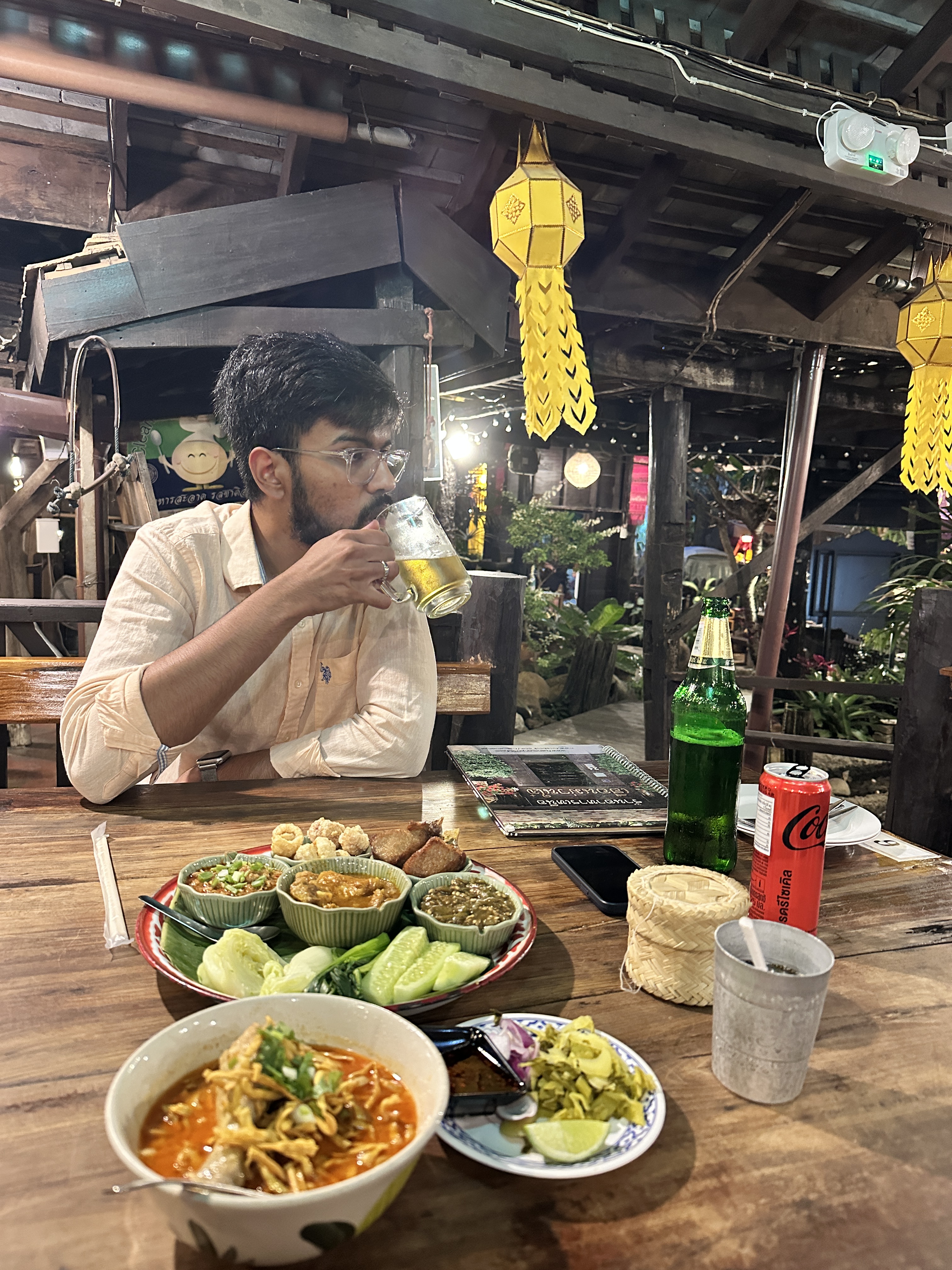
Khao soi is the reason the rest of the queue is standing there too — a curry noodle soup with crisp noodles piled on top, pickled mustard greens and lime on the side, and it is the single dish we most wish we could get at home.
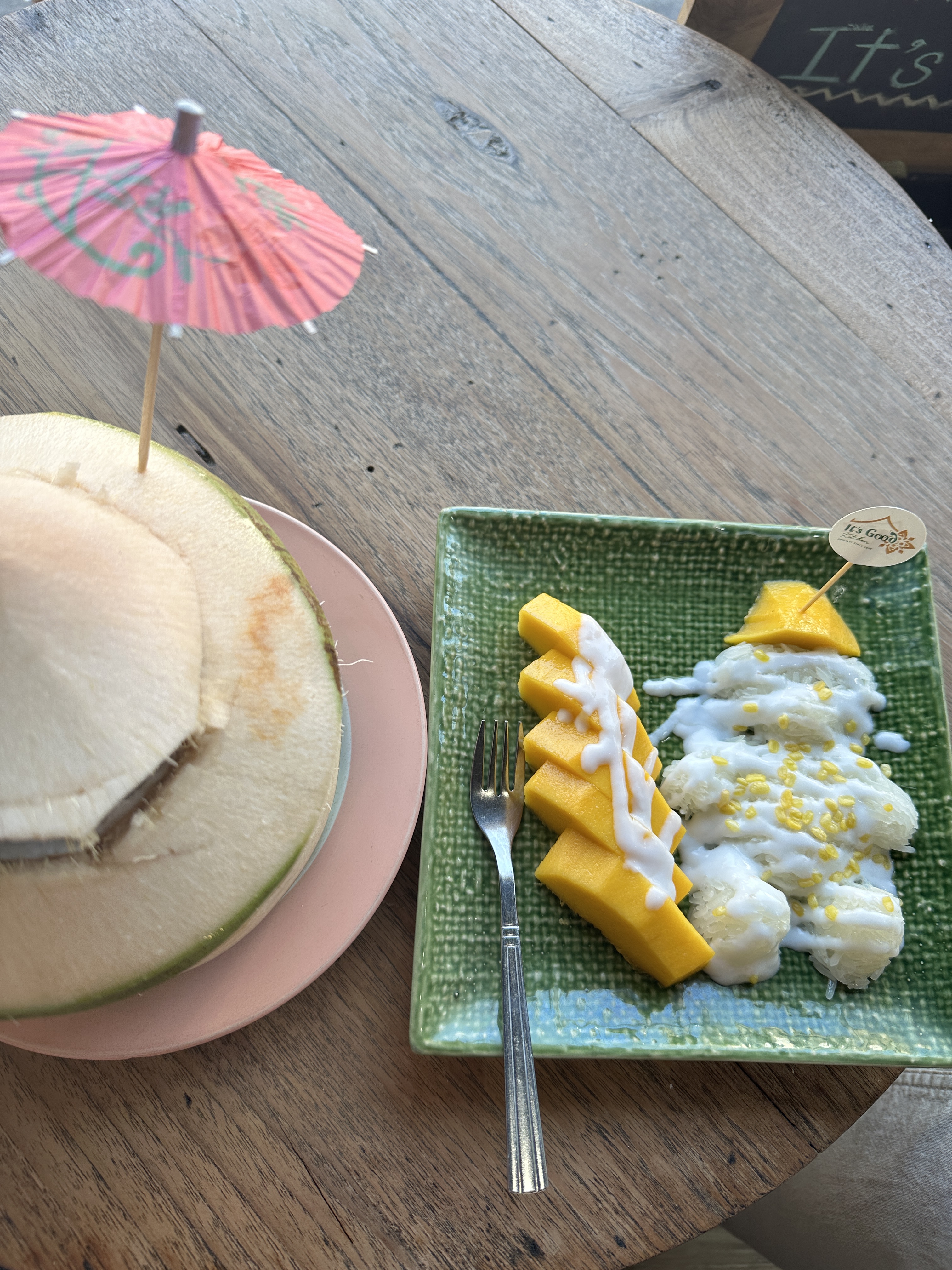
And then mango sticky rice again, ordered more times than I am going to admit to in writing, usually with a young coconut alongside it. Warm sweet rice, coconut cream, cold mango. Bangkok won on this one, but not by much.
Leaving Chiang Mai for Laos was the hardest border of the month, and not for any practical reason at all.
The massages, and the case for a schedule
This is where a habit started that we kept up for the entire month, the whole way through the month, and it belongs near the top of anyone’s list for this part of the world: a massage every three or four days.
We did not plan it. It began as a one-off in Bangkok after a day of walking in that heat, and by the end of the trip it had become the structure the whole month hung on. A month of moving is physically harder than it sounds — long travel days, heavy bags, unfamiliar beds, and a very great many steps — and the difference between arriving somewhere fresh and arriving somewhere wrecked came down almost entirely to whether we had stopped for an hour in the previous few days.
Traditional Thai massage is not the gentle sort. There is stretching, there is a good deal of pressure, and at some point somebody is going to stand on you. Go in expecting that rather than expecting a spa, and it is one of the great pleasures of being here.
Book them on a rhythm rather than waiting until you need one. Every third or fourth day, ideally on an afternoon that sits between two travel days. It costs very little across all of South East Asia, and it is the reason we were still functioning in week four.
What we would do differently
Fewer nights in Bangkok, more in Chiang Mai. Chiang Mai was the one we were not ready to leave, and Bangkok was the one we had understood by the second evening.
And now the part where we are supposed to tell you what disappointed us. We have sat with this one for a while, and the truthful answer is that nothing much did. The food was extraordinary at every price point, from a plastic stool on a pavement to a place with plaques by the gate. The weather did exactly what December in Thailand is supposed to do. The beaches earned their reputation. And people were warm to us in a way that never once felt transactional.
There is one honest consequence of that, though, and it is worth flagging. Thailand is easy. The transport works, it is cheap and frequent, English gets you a long way, and almost nothing about the country asks anything of you. That makes it a wonderful place to begin a long trip — and a slightly unfair standard to measure the next one against. Laos, which came next, is a harder country to travel and a quieter one to enjoy, and we suspect we would have got more out of it had we not arrived straight from somewhere that made everything so effortless.
Where the money goes
Thailand was, by a wide margin, the best value of the whole month. Food is barely a line item — you can eat extremely well from a cart or a market for the price of a coffee at home, and even the places with Michelin plaques by the door are inexpensive by European standards.
The money went on two things: internal flights and the beach. Bangkok to Krabi to Chiang Mai is two domestic flights, cheap individually and worth booking early. Railay is where accommodation prices step up — it is cut off by the cliffs, everything arrives by boat, and you pay for that. Halfway through a month of moving, we decided we did not mind.
Practical summary
Why December worked. Dry season, comfortable in Bangkok, cool in the evenings up north, and the sea flat enough to swim every day. The trade-off is that it is peak season: book accommodation and domestic flights well ahead, and expect company at the famous places.
The arrival card is mandatory and catches people out. Every foreign traveller must submit the Thailand Digital Arrival Card (TDAC) before arriving — it replaced the old paper form on 1 May 2025. It is free, done online, and must be submitted within 72 hours of arrival. It is per entry, not per trip: if you leave Thailand and come back, you file again. Use the official immigration portal and nothing else.
Visa-free stays are changing — check before you book. Thailand has run a 60-day visa exemption for 93 nationalities, but in May 2026 the cabinet approved replacing it with a tiered scheme: 30 days for most eligible nationalities, 15 for a small group. It takes effect 15 days after publication in the Royal Gazette, and at the time of writing that date has not been announced, so the 60-day rule is still in force. If you are planning a long trip, verify the current position before you commit to dates. Rules also differ by passport, and ours may not be yours.
Book ahead: domestic flights, and the elephant sanctuary — the good ones cap group sizes and fill up.
Do at night: the old city temples in Chiang Mai, the Bangkok canals.
Next: part two, Laos.


Leave a Reply