Here is the thing about flying home from Southeast Asia: you are almost certainly connecting through the Gulf anyway.
We were booked Kuala Lumpur to Munich via Doha, which meant a two-hour wait in an airport we would never see the outside of. Instead we turned the connection into three days, and it became one of the best decisions of the whole trip — a completely different part of the world, bolted onto the end for very little extra money.
This is part six of six, and the end of the month.
The route
| Stop | Nights | Getting there |
|---|---|---|
| Doha | 3 | Flight from Kuala Lumpur, about 7h 30m |
| Home | — | Direct to Munich, about 6h |
If your route home goes through Doha, Dubai, Abu Dhabi or Istanbul, look at what a stopover costs before you book the straight-through connection. It is very often near-free, and it turns a wasted day in a terminal into a country.
Souq Waqif: the reason to come
We landed in the afternoon and went straight to Souq Waqif, and stayed until late.
It is a restored market — genuinely restored, in mud brick and exposed wooden beams, rather than rebuilt as a shopping centre — and it is the most atmospheric place in the city by a distance. Narrow lanes, lanterns, carpet sellers with their stock spread across the ground, spice shops, and the smell of oud everywhere.
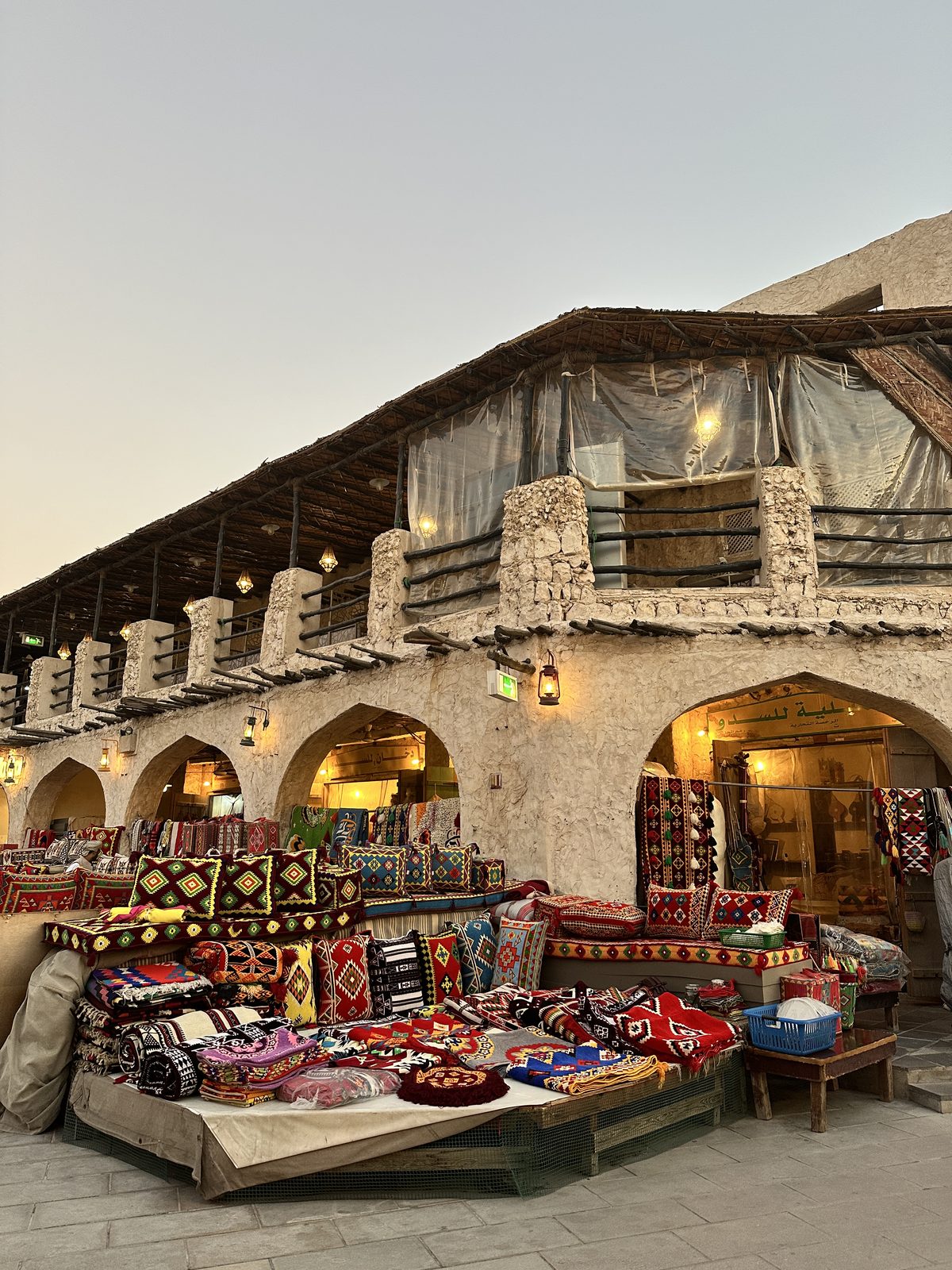
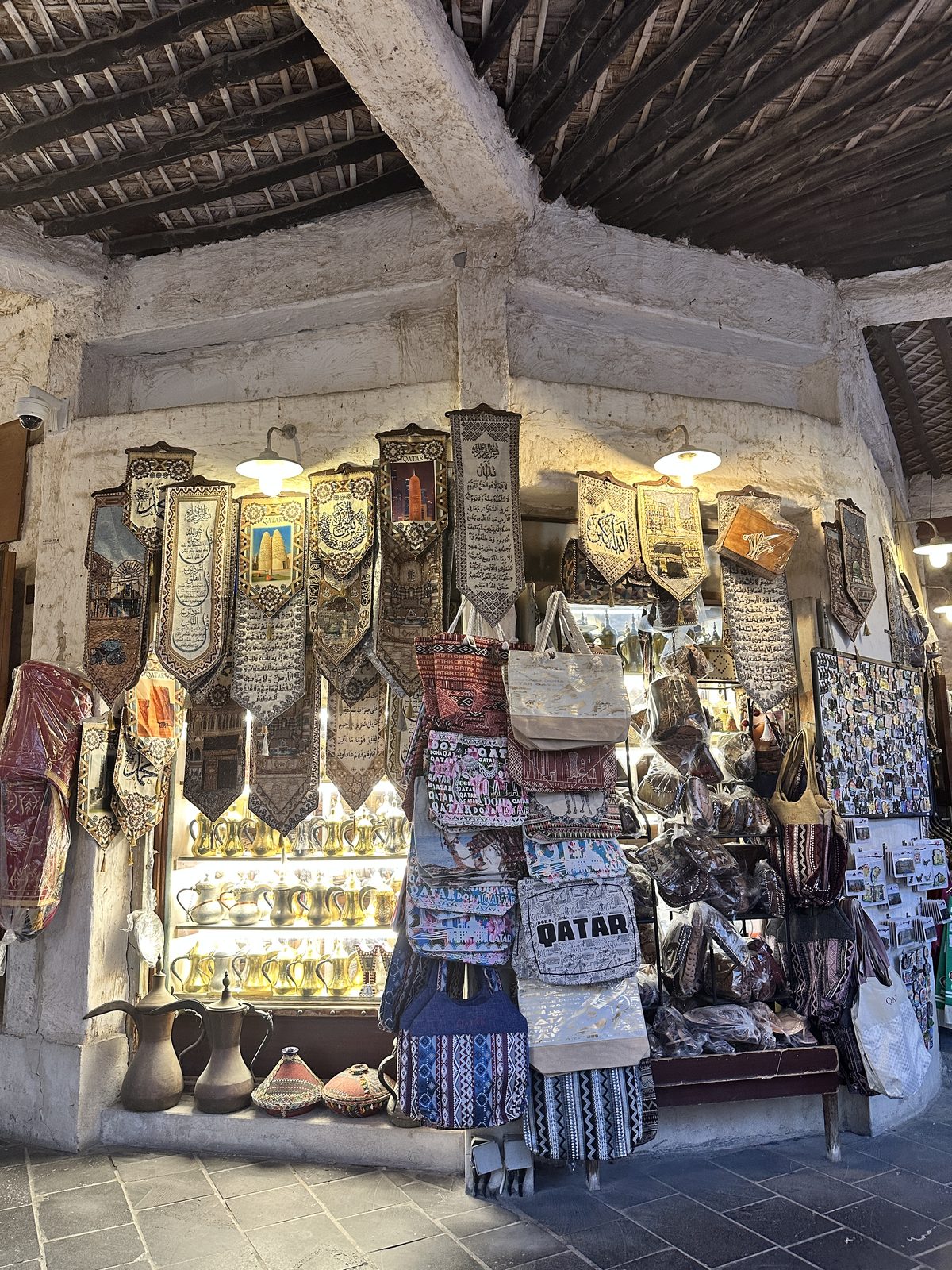
Go in the late afternoon and stay through the blue hour. The whole souq switches on at once and the mud brick goes gold.
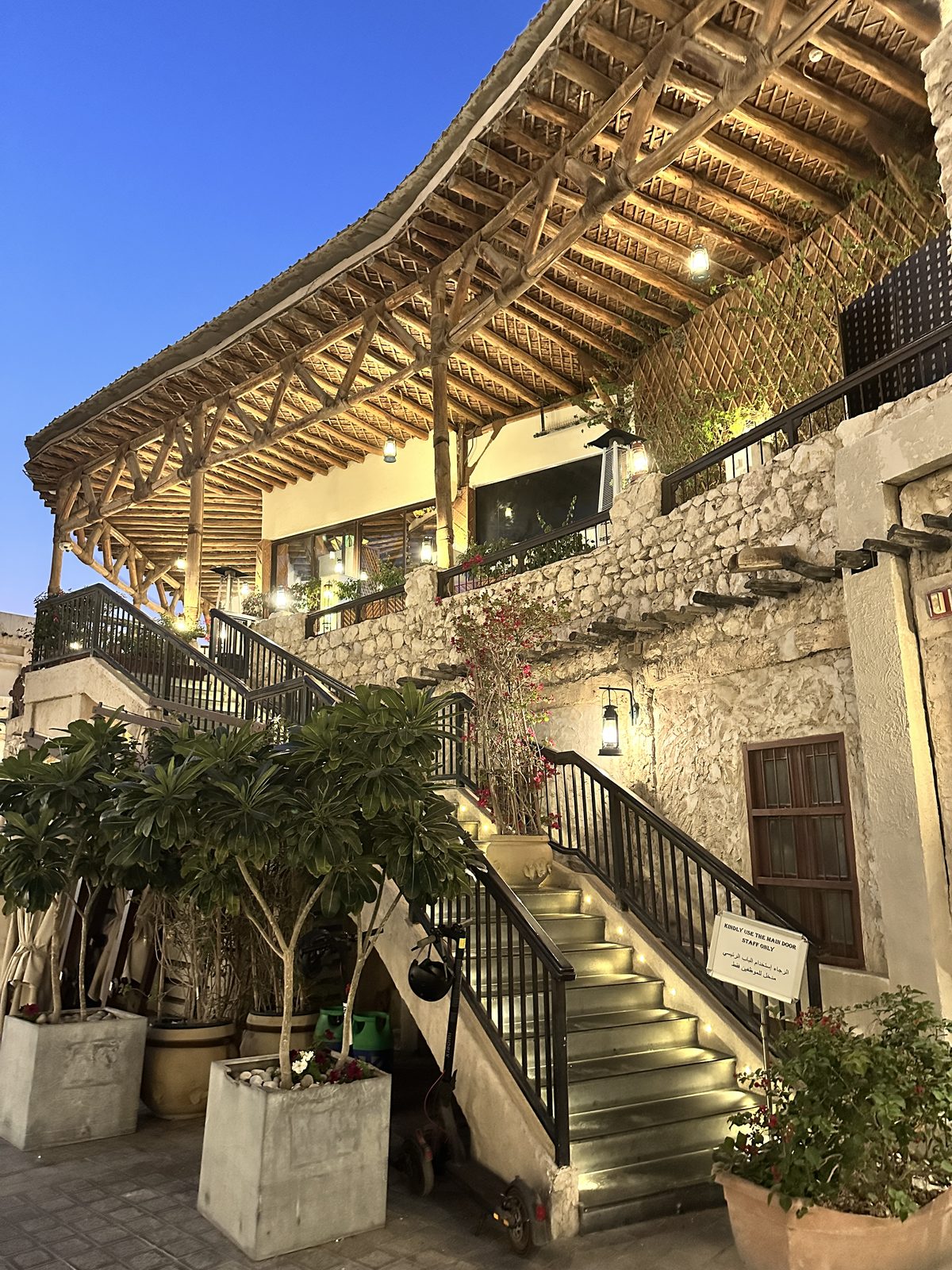
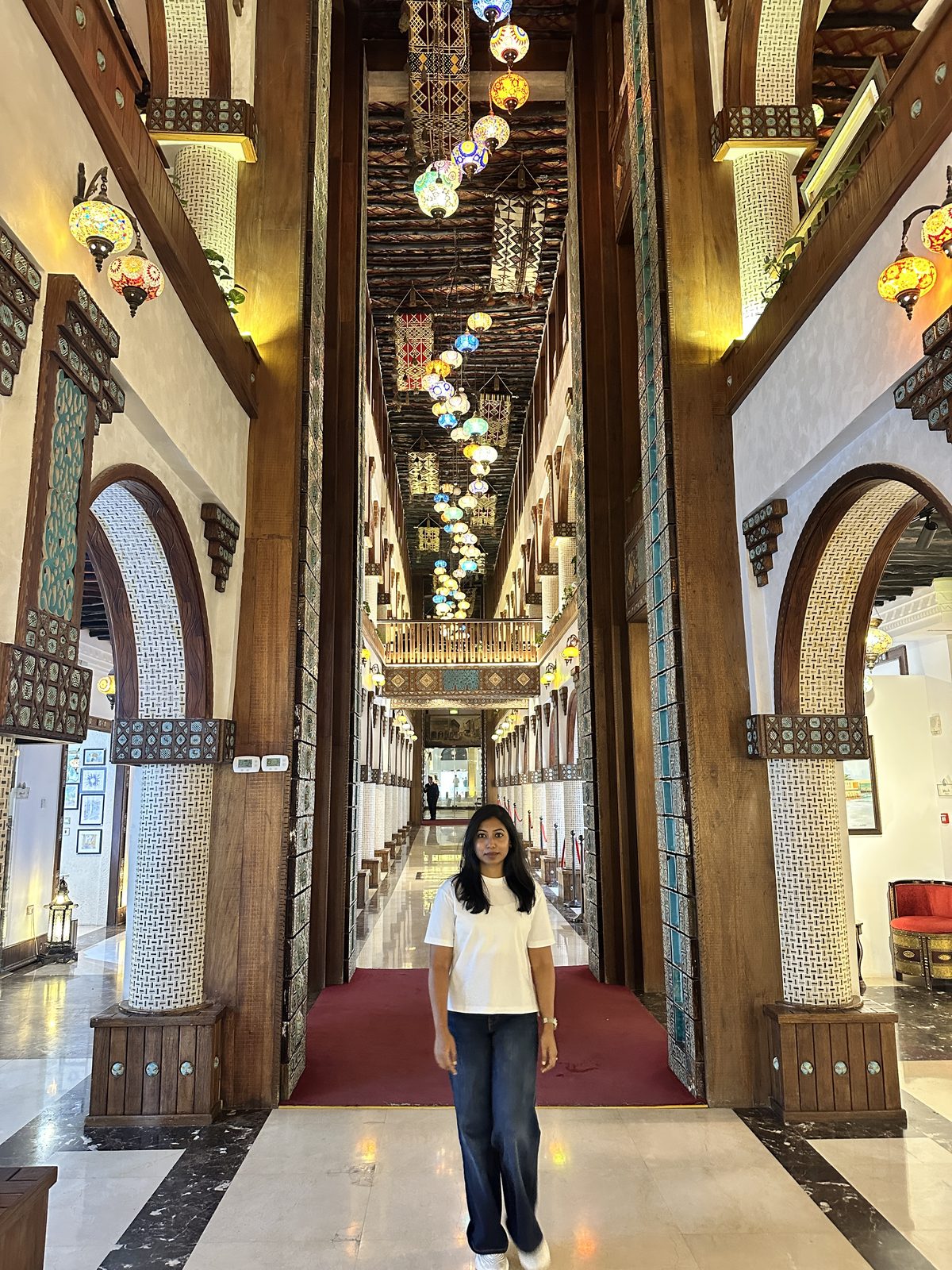
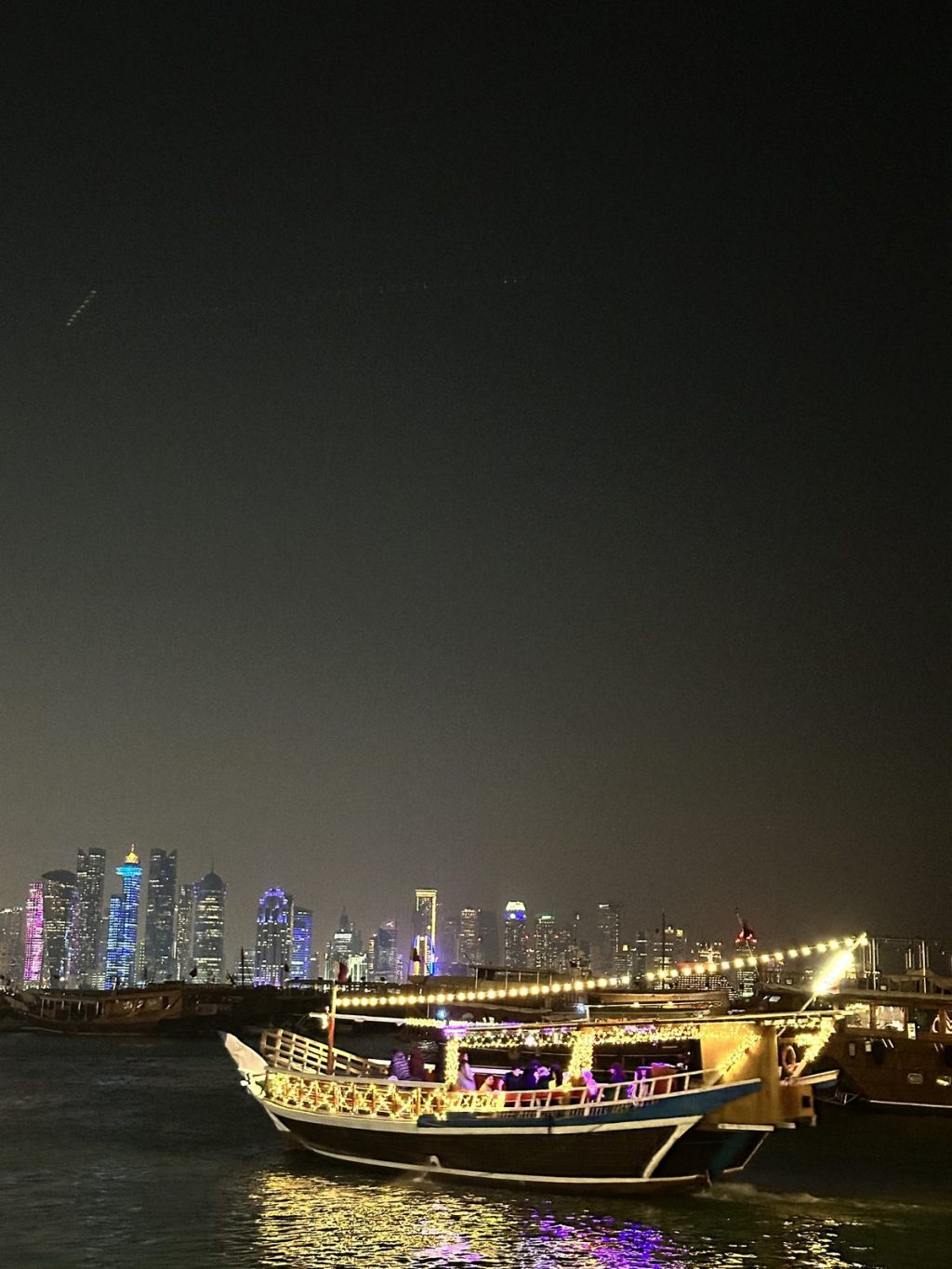
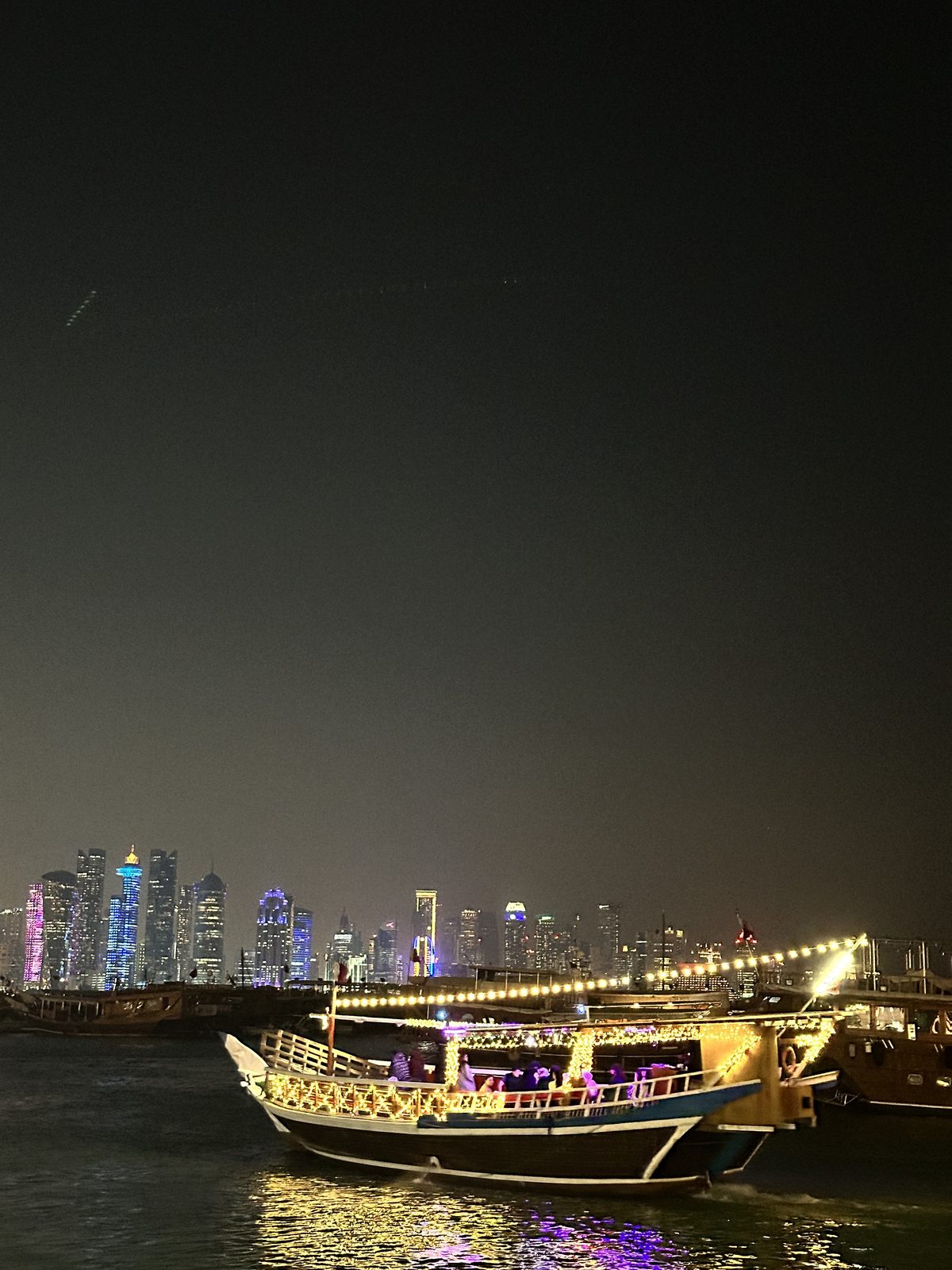
Then, at the end of the evening, walk five minutes to the Corniche and look at the dhow harbour. Dozens of traditional wooden boats strung with lights, and behind them the entire West Bay skyline. It is free, it is spectacular, and almost nobody tells you to do it.
Mina District: the surprise
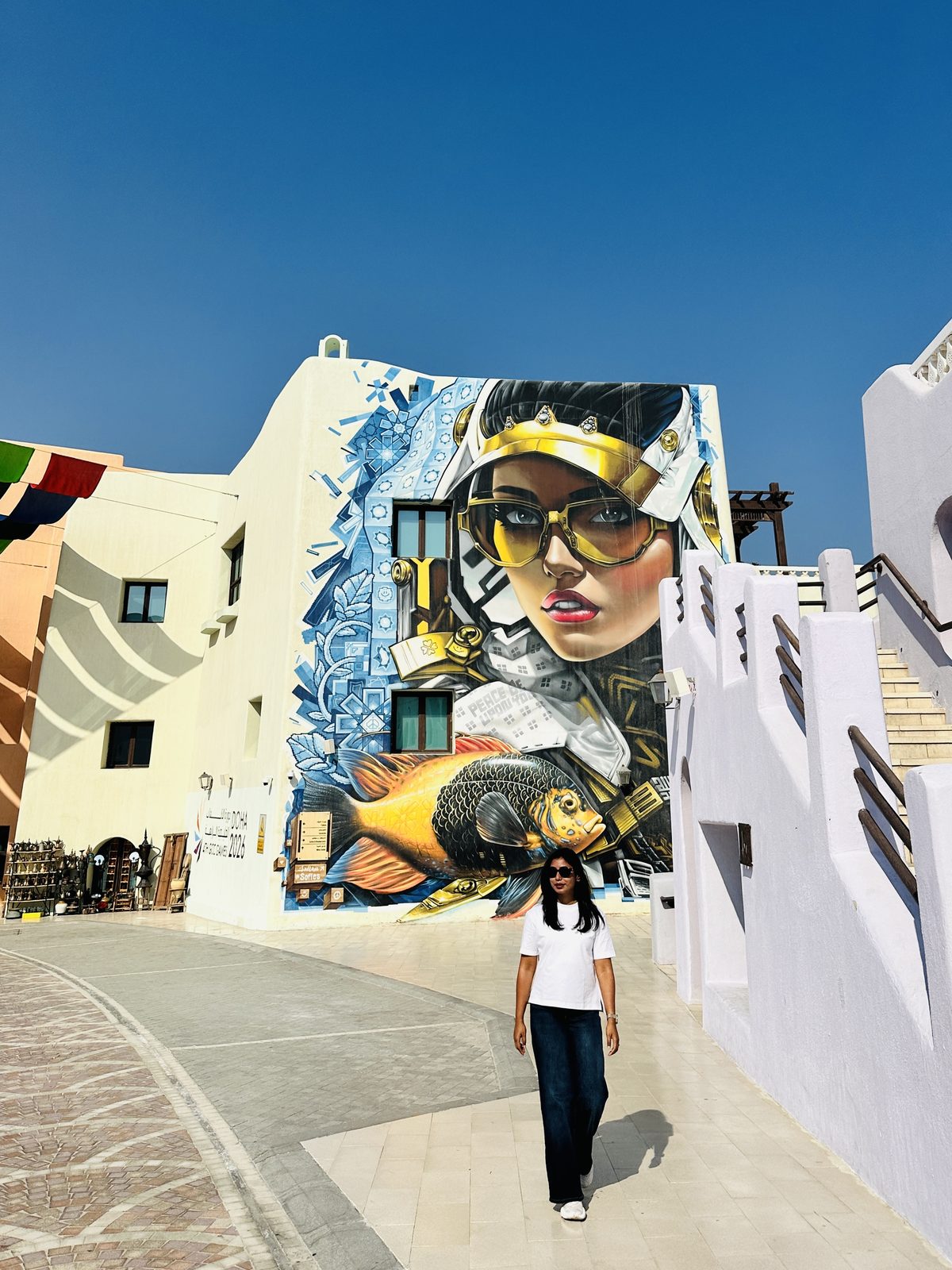
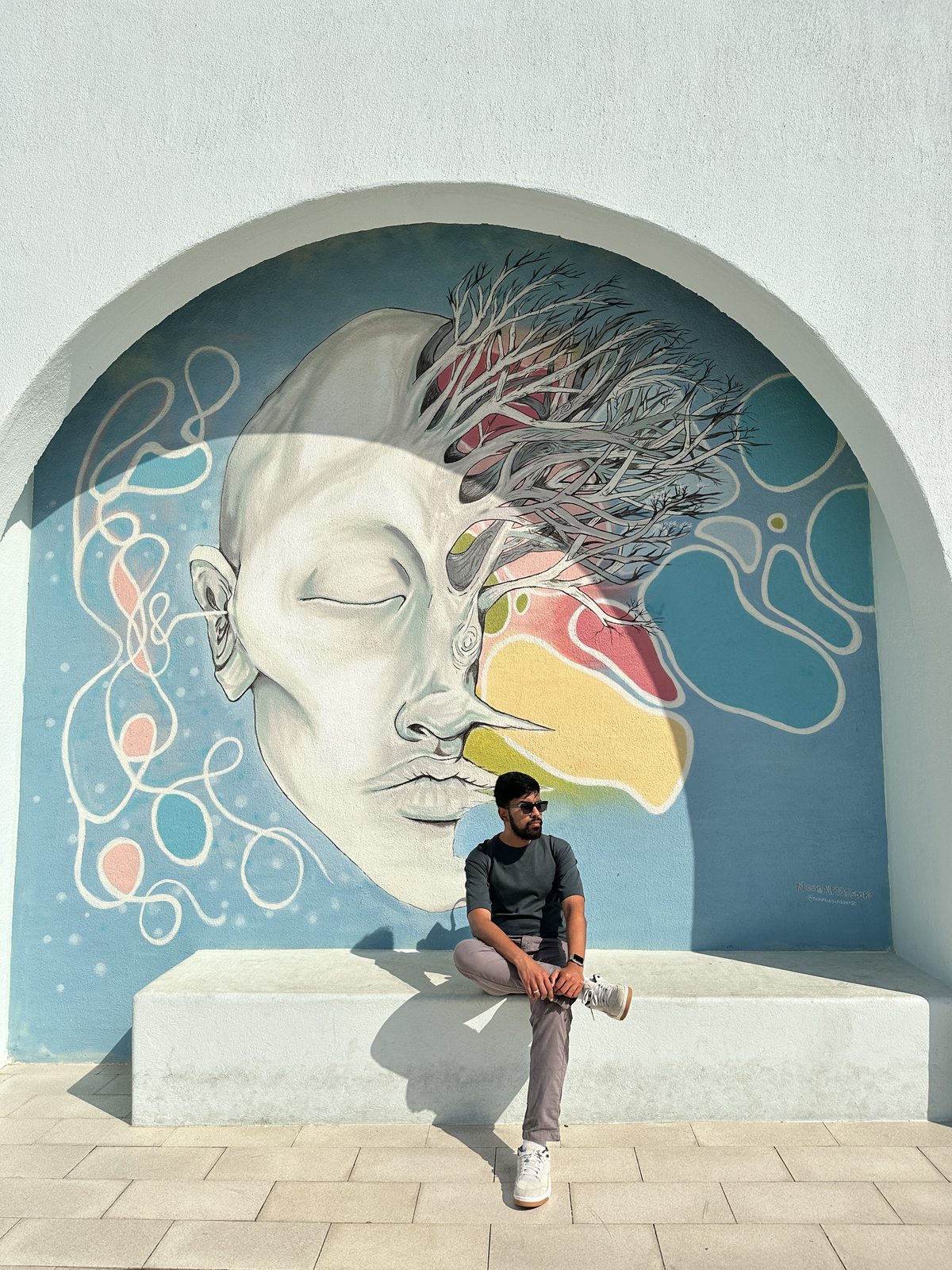
The next morning we went to the Mina District — the old fishing port, repainted in white and pastels and covered, building by building, in enormous murals.
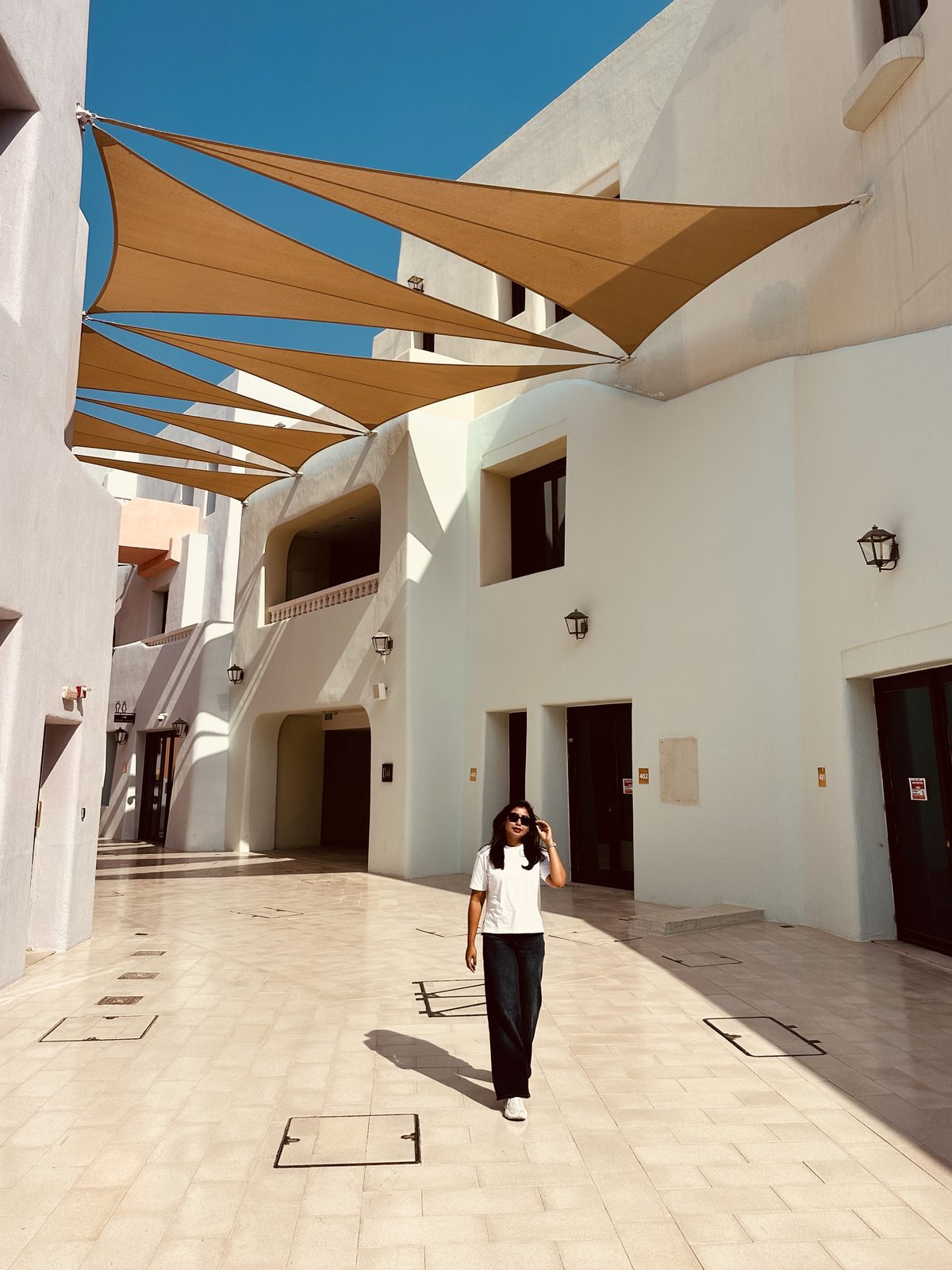
We had no expectations of this at all and it turned out to be our favourite morning in the city. The murals are large, properly good, and unfussy about themselves.
Katara and The Pearl
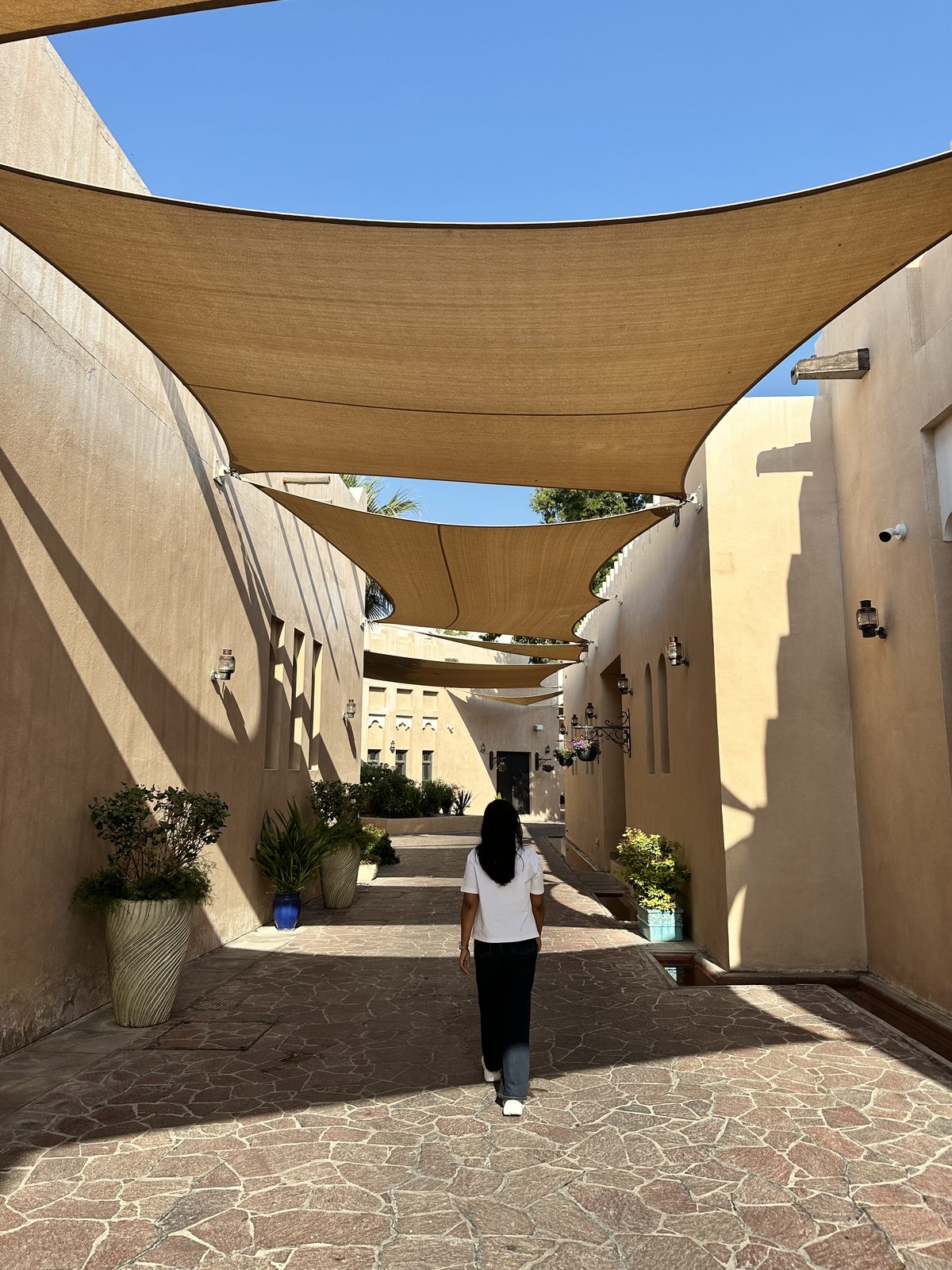
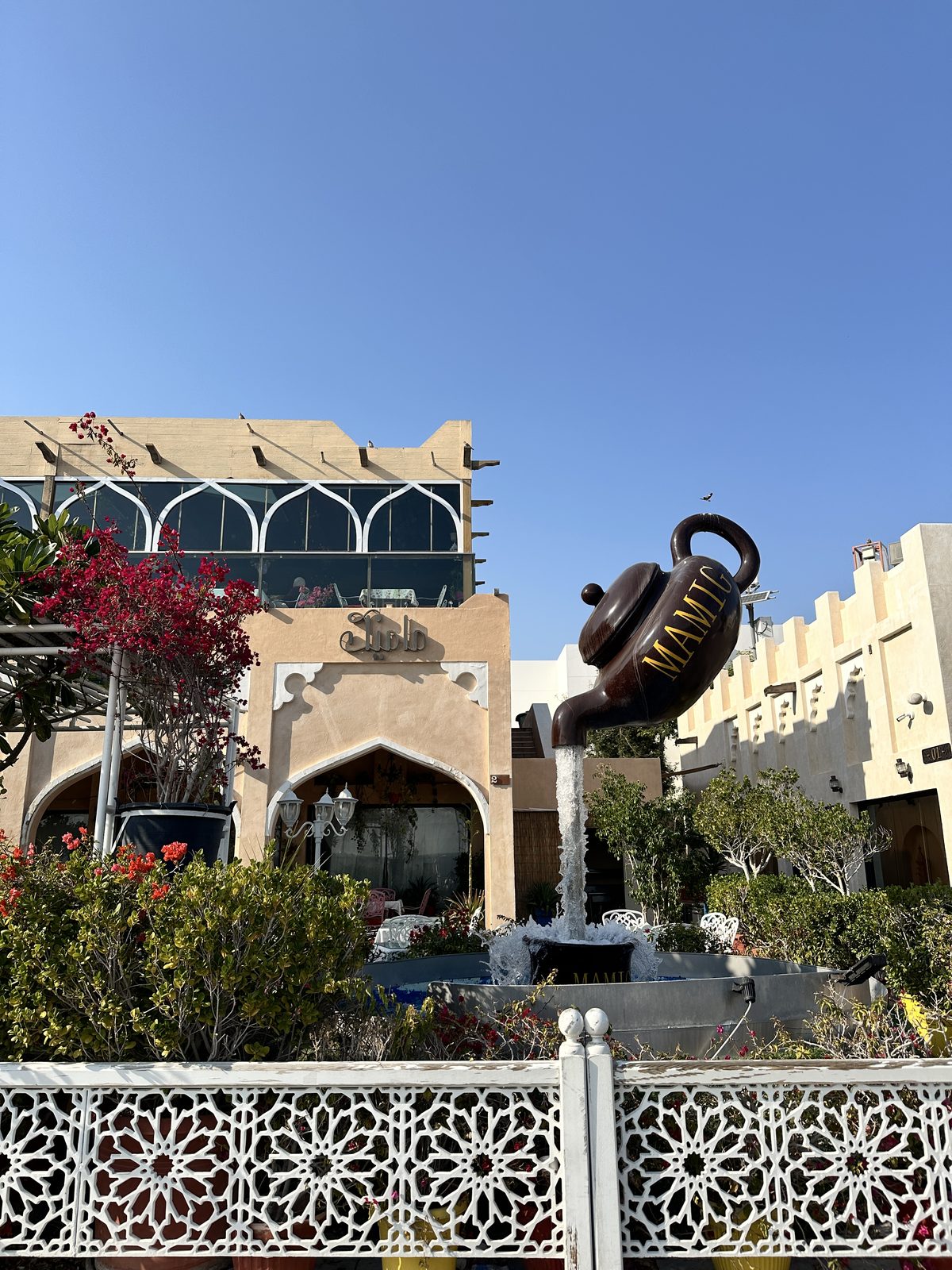
Katara Cultural Village is a purpose-built quarter of theatres, galleries and restaurants done in sand-coloured traditional architecture, and it is a great deal more pleasant than that description suggests. The alleys are narrow and shaded and cool, which in this climate is the entire point.
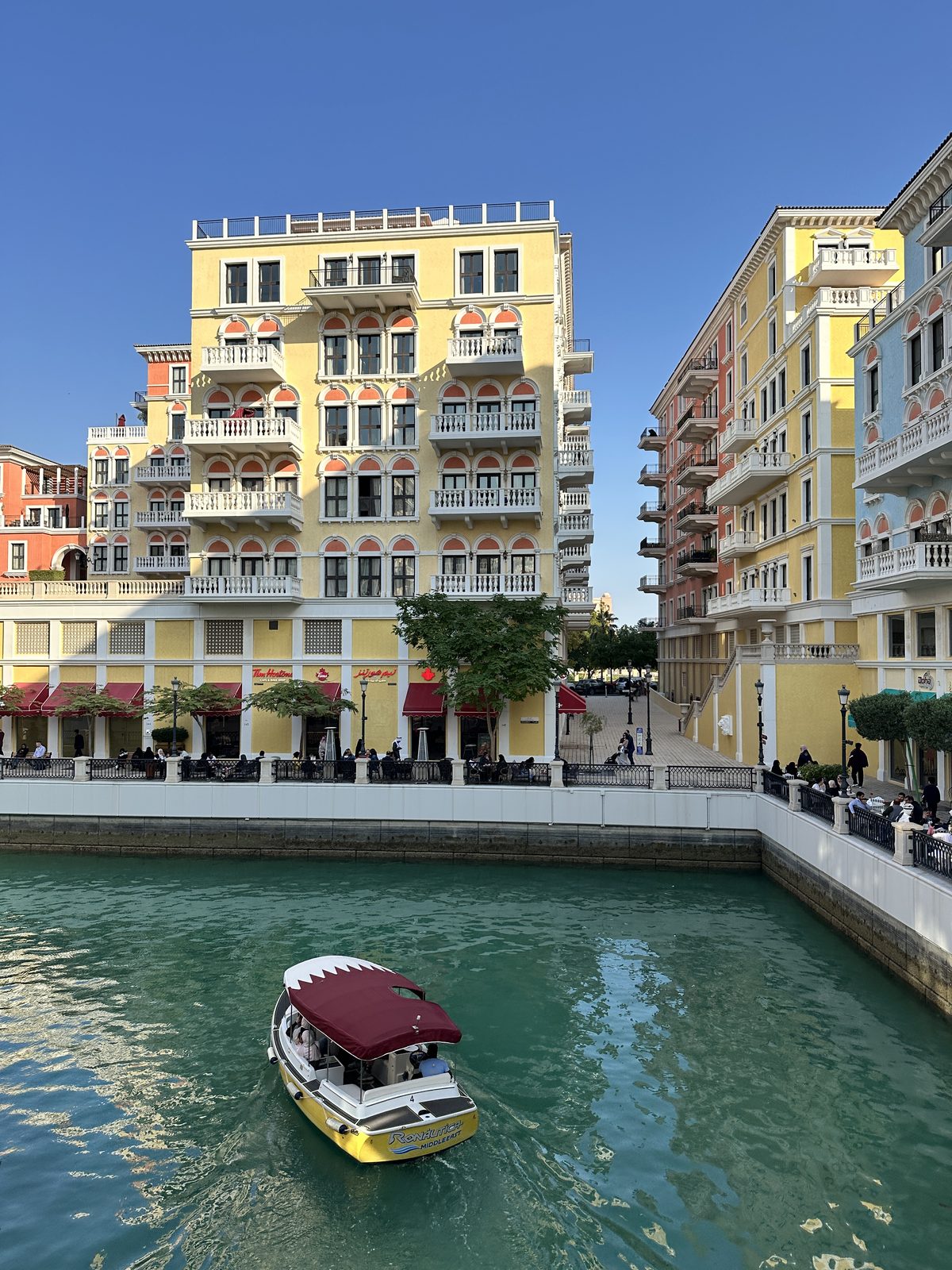
Then The Pearl, and specifically Qanat Quartier, which is an artificial island district built to look like Venice — pastel buildings, canals, little bridges, water taxis. It is completely unserious and we enjoyed it enormously.
Lusail: the last evening of the month
And then, for our final evening of the entire trip, we drove north to Lusail — a city that essentially did not exist twenty years ago — and walked the marina at dusk.
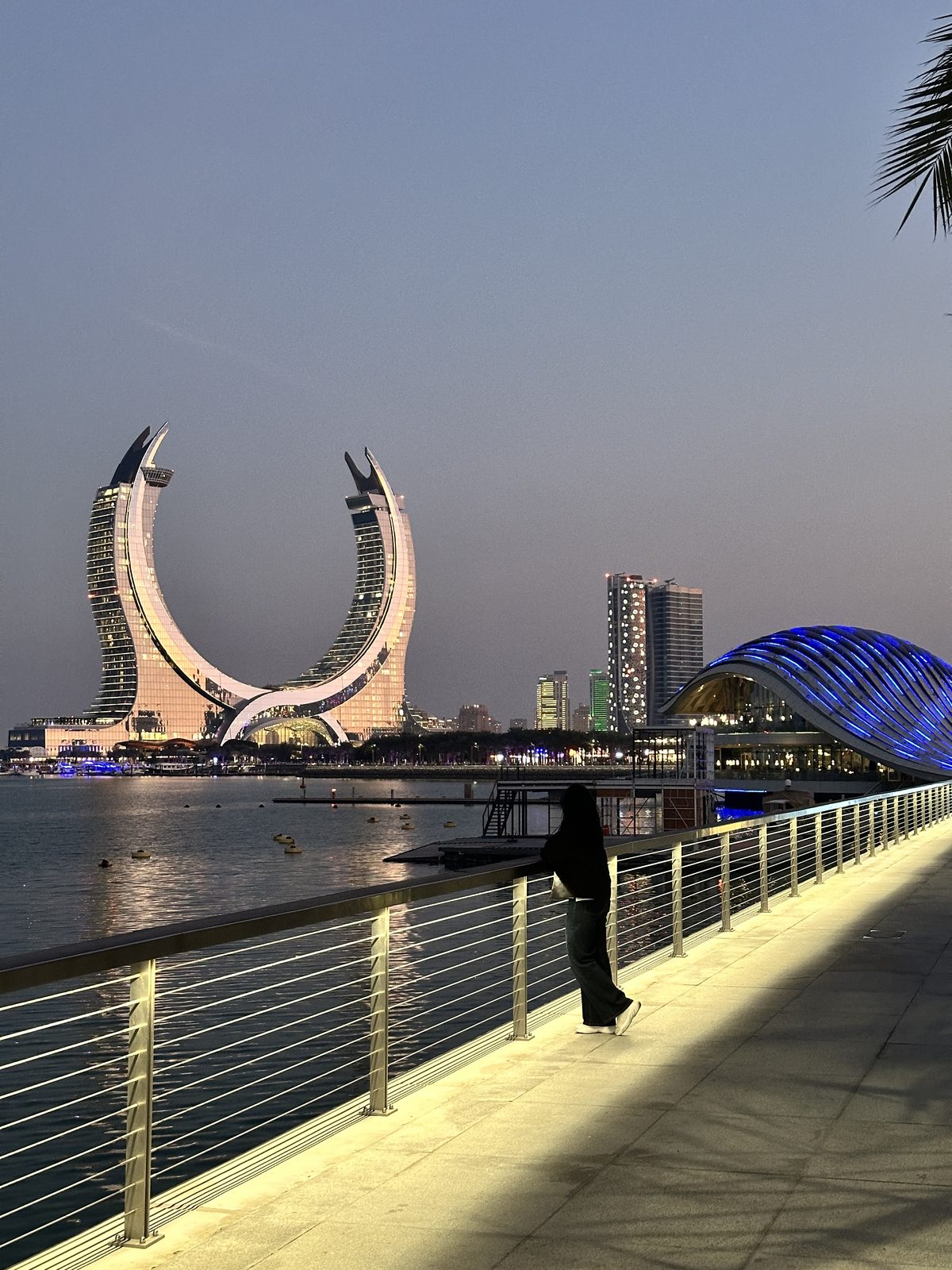
The two crescents are a hotel. The whole waterfront was built for the 2022 World Cup and has the faintly unreal quality of a place that arrived all at once. Standing there at the end of a month that began in a Bangkok heat haze felt appropriately strange.
Then a short night, an early flight, and Munich in January.
What we would do differently
Nothing, honestly — but we would give it one more day. Three days is enough for Doha and not quite enough for Qatar. The desert is an hour away: the inland sea at Khor Al Adaid, where the dunes run straight into the water, is supposed to be extraordinary and needs a full day with a driver. We did not have that day. Next time.
And we would not have hesitated about the stopover. We nearly booked the straight connection. Three days on the way home cost us very little and gave us a sixth country.
Where the money goes
Qatar is not cheap, and after a month in Southeast Asia the adjustment is abrupt. Coffee costs what it costs in Munich. Taxis are fine but add up; the metro is excellent, spotless and very cheap, and covers Souq Waqif, Katara, The Pearl and Lusail.
Two things are free and among the best of it: the Corniche at night, and Souq Waqif, where you need not spend anything at all.
Hotels are the real variable. Prices swing enormously with what is on at the exhibition centre, so check your dates before assuming.
Practical summary
Check whether you need a visa — many nationalities get visa-free entry on arrival. Rules vary considerably by passport; check the official Qatari portal before booking, not a third-party site.
Look at the airline’s stopover programme. Qatar Airways runs one with heavily discounted hotel nights for passengers breaking a connection in Doha, and similar schemes exist on the other Gulf carriers. This is the mechanism that makes a trip like this cost almost nothing extra.
Use the metro. Cheap, air-conditioned, and it reaches everywhere in this post.
Souq Waqif in the late afternoon, and stay for the blue hour.
Everything outdoors is a morning or an evening. Midday is for museums and lunch, even in January.
Dress modestly in public — shoulders and knees covered is the standard, and it is a matter of courtesy rather than enforcement in most places.
And that is the month
Six countries, thirty days, in this order: Thailand, Laos, Vietnam, Cambodia, Malaysia, Qatar.
What a month like this gives you is not depth — it is contrast. The way a country announces itself in the first hour, before you have had time to get used to it. Six of those in a row is a particular kind of privilege and we would do it again tomorrow.
If you take three things from the whole series: book the massages on a rhythm, not when you finally need one. Go to the Michelin-listed places — across all six countries they were never the expensive option. And build in the days that do nothing, because they are what makes the rest of it work.
And if your flight home connects through the Gulf: stop. Even for three days.
Thank you for reading all six of these.
If you have landed here first: start at the beginning with Thailand.


Leave a Reply