Country number five, and the one where we finally stopped moving.
Malaysia got four days and all of them in Kuala Lumpur. We did not go to Penang, we did not go to Langkawi, and we did not get anywhere near Borneo. What we did instead was slow all the way down, eat extremely well, and celebrate Paritosh’s birthday in a city neither of us had ever been to.
If you have read the other four parts you will know this was a fast month. Ending it in one place, doing one thing a day, was the best decision we made about the whole trip.
This is part five of six.
The route
| Stop | Nights | Getting there |
|---|---|---|
| Kuala Lumpur | 4 | Flight from Siem Reap, about 2h |
| — Batu Caves | half day | 30 min by train from KL Sentral |
| Onward to Qatar | — | Flight to Doha, about 7h 30m |
Kuala Lumpur: the easiest city in Southeast Asia
KL does not get written about the way Bangkok and Singapore do, and having now spent four days there we think that is a straightforward oversight.
It is genuinely easy. The trains work and are cheap. It is clean without being sterile. It is Malay and Chinese and Tamil all at once, in the food and the signage and the temples, and none of that feels arranged for visitors — it is simply what the city is. After a month of arriving somewhere new every two or three days, landing in a place that asked nothing difficult of us was an enormous relief.
Batu Caves: go at seven in the morning
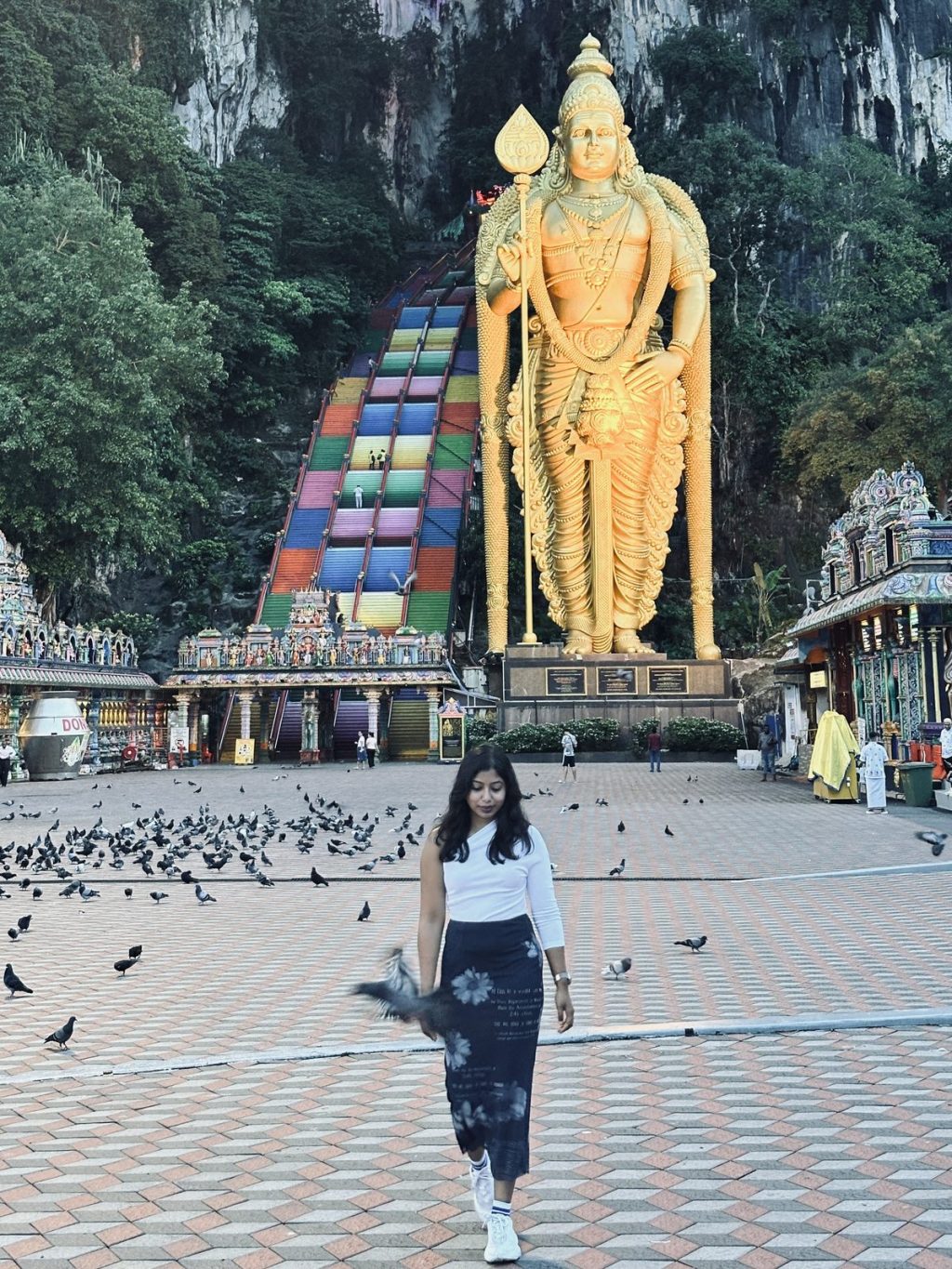
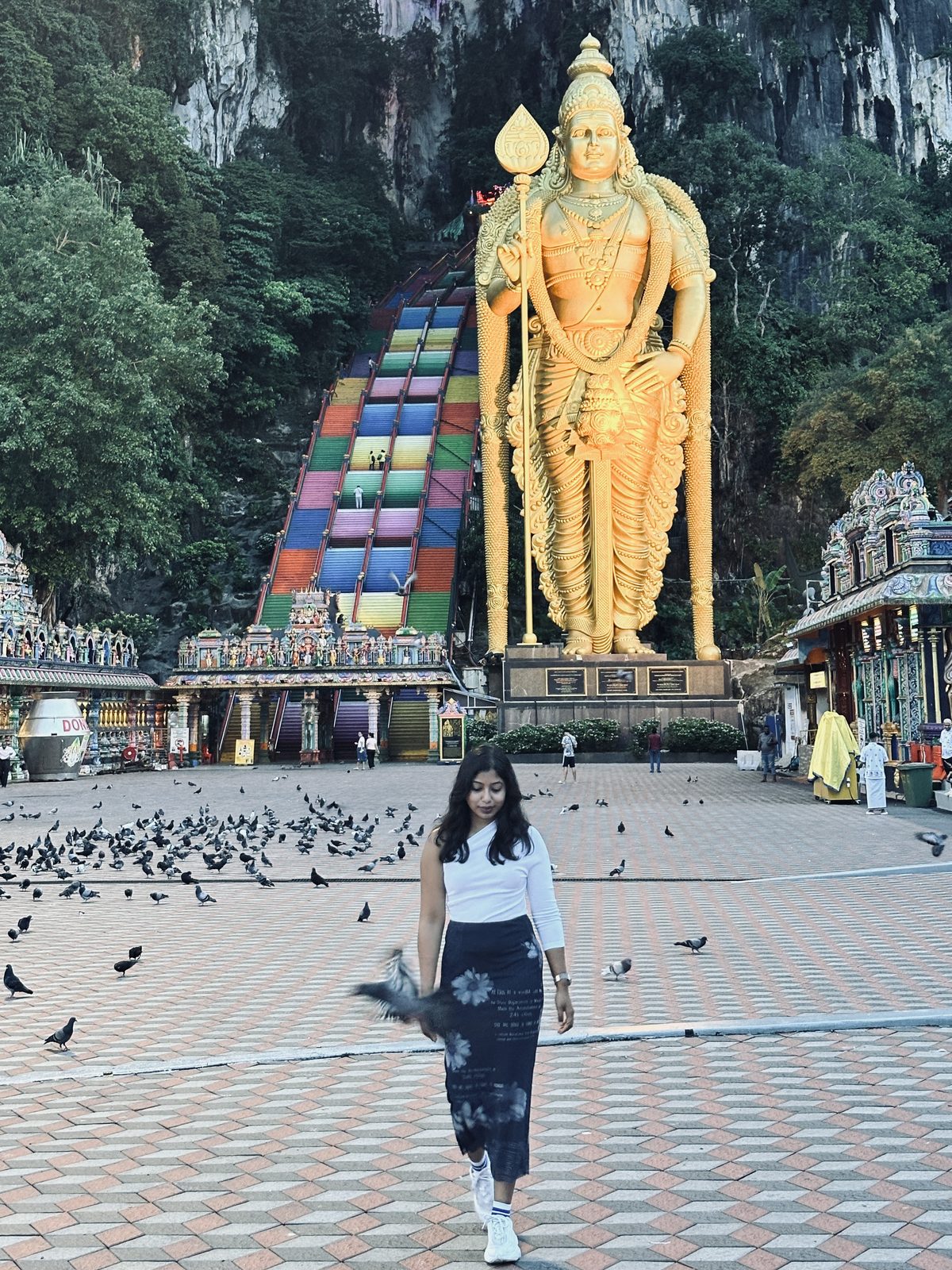
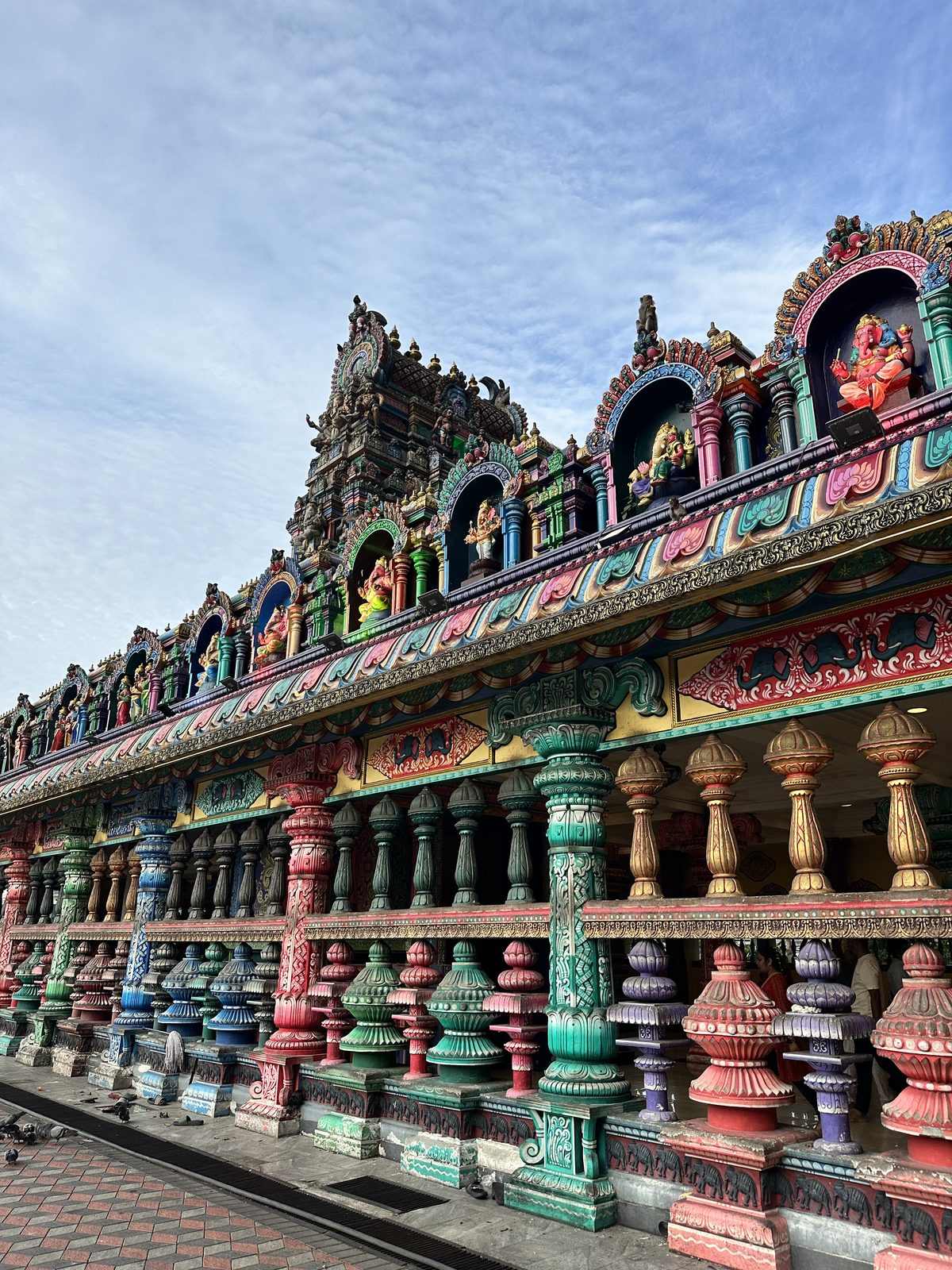
Twenty minutes north of the city on a commuter train, a 140-foot gold statue of Murugan stands at the bottom of 272 rainbow-painted steps leading into a limestone cave. It is, visually, one of the most arresting places we saw in the entire month.
It is also mobbed by ten o’clock. Go at seven. We had the forecourt almost to ourselves except for several hundred pigeons, and the light on the gold at that hour is worth the alarm on its own.
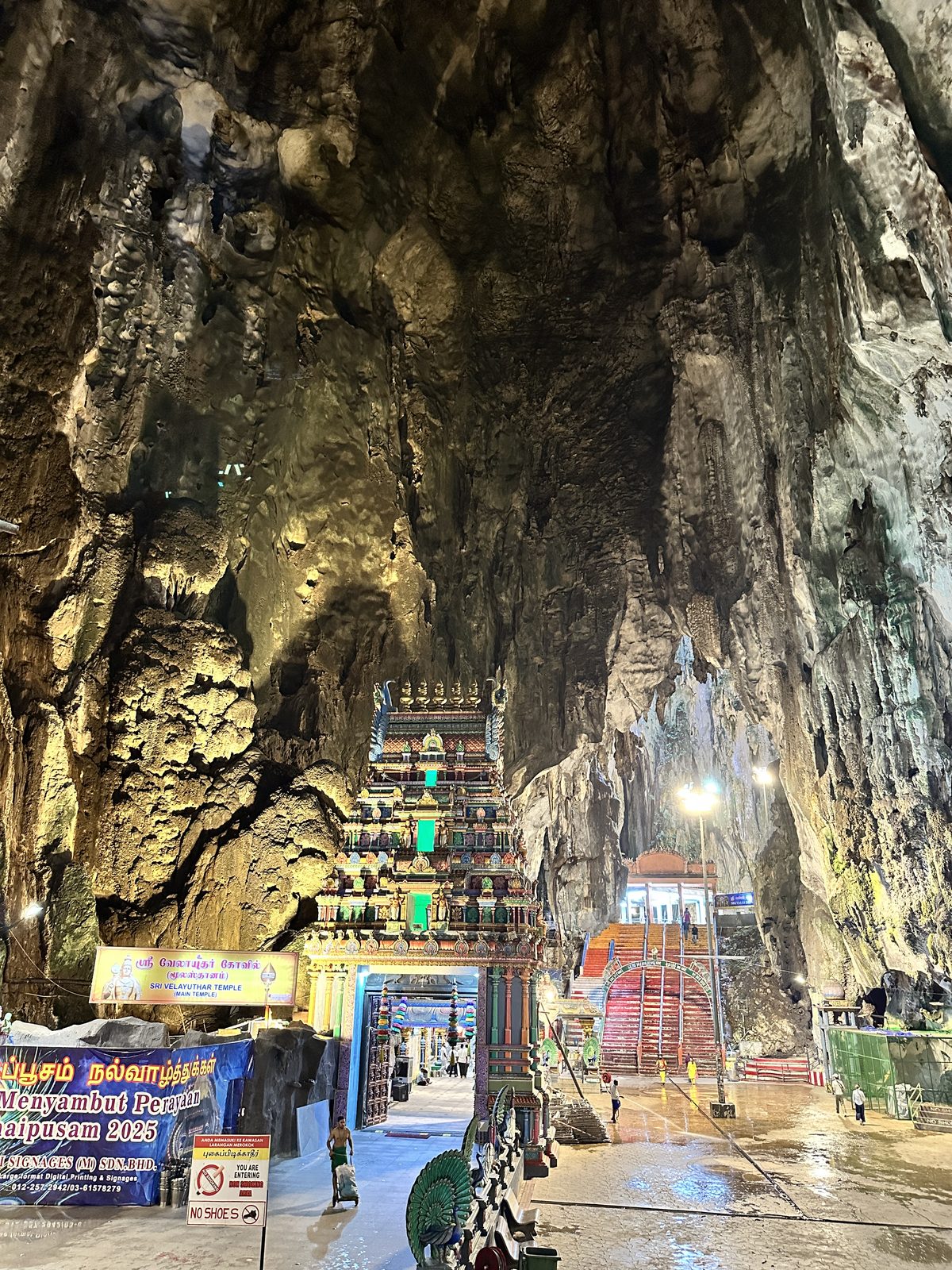
Then up the steps, which are steeper than they photograph, into the Temple Cave — an enormous limestone chamber open to the sky at one end, with a temple built inside it and stalactites hanging over the whole thing.
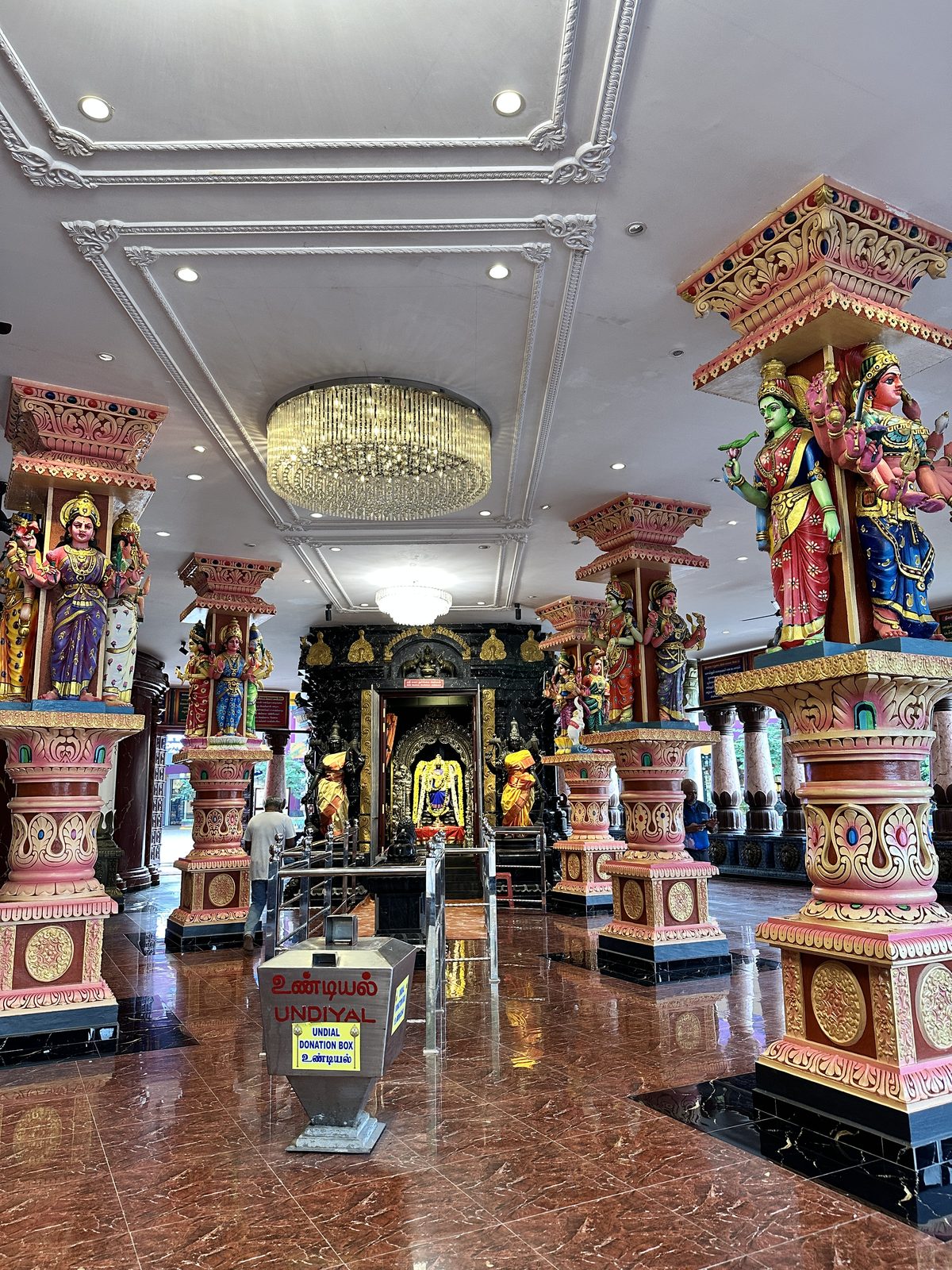
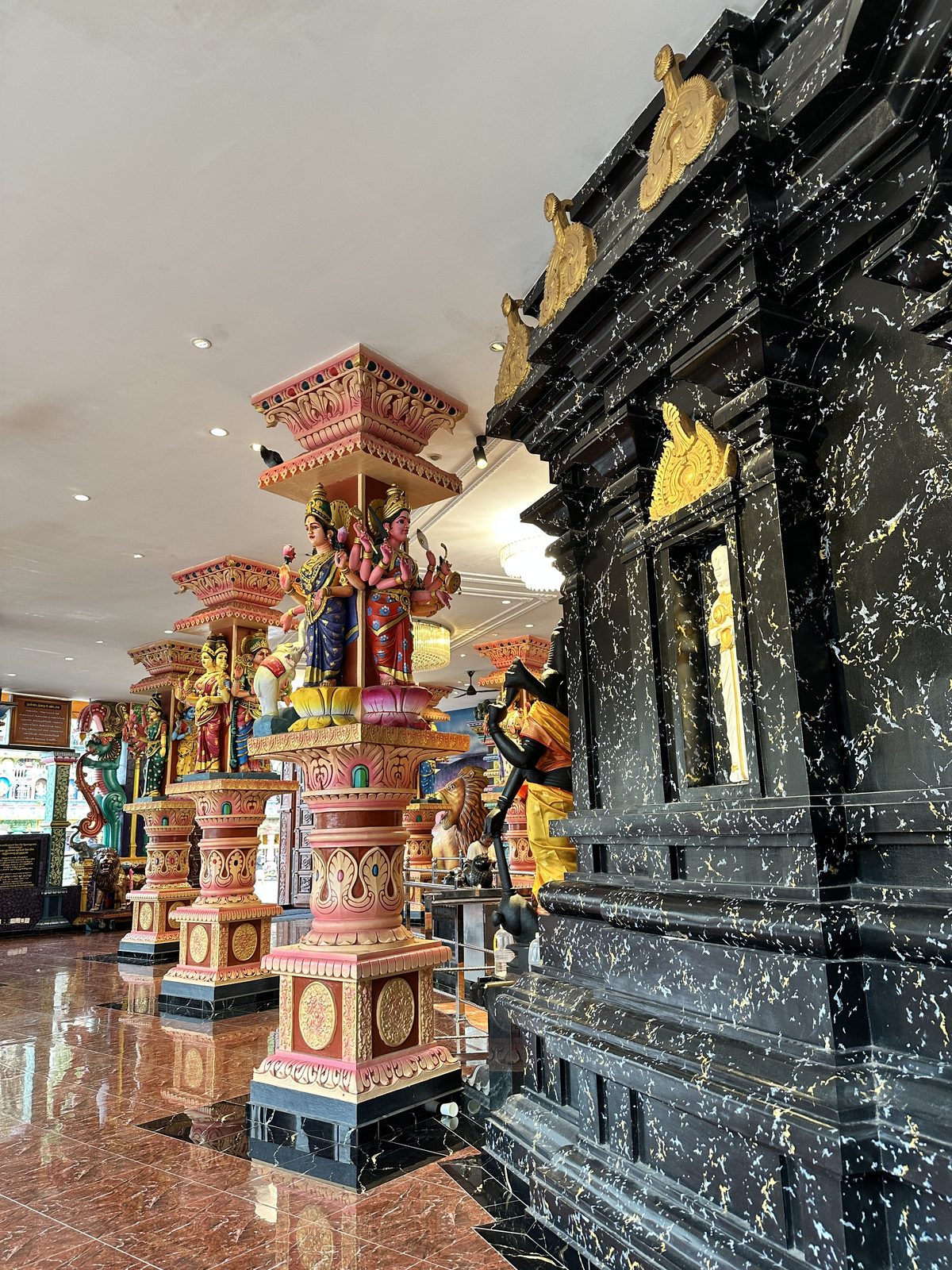
Two practical things. Shoulders and knees covered, and they will lend you a sarong at the entrance if you have got it wrong. And the monkeys are not friendly — they are habituated and they will go into an open bag. Zip everything.
And then, unexpectedly, coffee
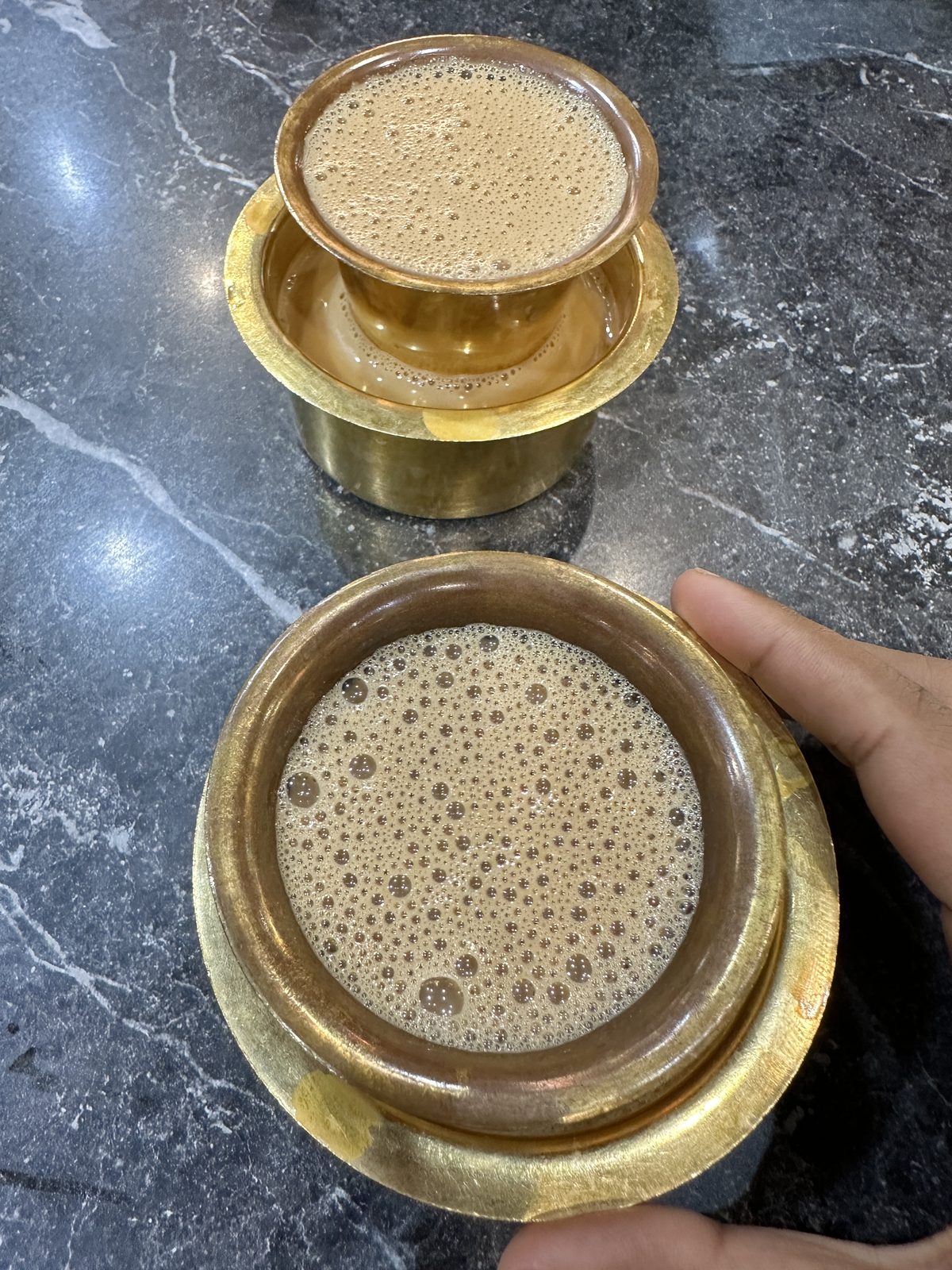
The best cup of the entire month was in a Tamil café near the caves — South Indian filter coffee, poured back and forth between a brass tumbler and its dish until it froths. I did not expect to find this here and I am still slightly emotional about it.
That is the thing about KL that no guidebook conveys properly. The Tamil part of the city is not a quarter or an attraction. It is just part of how the place works.
The birthday
Paritosh’s birthday landed on our second day, which was an accident of scheduling that we had not planned around at all and which turned out to be the nicest possible way to finish a month of travelling.
We booked De.Wan 1958, Chef Wan’s restaurant, which has Michelin plaques for 2023, 2024, 2025 and 2026 lined up by the door.
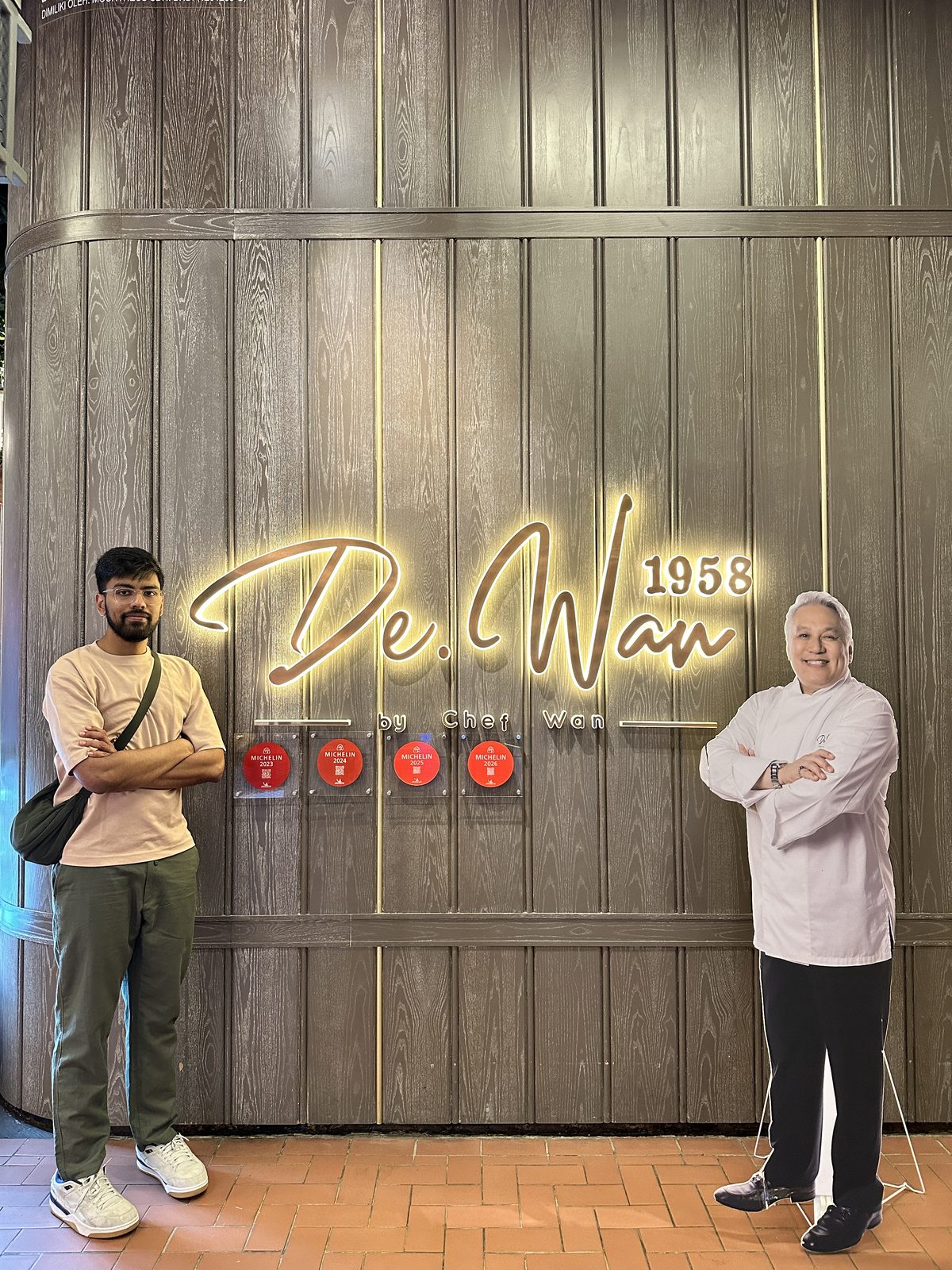
Which brings this series neatly back to where it started. We noted in part one that Michelin-listed restaurants across Southeast Asia cost a fraction of what an ordinary dinner costs at home. By Malaysia we had eaten at half a dozen of them over the course of the month, and the running total still would not have covered one good night out in Munich.
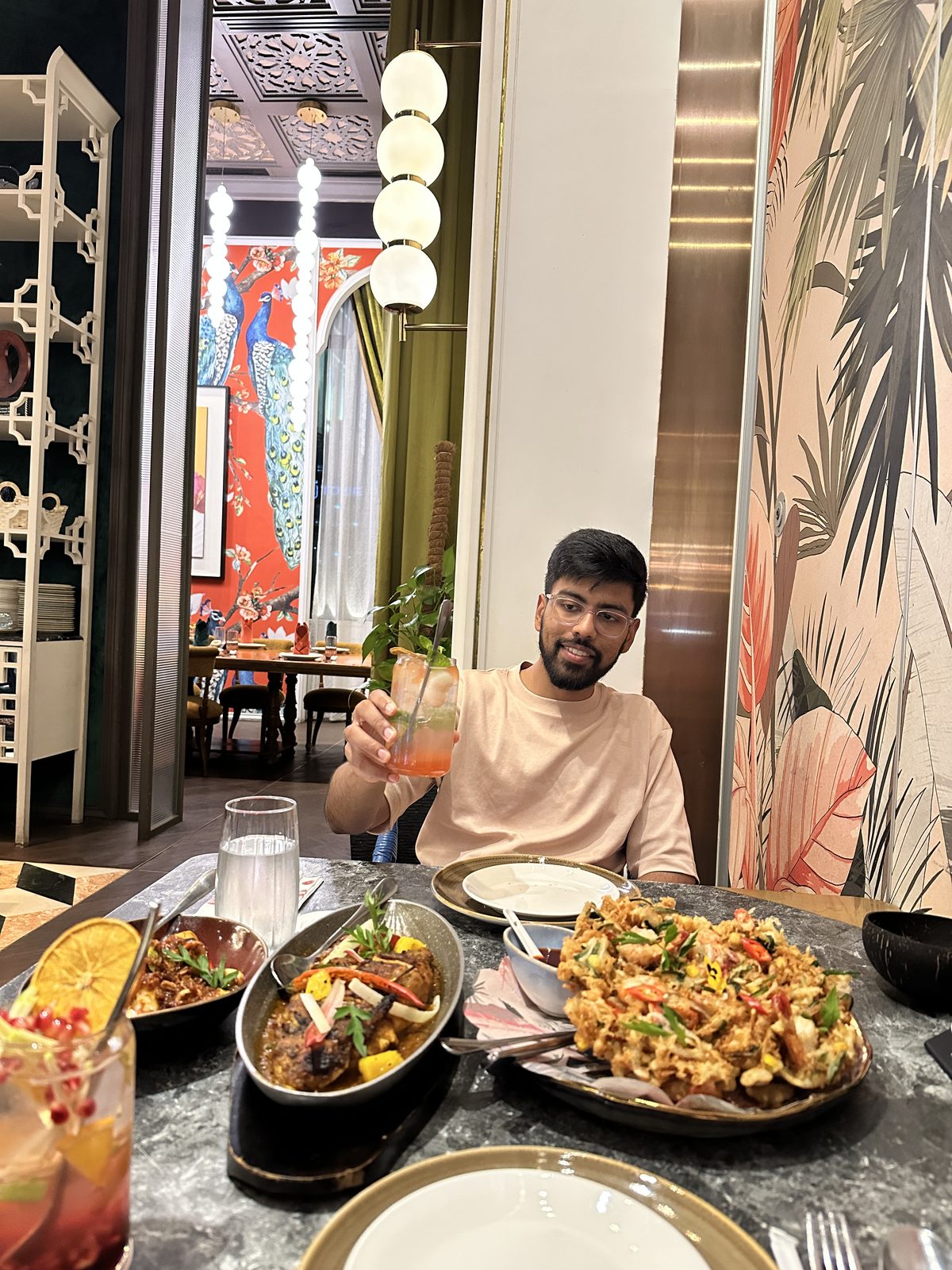
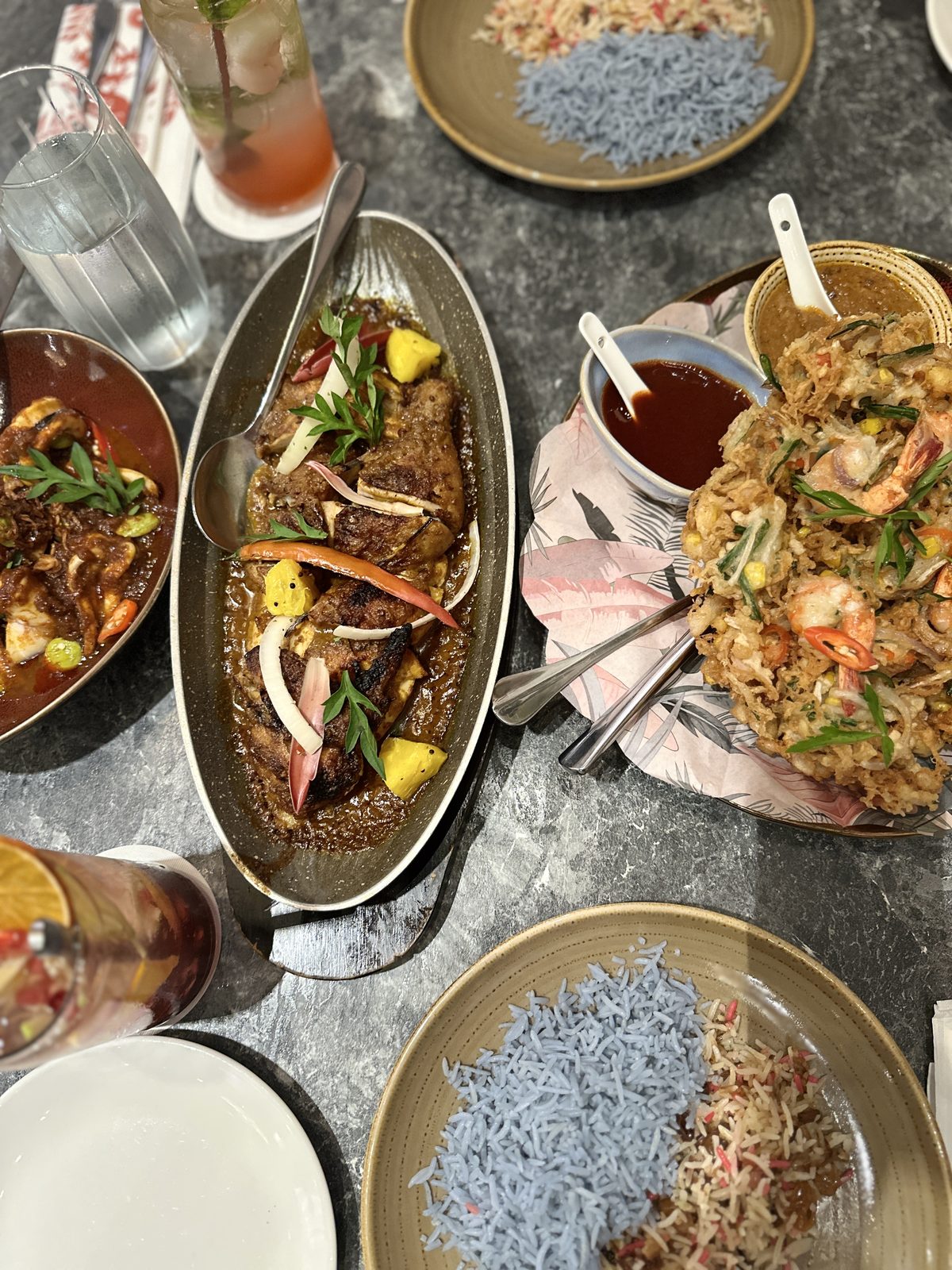
Then out, and down to the towers.
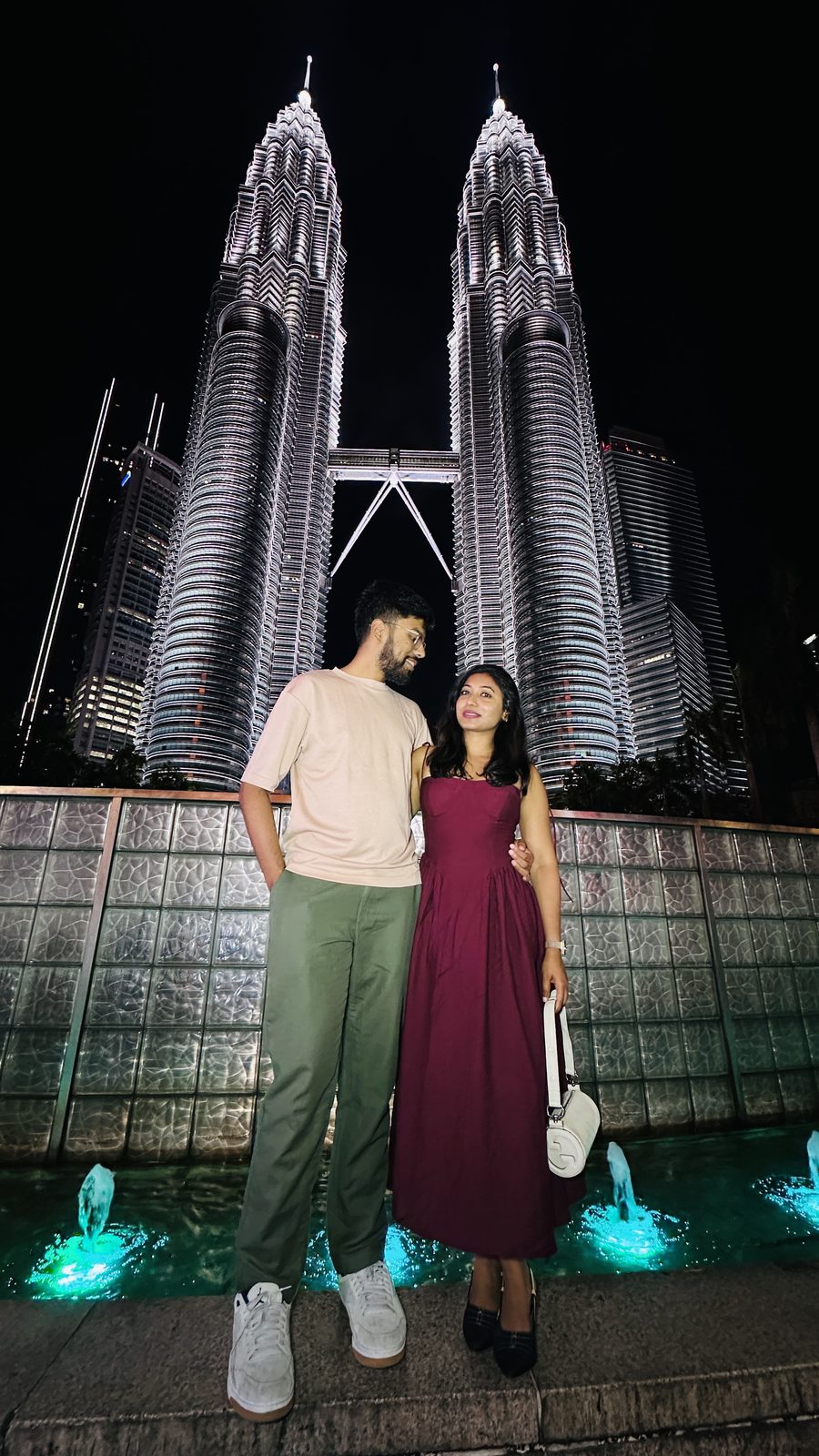
The last night
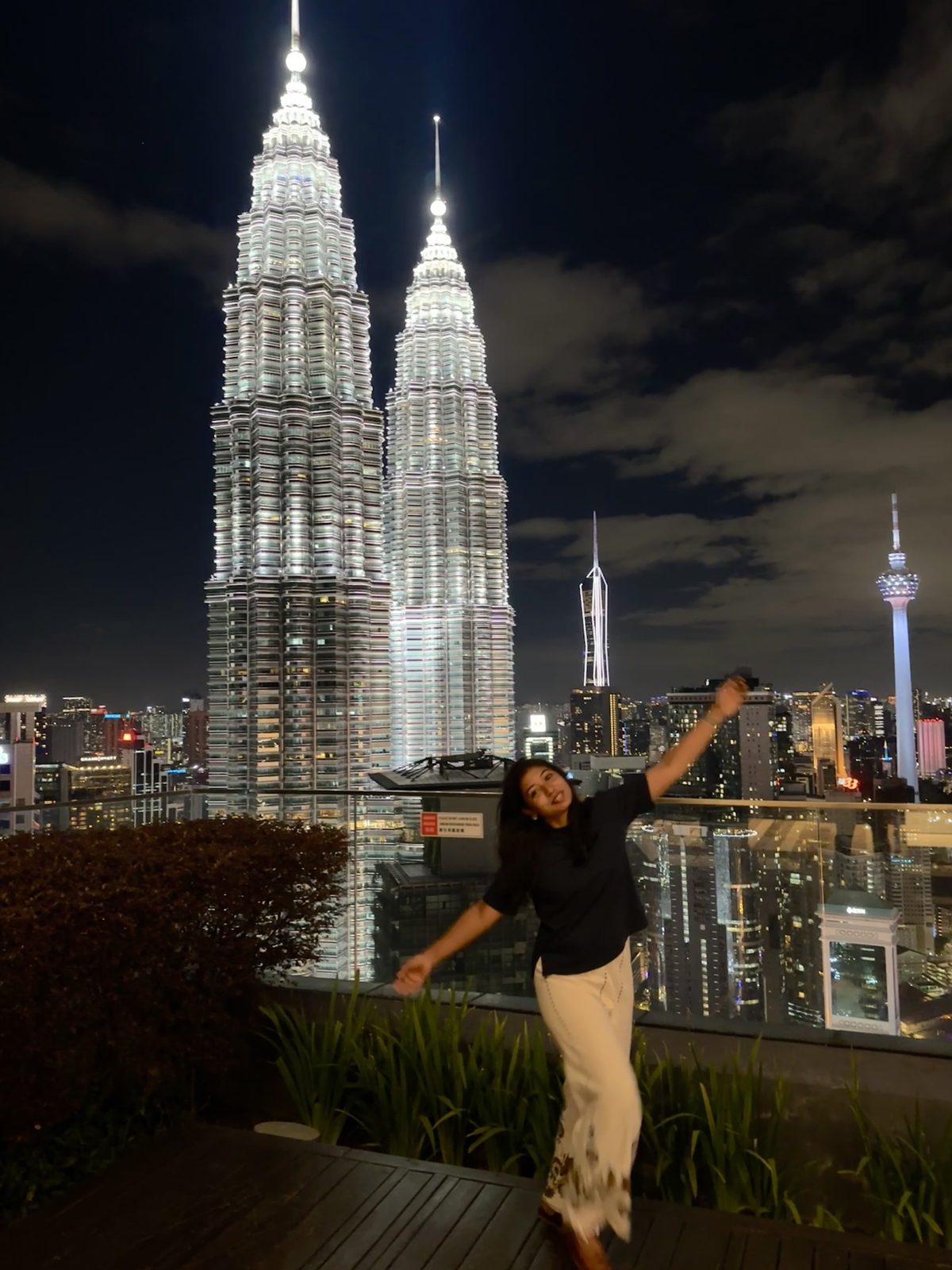
Our final evening was on a rooftop with the towers on one side and the KL Tower on the other and the whole city lit up in between, and I danced a bit, because we were five countries into a month and it seemed like the only reasonable response.
That was very nearly the end of the month. There was one more country to come, and we had not really planned it.
What we would do differently
We saw a city, not a country. Four days in KL is four days in KL — we have no basis whatsoever for an opinion on Malaysia, and we are not going to pretend otherwise. Penang is supposed to be the food capital of the region and we did not go. That is a whole separate trip and we would like to take it.
But we would not swap the four slow days for two more countries. Ending a fast month somewhere easy, in one hotel, with nothing to catch, is what let us actually enjoy the last week rather than survive it. If you are planning something like this, put your softest landing at the end.
Where the money goes
Kuala Lumpur is cheap for what it is. The trains cost almost nothing, including the one out to Batu Caves. Hawker food and Indian-Malay cafés are a couple of euros a meal. Hotels are excellent value by any standard — a proper room with a pool and a view is a fraction of European city pricing.
The birthday dinner was the single most expensive meal of the entire month, and by European standards it was not expensive at all.
Practical summary
Most nationalities enter Malaysia visa-free, but you must submit the Malaysia Digital Arrival Card (MDAC) online in the three days before you arrive. It is free. Use the official immigration portal. Check the current position for your passport before you travel.
The trains are the answer. KL Sentral connects to almost everything, including Batu Caves on the Komuter line, and it is far faster than sitting in KL traffic.
Batu Caves at seven in the morning. Covered shoulders and knees. Zip your bag against the monkeys.
Book the nice dinner. The Michelin-listed places here take reservations and fill up, and they are still a fraction of what you would pay at home.
Next: part six, Qatar — where we turned a two-hour connection on the way home into three days, and finished the month somewhere none of us expected.


Leave a Reply