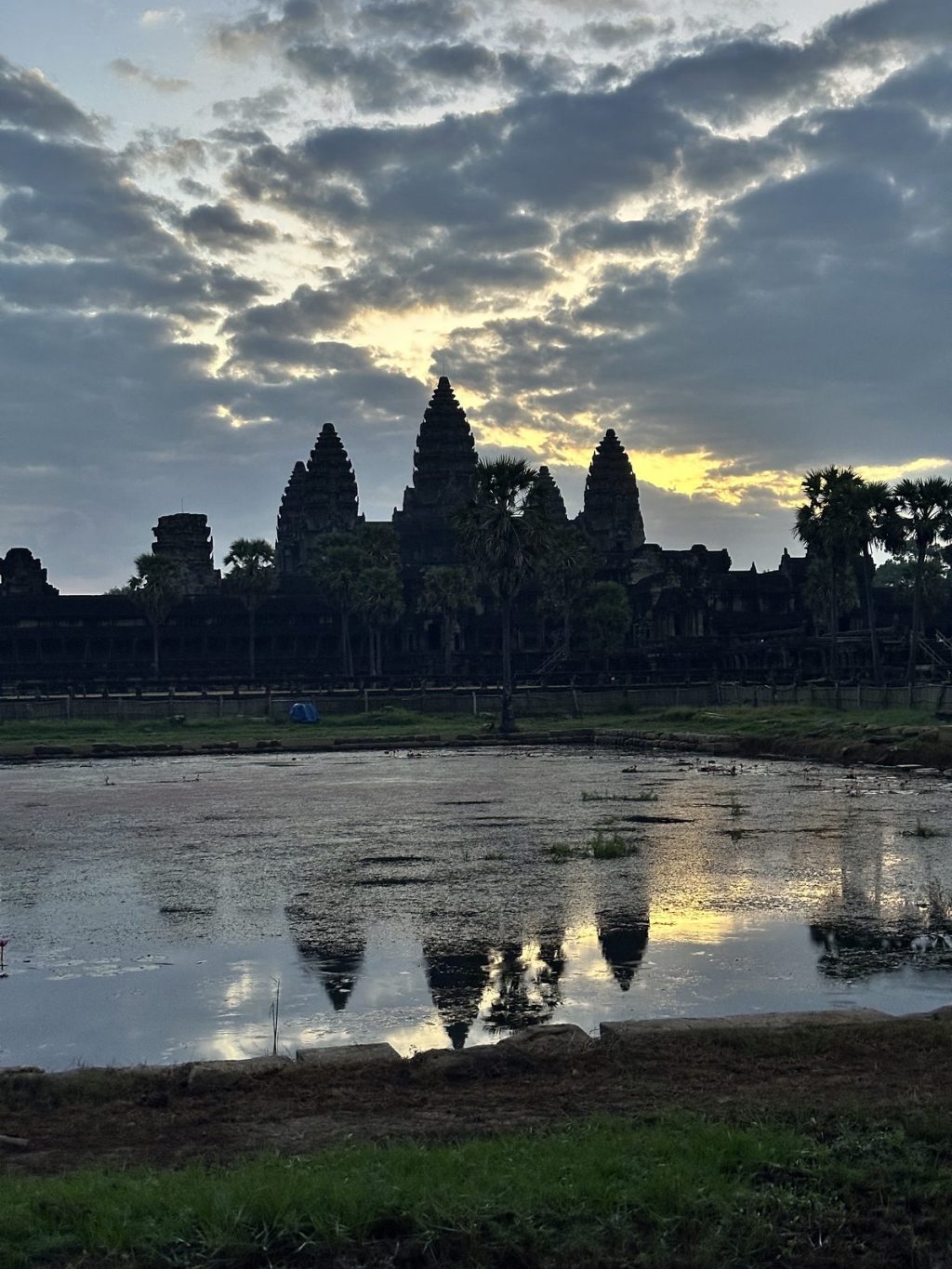
Three nights in Siem Reap, and no Phnom Penh at all.
We had four countries behind us by this point and one to go, and rather than try to do Cambodia properly we did one small part of it properly instead. That turned out to be the right call, and it produced the two best days of the whole month — back to back, and complete opposites.
Day one was Angkor: out of the door at half past four in the morning, back at the hotel at three in the afternoon, five temples deep. Day two we did absolutely nothing on purpose.
This is part four of six.
The route
| Stop | Nights | Getting there |
|---|---|---|
| Siem Reap | 3 | Flight from Ho Chi Minh City |
| — Angkor Archaeological Park | day trip | 20 minutes by tuk-tuk |
| Onward to Malaysia | — | Covered in part five |
One town, three nights, no internal travel at all. After Vietnam — three flights in eight days — this was an enormous relief, and we would recommend it on those grounds alone. If you are running a multi-country month, put your one stationary stop somewhere near the end.
Siem Reap: smaller and softer than you expect
Siem Reap is a small town wrapped around an enormous ruin, and it manages that with more grace than it has any right to. You can walk most of it. The river runs through the middle. Everything closes earlier than you think.
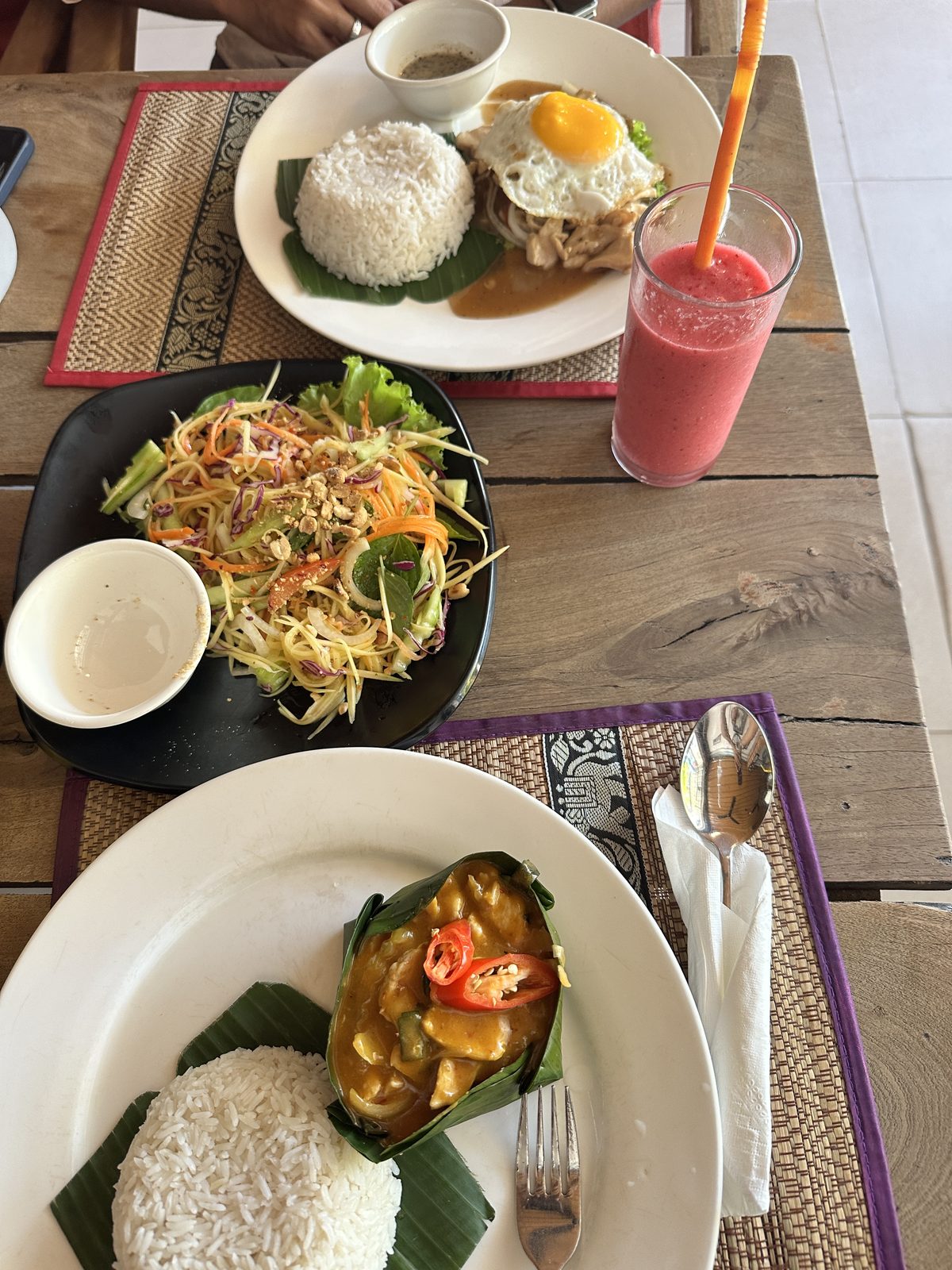
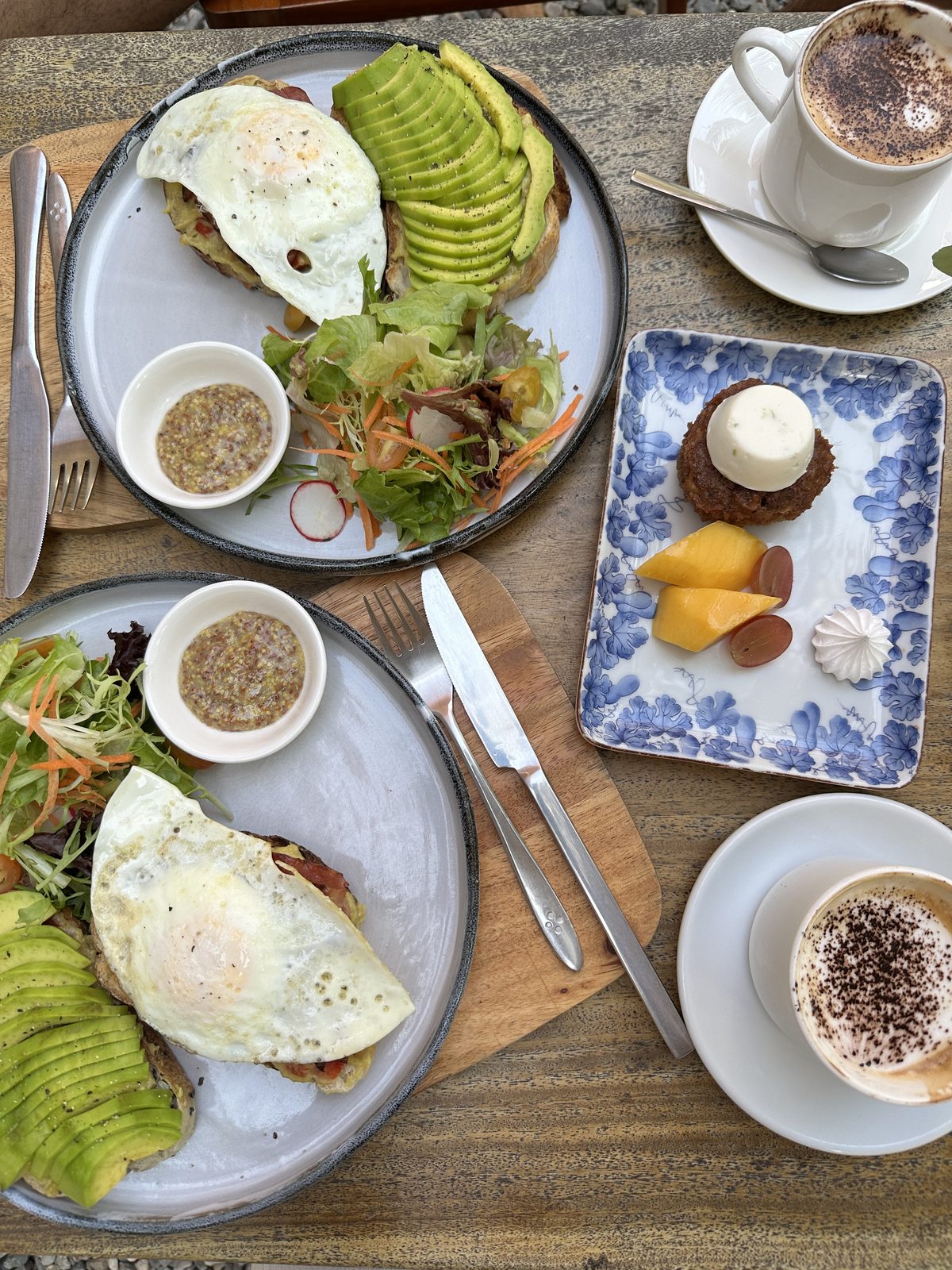
We landed mid-afternoon and did the only sensible thing, which was to eat.
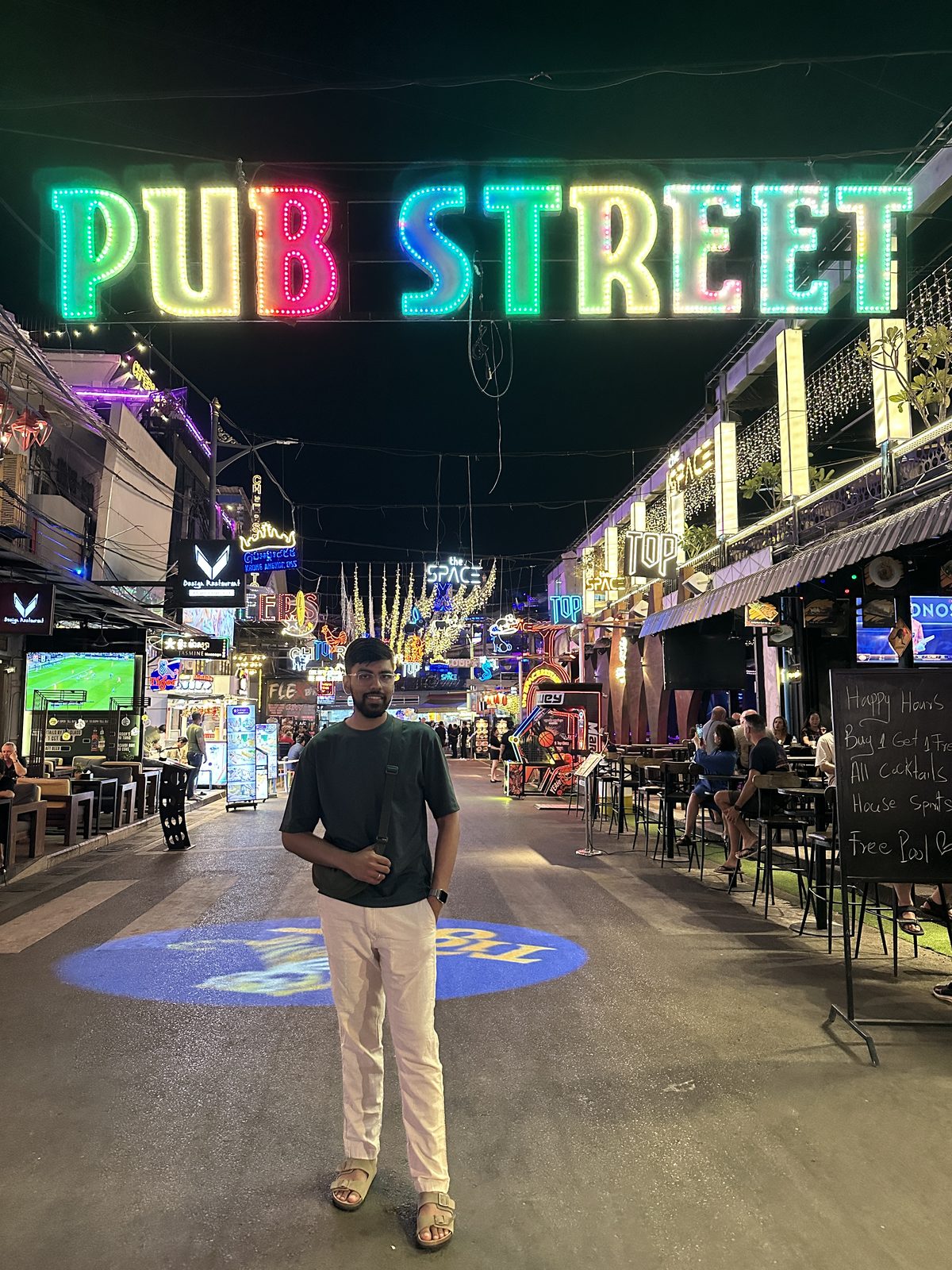
Then, inevitably, Pub Street, which is exactly what it sounds like and is best treated as a twenty-minute walk-through rather than an evening.
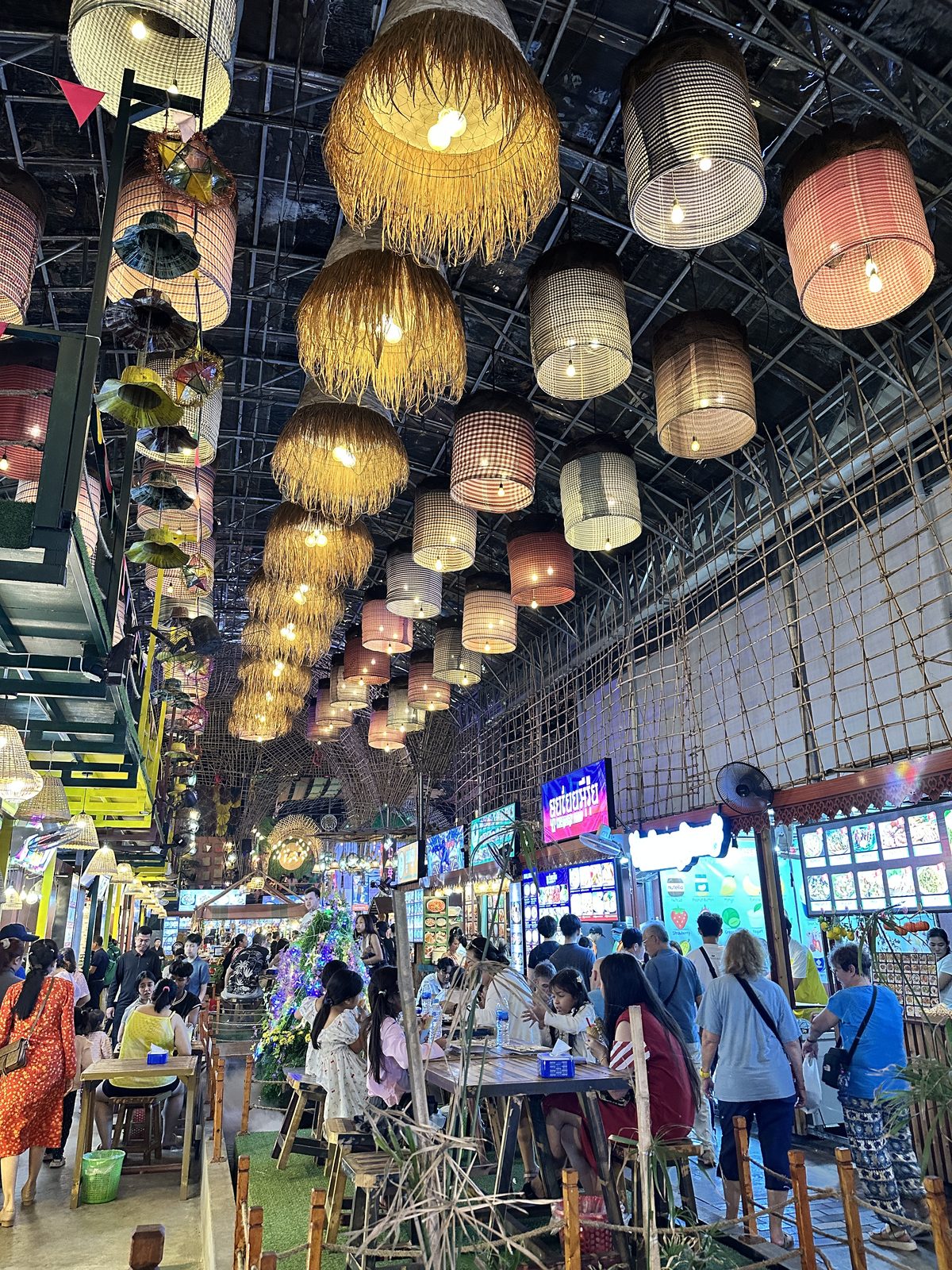
The somewhere else is two minutes away and much better: the covered night markets, where the food stalls sit under ceilings hung with hundreds of woven fish traps turned into lampshades.
Angkor: the big day
Getting up at half past four
The alarm goes at 04:30 and it is the correct decision, though it will not feel like it. Your tuk-tuk driver is waiting in the dark. The road out to the park is full of other tuk-tuks doing exactly the same thing, headlights and dust, everybody silent.
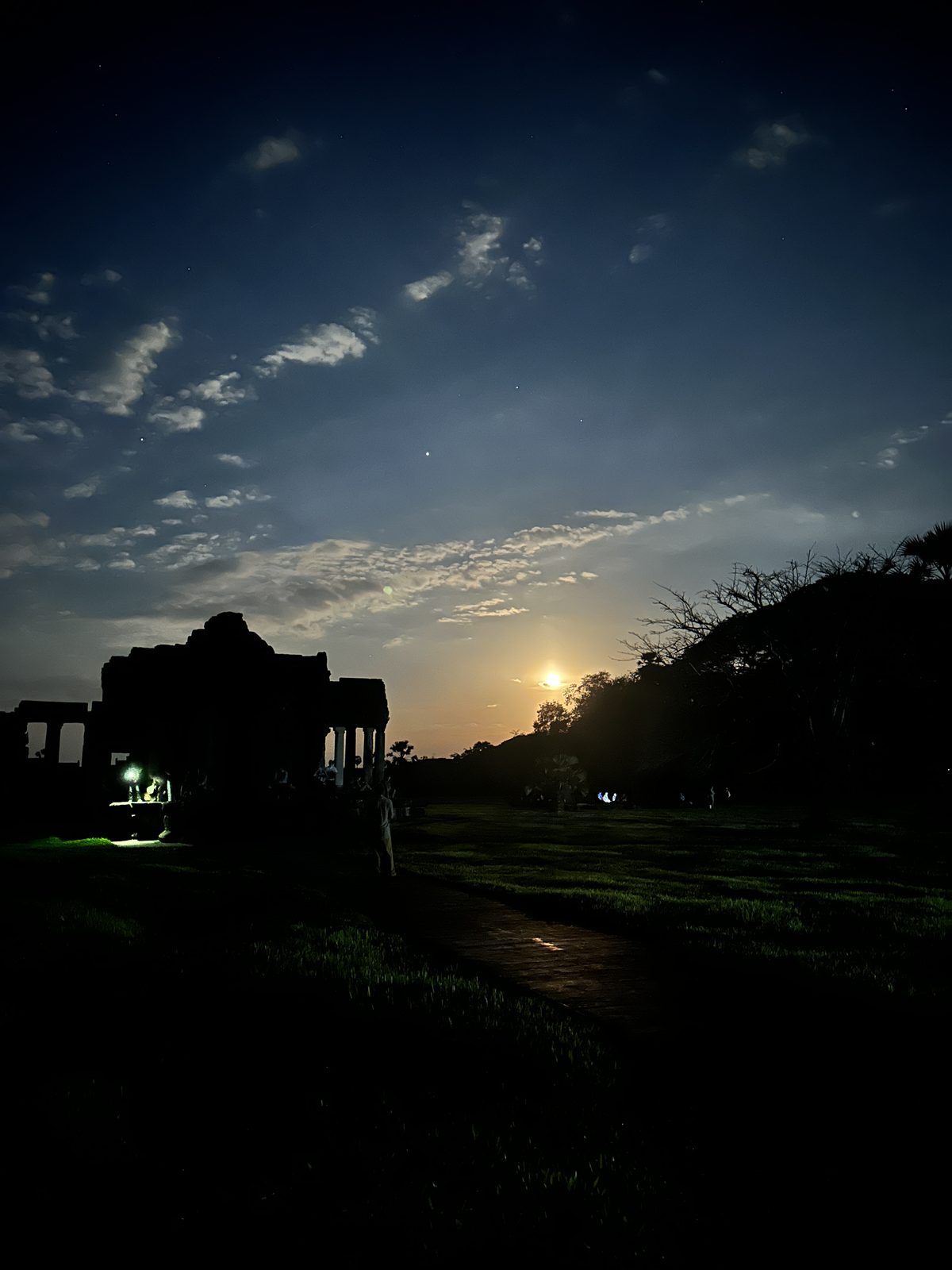
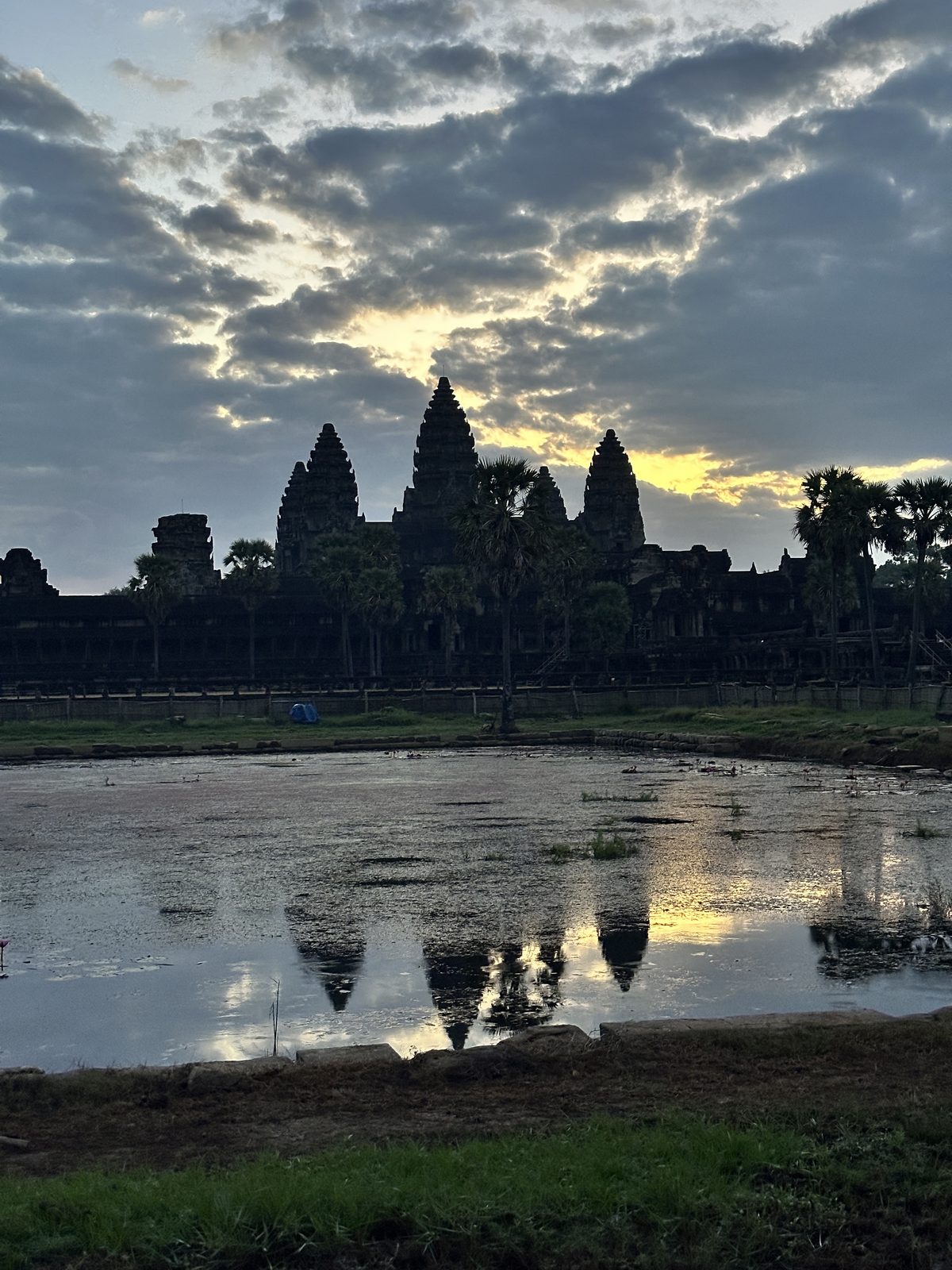
You cross the moat, walk the causeway, and find your spot at the northern reflecting pool with a few hundred other people. And then you wait, and the sky does the thing.
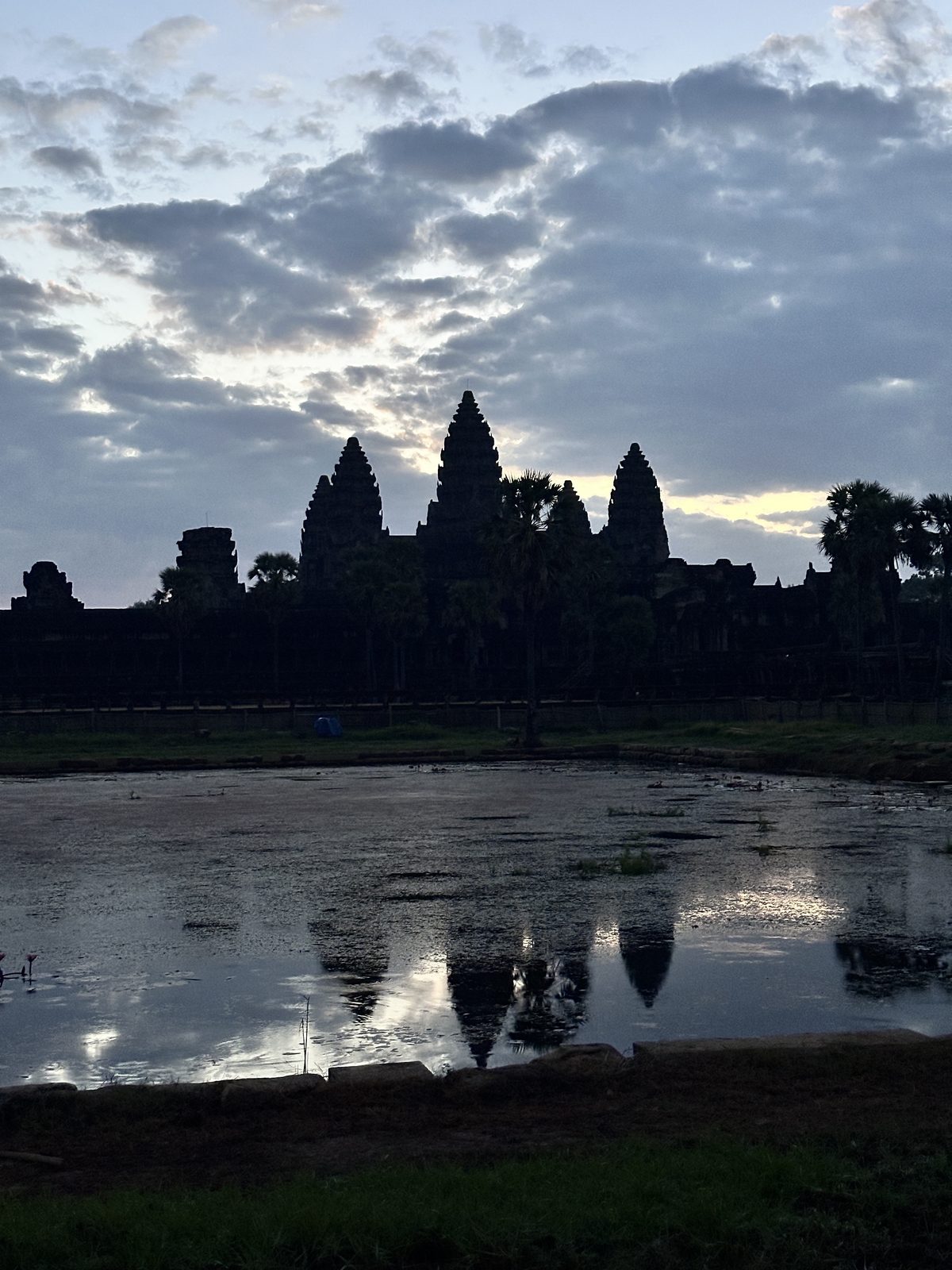
Here is the honest version: it is crowded, and it does not matter. People will tell you the Angkor sunrise is ruined by the numbers. It is not. The crowd is quiet, the pool is long enough to absorb everyone, and the thing you have come to see is nine hundred years old and roughly the size of a small city. It is not diminished by there being four hundred people in front of it.
The trick everybody misses
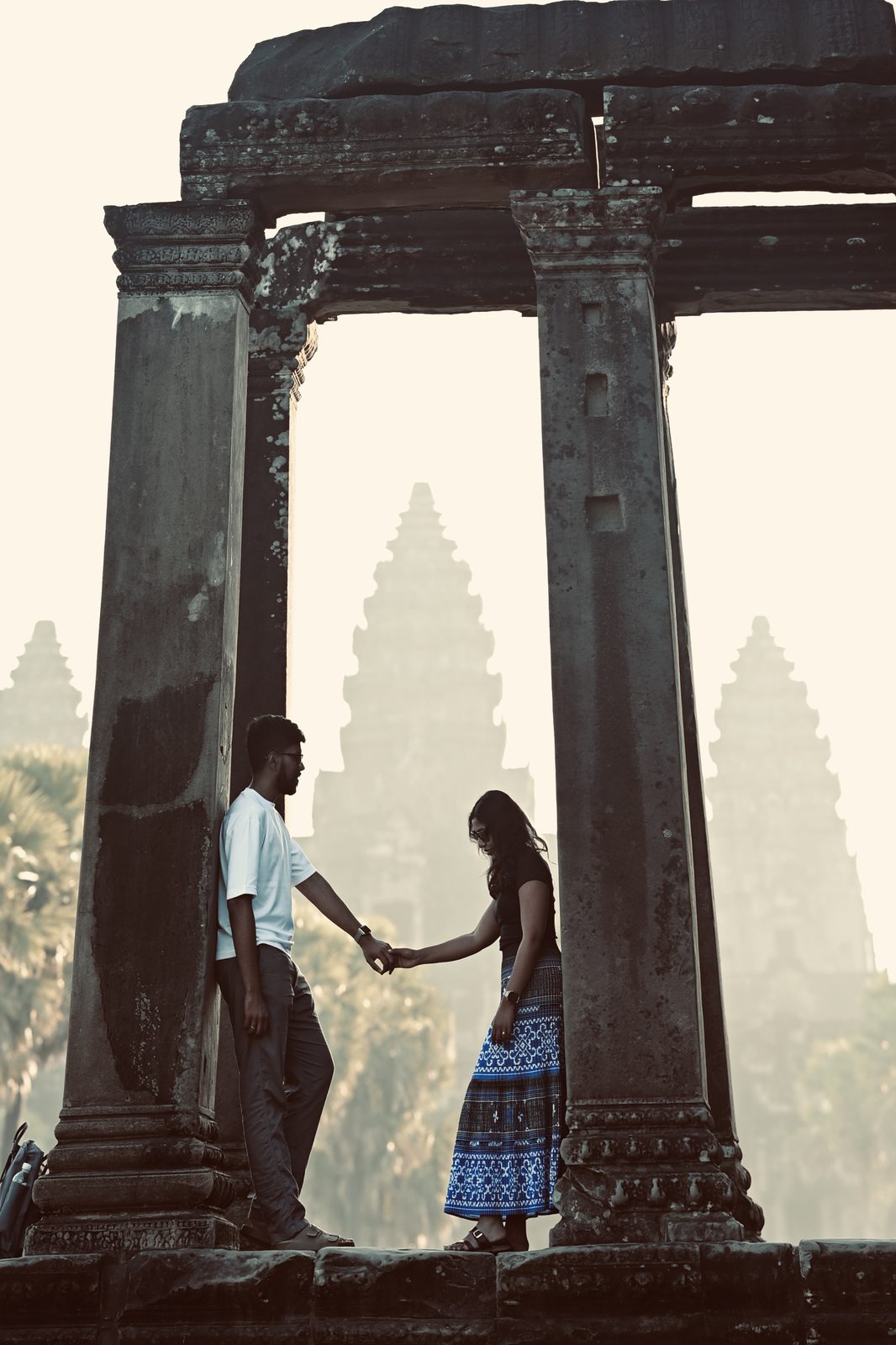
Almost the entire sunrise crowd leaves immediately afterwards, in a single wave, to go and eat. If you stay — with a packed breakfast, or just hunger — you get Angkor Wat itself nearly to yourself for about ninety minutes, in the best light of the day.
That is the single most useful thing in this post. The temple is far better at 06:45 than the sunrise was.
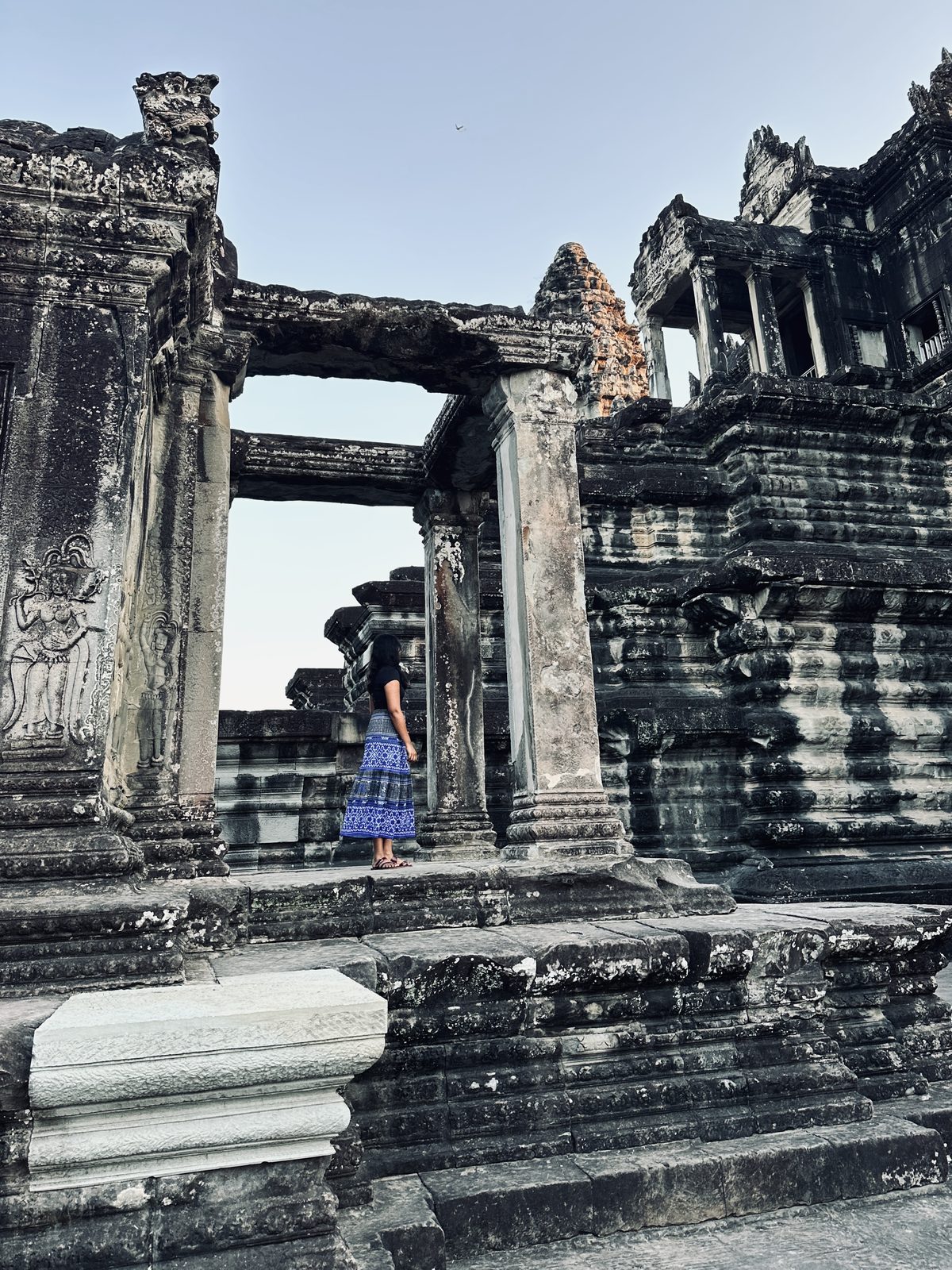
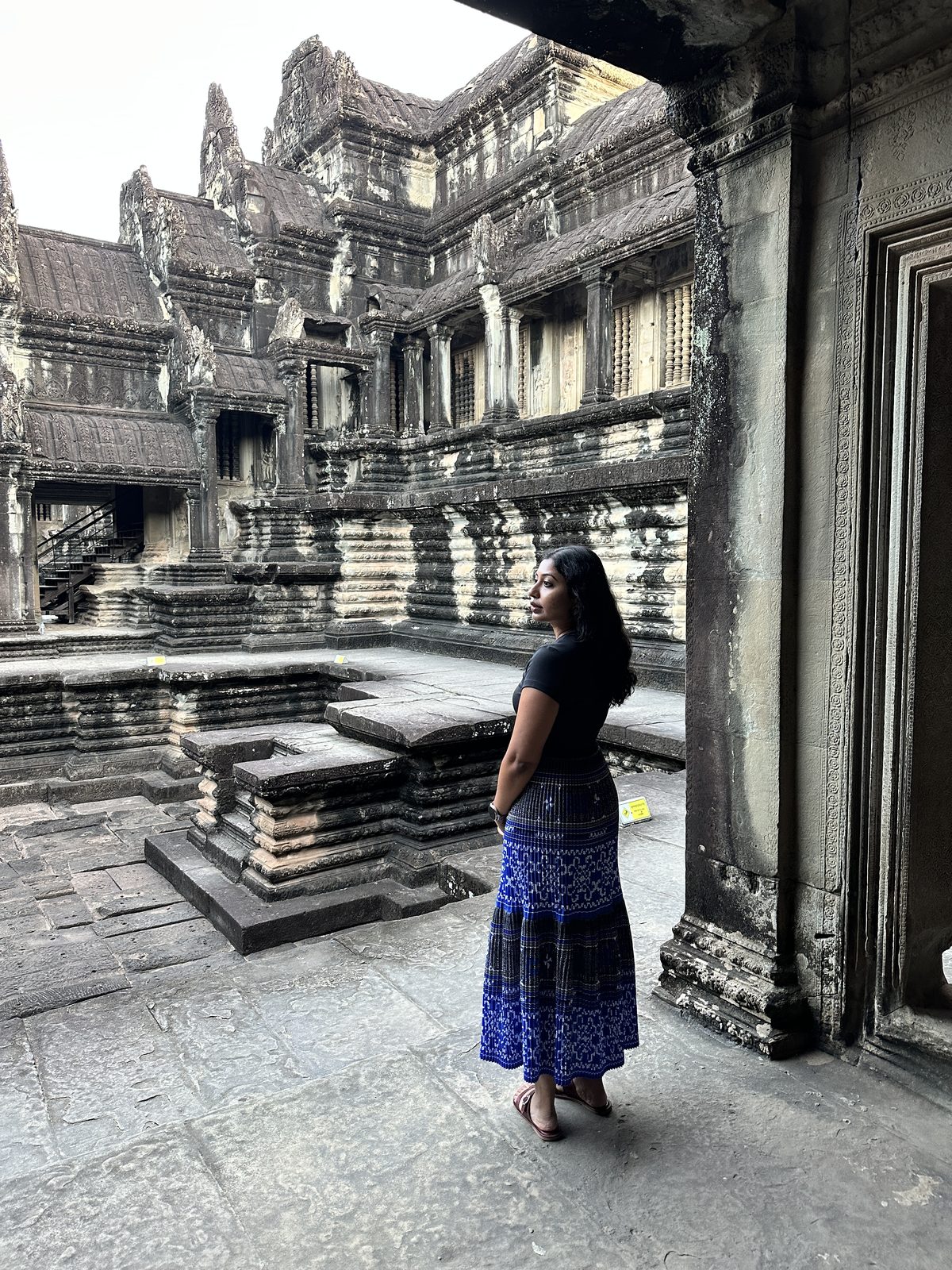
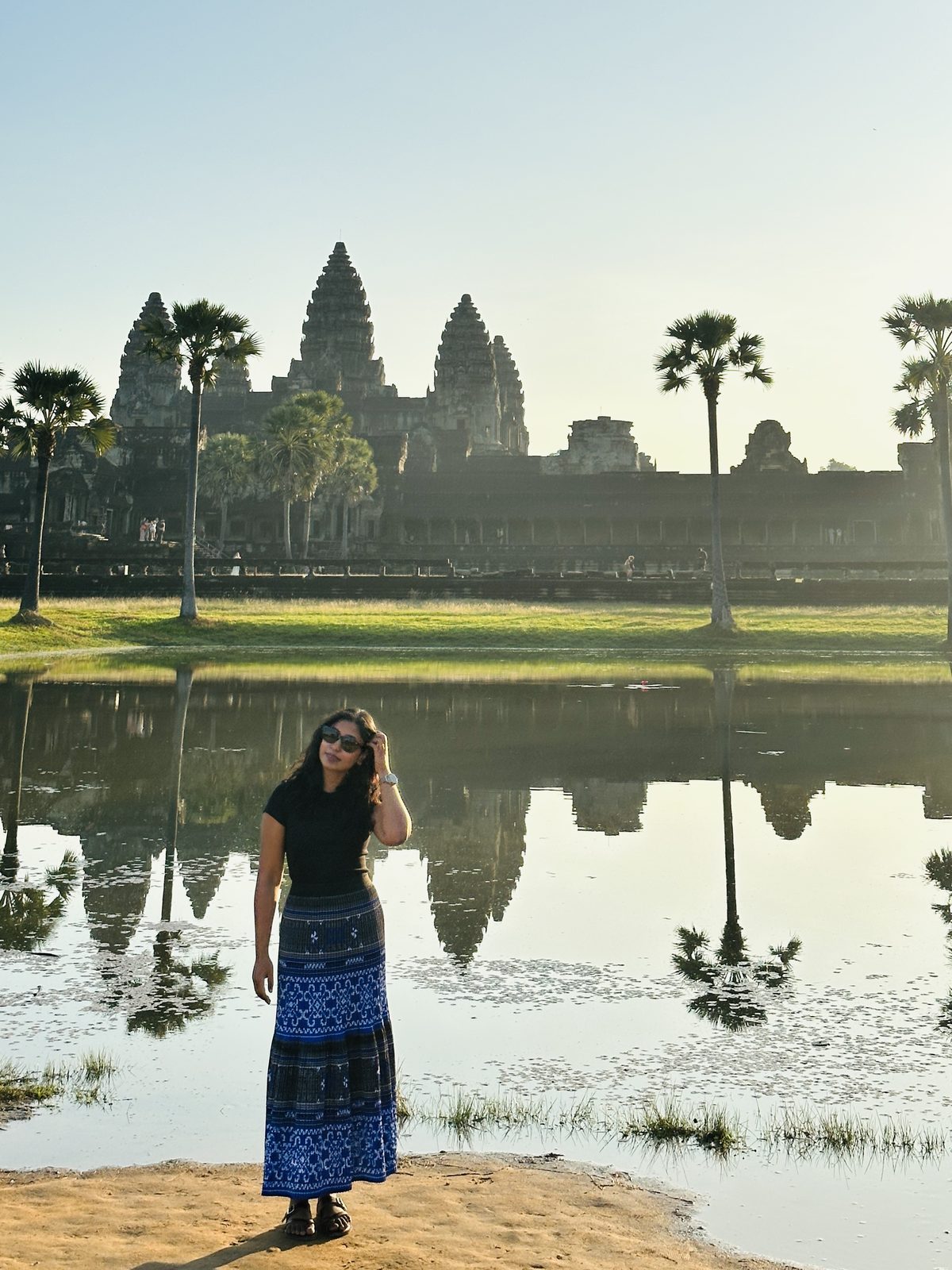
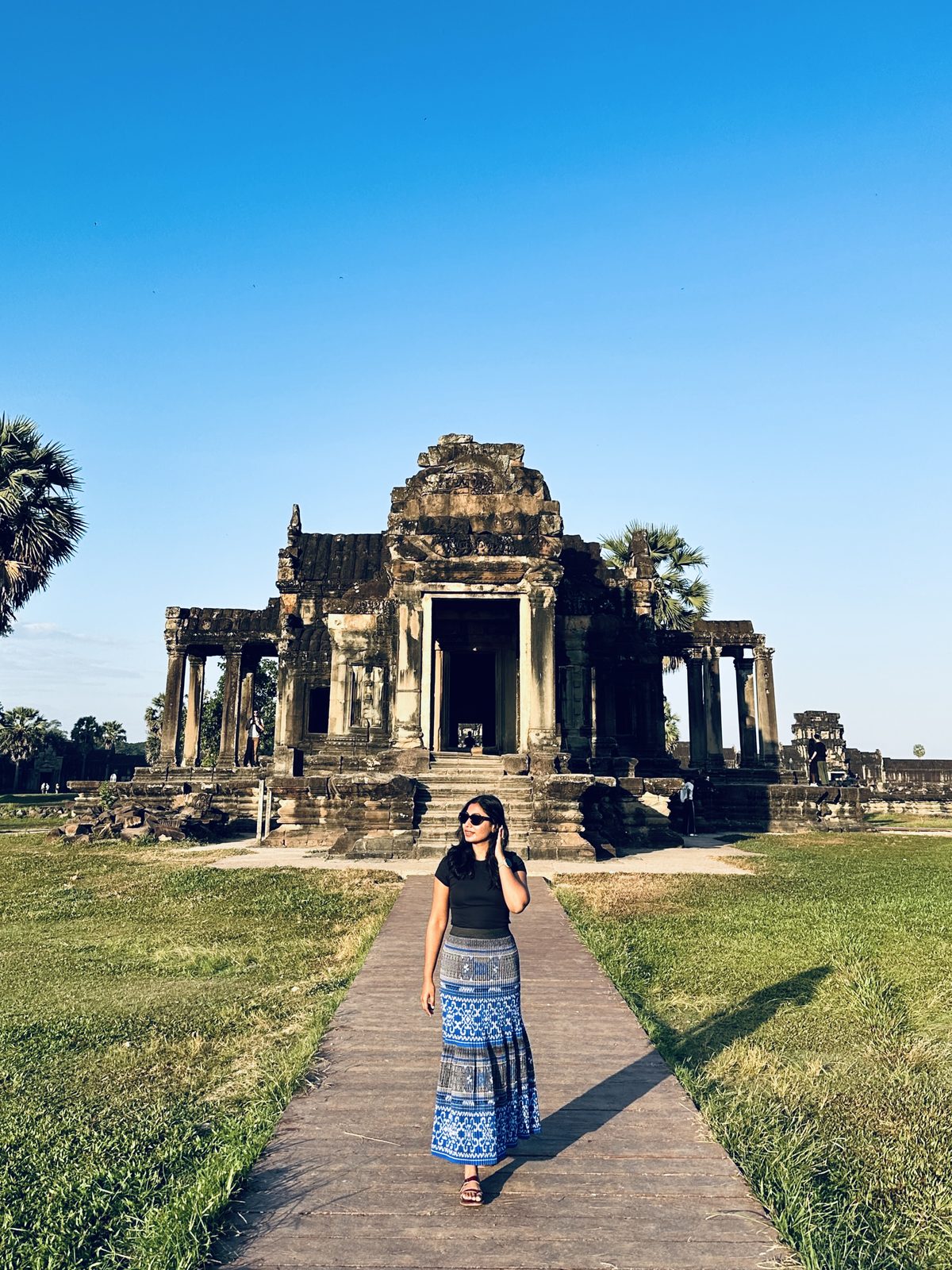
Then the rest of it
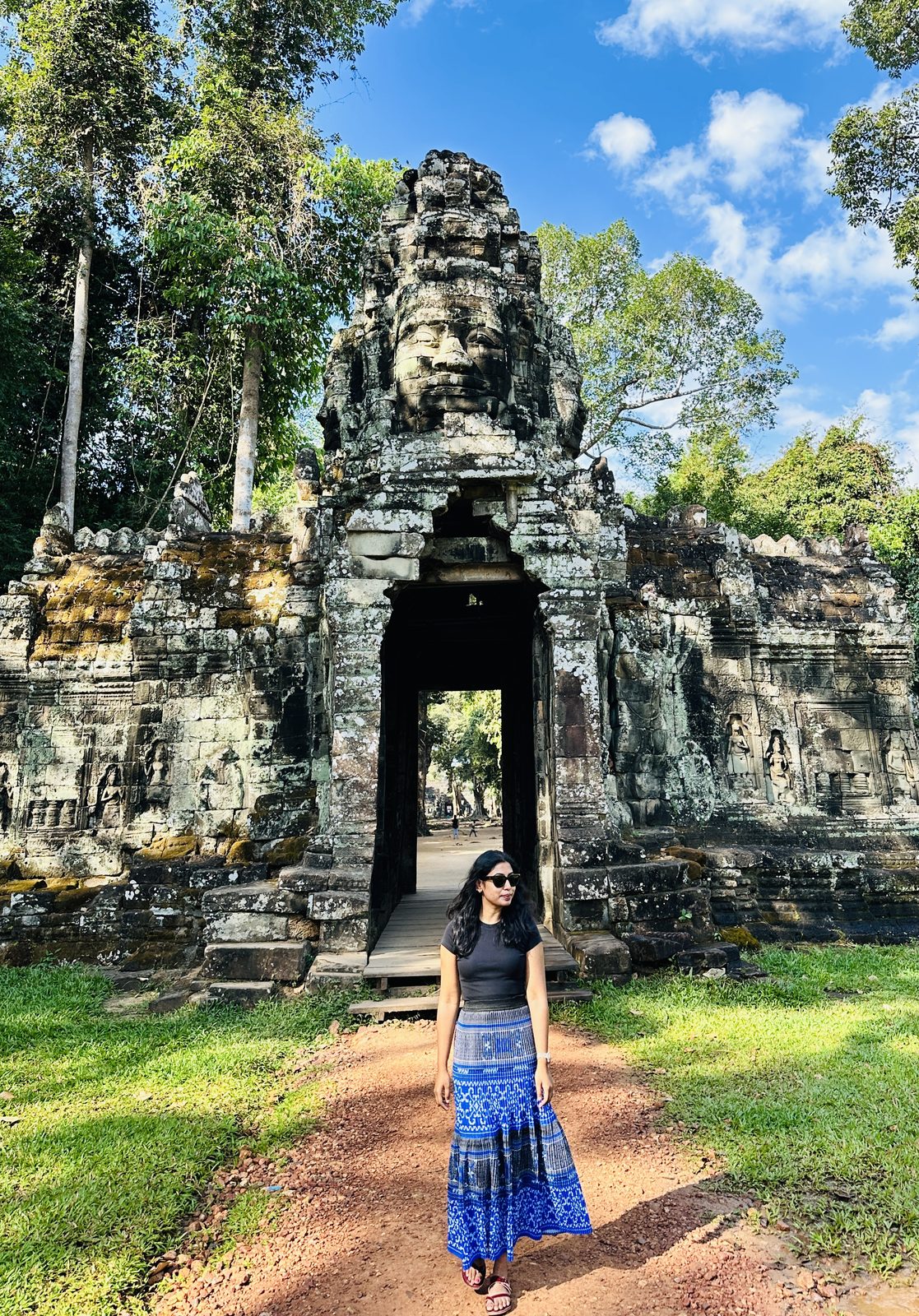
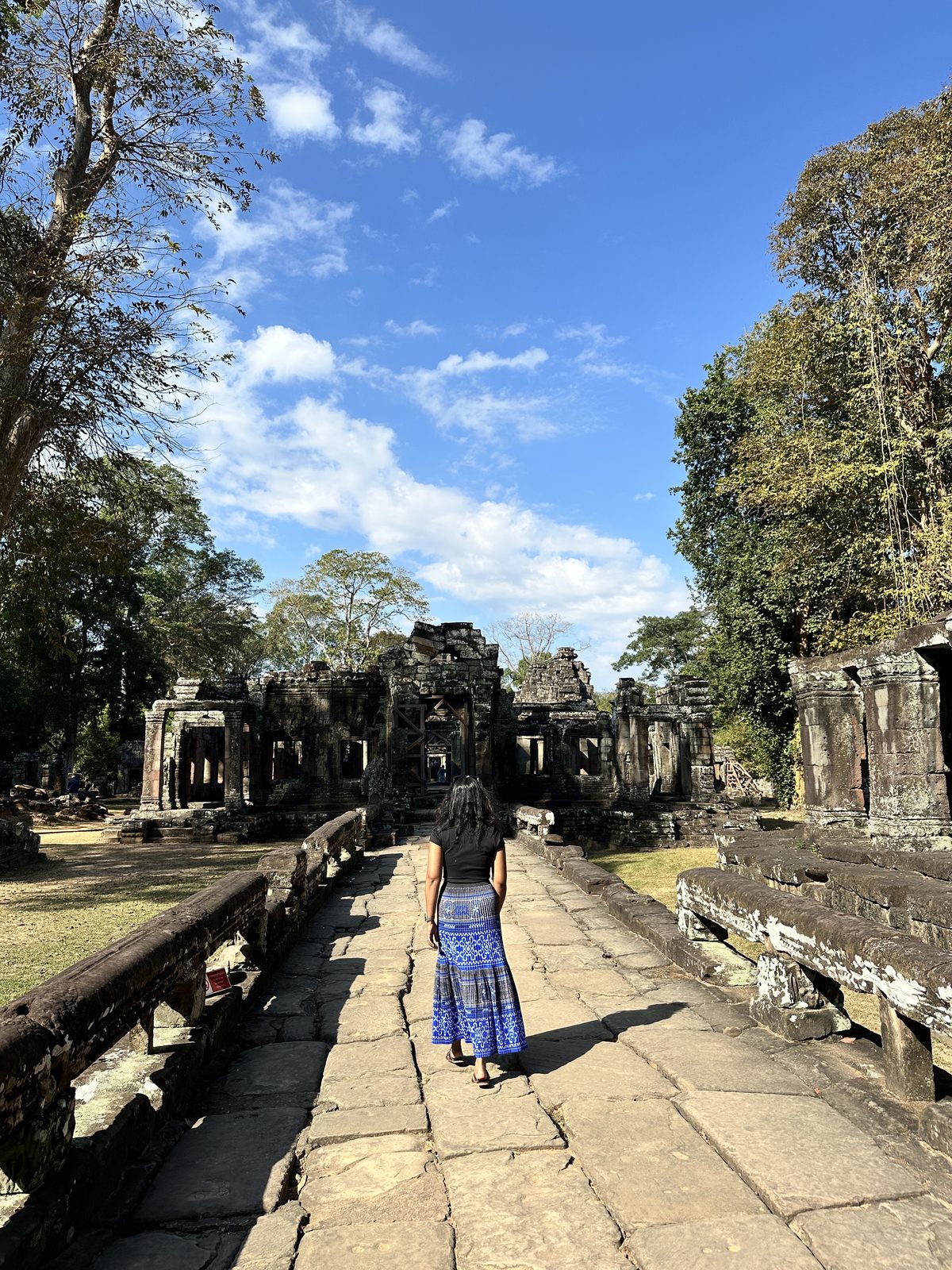
Angkor is not one temple, it is several hundred spread over four hundred square kilometres. We did the small circuit and four more.
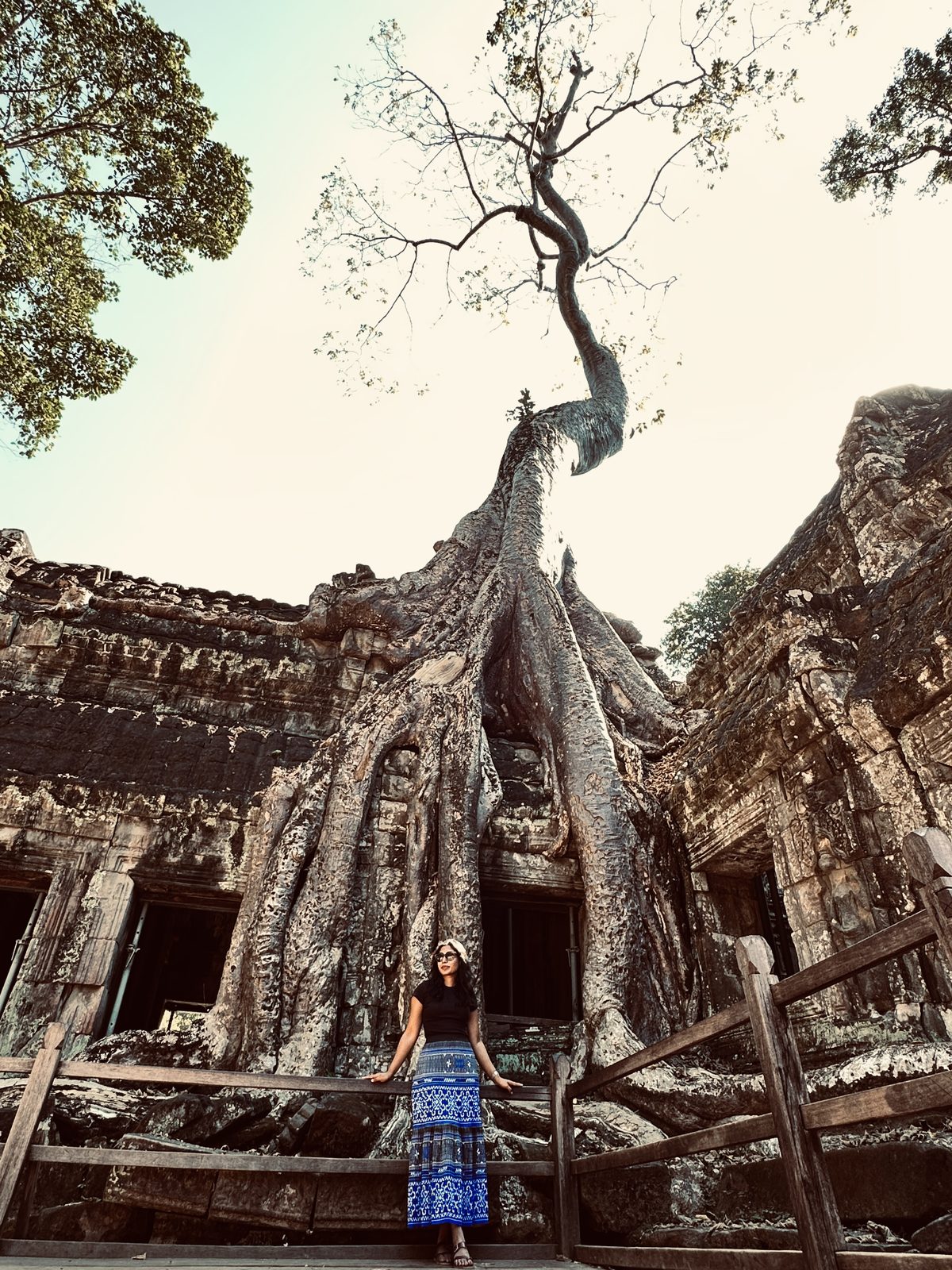
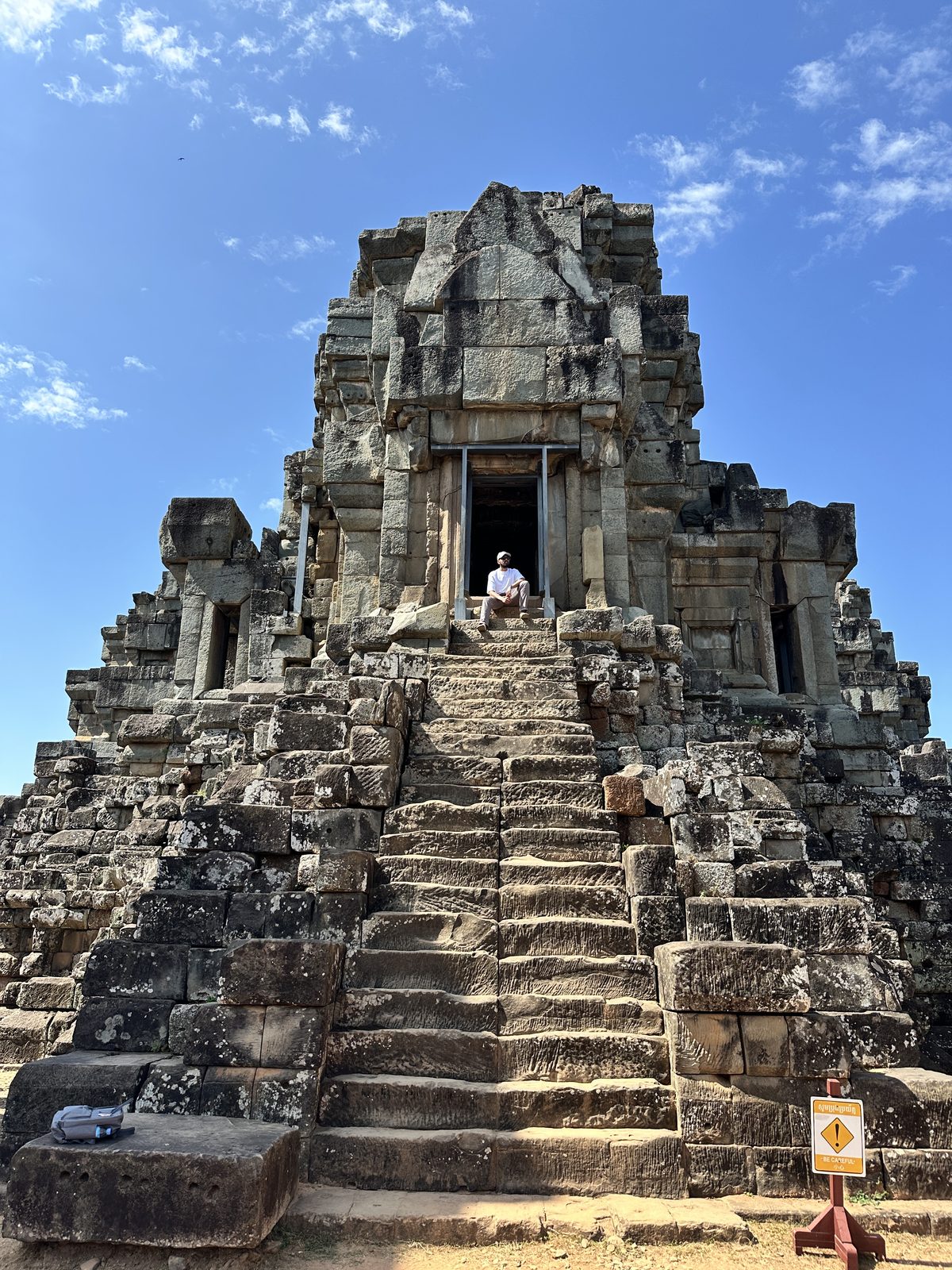
Ta Prohm is the one left deliberately half-swallowed by the forest, and it earns the queue.
The dancers
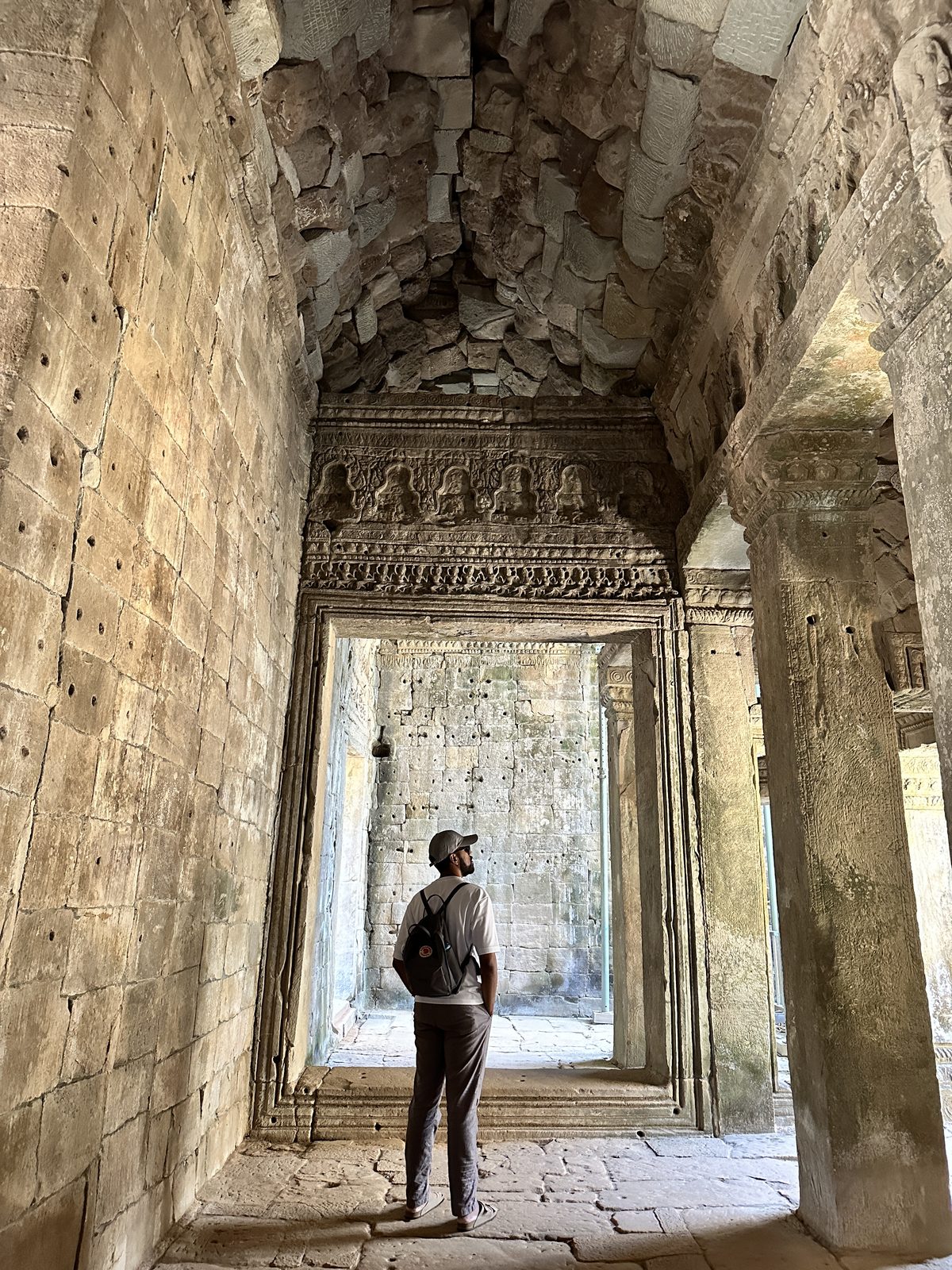
And then Bayon, in the middle of Angkor Thom — the one with the faces — where the walls are covered in apsaras.
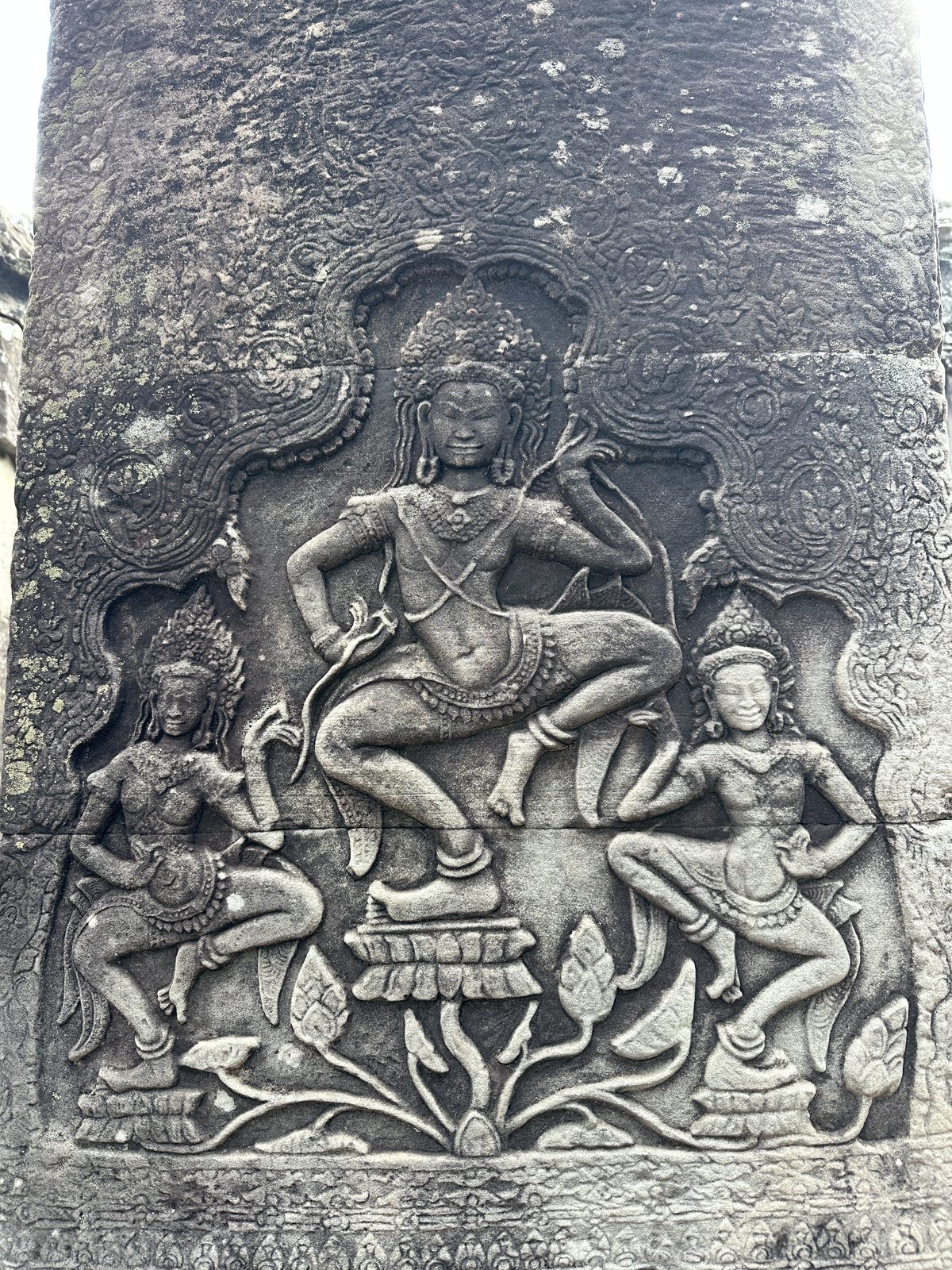
Small personal aside: I teach Indian classical dance, and I was not remotely ready for this. I’d assumed the connection would be vague — a shared root somewhere a long way back. It isn’t vague. It’s the same vocabulary. Same bent knee, same turned-out stance, same fingers. I stood there trying to work out which position it was and then realised I already knew, because I teach it. Nine hundred years old, two thousand kilometres from home, and I could have stepped straight into it.
Anyway — the point is that whatever you happen to know about, Angkor probably has some of it in there somewhere. Go and find your own thing in it rather than working down somebody’s list of the top five temples.
The day we did nothing, and why it belongs in this post
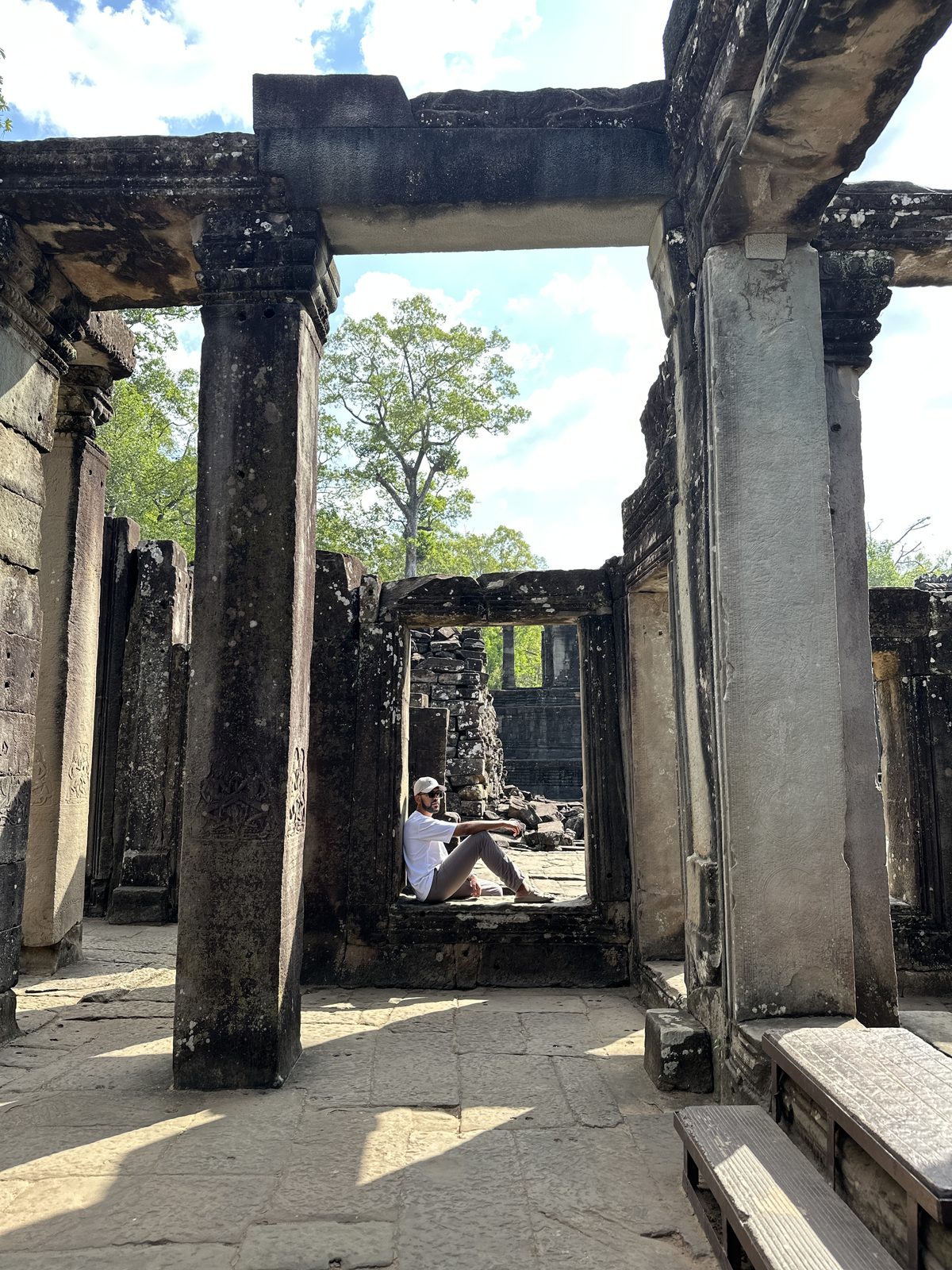
The next morning we got up late, and that was the entire plan.
Then the thing we had been doing all month, and doing properly this time.
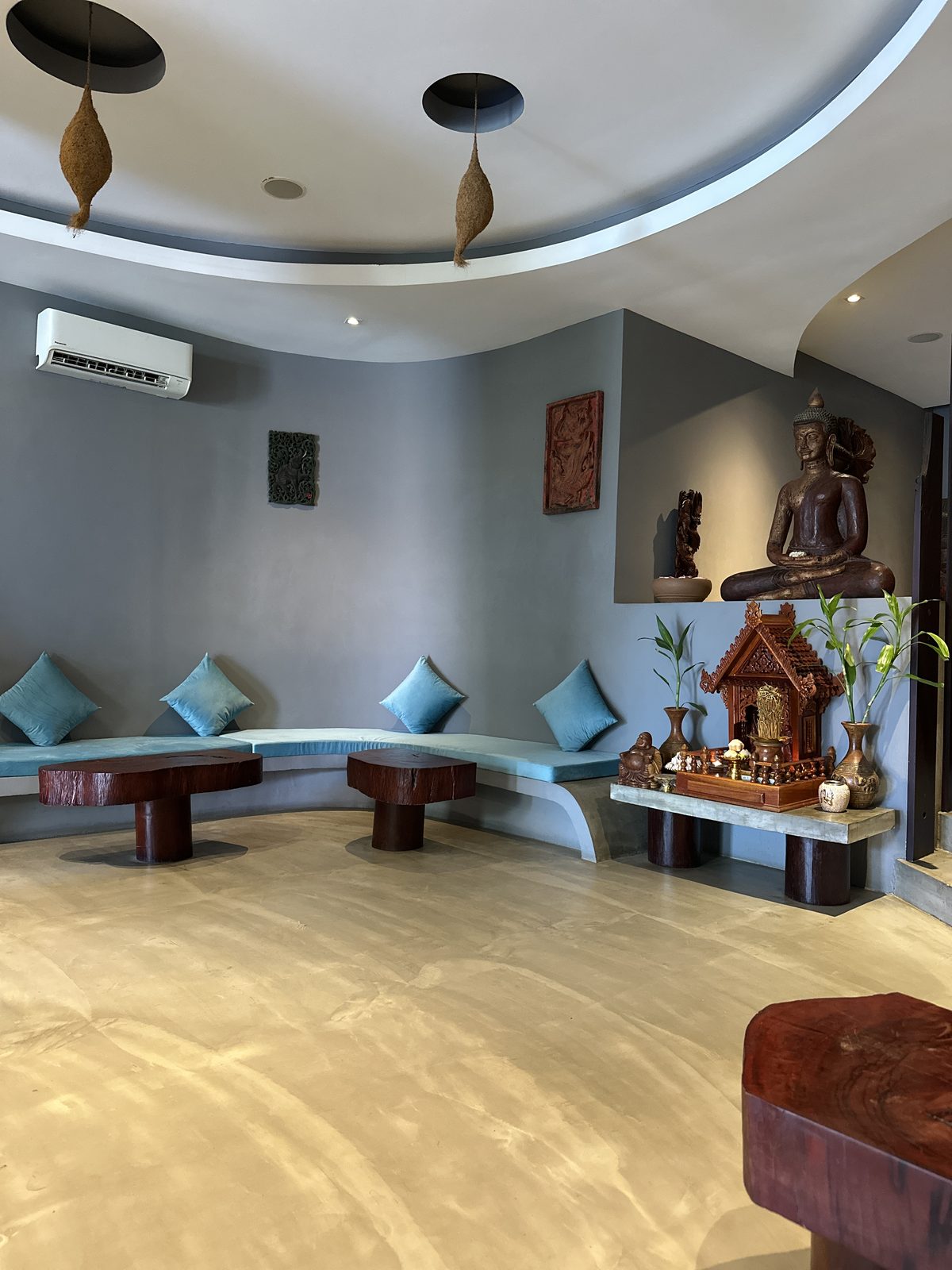
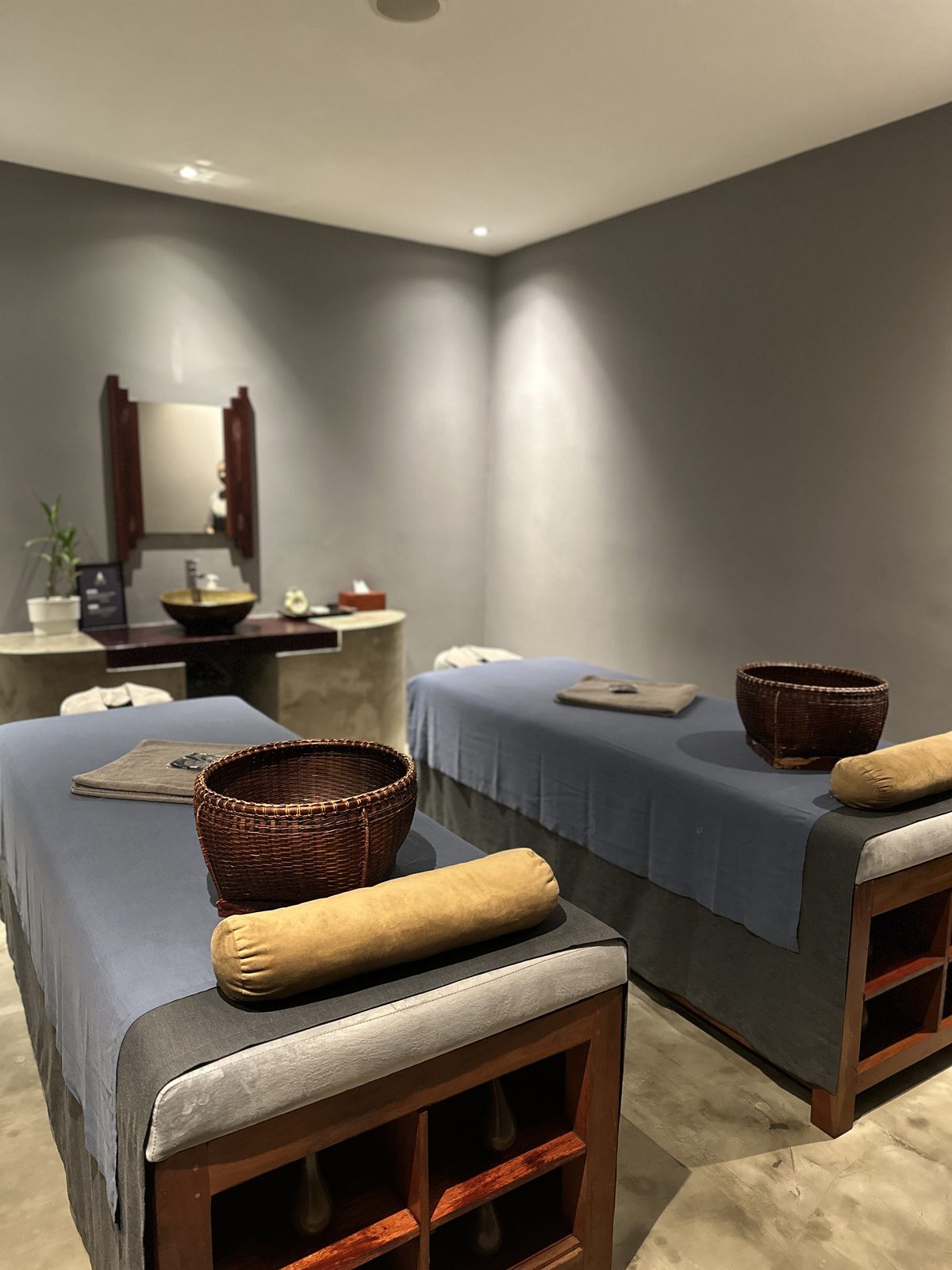
We had a massage every three or four days the whole way through the month, and it is the practical tip we would push hardest out of the entire month. A month of moving is physically harder than it sounds, and the difference between arriving somewhere fresh and arriving somewhere wrecked came down almost entirely to whether we had stopped for an hour in the previous few days.
Khmer massage is gentler than Thai — less stretching, less standing on you — and after nine and a half hours of climbing temple stairs it was exactly right. Book it for the day after your big day, not the day before.
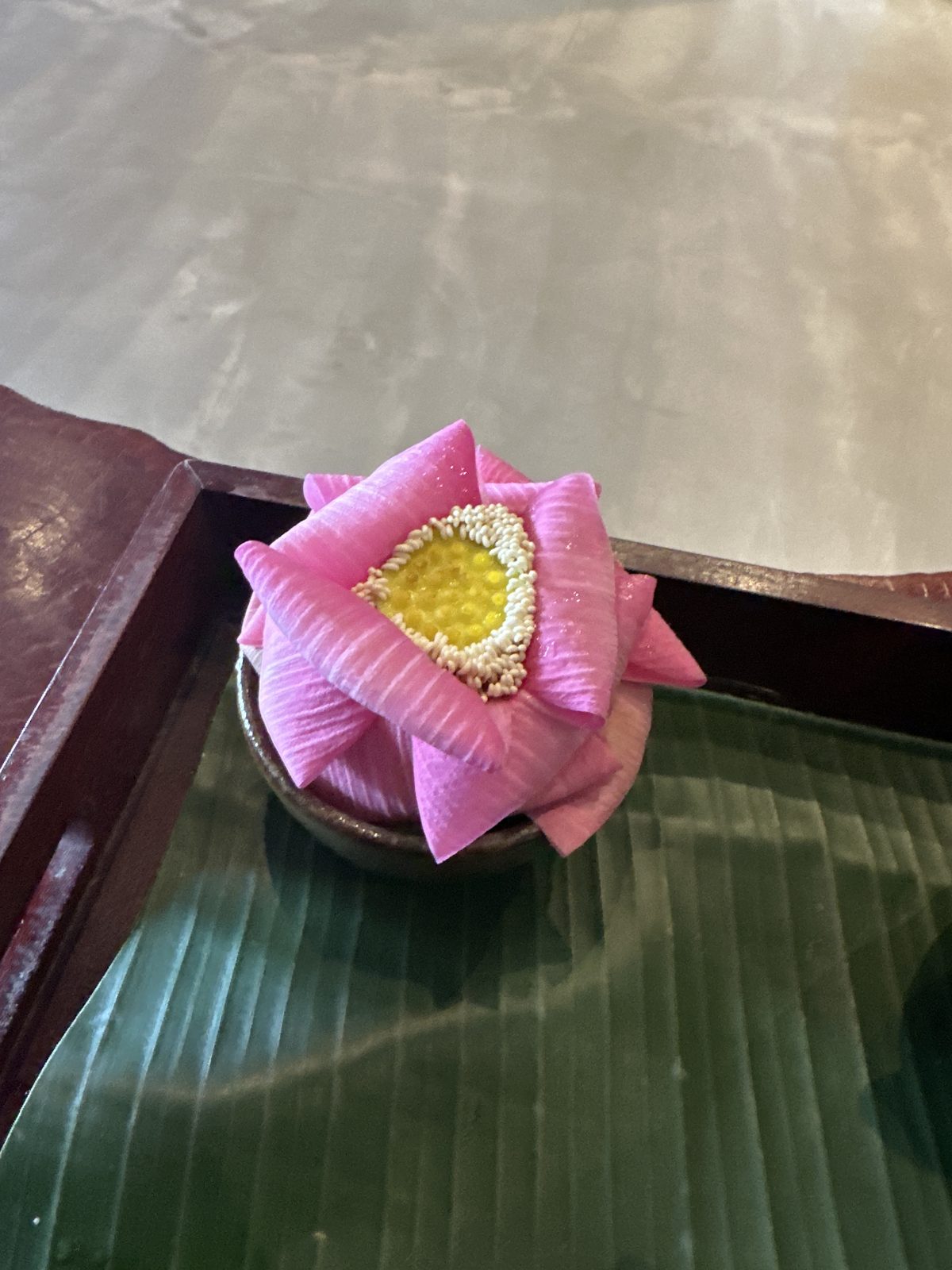
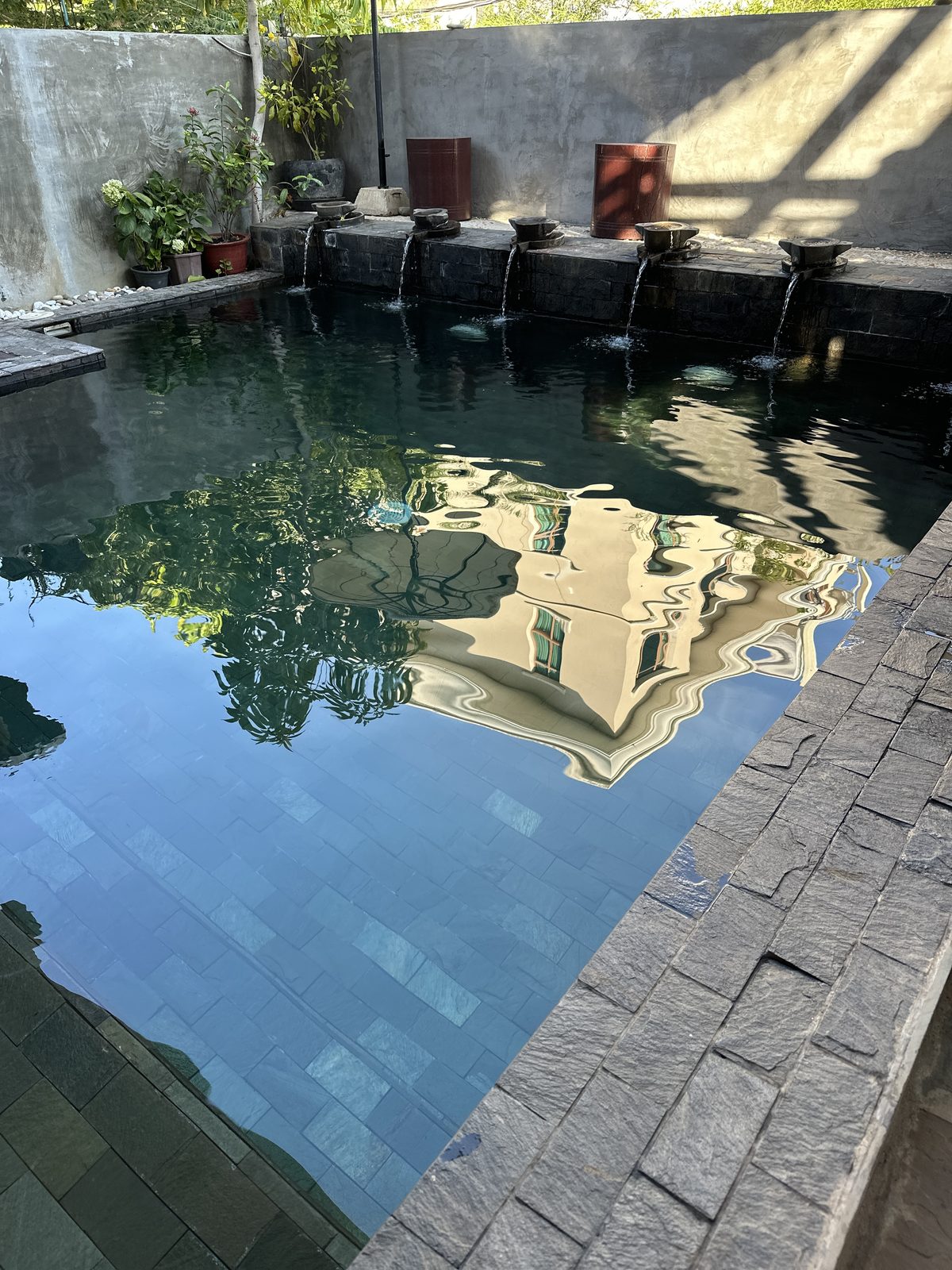
Building a nothing day into a fast trip feels wasteful right up until you have done it. It is the reason we arrived in Malaysia able to enjoy Malaysia.
Where we ate
Cambodian food does not have Vietnam’s reputation and we think that is a mistake. It is milder, sweeter, more coconut-driven, and quietly excellent.
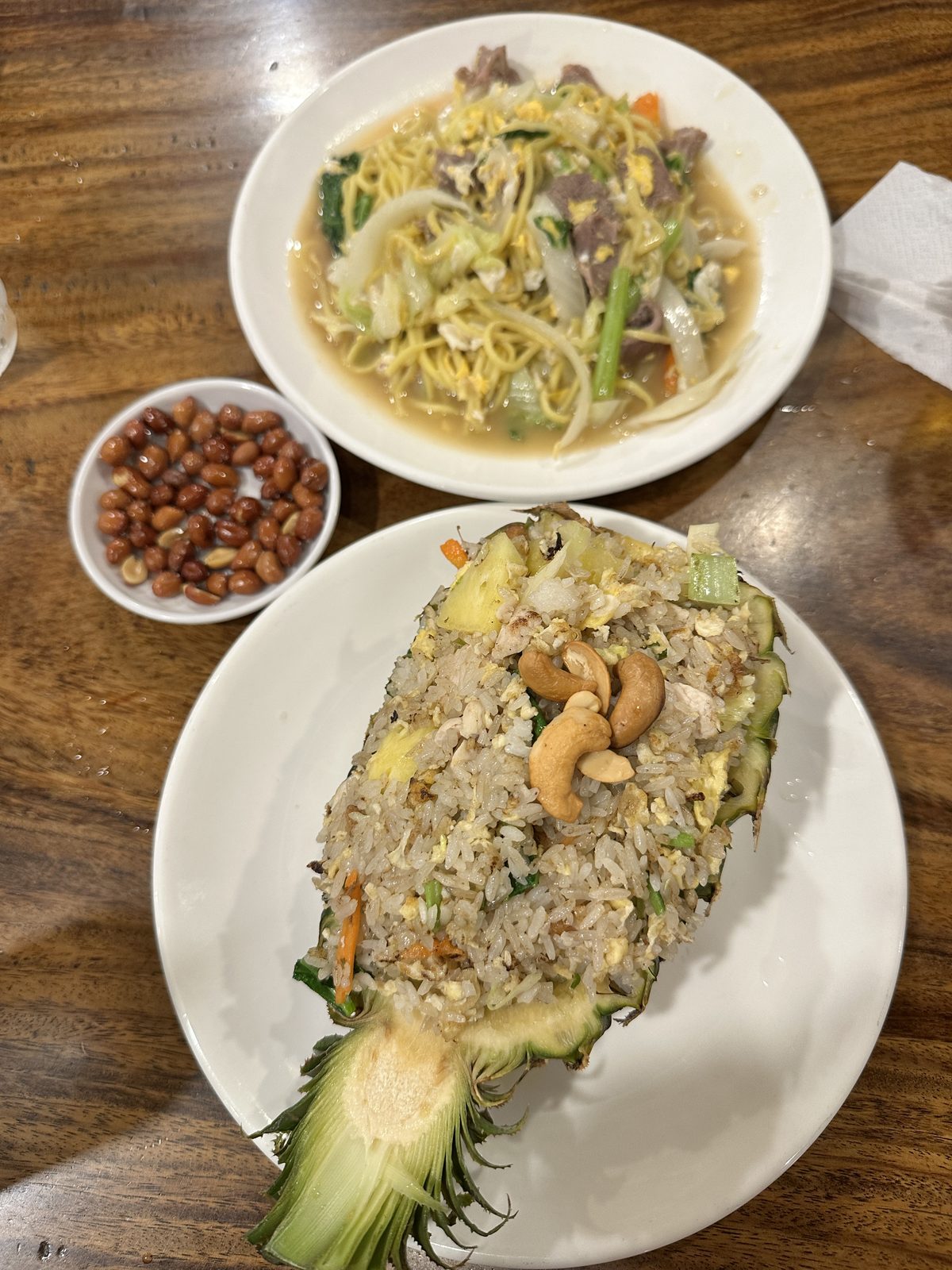
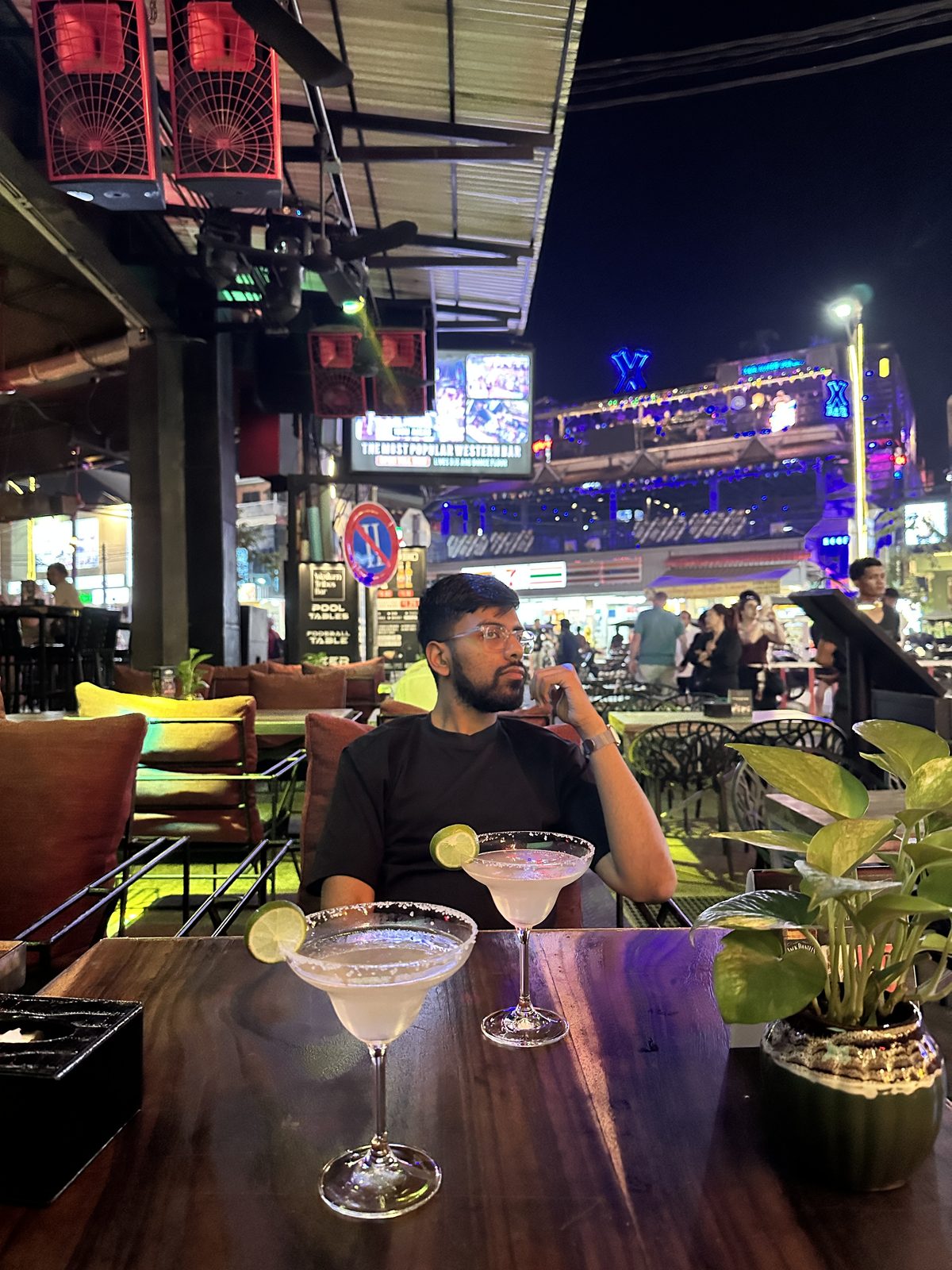
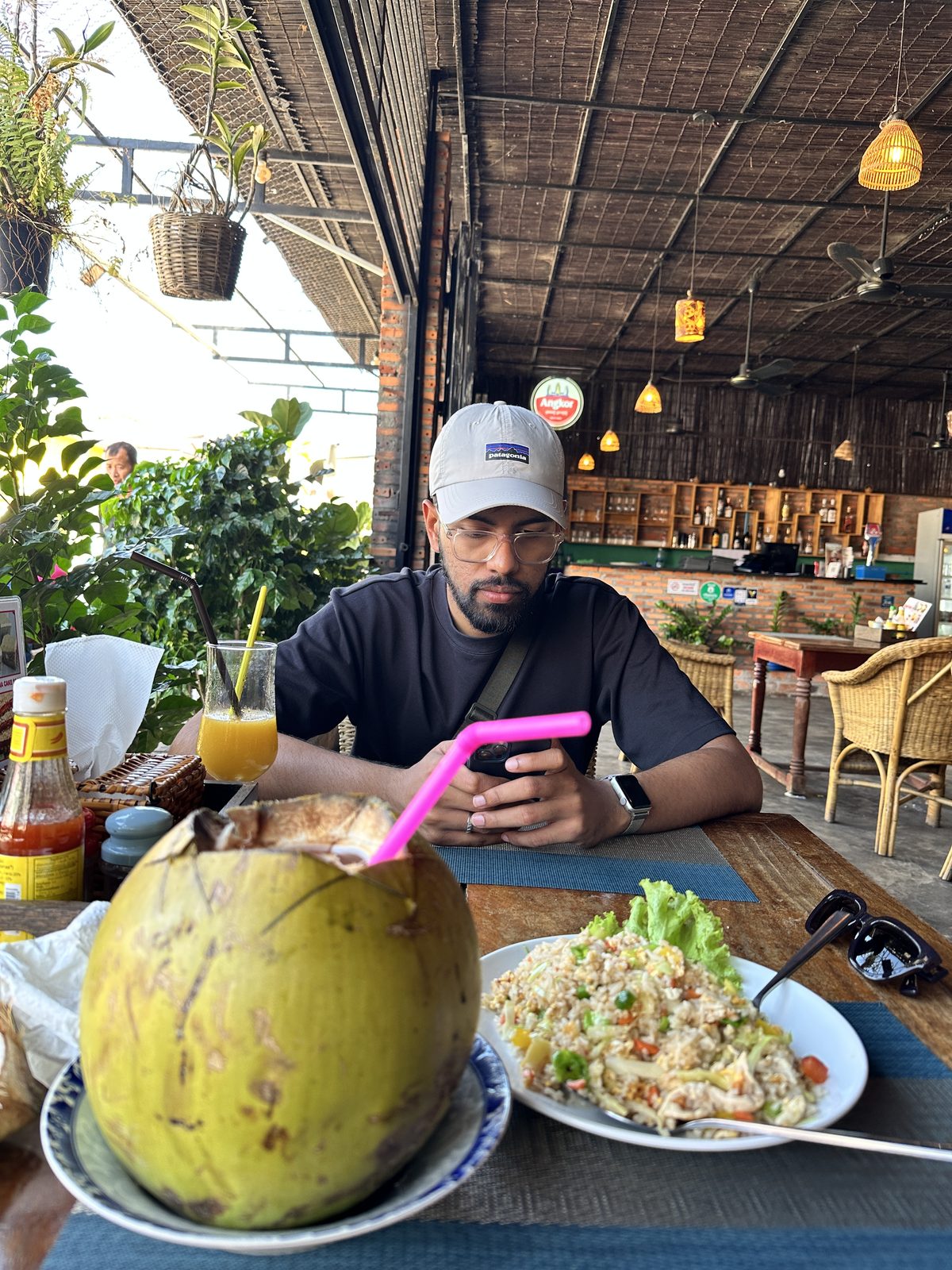
Eat fish amok at least twice. Order the lok lak — peppered beef with a fried egg and a lime-and-black-pepper dip. And drink the coconuts, which cost about a dollar and come with a straw and no ceremony.
What we would do differently
We would add a night. Three was enough for one temple day and one rest day, but it left nothing for Banteay Srei — the small pink sandstone temple an hour out, which everybody who has seen it says is the finest carving in Cambodia — or for the floating villages on the Tonlé Sap. A fourth night would have bought one of those without touching the rest day, which we would not give up.
We would not try to add Phnom Penh. We considered it and decided against, and we were right. It is a five- or six-hour drive or a short flight, and doing it justice — the Royal Palace, and Tuol Sleng and the killing fields, which are the reason to go and are not something to squeeze in around an Angkor trip — needs two full days of its own and a different frame of mind. Do it as its own visit or not at all.
Where the money goes
Cambodia was the cheapest country of the month by a clear margin, with one large exception: the Angkor pass. At the time of writing it is around $37 for one day, $62 for three and $72 for a week, and it is worth every cent — but it is a real number and it lands all at once, so budget for it rather than being surprised at a ticket window at five in the morning.
After that, very little. A tuk-tuk for a full temple day is a modest fixed cost and your driver waits for you at every stop. Food is cheap, drinks are cheaper, and a good hotel with a pool costs less here than a mediocre room in Hoi An.
The country runs on US dollars. Prices are quoted in dollars, ATMs dispense dollars, and you will get Cambodian riel as small change instead of coins. Bring clean, unmarked notes; torn ones get refused.
Practical summary
Get the e-visa before you go. Cambodia issues an e-visa online, and visa on arrival also exists at the main airports. Use the official government site — there is an entire industry of near-identical sites charging several times the real fee. Check the current position for your passport before booking.
Dress code is enforced at the temples, properly and politely. Shoulders and knees covered for everyone. A long skirt or light trousers plus a t-shirt with sleeves is the answer, and you will be glad of the sun cover anyway.
Take a torch, water and a hat. You arrive in the dark and leave in the full heat of the afternoon.
Stay after the sunrise. Ninety minutes of a nearly empty Angkor Wat is the best thing in this post and it costs nothing but breakfast.
Book a tuk-tuk driver for the whole day, not per temple. Agree the route in advance and they will wait, hold your bag and know exactly where the shade is.
Put the rest day after the temple day. Not before.
Next: part five, Malaysia.


Leave a Reply