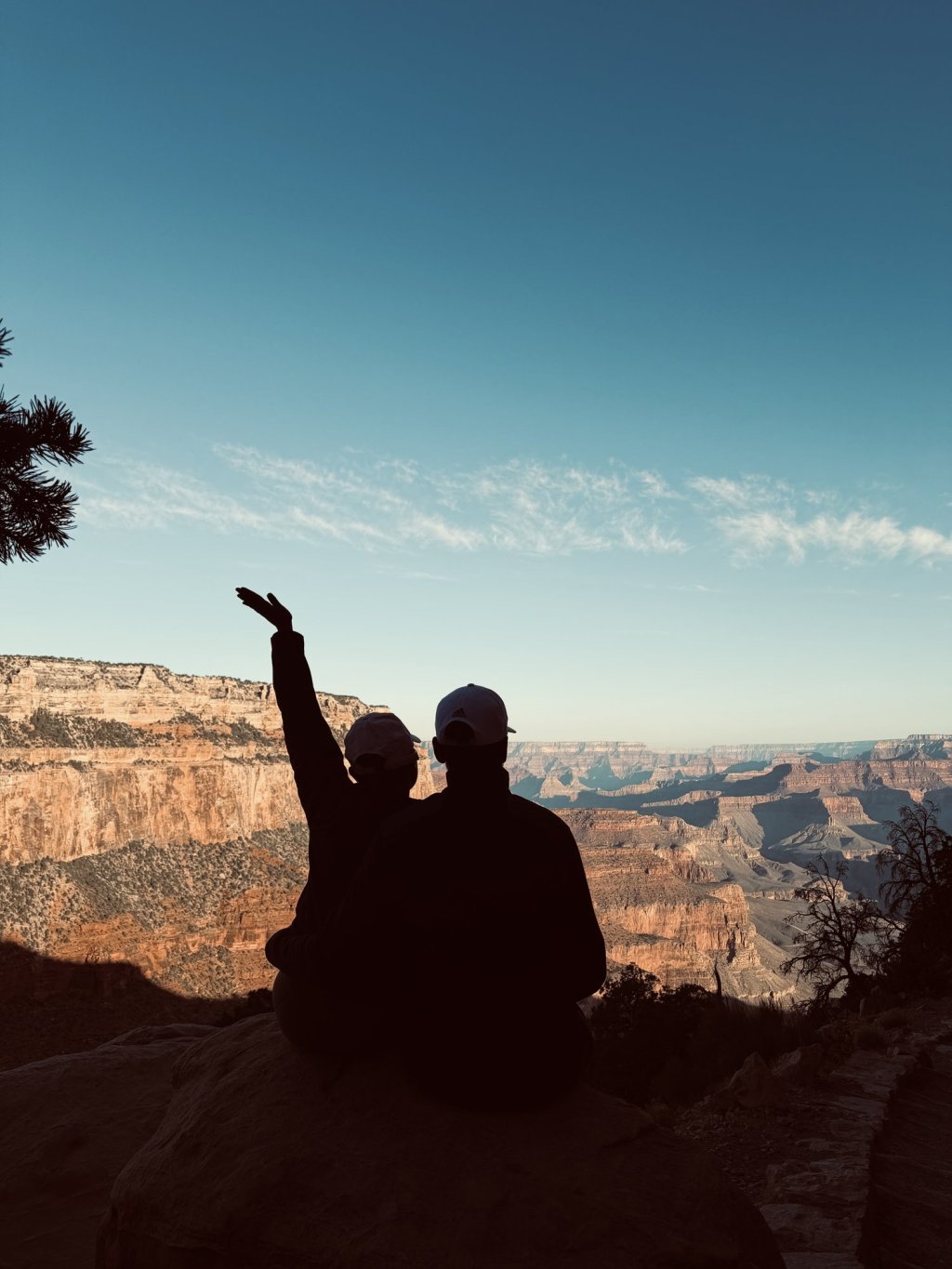
Nine parks, two coasts, one rental car.
We left Munich in May with a plan that everyone we told about it said was far too much. New York first, then all the way across to San Francisco, where we would pick up a car and drive south and east — through the Sierra Nevada, into the hottest desert on earth, through the red canyon country of Utah and Arizona, and finally out to the Pacific at Los Angeles.
They were right. It was too much. And we would do every single mile of it again tomorrow.
So here is all of it — the route, the places we fell in love with, the couple we would happily skip, and everything practical we wish someone had told us before we set off. If you are dreaming about this trip, we hope this helps you plan yours.
The route
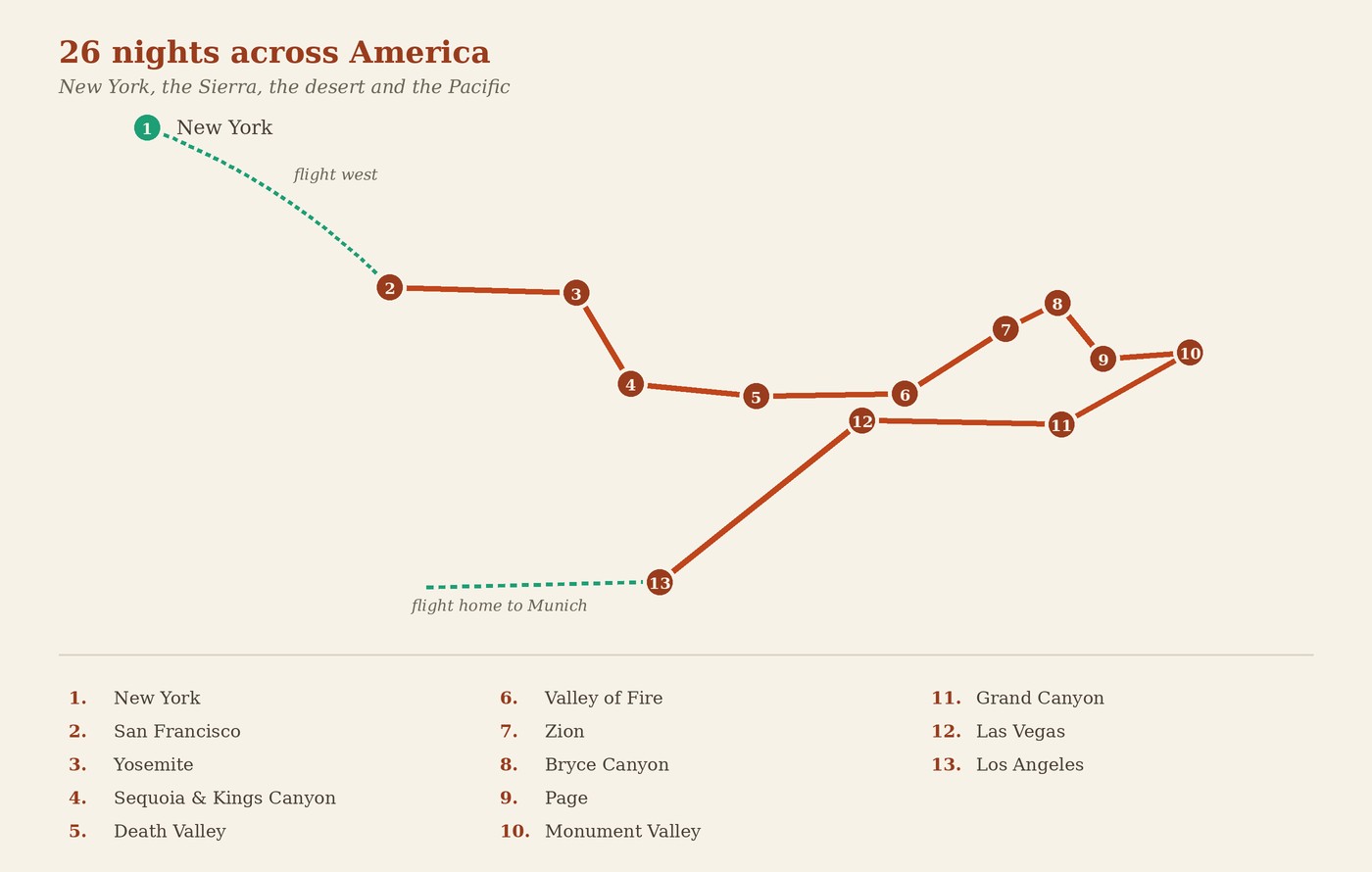
| Stop | Nights | Getting there |
|---|---|---|
| New York | 3 | Direct from Munich |
| San Francisco | 2 | Domestic flight |
| Yosemite | 2 | Rental car from SF, about 4 hrs |
| Sequoia & Kings Canyon | 1 | 4 hrs south |
| Death Valley | 2 | 5 hrs east |
| Valley of Fire | — | Stop on the drive |
| Zion | 3 | 2.5 hrs from Valley of Fire |
| Bryce Canyon | 1 | 1.5 hrs |
| Page | 2 | 2.5 hrs |
| Monument Valley | 1 | 2.5 hrs |
| Grand Canyon, South Rim | 2 | 3 hrs |
| Las Vegas | 2 | 4.5 hrs west |
| Los Angeles | 5 | 4 hrs |
| Munich | — | Out of LAX |
Twenty-six nights, twelve stops, and one very well-travelled rental car, picked up in San Francisco and dropped off in Los Angeles.
26
nights
12
stops
9
parks
May
we went
New York: three days, and one dessert twice
Three days in New York is nowhere near enough, and we knew that before we even landed. So we let go of trying to see everything, and simply walked instead. It turned out to be the best decision we made there.
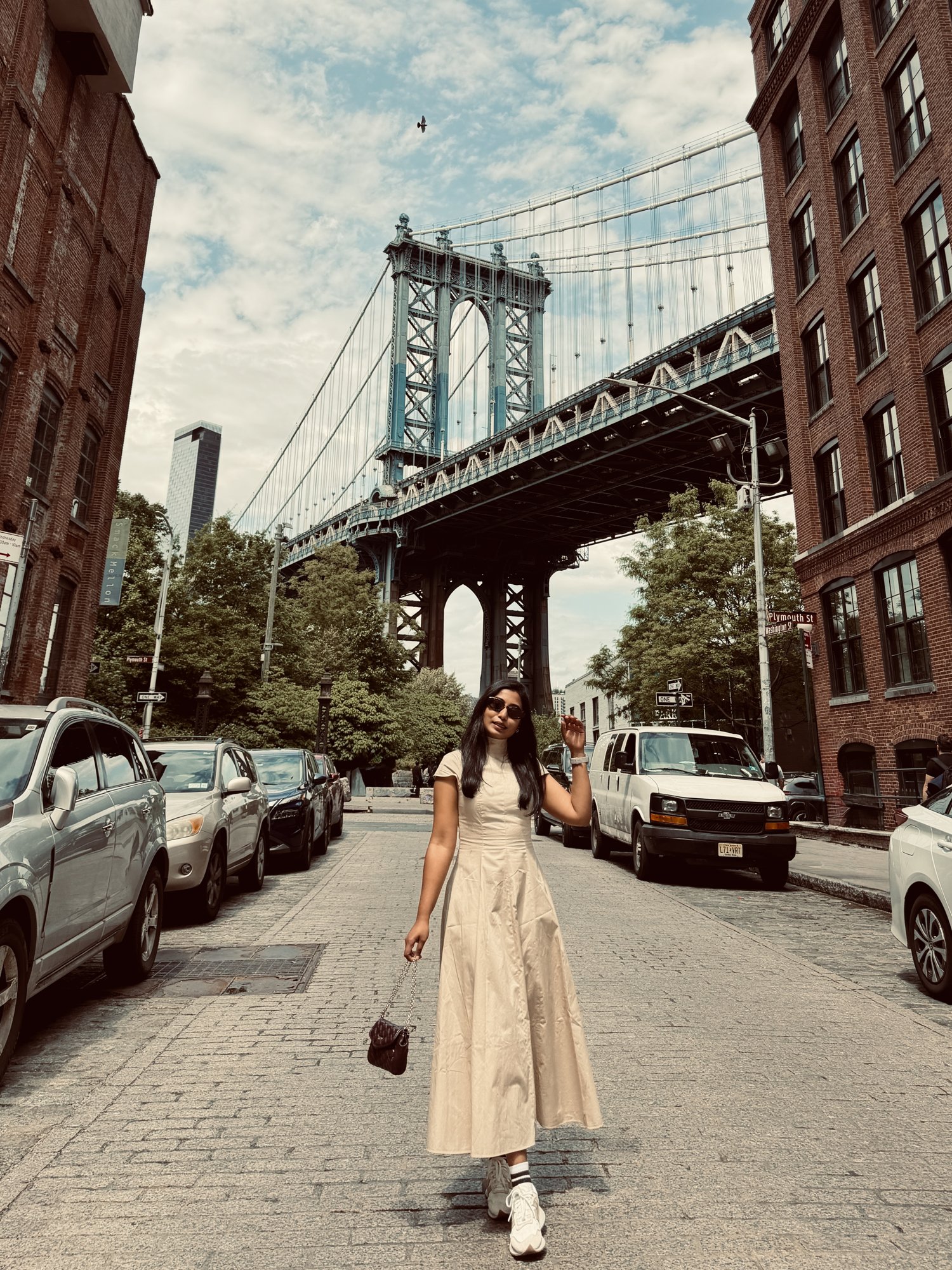
Manhattan first. We took the cruise out to the Statue of Liberty, which is one of those things you feel a little sheepish about doing right up until you are out on the water and the whole skyline pulls back behind you — and then you are just grinning like everybody else on the boat. Afterwards we walked the Financial District, through those narrow canyon streets around Wall Street, past the Charging Bull with its little scrum of people waiting a turn for a photograph, and then stood a long while at the 9/11 Memorial. It is a remarkably quiet place in a very loud city, and we did not say much for a bit. Then Brooklyn, and DUMBO, with that view back through the bridge that every photograph you have ever seen of New York seems to be taken from. SoHo we wandered on foot with no plan at all, which is exactly how it should be done.
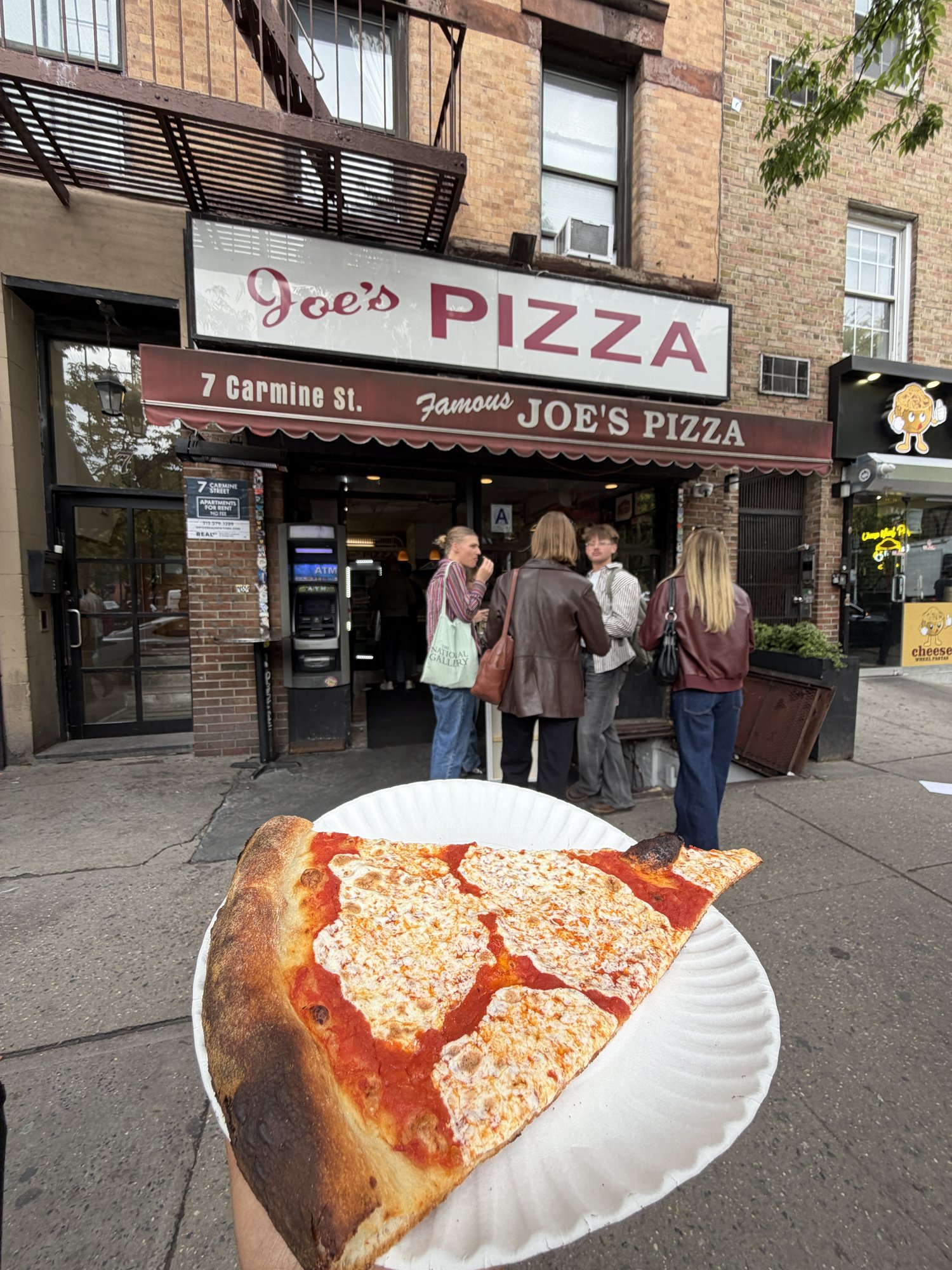
The food, though. That was the real surprise. Not that it was good — we expected good — but that we ended up happily planning whole days around it. Bungalow for Indian fine dining, which is not a sentence we ever expected to write about New York, and which we are still talking about. Joe’s Pizza, eaten standing up, exactly the way you are supposed to. Ess-a-Bagel in the mornings, an institution all of its own. And the coffee, everywhere, so much better than we had been led to believe.

But the thing I still think about, months later, is the banana pudding from Magnolia Bakery. It was so good that I went back for a second one. I am not even slightly embarrassed about this.
We also spent time with family in the city, which quietly reshaped those three days — less rushing between sights, more sitting around tables and talking. Those were some of our favourite hours in New York, and we would trade a monument for them any day.
And Times Square after dark, which everybody warns you is too much, and which is too much, and which we loved anyway. All that light, all those people, every single one of them looking up. Go once, at night, and let it be silly.
San Francisco: two days, and the friends who made them
Two days in San Francisco, and we spent almost every hour of them with childhood friends who live there now. They collected us, showed us their city, walked us out to the Golden Gate Bridge and down to Fisherman’s Wharf, and filled the gaps in between with the kind of easy conversation you only get with people who have known you since you were small.
I want to be honest with you, because that is rather the point of writing these: as a city, San Francisco did not land for me the way I hoped it would. It felt touristy in a way that kept me at arm’s length from whatever the real place is. The bridge is the bridge, and you absolutely should go and stand in front of it. But Fisherman’s Wharf could have been almost anywhere.
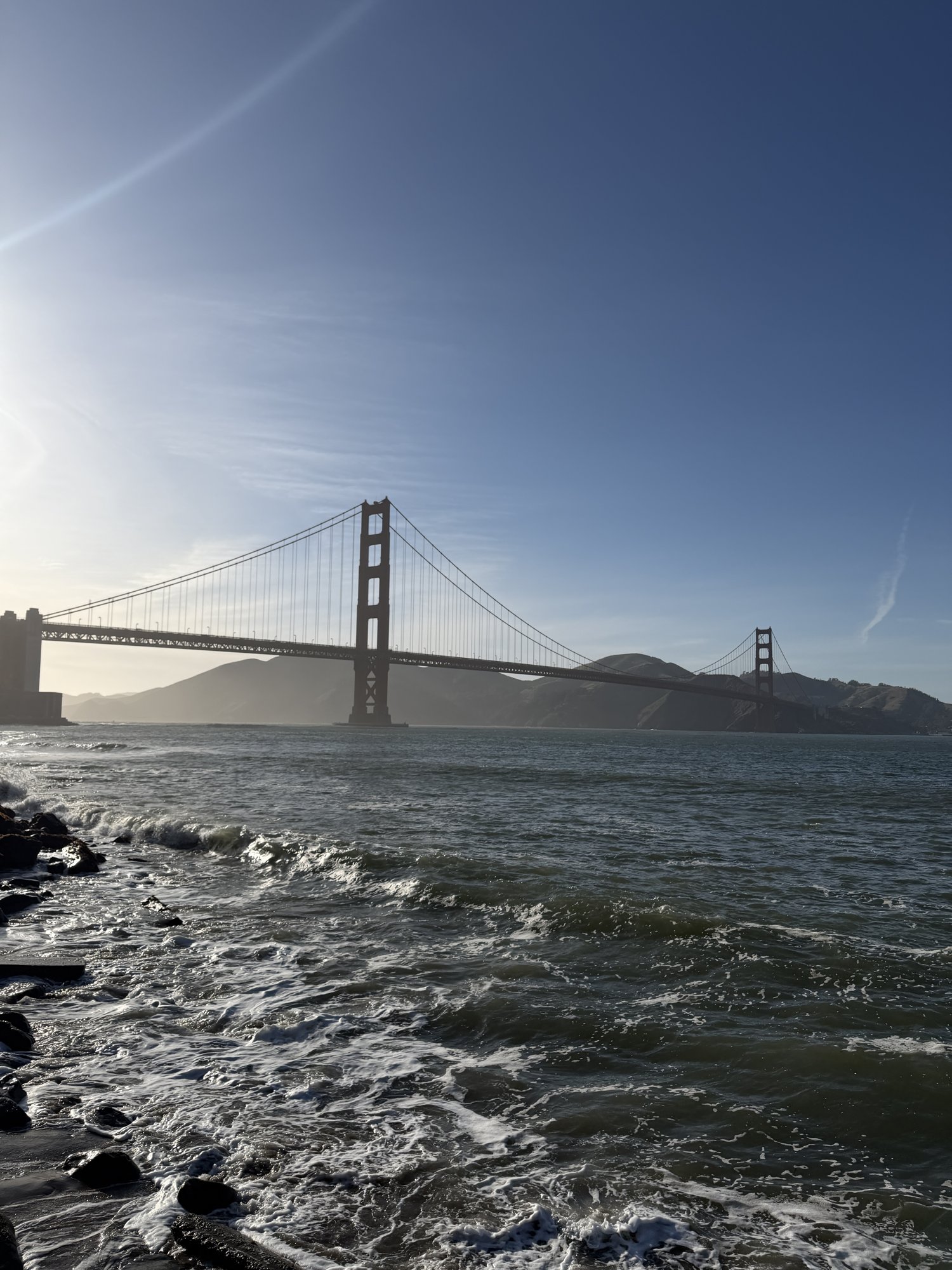
And here is the thing I keep coming back to: none of that mattered in the slightest. What we will actually remember about San Francisco is not the bridge or the waterfront. It is being walked around a city by people who have known us since childhood, and just how much warmth there was in those two days. The sightseeing was fine. The company was everything.
Two days felt like exactly the right amount for us. San Francisco was the hinge of this trip rather than the heart of it — we collected the rental car here, and from this point on, everything was the open road.
A note on the car: San Francisco pick-up and Los Angeles drop-off is a one-way rental, and the one-way fee can be significant. Price it early. It was still far cheaper than doubling back.
Yosemite: the one where we hiked until our legs gave out
We stayed inside the park, and if you can possibly get a booking, do. Being in the valley in the evening after the day visitors have gone is a completely different experience — quieter, softer, and somehow much bigger.
The Mist Trail was the hike of our time here, and the one we would press on anybody. It climbs right alongside the water the whole way, up past Vernal Fall and on towards Nevada Fall, on granite steps that simply keep coming. It is relentless, honestly relentless, and by the top your legs have nothing left to give. And it is so worth every single step. If you only do one big hike in Yosemite, please make it this one.
Going in May turned out to be the happiest accident of the whole trip. The snowmelt was still pouring down and the waterfalls were absolutely thundering. The Mist Trail more than earns its name at that time of year — you will be soaked through within minutes, and you will not care one bit. There were rainbows hanging in the spray most of the morning. We laughed the entire way up.
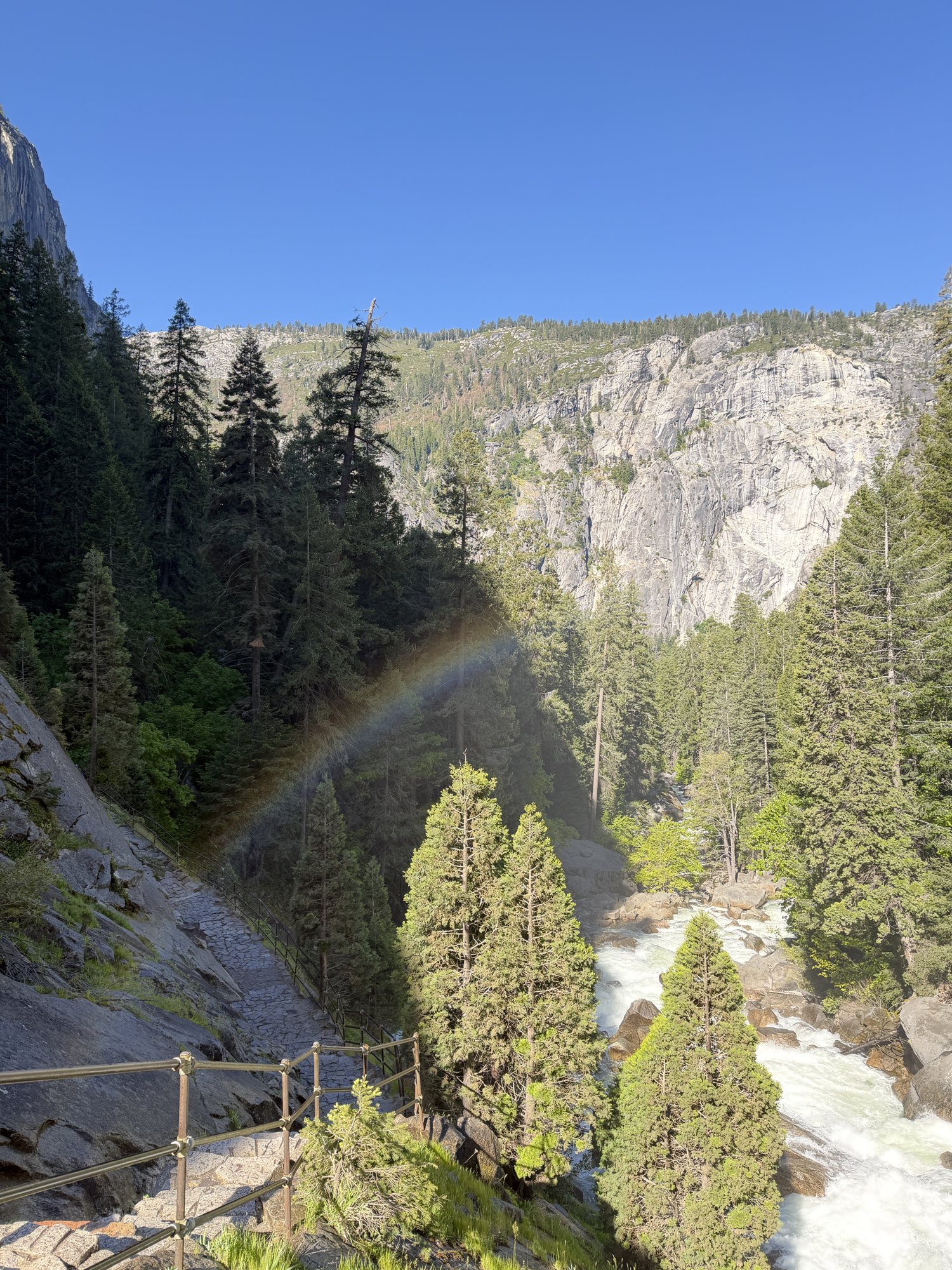
On another day we hiked Yosemite Falls, which is its own proper climb and gives you the valley laid out beneath you, and then wandered Cook’s Meadow in the late afternoon — flat, easy, and quite possibly the loveliest place in the whole valley to simply stand still and look up at Half Dome and Yosemite Falls together. Spreading the big hikes across separate days was the right call. We would not have enjoyed either half as much stacked back to back.
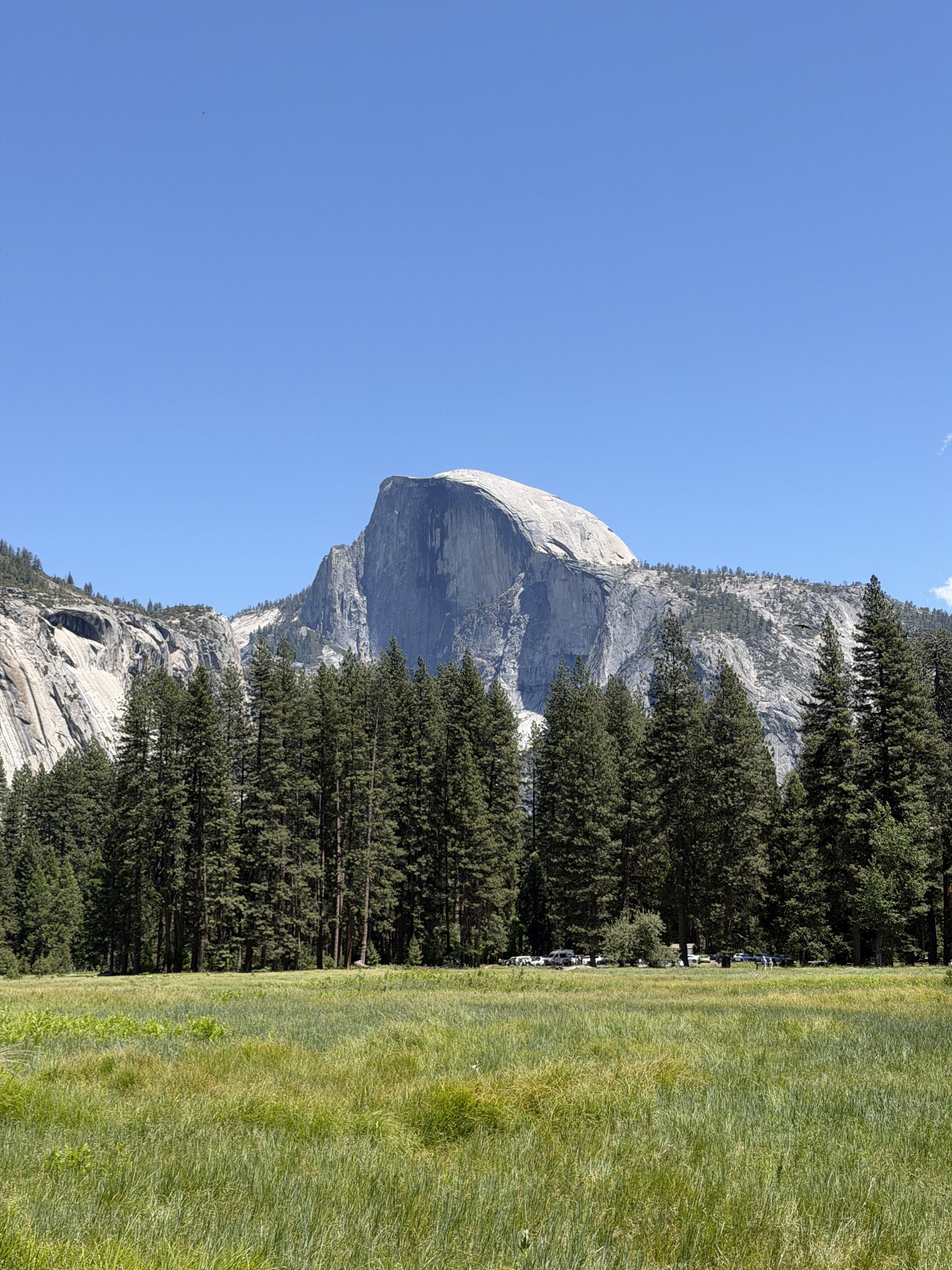
Two and a half days felt right for a first visit, though we could happily have stayed a week and still not run out of things to love.
Good news for 2026: Yosemite has dropped its entrance reservation requirement, including through summer. You can simply drive in. Traffic is still heaviest between about 5am and 4pm, so early starts still pay off.
Sequoia and Kings Canyon: one day among the giants
Most itineraries skip this one entirely and head straight from Yosemite out to the desert. Please don’t.
We stayed inside the park and spent a whole day wandering the Giant Forest. The scale of it is genuinely hard for your brain to take in — these are the largest living things on the planet, and every photograph flattens them into something ordinary. You really do have to stand underneath one, tip your head back, and feel very small and very happy about it.
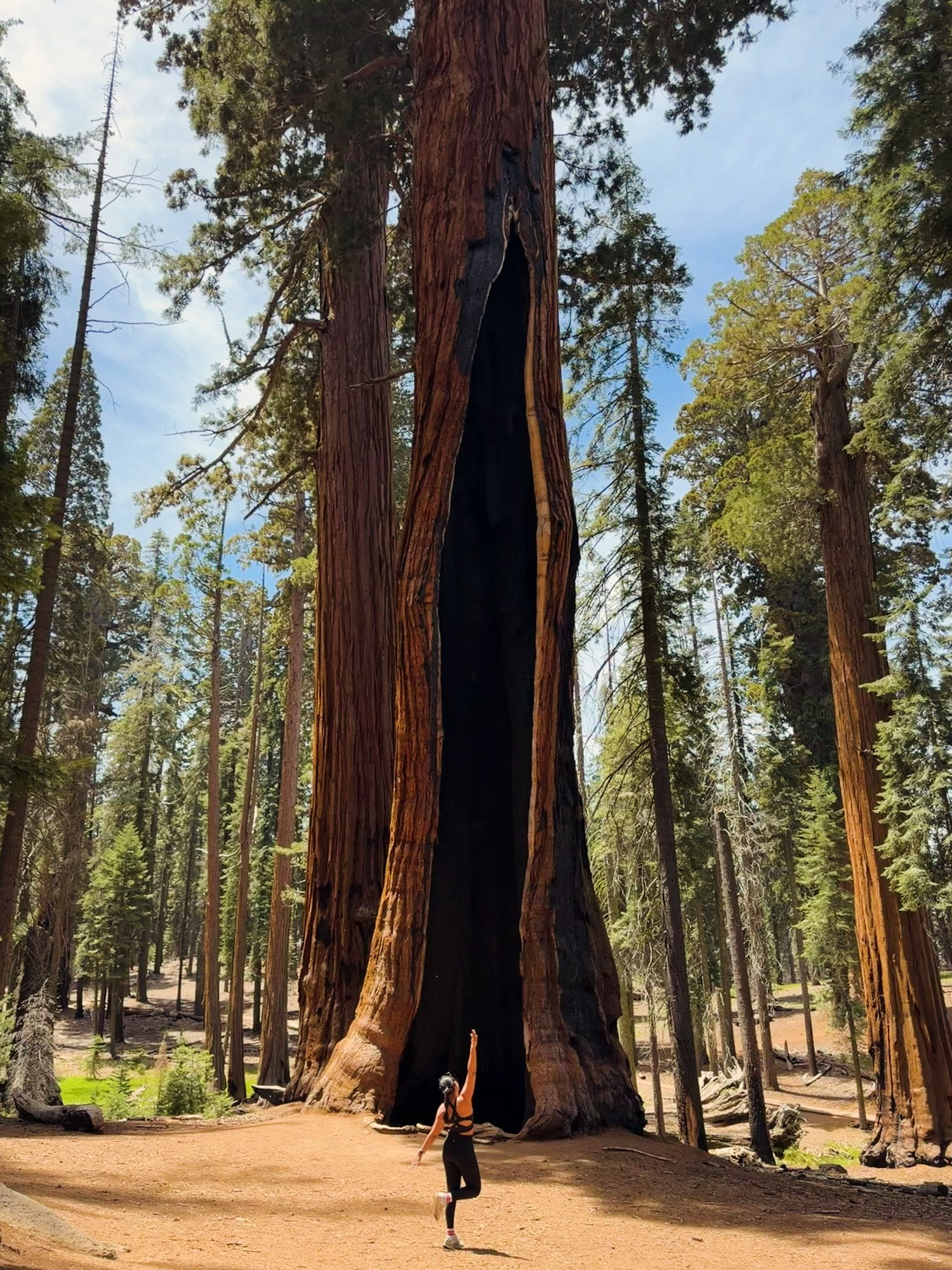
One practical note: the road in is slow and full of switchbacks, so give yourself more driving time than the map promises. You will want to stop anyway.
Death Valley: the one we splurged on, and were right to
We booked an expensive resort here. Properly expensive — the most we spent on a room the entire trip — and it turned out to be the best decision we made anywhere.
Even in May, the afternoons were simply too much. The day splits itself in two whether you plan it that way or not: out early while it is still bearable, back before the worst of the heat, and then the whole middle of the day belongs to air conditioning and a pool. We stopped resenting that fairly quickly and started rather loving it.
If you are going to be indoors for the hottest hours anyway, be indoors somewhere wonderful. Those slow afternoons ended up being some of our favourite of the trip.
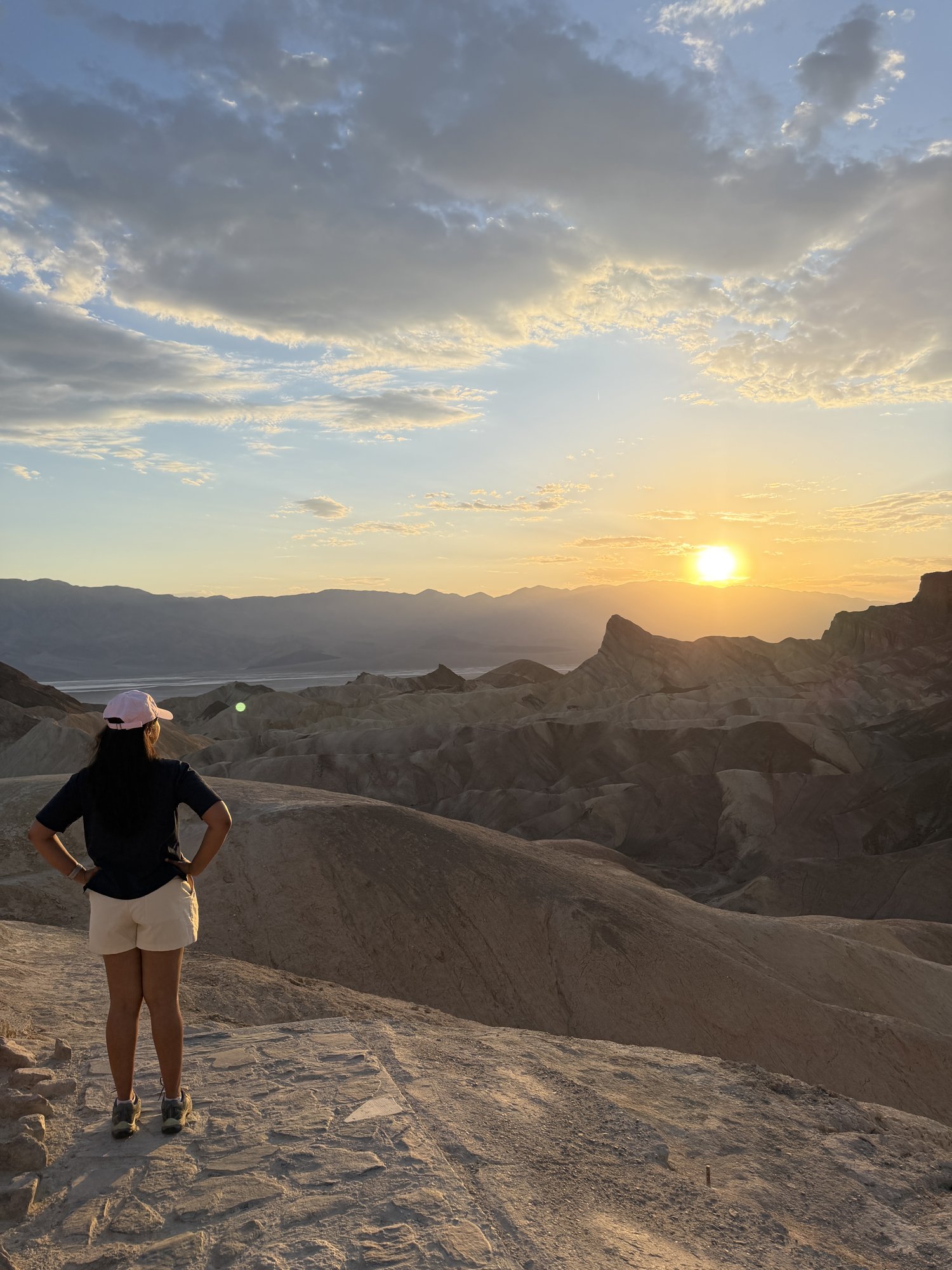
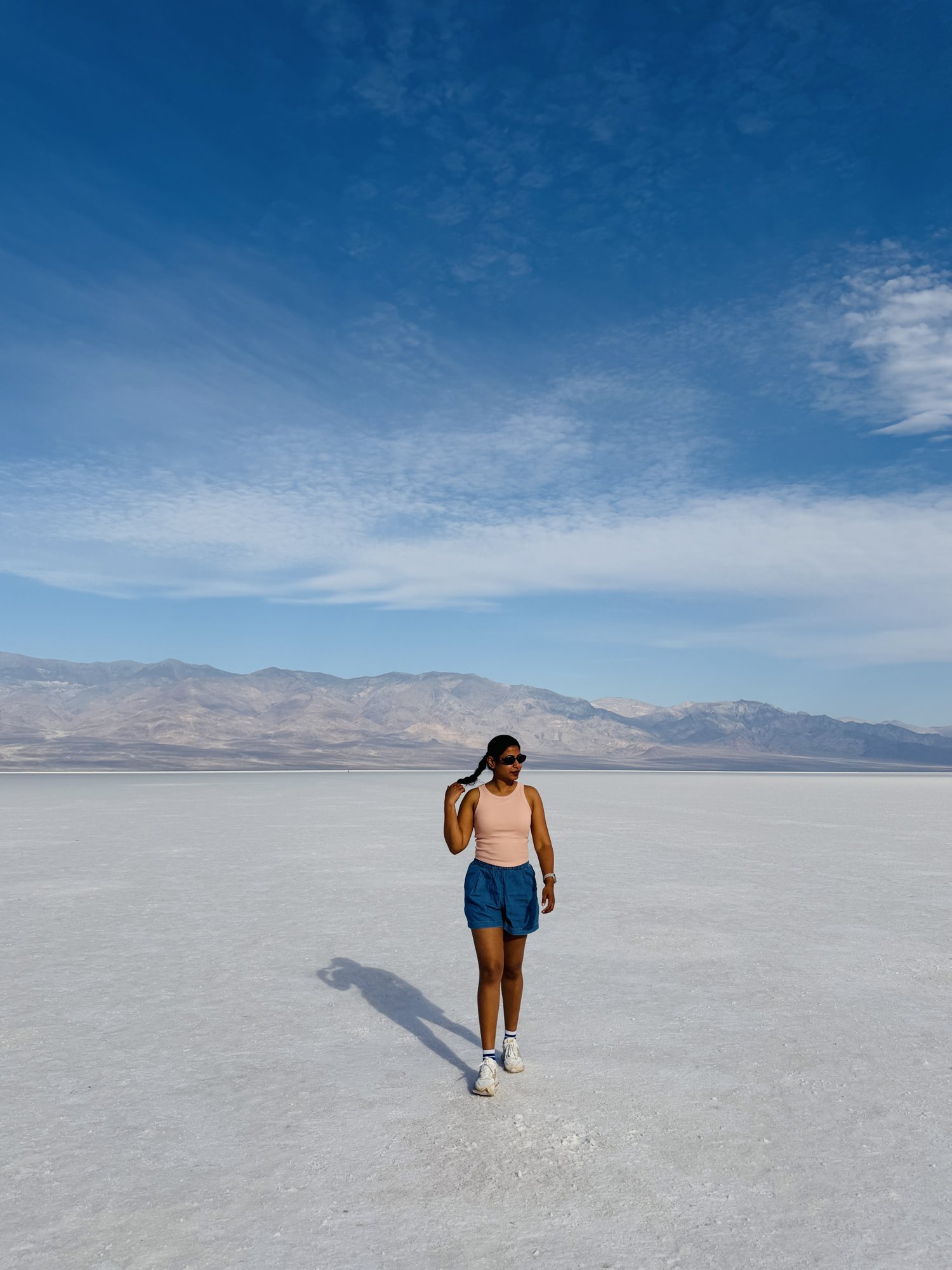
We watched the light at Zabriskie Point, and we walked out onto the salt flats at Badwater Basin — and oh, the salt flats. They were on a completely different level from anything else we saw. An endless white plain, cracked into perfect hexagons, running out far further than seems reasonable, with mountains standing behind it. Nothing prepares you for it, and no photograph we took comes close.
Take the heat seriously — and more so if you go later than we did. The humidity in Death Valley sits in single digits, so your sweat evaporates before you feel it: you don’t notice you’re sweating, which means you don’t notice how fast you’re dehydrating. May is manageable with early starts. July and August are a different proposition entirely — averages around 47°C, ground temperatures past 90°C, and 62 recorded deaths in the park between 2007 and 2024. Park guidance is nearly four litres of water per person per hour outdoors, no low-elevation hiking after 10am, and staying within about ten minutes of air conditioning. If your car breaks down, stay with it: it’s shade, and it’s easier to find than a person.
Valley of Fire: the stop nobody plans
We broke the Death Valley to Zion drive here on a whim, and it turned into one of the loveliest surprises of the whole trip. Glowing red Aztec sandstone, a handful of gentle walks of an hour or so, and hardly anybody around compared with everything that was coming next.
It costs you almost no time and it sits right on the route. Go, honestly.
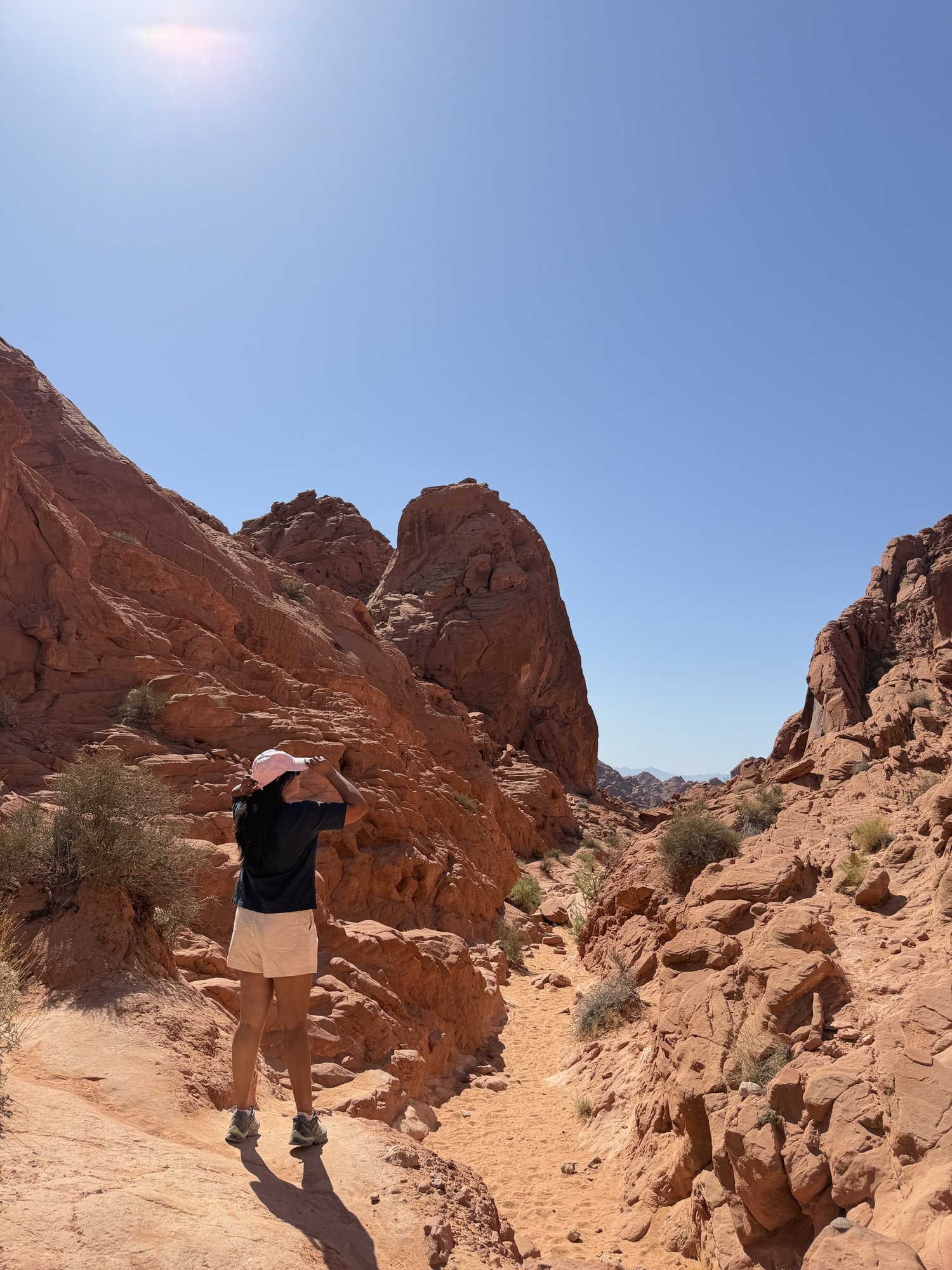
Note that Valley of Fire is a Nevada state park, so a national parks pass does not cover it. Separate fee.
Zion: three days and the best morning of the trip
We stayed in Springdale, right at the park gate, and gave Zion three days. It earned every single one of them, and then some.
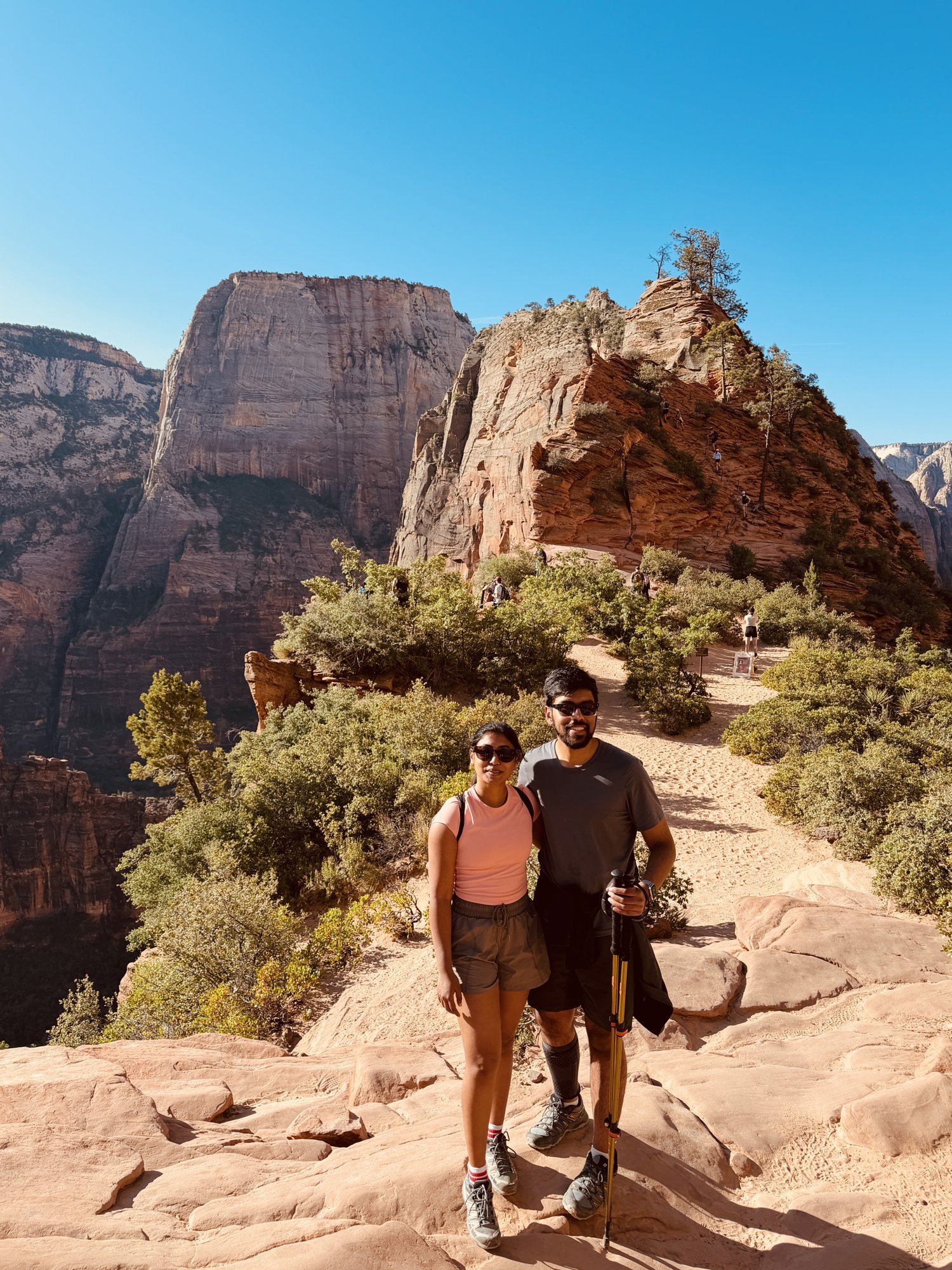
Scout’s Lookout at sunrise was the morning we will both remember. You climb Walter’s Wiggles — those switchbacks stacked one on top of another that look genuinely absurd when you are standing beneath them — and you come up over the top just as the light spills into the canyon. Setting off in the dark pays you back twice: once for the sunrise, and once for having done all the hard climbing before the heat arrives.
The Narrows was unlike anything I have ever done in my life. You walk straight up the river itself, into a slot canyon, with the walls rising and closing in above you and the cold water pushing around your legs. There is no path at all — the river is the path. Nothing else on this entire trip felt so strange, so joyful, or so completely unforgettable.
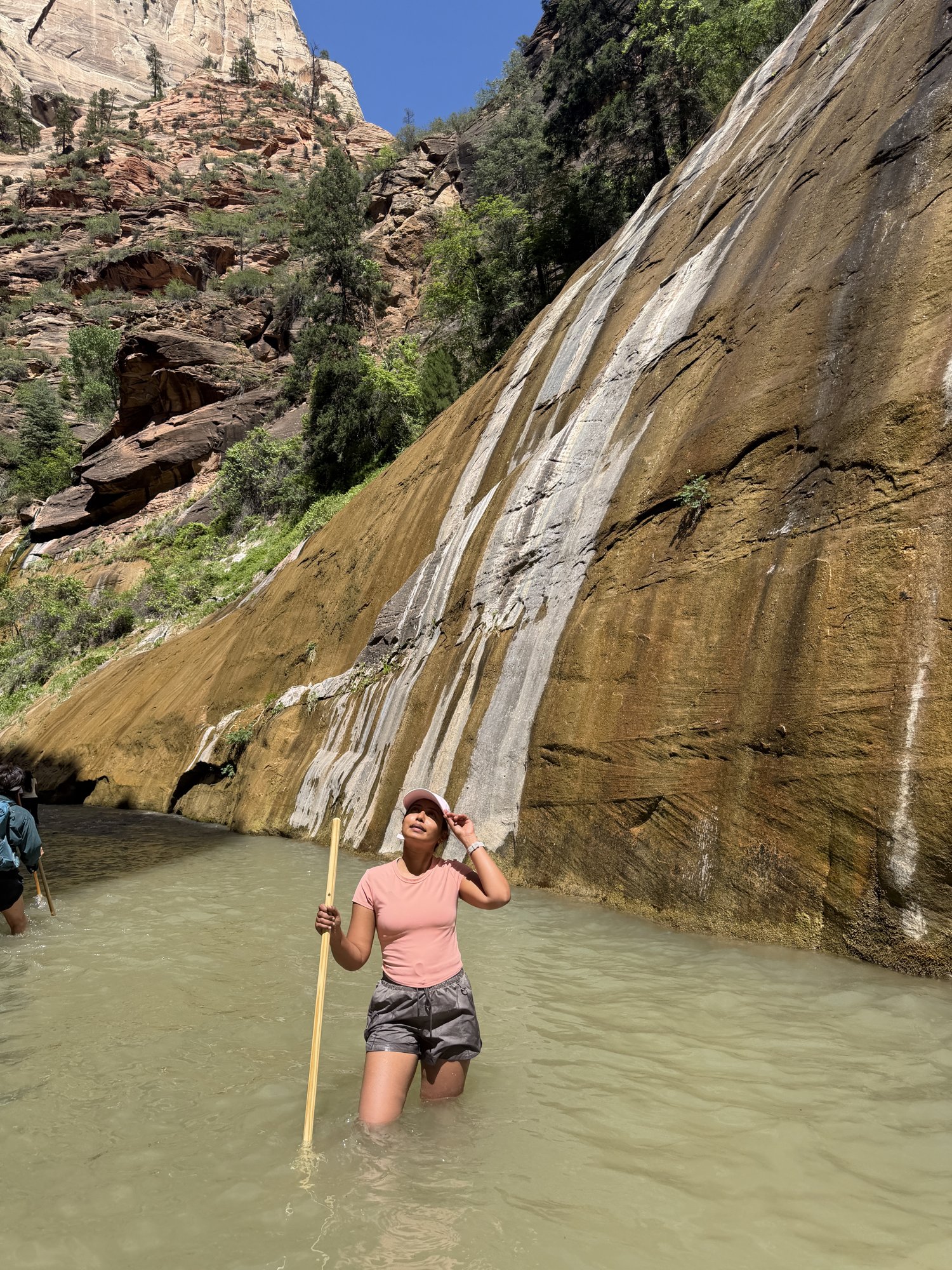
We also did the lower and upper Emerald Pools and a few shorter walks, and deliberately left ourselves space to do absolutely nothing. Zion rewards slowness.
Bryce Canyon: one long day among the hoodoos
One day, and one glorious hike of five or six hours down into the amphitheatre and around the Peekaboo Loop. Bryce sits higher than everything around it and is noticeably cooler, which after Death Valley and Zion felt like a small mercy all by itself.
The hoodoos — those slender orange spires standing in rows below the rim — are so wonderfully odd that walking down among them feels like stepping into another planet’s idea of a landscape. We kept stopping just to look up.
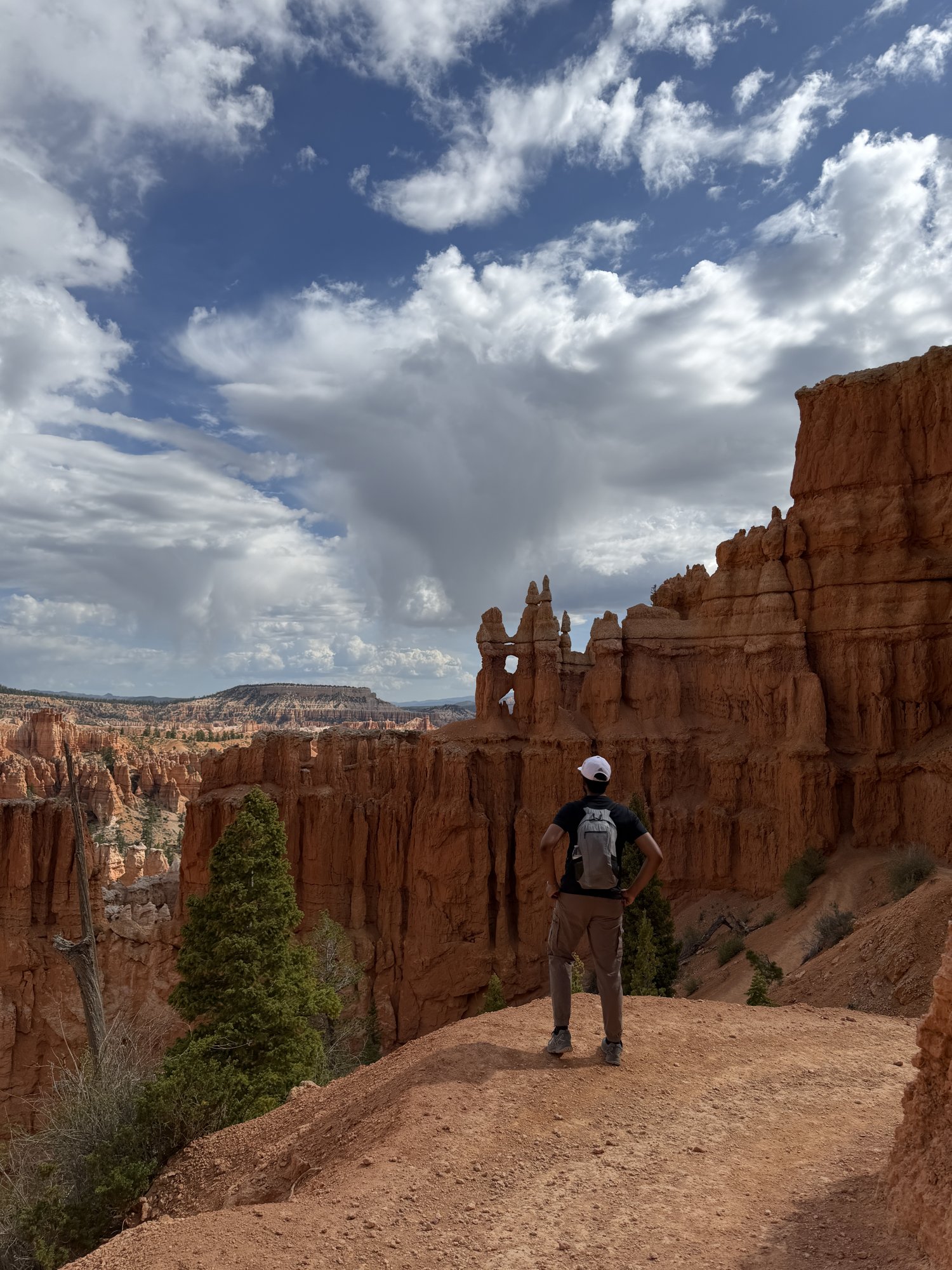
One day is enough to see Bryce. Two would let you do sunrise properly, and if we went again, that is exactly what we would do.
Page: Horseshoe Bend and Lower Antelope Canyon
Two nights in Page, and far more to fall for than we expected.
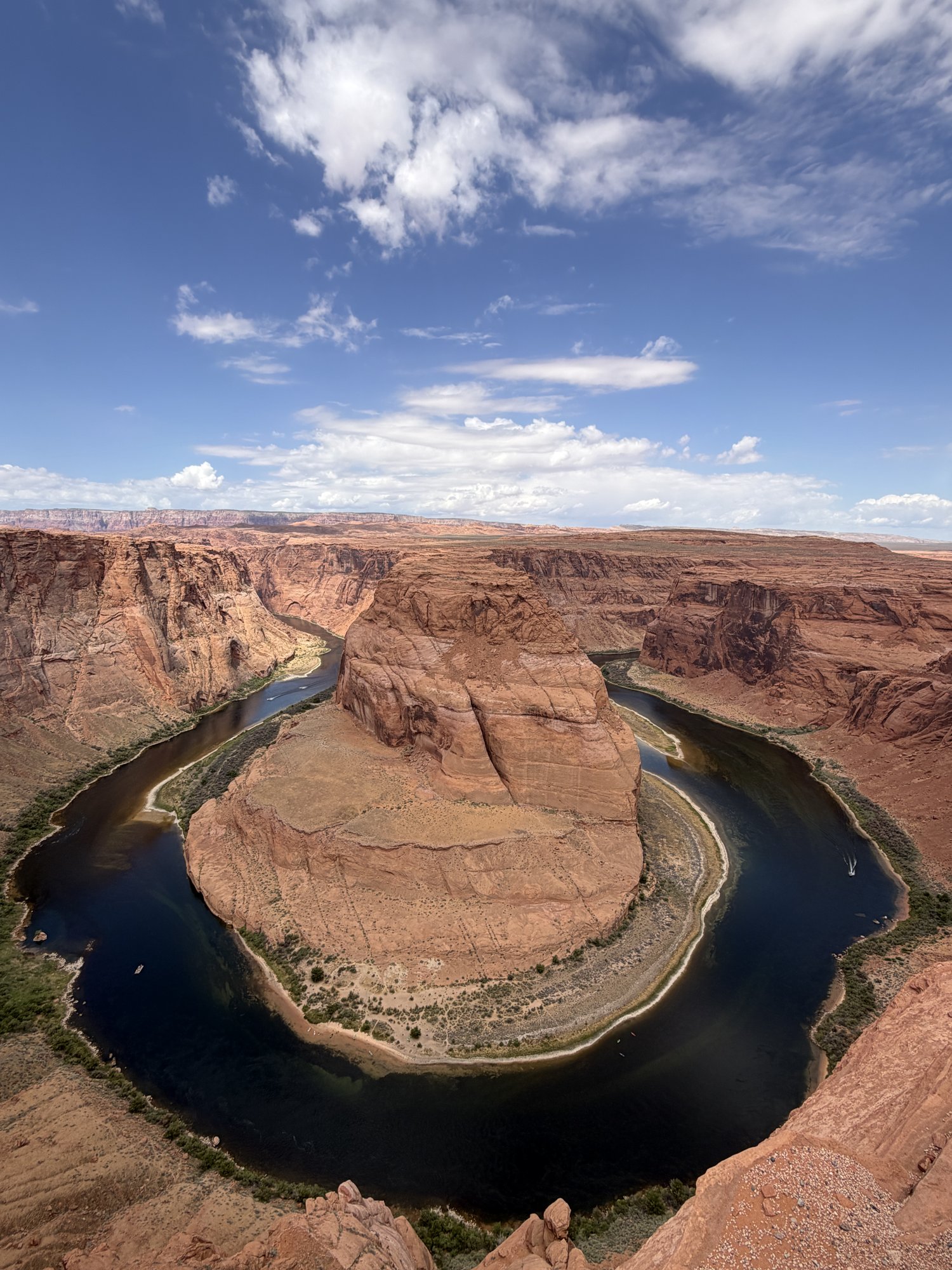
Horseshoe Bend is a short, easy walk that opens onto an absolutely enormous view — the Colorado River curling a full 270 degrees around a sandstone pillar, a very long way below you. You hear people gasp as they arrive.
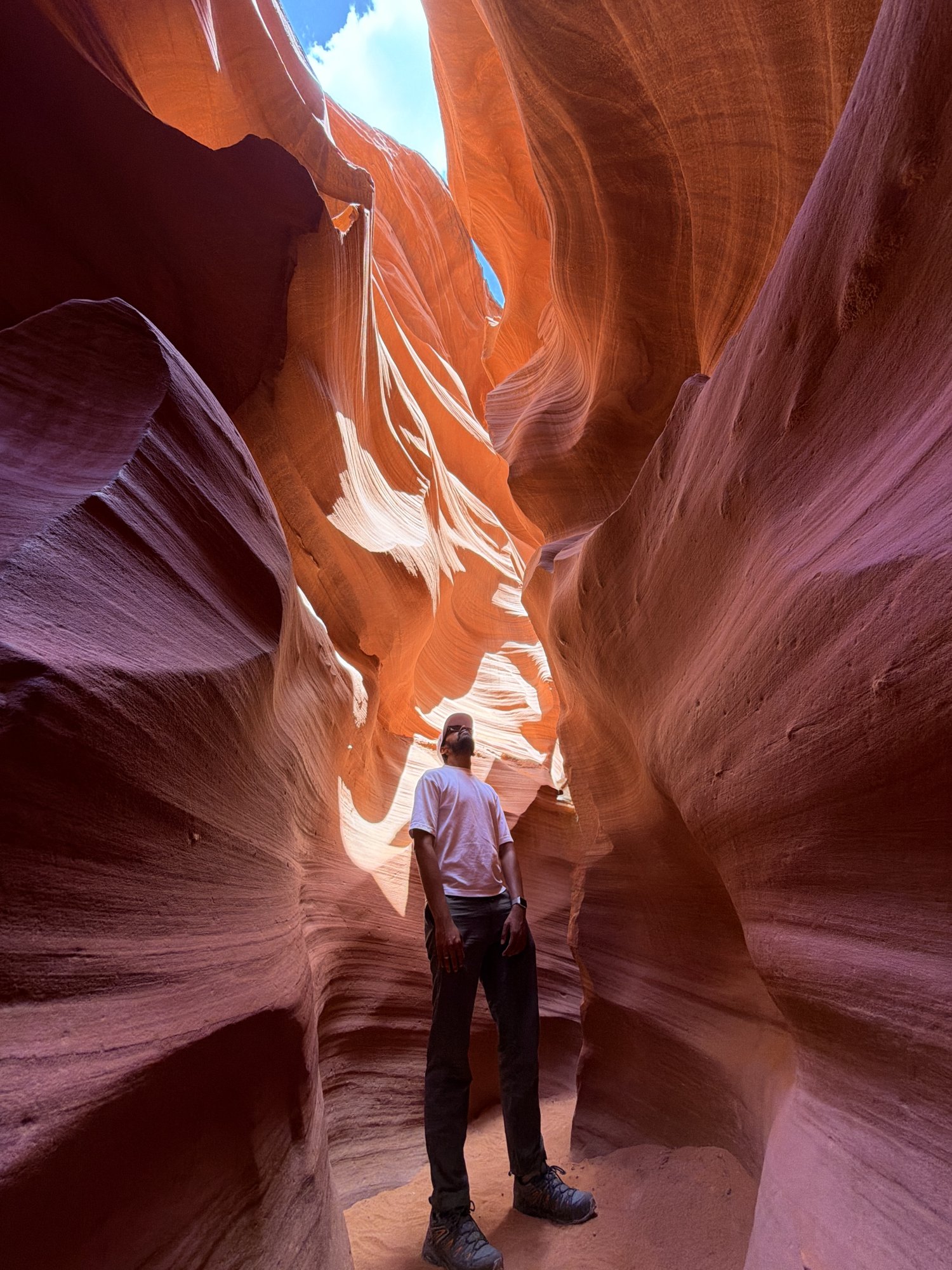
Lower Antelope Canyon was simply extraordinary. Narrow, softly sculpted, with light pouring down in shafts through the slot far above you. We chose Lower over Upper and were so glad we did — it is narrower and involves a few ladders, which makes the whole thing feel like a proper little adventure rather than a queue.
We also spent a happy hour or two at the Colorado River viewpoints around town, which get a fraction of the attention and are quietly beautiful.
And then there was the bit we very nearly skipped. Just outside town, on the slickrock, sits the New Wave — a great curved wall of striped sandstone that you can walk straight up to and stand beneath, feeling deliciously tiny. A few minutes away, tucked in behind the Shell petrol station, is a sand cave you scramble up into, where you sit in the cool and look back out at the sky through the mouth of it. Both are free. Both were among our favourite hours in Page.
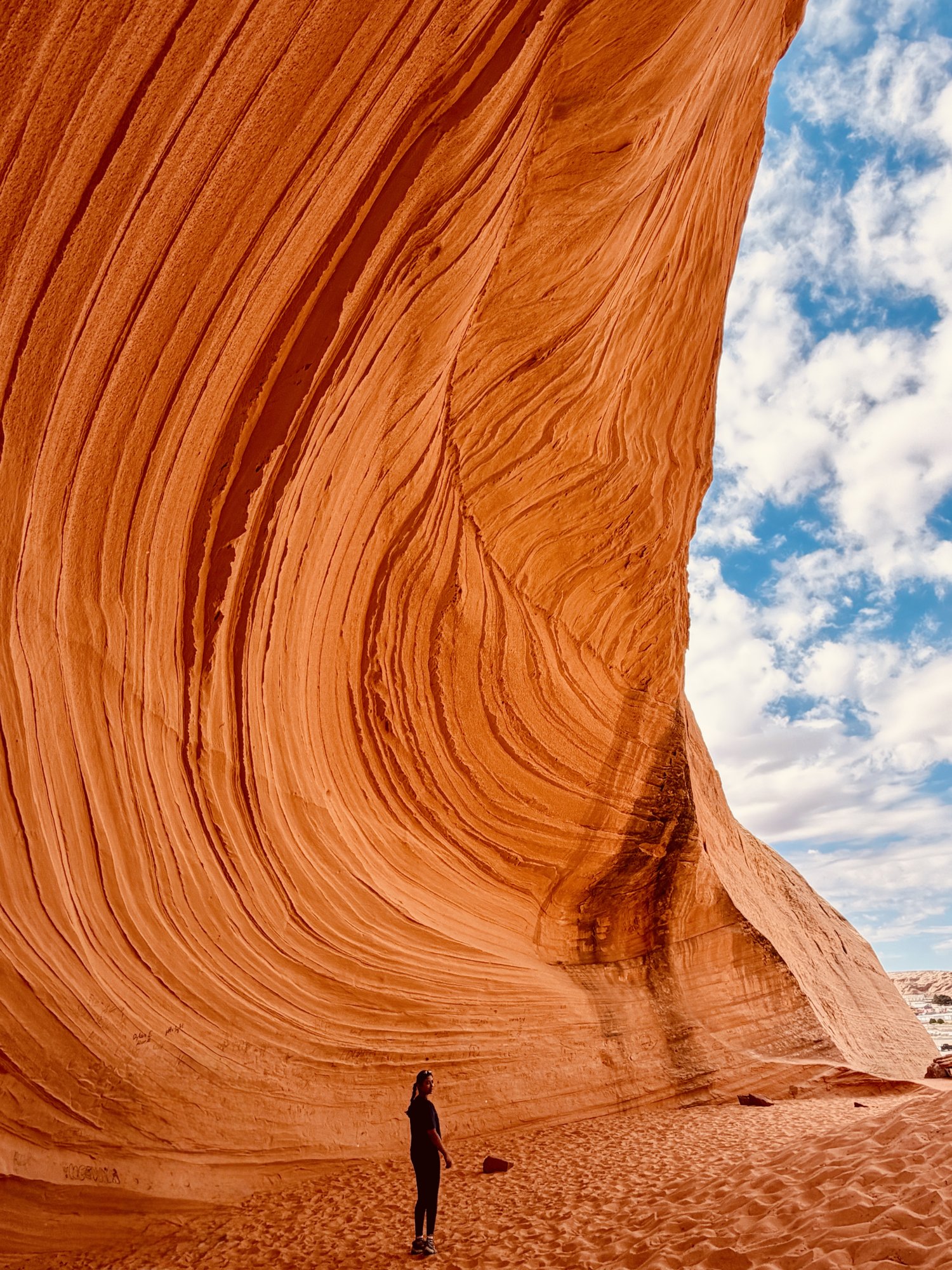
A note on the name. This is not The Wave at Coyote Buttes North, the famous one, which lies about an hour away and requires a permit won through a daily lottery. The New Wave and the sand cave near Page need no permit at all, which is precisely what makes them such a gift.
Book Antelope Canyon before anything else. You cannot enter without a Navajo-authorised guide, and summer slots go three to four weeks ahead, often more. This is the one booking on the whole route that can genuinely break your itinerary.
Monument Valley: the drive in is the thing
The drive is the thing here, twice over. First the approach: a dead-straight road, and those red buttes standing up out of the flat ground ahead of you, growing slowly larger the whole way. You have seen this road in a hundred films and it still catches you completely off guard.
Then the second drive, which is the one we would really press on you. Inside the park there is a rough dirt loop that takes you down among the buttes instead of looking across at them from the viewpoint. It costs an extra ticket on top of park entry, and it is worth every cent. You crawl along, you stop constantly, and the sheer scale of the place finally lands when you are underneath it rather than beside it.
We came in the afternoon, which we would recommend — the low sun sets the whole valley glowing, and by the end of it the rock had turned properly crimson. Deep, saturated, almost too much to take in. We barely spoke.
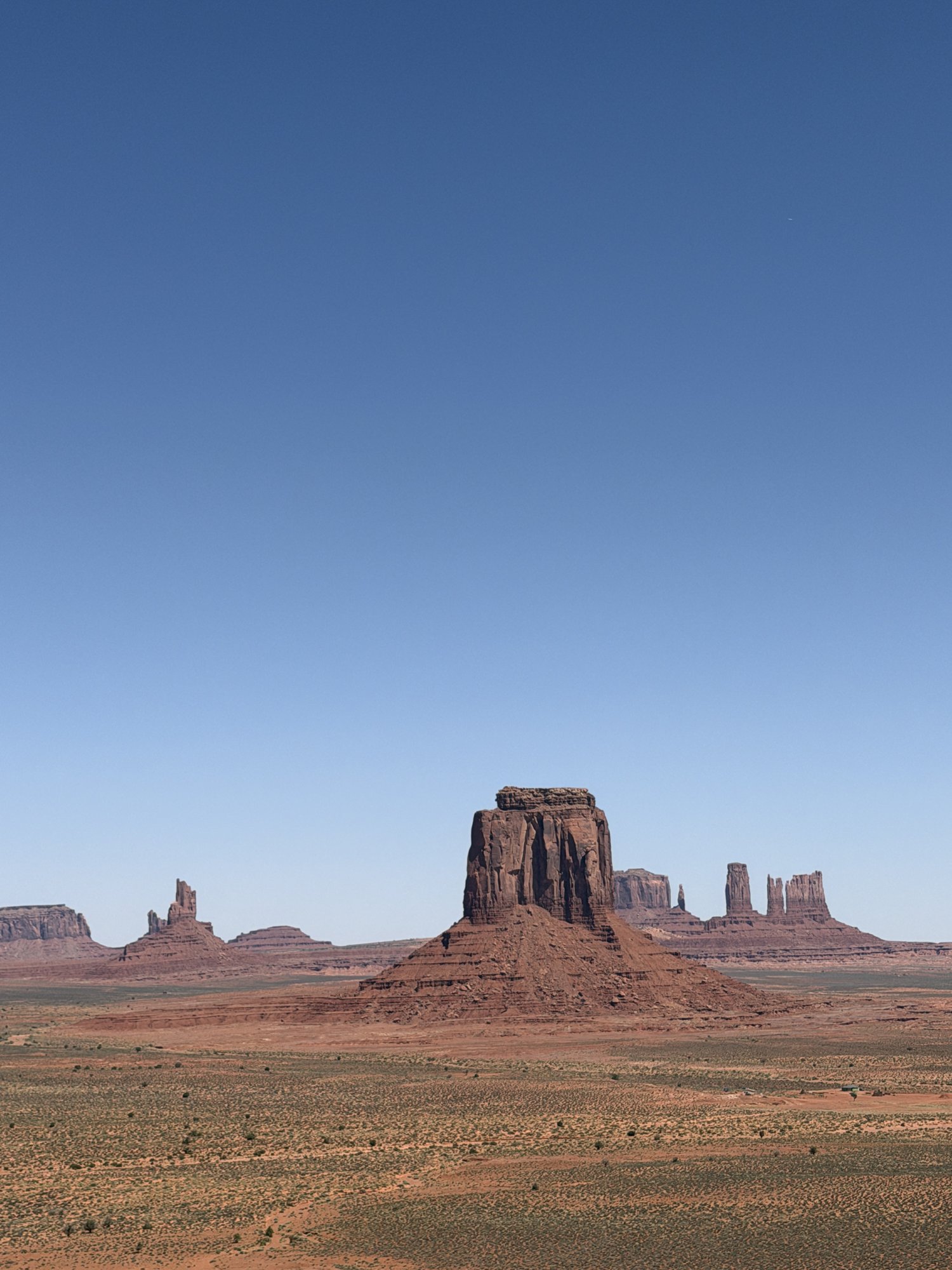
Monument Valley sits on Navajo Nation land and is not part of the national park system, so your parks pass does not apply here. There is an entry fee, and the interior loop drive is a further ticket on top of it. Budget for both.
The Grand Canyon: the reason for the whole trip
I did not expect this to be the emotional heart of nearly four weeks of travelling. But it was, completely.
We hiked down the South Kaibab Trail to Skeleton Point, setting off early, in the dark, so that we were descending just as the sun came up. And somewhere on the way down, something in me shifted. Standing inside the canyon rather than looking at it from the rim, everything I had been quietly carrying around — the thoughts, the worries, the whole shape of ordinary life — became very small, very fast. Not in a frightening way at all. In the best possible way. Overwhelmed, and so grateful for it.
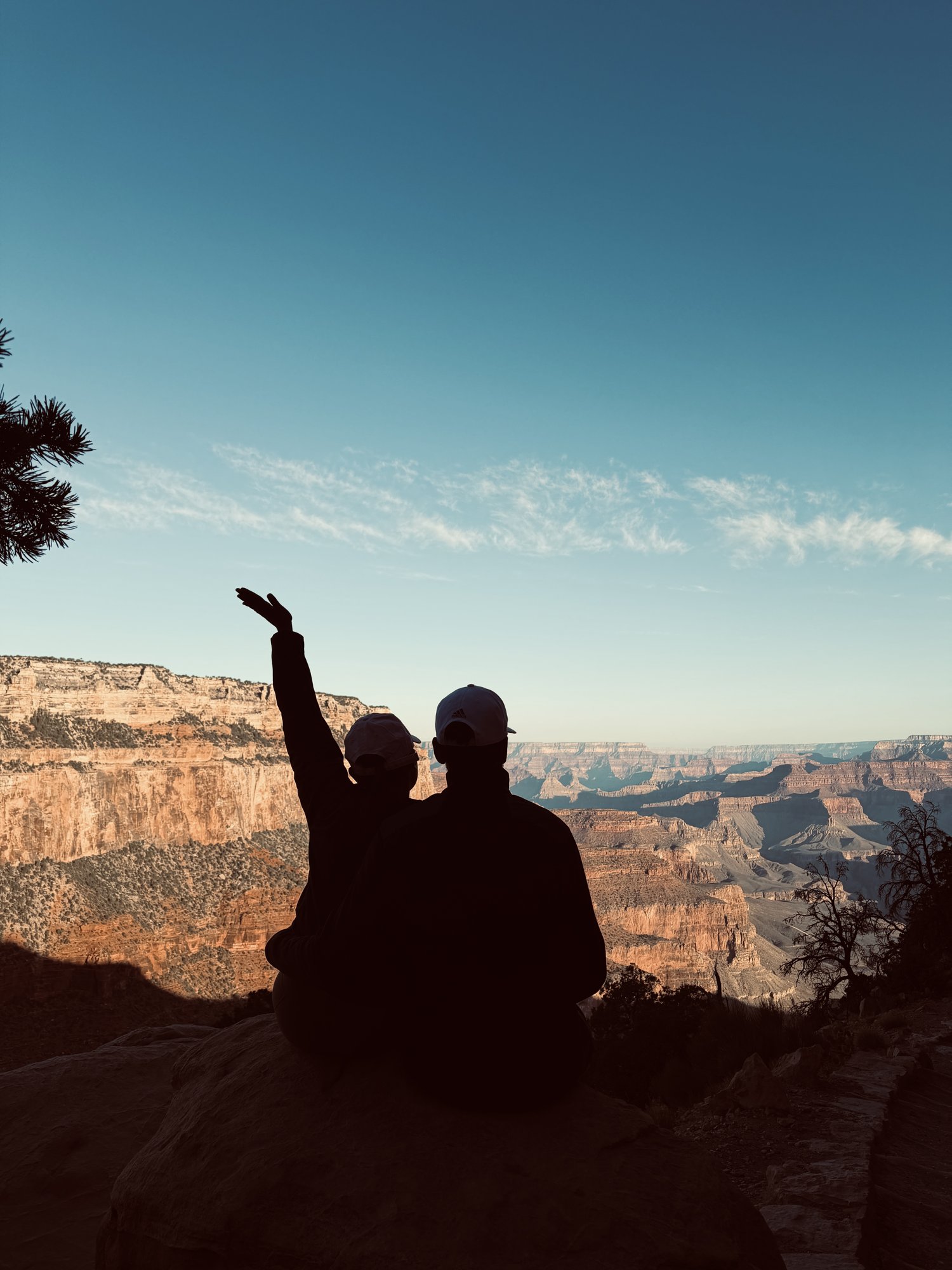
That was the highlight of the entire trip for me. Not the most beautiful thing we saw, necessarily — but the thing that shifted something, and stayed with me long after we came home.
If you do one single thing at the Grand Canyon, go below the rim. The view from the top is a photograph, and a lovely one. Going down inside it is something else entirely.
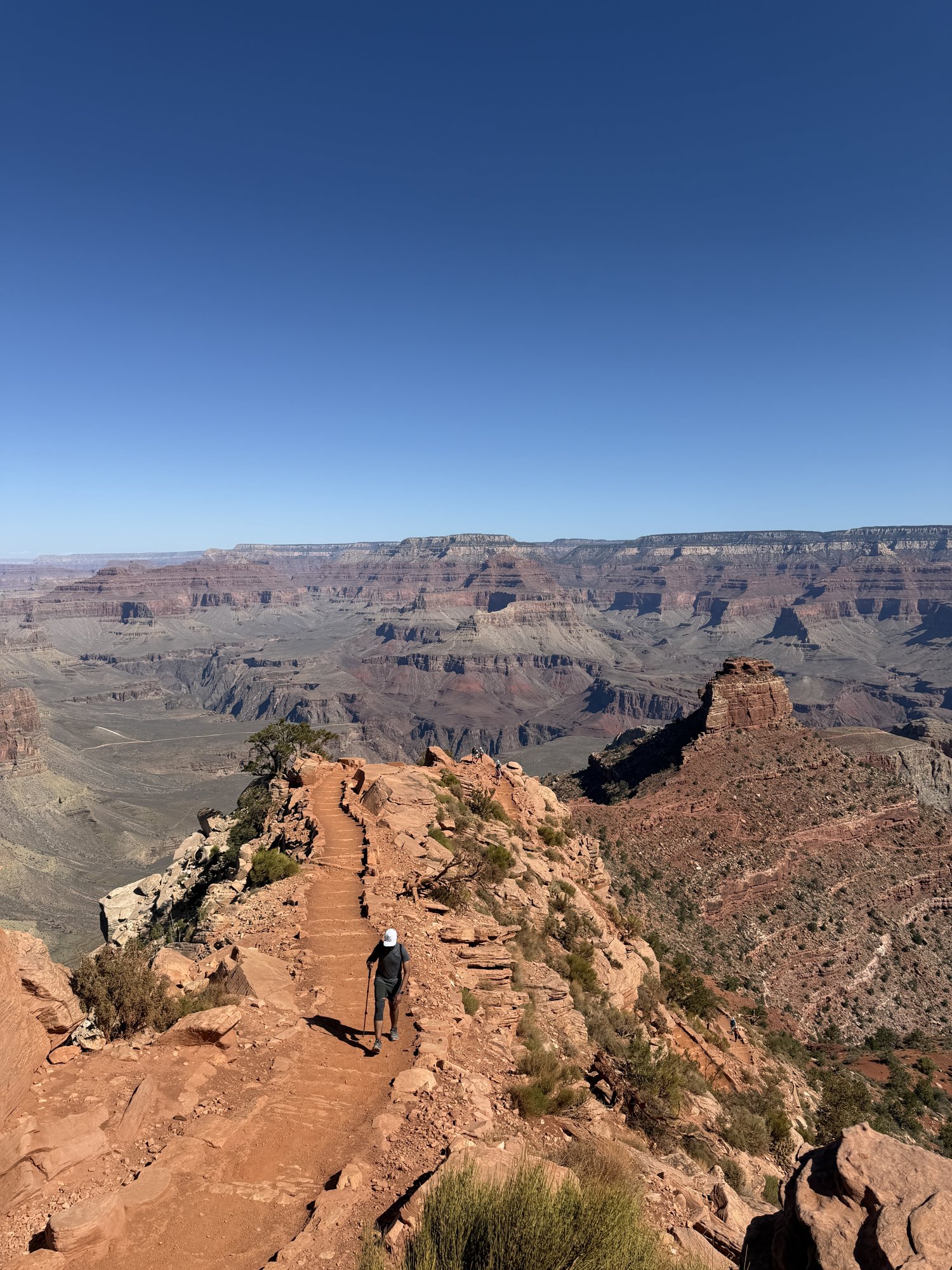
Practical: South Kaibab has no water and very little shade. Down is optional, up is mandatory — budget roughly twice the time for the return climb, and turn round earlier than you think you need to.
Las Vegas: two days, and not for me
From the Grand Canyon we drove on to Las Vegas and stayed two days, and it could not have been more different from everything that came before it.
I will be straight with you, gently: it is not my taste. The casinos, the whole glittering apparatus of it — it feels like manufactured fun to me. I really do not want to be sniffy about a place that clearly brings so many people so much joy, and I am genuinely glad we went, because I had never seen anything remotely like it and now I have. Two days was fascinating. It was also plenty.
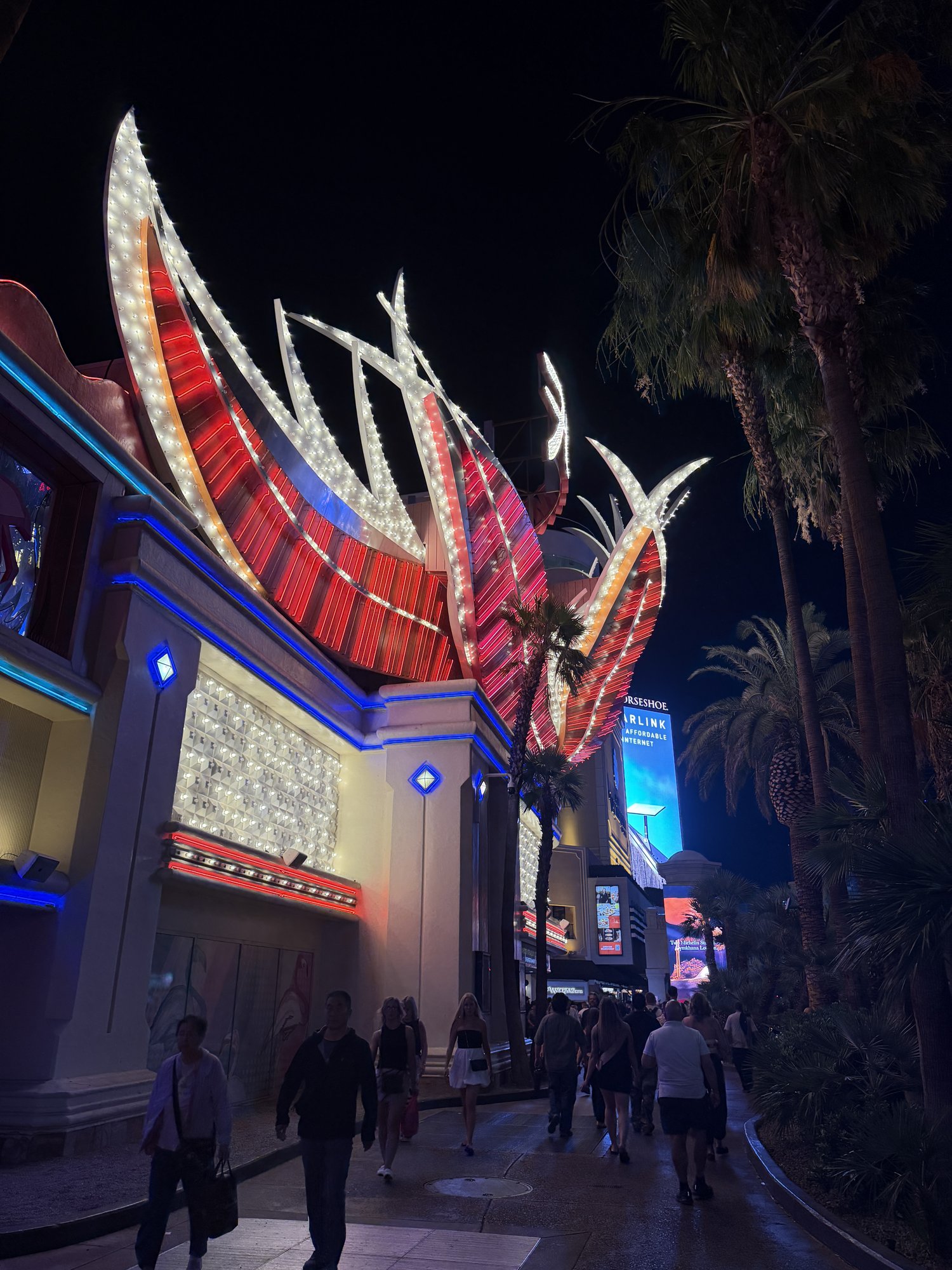
If you are doing this route and Vegas does not call to you, it lifts out very easily — Grand Canyon to Los Angeles is a long day’s drive on its own, and you could just as happily break it somewhere quieter.
Los Angeles: five days, and the ocean at the end
We used LA as a base for five days and spread out from there in every direction. Santa Monica, Malibu, Santa Barbara, Long Beach, Laguna Beach, Beverly Hills, and a full day in the city itself. We also spent time with close friends here, and that is really what made those five days feel like a proper ending rather than simply the last stop before a flight.
There is something quietly perfect about finishing this route at the Pacific. You begin on the Atlantic in New York, cross an entire country by air and then by road, through mountains and desert and canyon, and you come out at the other ocean.
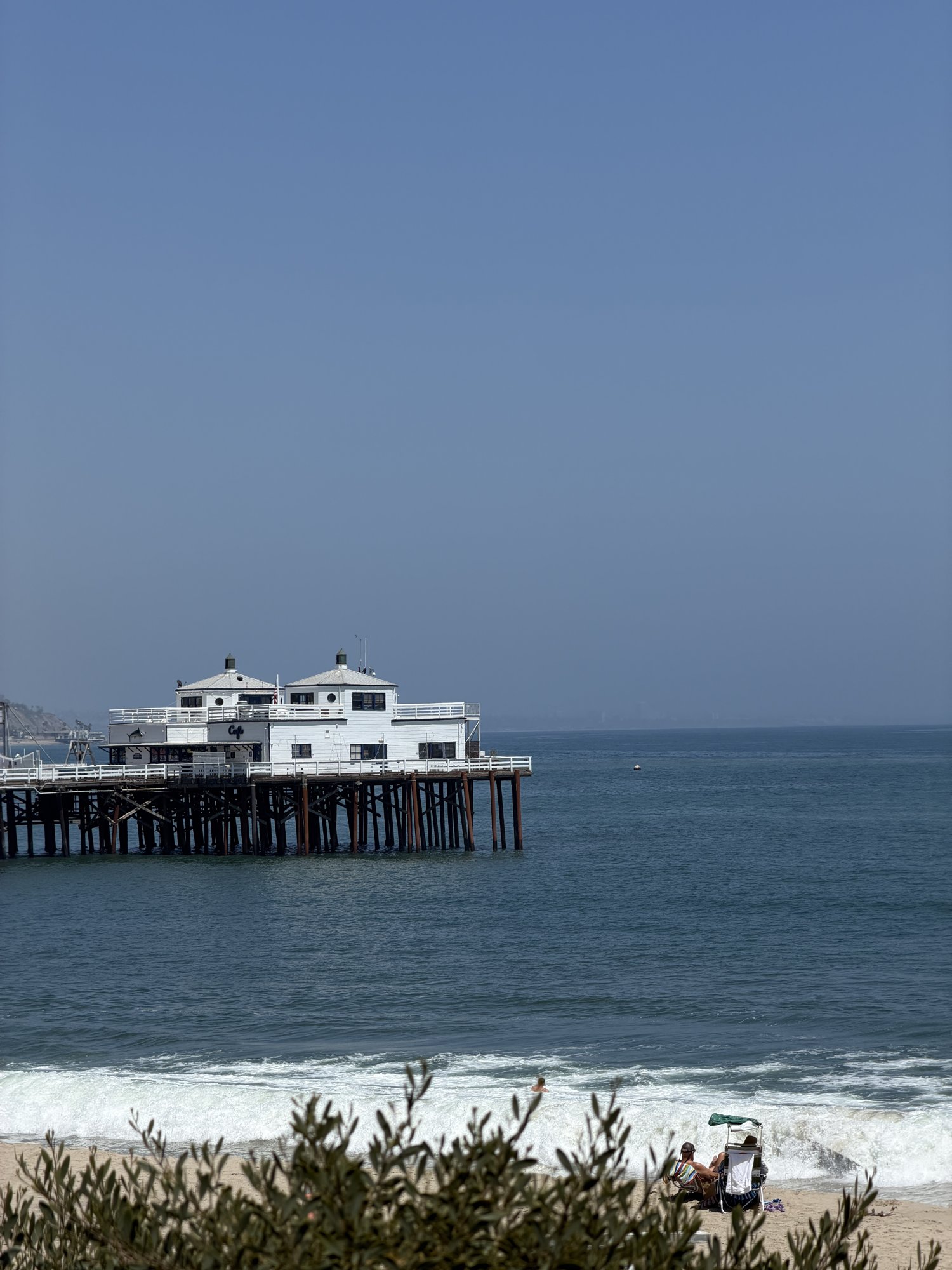
Then you fly home to Munich, and it takes a good week before any of it feels real again.
What we would do differently
Two things, and rather tellingly, they are both cities.
Las Vegas we would drop, or cut to one night. Two days was one and a half more than we needed, and the whole thing sat oddly against the fortnight of desert and rock that came before it. That is a matter of taste rather than a criticism of the place — but if you are coming to this route for the landscapes, be honest with yourself about whether you actually want the Strip in the middle of it.
San Francisco we would either give more time or skip. Two days there was enough to get the touristy version and not enough to get past it, which is the worst of both. If we went again we would either commit properly or fly straight into the Sierra.
Everywhere else we would keep exactly as it was. If anything we would add one more night at Bryce, just for the sunrise.
Would we do it again
Yes. Tomorrow, and without hesitating.
People told us three and a half weeks was not enough for this route, and they were absolutely right. But the alternative was not going at all — and we are so very glad we did not choose that. If you are sitting on a trip like this, wondering whether it is too ambitious: go. You will be tired, and you will be so happy.
Where the money goes
Let us be honest about this part, because we think it matters. This is not a cheap trip, and we would never pretend otherwise. Two long-haul flights, an internal flight across the country, a one-way rental car and twenty-six nights of beds add up — and they add up rather faster than a fortnight somewhere in Europe does.
The money went in two places. Accommodation was much the bigger one, because staying inside the national parks costs considerably more than the gateway towns just outside them, and the Death Valley resort was a very deliberate splurge that we would happily make again. The second was simply distance — fuel, park entry, tours and the one-way drop fee on the car all stack up quietly across several thousand kilometres of driving.
If you are budgeting for something like this, our honest advice is to price the accommodation first, before you look at flights. It will shape your route and your pace far more than anything else does.
Practical summary
Park fees, for non-residents: The United States now runs a two-tier system. The America the Beautiful annual pass is $80 for US residents and $250 for non-residents. Non-residents without that pass pay a $100 per-person surcharge on top of standard entry at eleven headline parks — Yosemite, Zion and the Grand Canyon among them. For two people on this route the pass pays for itself almost immediately. Verify current pricing at nps.gov before you travel; this policy is changing quickly.
Not covered by the pass: Valley of Fire (Nevada state park) and Monument Valley (Navajo Nation).
Book well ahead: Antelope Canyon tours, in-park lodging at Yosemite, Zion, Bryce and the Grand Canyon, and the one-way rental car.
Why May worked: Waterfalls at full flow in Yosemite from the snowmelt, the desert hot but manageable, and thinner crowds than high summer. Worth knowing that Tioga Road across Yosemite’s high country often stays closed into June, so check before you count on it.


Leave a Reply