Part two of six. Part one was Thailand — Bangkok, Railay and Chiang Mai.
We flew from Chiang Mai to Luang Prabang, which takes about an hour and drops you somewhere that feels considerably further than that from where you started. Laos was the quietest country of the month by a wide margin, and the one we were least prepared for. Five nights, two bases: the old town, and then a lake.
If Thailand is a country that arrives all at once, Laos does the opposite. It waits.
The route
| Stop | Nights | Getting there |
|---|---|---|
| Luang Prabang | 2 | Flight from Chiang Mai, about 1h |
| — Kuang Si Falls | day trip | About 45 min by scooter |
| Nam Ngum lake | 3 | Overland south from Luang Prabang |
| Onward to Vietnam | — | Covered in part three |
Five nights in Laos altogether — the slowest week of the whole month, and the one we would protect if we planned it again.
Luang Prabang: the town that empties at nine
Luang Prabang sits on a spit of land between the Mekong and the Nam Khan, and the whole of the old town is UNESCO-listed — low French colonial shopfronts, gilded temple roofs, and frangipani leaning over garden walls. It is genuinely one of the loveliest small towns either of us has walked around.
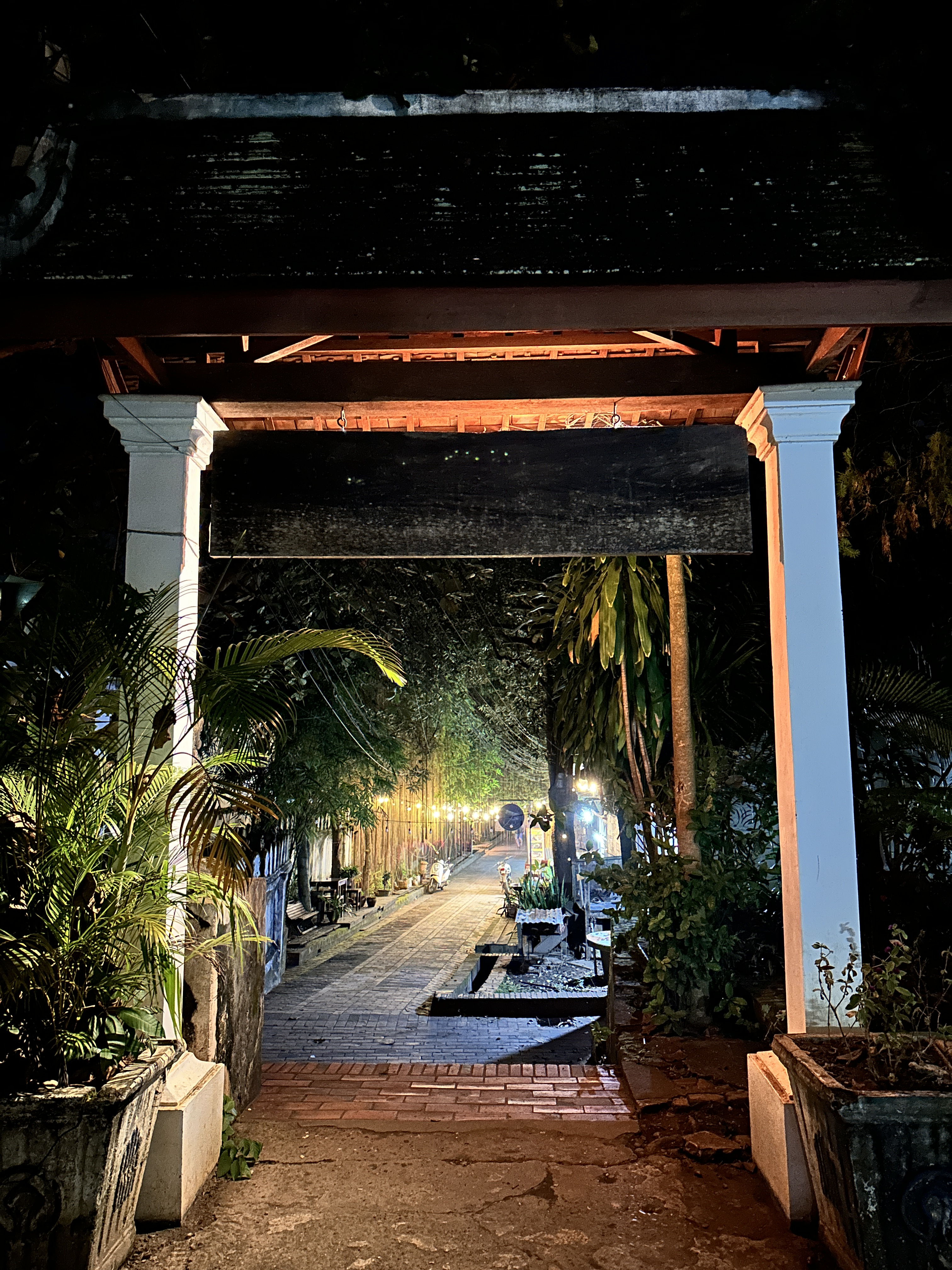
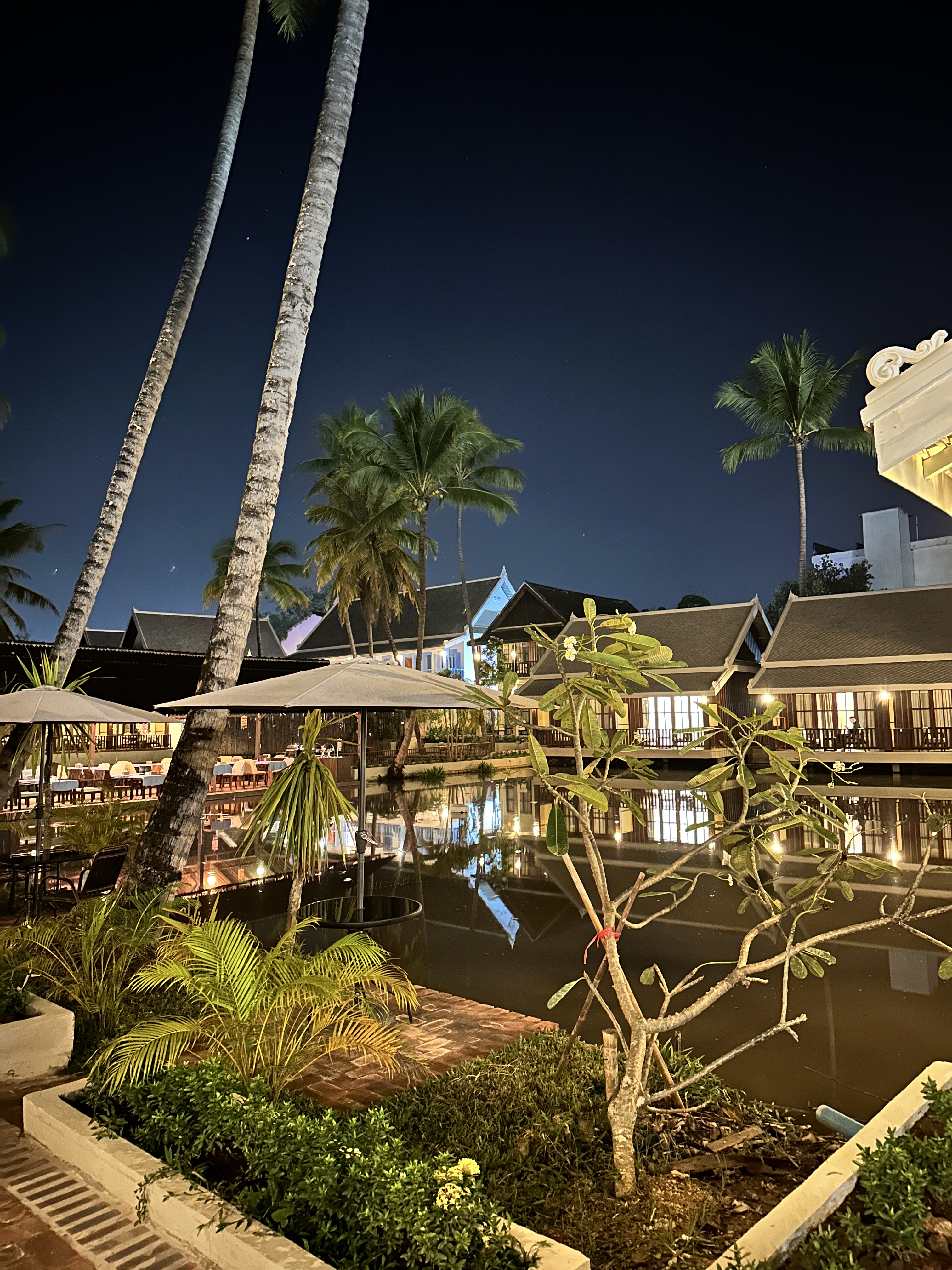
What surprised us was how early it goes quiet. Come nine or ten in the evening the lanes empty out, the lights stay on, and you can walk the length of the old town hearing almost nothing. After Bangkok this was disorienting and then completely wonderful.
A note on the morning almsgiving, the tak bat: the monks walk at dawn to receive rice, and it is a religious observance rather than a performance. If you go, stay well back, do not use a flash, do not step into the line, and consider whether watching at all is something you want to do. Plenty of people find the crowds around it uncomfortable. We would not blame you for having a lie-in instead.
The food
The dish to find is khao poon — rice vermicelli in a red coconut broth, sharper and more herbal than a Thai curry, with a plate of raw greens and lime to tear in yourself. Alongside it, laap, the minced meat salad with toasted rice powder that is the national dish, and sticky rice eaten with your fingers from a woven basket.
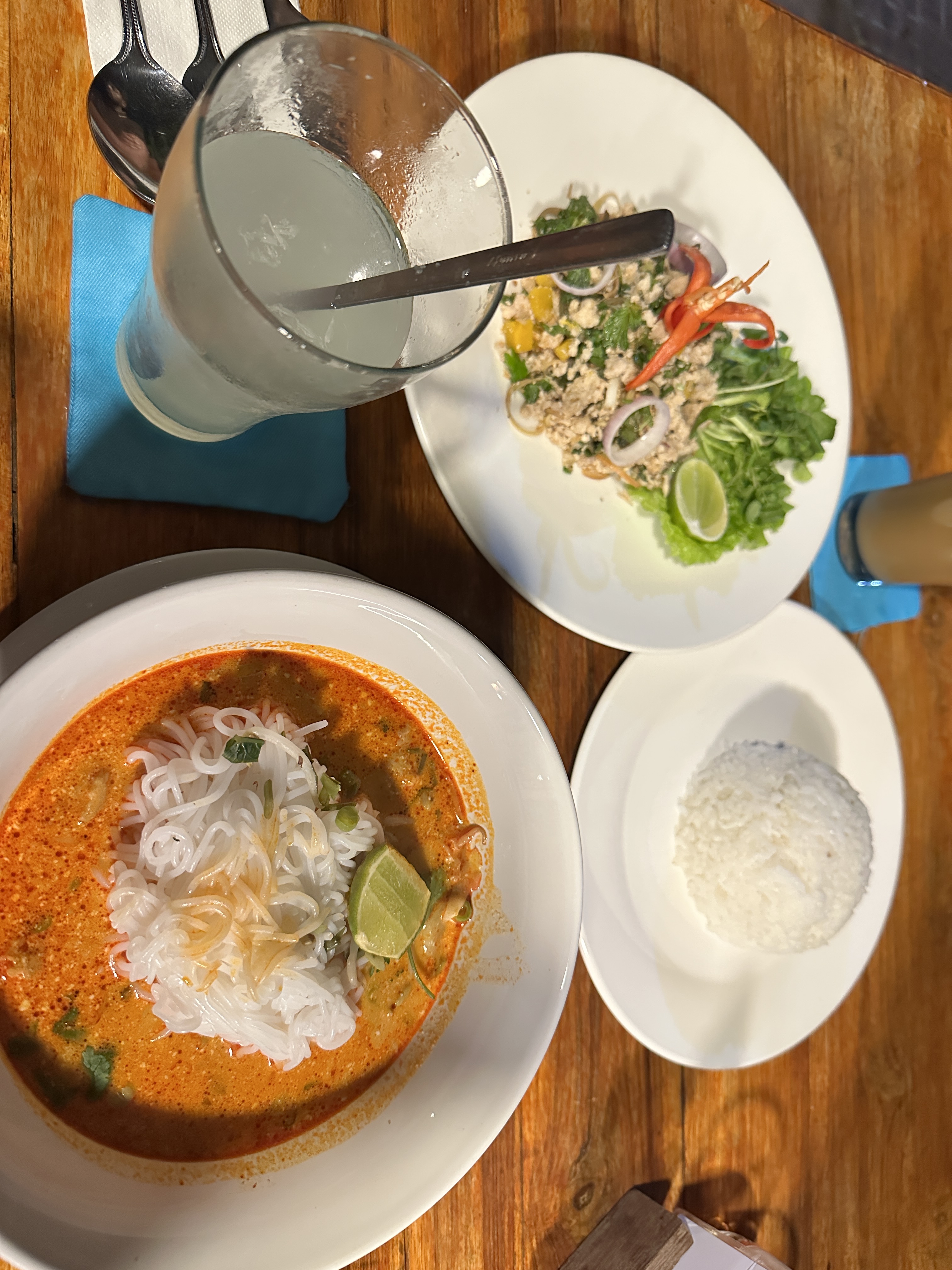
Sticky rice is the thing that quietly explains Laos. It is at every meal, you eat it by hand, and the country eats more of it per person than anywhere else on earth.
Kuang Si Falls: the best hour in Laos
We hired a scooter and rode out, about forty-five minutes from town. Then the water comes down through the forest over limestone shelves in a series of turquoise pools, and the colour is so improbable that your first thought is that somebody has done something to it. Nobody has. It is the limestone.
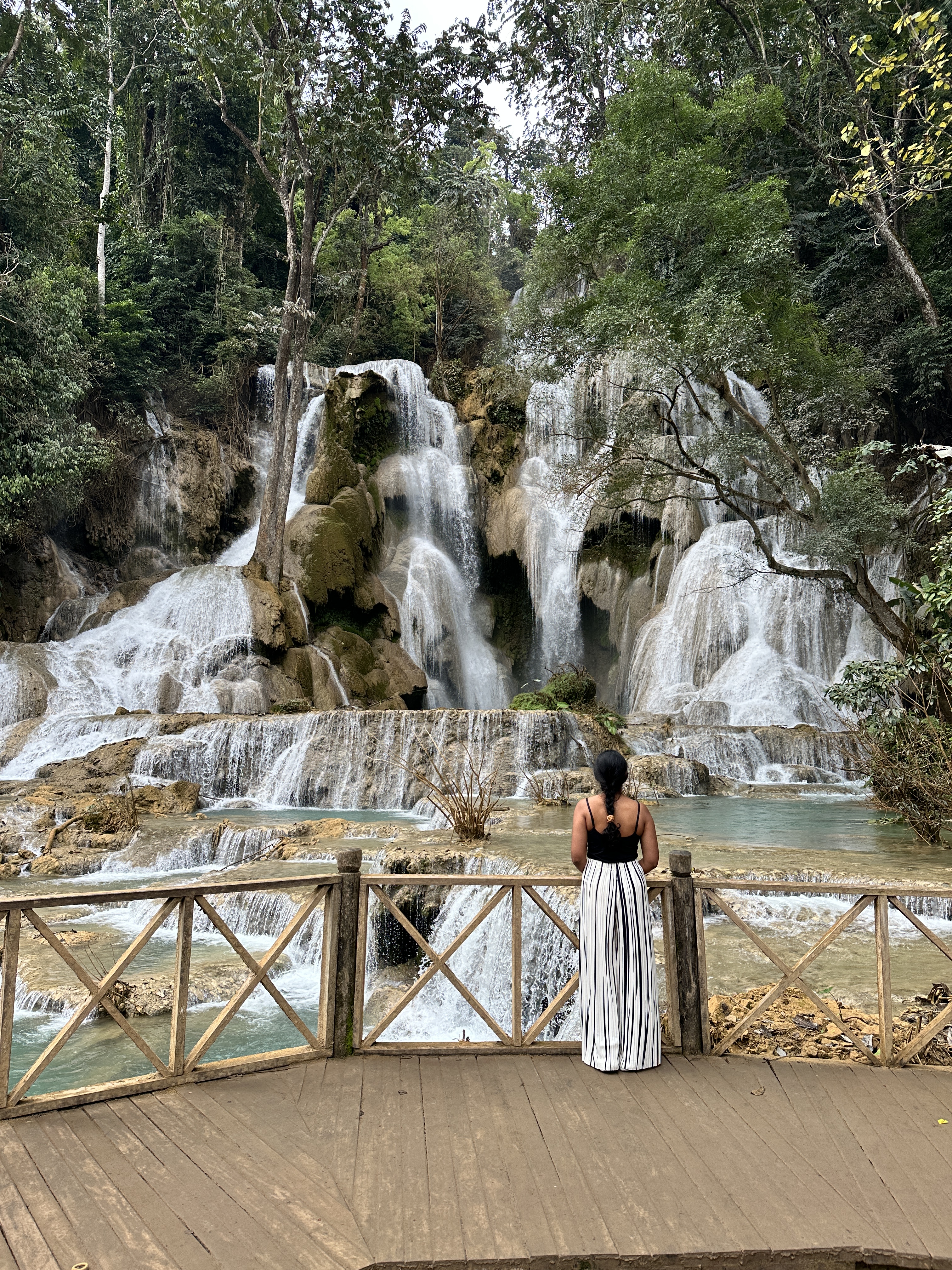
You can swim in the lower pools, and you should. There is also a steep path up beside the main fall to the top, which most people skip and which is worth the sweat.
Go early. The tour minivans arrive mid-morning in a block. We were glad to be there before them, and the pools are a different place with nobody in them. If you do ride yourself, note that Laos expects an international driving permit for a motorbike and most travel insurance will not cover you without one.
And the bears, which you should not walk past
At the entrance to the falls is a bear sanctuary run by Free the Bears, and it is not a zoo. The Asiatic black bears here — moon bears, named for the cream crescent on the chest — were rescued from the bile trade and from poaching, and most could not survive a release. They have forest enclosures, platforms and hammocks, and on a warm afternoon they are mostly asleep in them, arms and legs hanging off the edges.
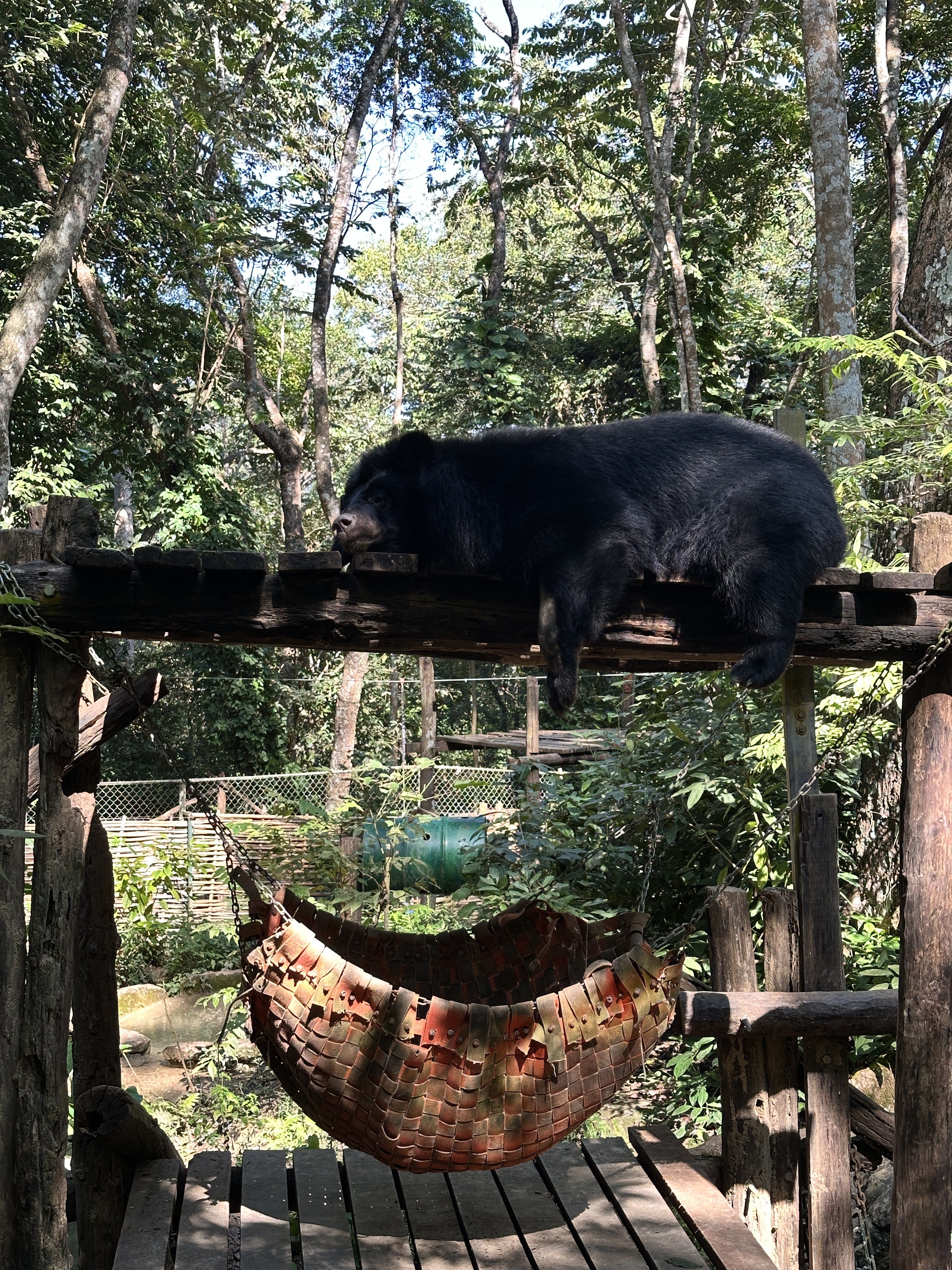
Almost everyone hurries past this on the way to the water. Give it twenty minutes. The enclosures are well done, the story of each animal is on the signs, and it is the single most useful thing we learned about the region all month.
Nam Ngum: the lake, and doing nothing on it
Then we went south to Nam Ngum, a vast reservoir with wooded islands standing out of it and hills folded up behind, and we stopped doing anything at all.
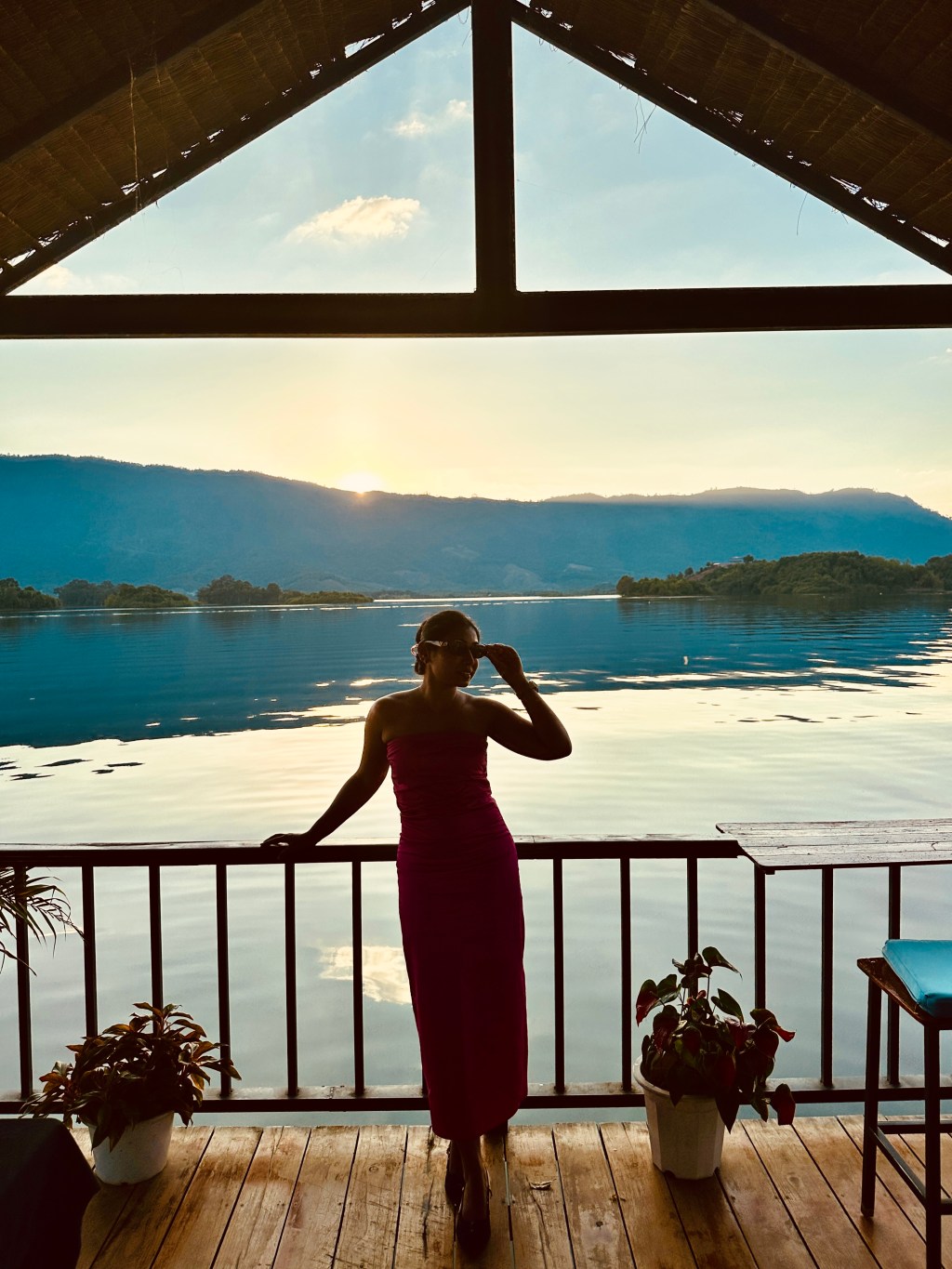
We stayed at a thatched place right on the edge of the water. That is the whole of it, really. There was a deck, and a lake, and a line of blue hills on the far side, and the light changed all afternoon while we failed to have a single plan.
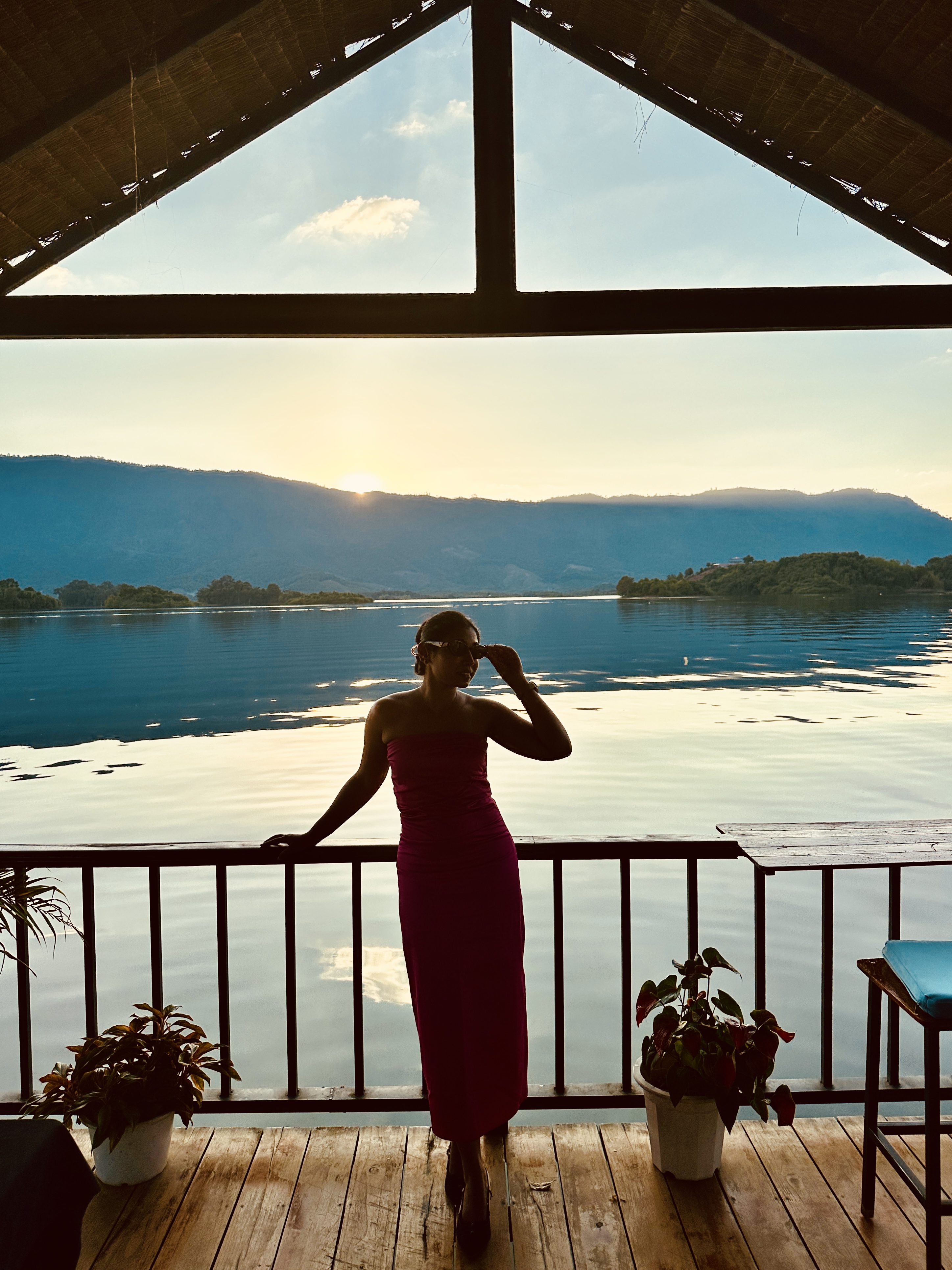
One afternoon we took a houseboat out to see the rest of the reservoir. This is the way to do Nam Ngum. You go at a pace that makes conversation the main activity, wooded islands slide past, fishing pontoons appear out of nowhere, and the hills turn steadily bluer the further out you get.
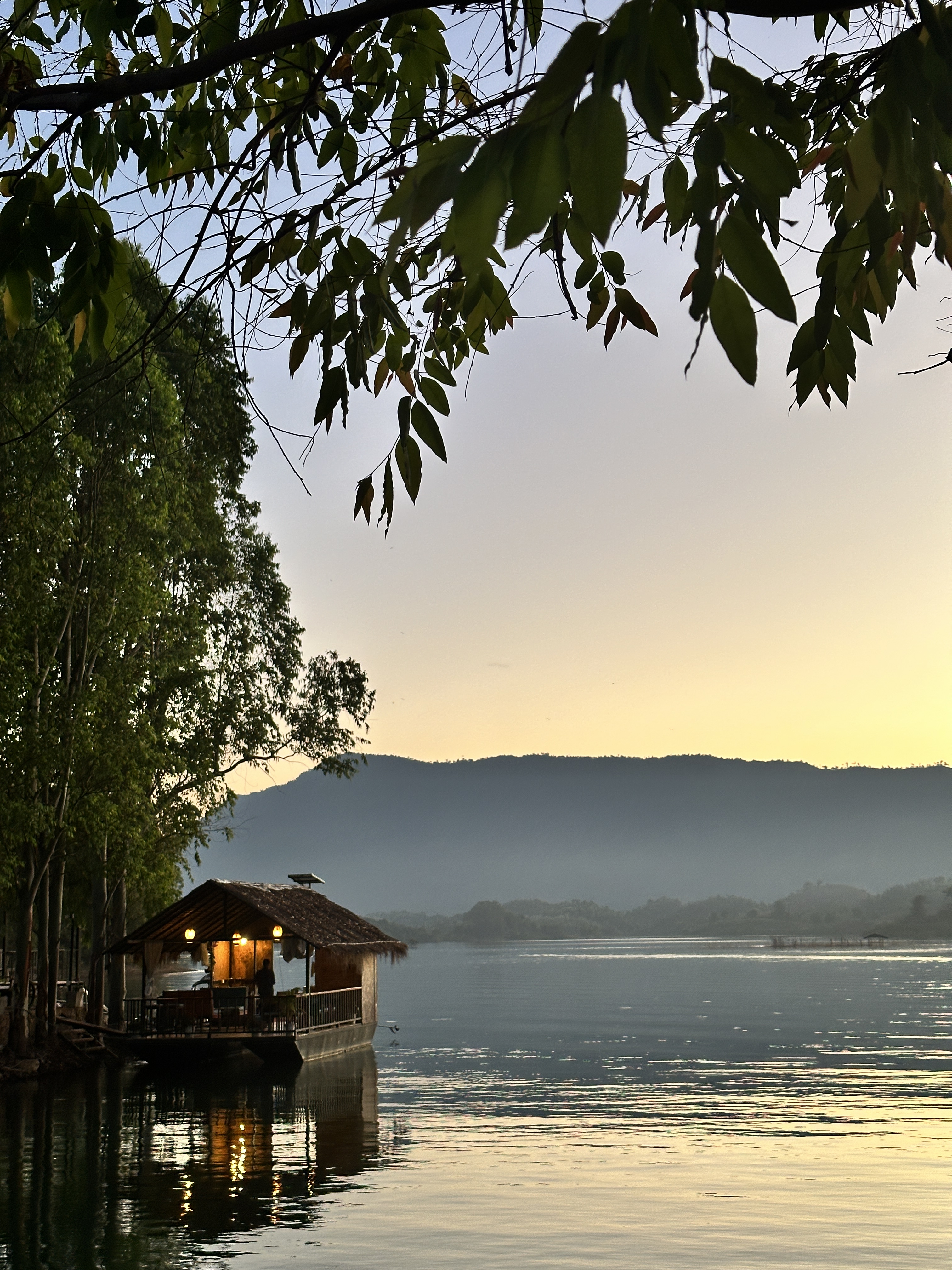
Meals came out to the deck — a curry, a basket of something fried, greens, sticky rice, a cold Beerlao — and you eat them looking at the water, which improves any food by about thirty per cent.
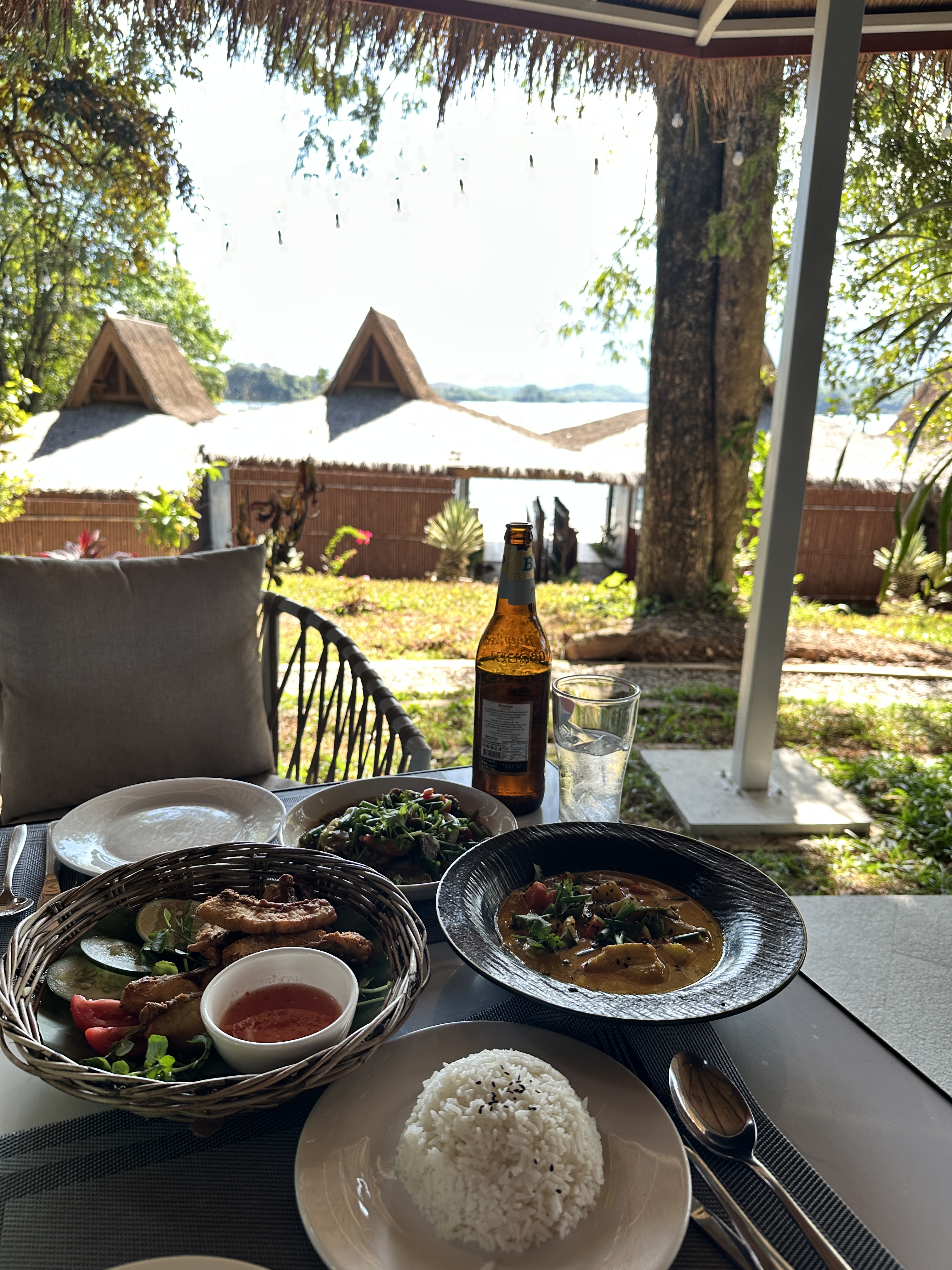
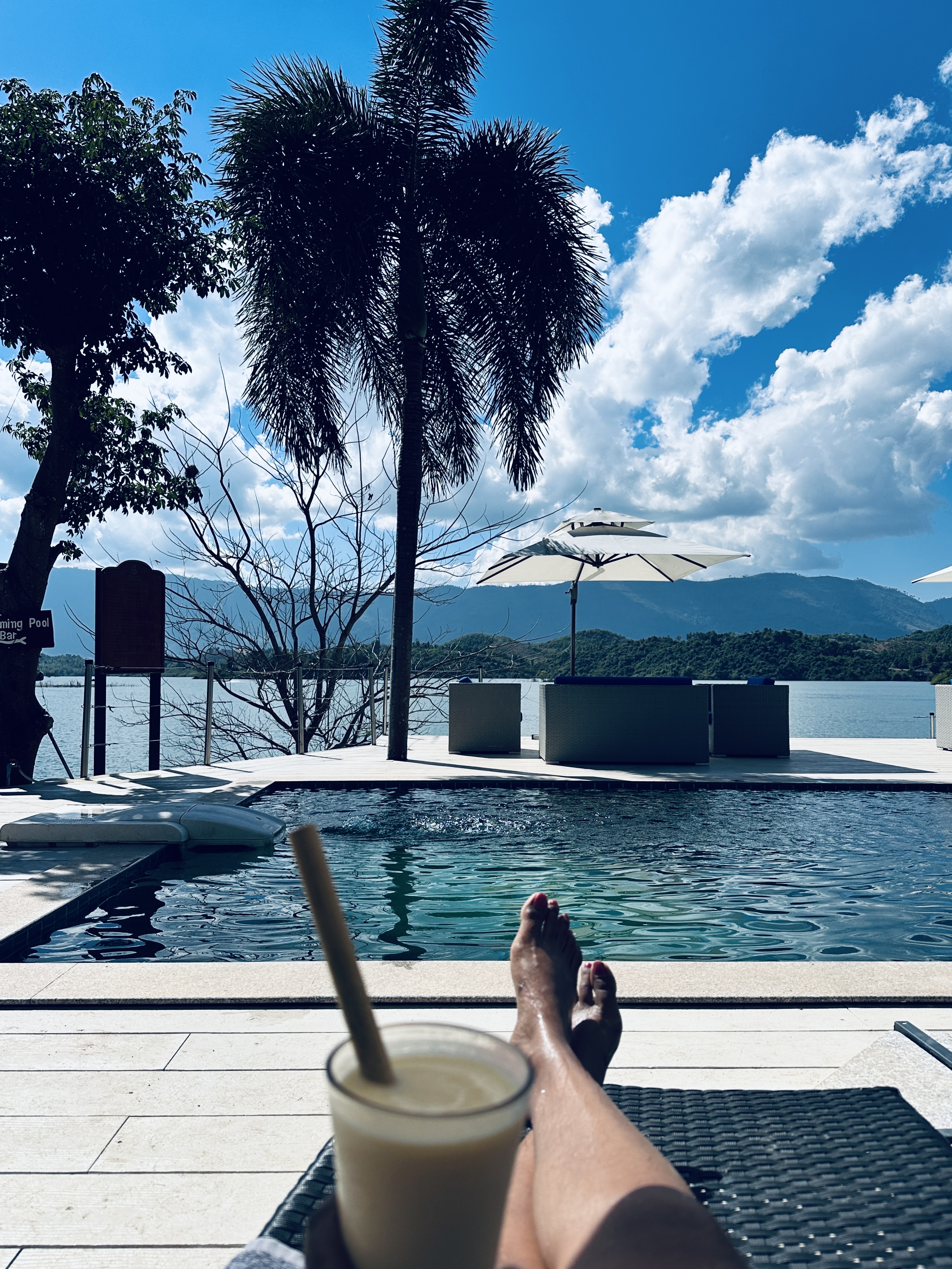
The sunsets were absurd. Every evening the whole lake went orange, and one night a thin crescent moon came up over it while the last of the light was still going.
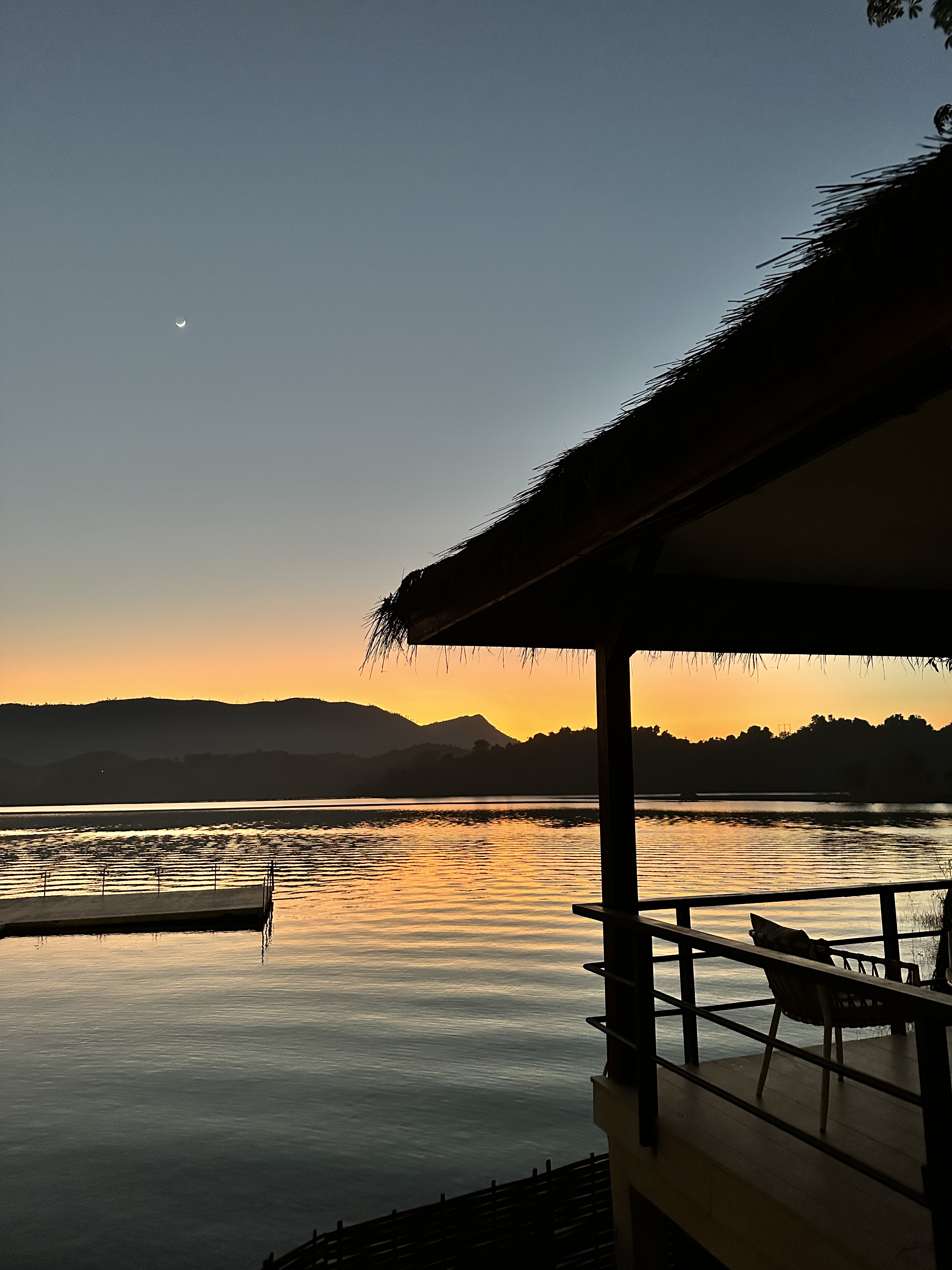
We had spent the previous fortnight moving every second or third day. This was the correction, and it arrived at exactly the right point in the month.
The massages, and the case for a schedule
The habit we picked up in Thailand carried straight on here, and it belongs in every one of these posts: a massage every three or four days, all the way through the month.
It suited Laos particularly well, because Laos is where we had already decided to slow down. A month of moving is physically harder than it sounds — long travel days, heavy bags, unfamiliar beds — and the difference between arriving somewhere fresh and arriving somewhere wrecked came down almost entirely to whether we had stopped for an hour in the previous few days.
Book them on a rhythm rather than waiting until you need one. Every third or fourth day, ideally on an afternoon that sits between two travel days. It costs very little here, and it is the reason we were still functioning in week four.
What we would do differently
We would give Laos longer. Of everywhere we went, this is the country we most want to go back to, and the one where five nights felt most obviously like a sample rather than a visit. The north — Nong Khiaw, the Nam Ou valley — is the part we did not reach and would build the next trip around.
Where the money goes
Laos is inexpensive to be in and less inexpensive to move around. Food, drinks and entry fees are all very cheap; Beerlao costs almost nothing. What adds up is transport — distances are long, roads are slow, and the comfortable options carry a premium.
The other line is accommodation, and here we would spend the money again. Somewhere over the water on Nam Ngum is not a splurge in European terms and it was the best two days of rest in the whole month.
Practical summary
Visas. Most nationalities can get a visa on arrival at Luang Prabang airport — roughly US$40–50 in cash, plus a passport photo, so bring both. There is also an eVisa at laoevisa.gov.la, US$50, valid 60 days for a stay of up to 30. Worth knowing: the eVisa is not accepted at most Laos–Vietnam land borders, so if you are leaving overland, check your specific crossing before you rely on it.
Everyone must file the Lao Digital Immigration Form (LDIF) before arrival — up to three days ahead. Passport valid six months or more.
Cash. Laos runs on kip in cash far more than its neighbours. Card acceptance outside hotels is patchy and ATMs have low withdrawal limits. Carry more cash than you would in Thailand.
Getting between Luang Prabang and the Vientiane area. The Laos–China Railway has transformed this leg — a couple of hours on the fast train against most of a day on the road. Book ahead; seats sell out, especially in December.
Go early to Kuang Si, and leave twenty minutes for the bears at the entrance.
December was ideal: dry, warm days, genuinely cool evenings, and the falls still running well.
Next: part three, Vietnam.
 Travelspheric
Leave a comment