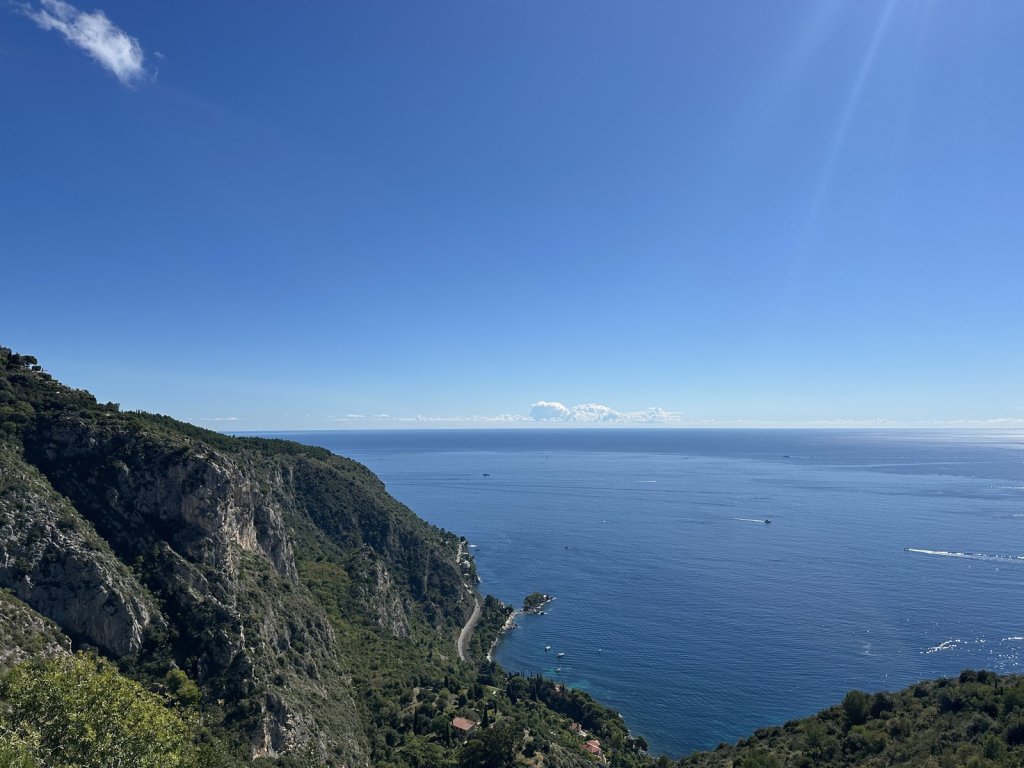
The French Riviera has a reputation for yachts and money, and it does have plenty of both. But over a few days at the start of October, with two of them in Nice, a day in Èze and a day for Monaco and Menton, we found a much more ordinary, much more likeable coast: hill villages, pastel old towns, a pebble beach in the rain, sunsets on the sea wall and a lot of very good dinners. It was just the two of us, with a short detour to the Calanques near Marseille on the way in.
The route
| Day | Where | What |
|---|---|---|
| 1 | Calanques, near Marseille | Limestone cliffs and the view over Sugiton |
| 2–3 | Nice | Old town, the Promenade des Anglais, Castle Hill point, dinners |
| 4 | Èze | The hill village above the sea |
| 5 | Monaco and Menton | Port Hercule, then sunset by the Italian border |
| 6 | Antibes | The old town and the harbour |
A detour to the Calanques
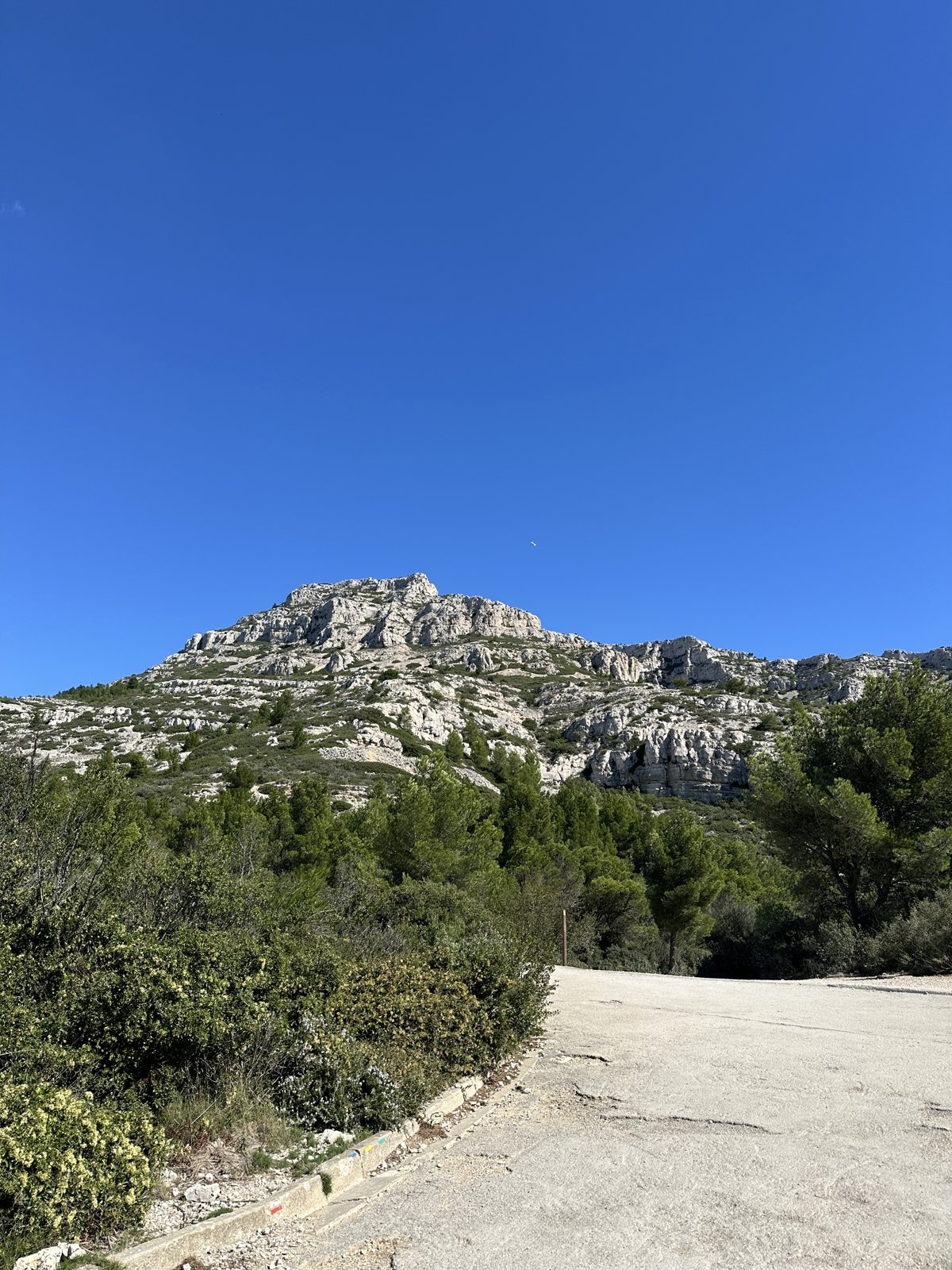
Before the Riviera proper, we started a little further west in the Calanques National Park, between Marseille and Cassis. The calanques are narrow inlets cut into white limestone cliffs, with water so blue it looks edited. The park only became a national park in 2012, and a lot of it is still reachable only on foot or by boat.
We walked out to the viewpoint above the Sugiton cove, about 250 metres up. The path is wide and easy at first, then gets rockier near the edge, and then suddenly the ground stops and it is all sea.
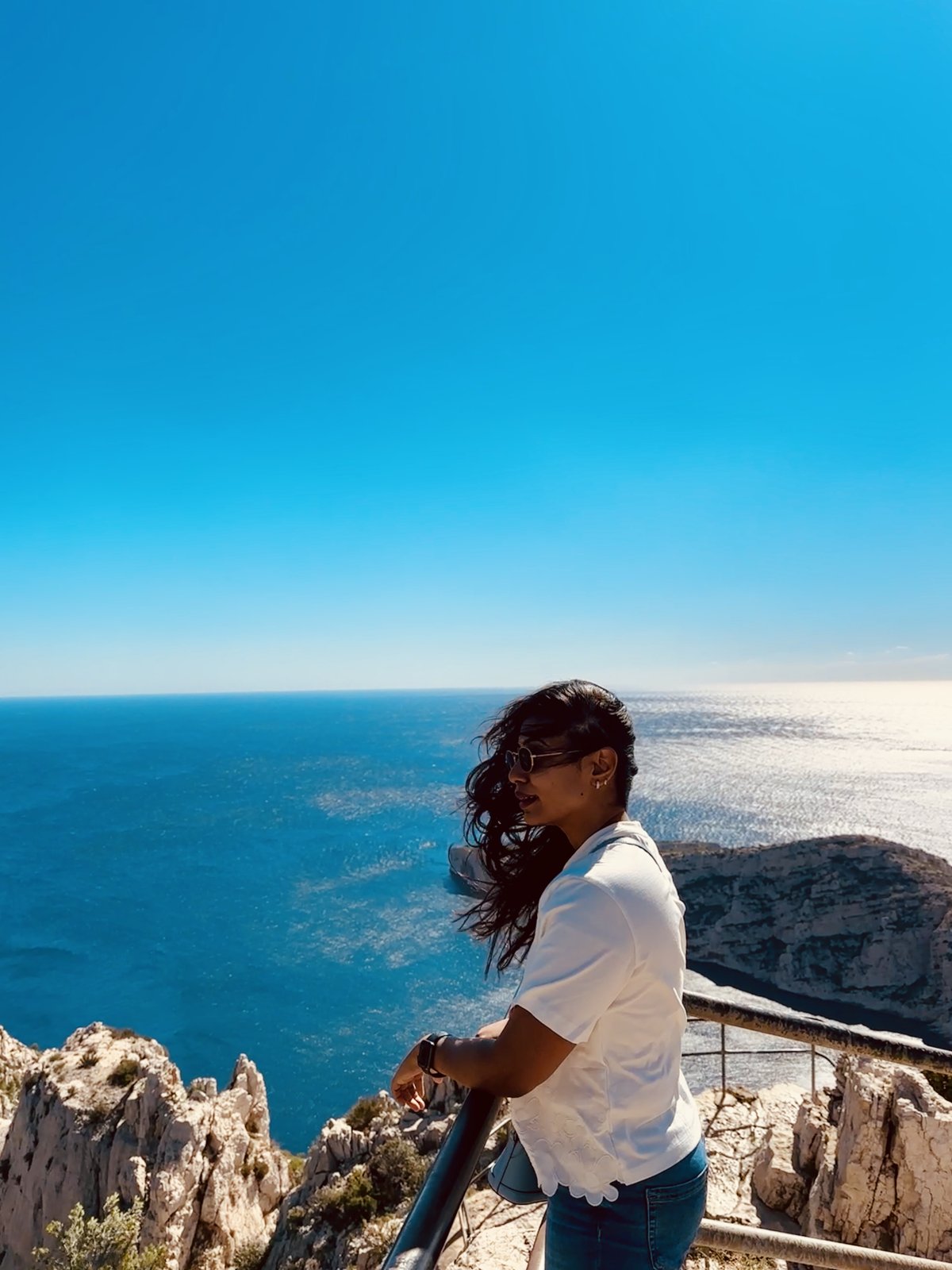
Wear proper shoes. And in summer, check before you go, because parts of the park close on high fire-risk days.
Nice, in the rain and out of it
We spent two days in Nice, and the first one was grey and wet, which turned out to be no bad thing. We started with coffee and cake in a cosy little café hung with old photographs and clocks, and waited for the worst of it to pass.

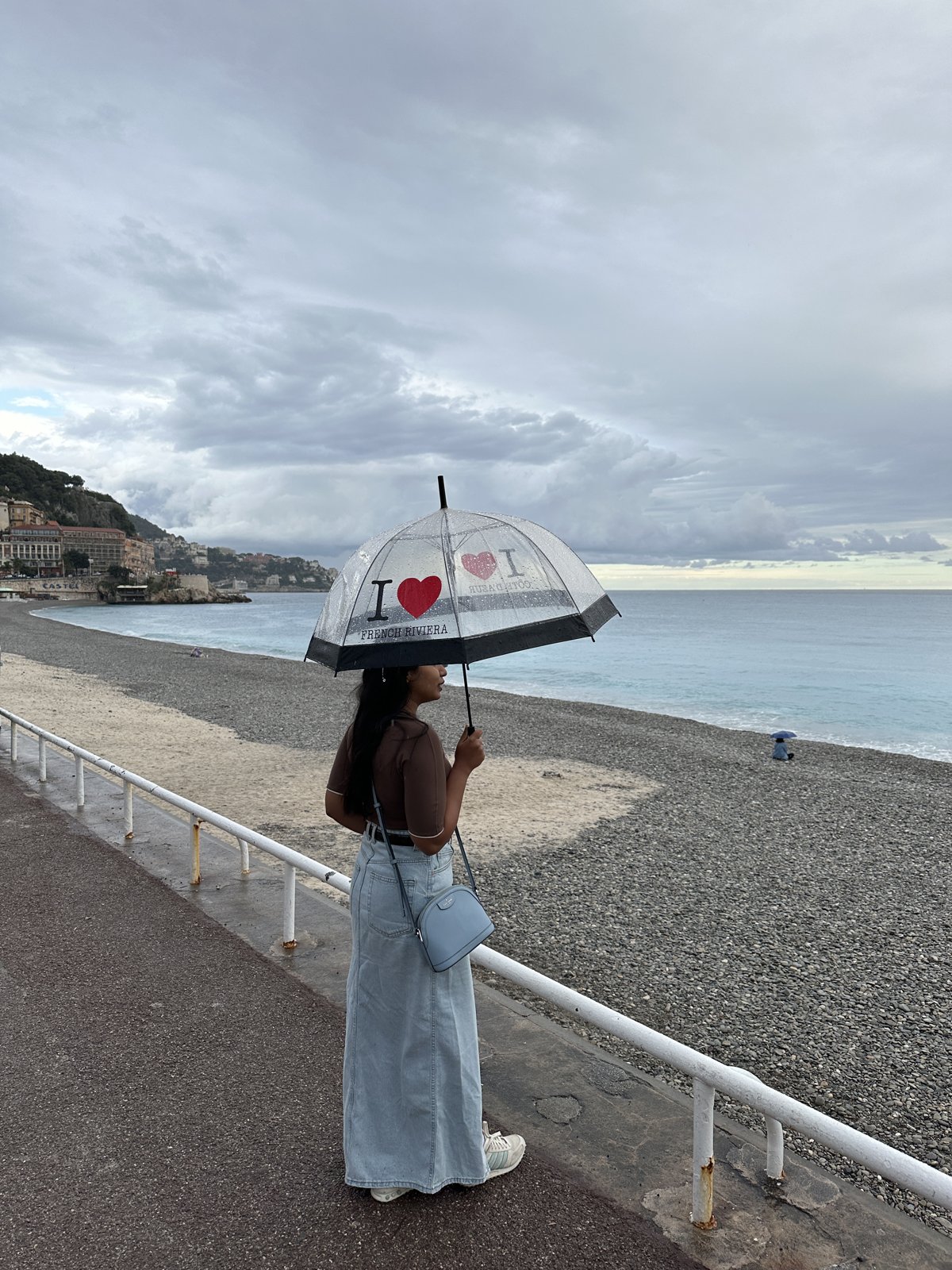
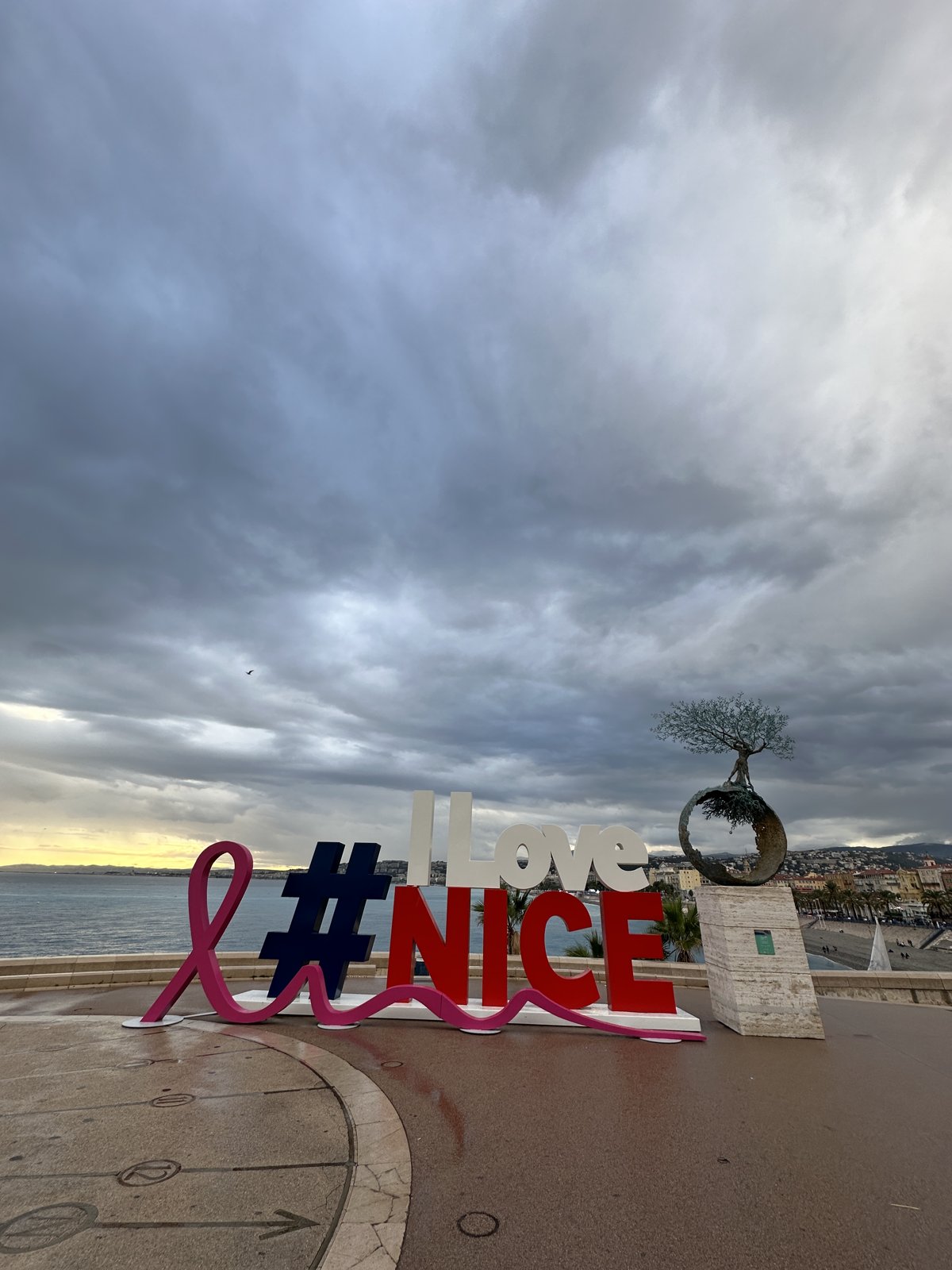
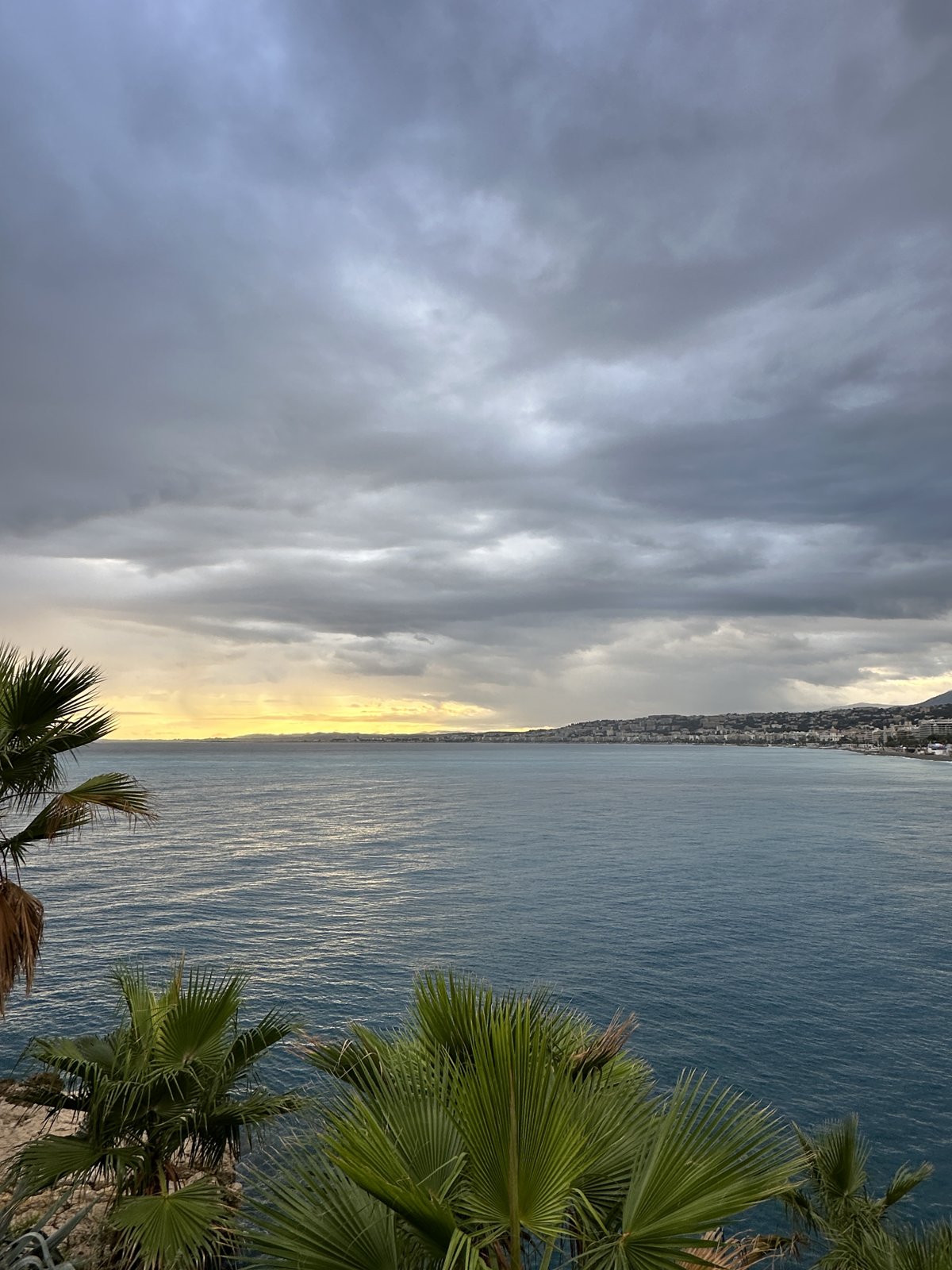
Then we walked the Promenade des Anglais anyway. The beach in Nice is pebbles, not sand, and the sea along the Baie des Anges is a ridiculous shade of blue even under cloud. We followed it east to the point below Castle Hill, where the big I Love Nice sign looks back along the whole bay.
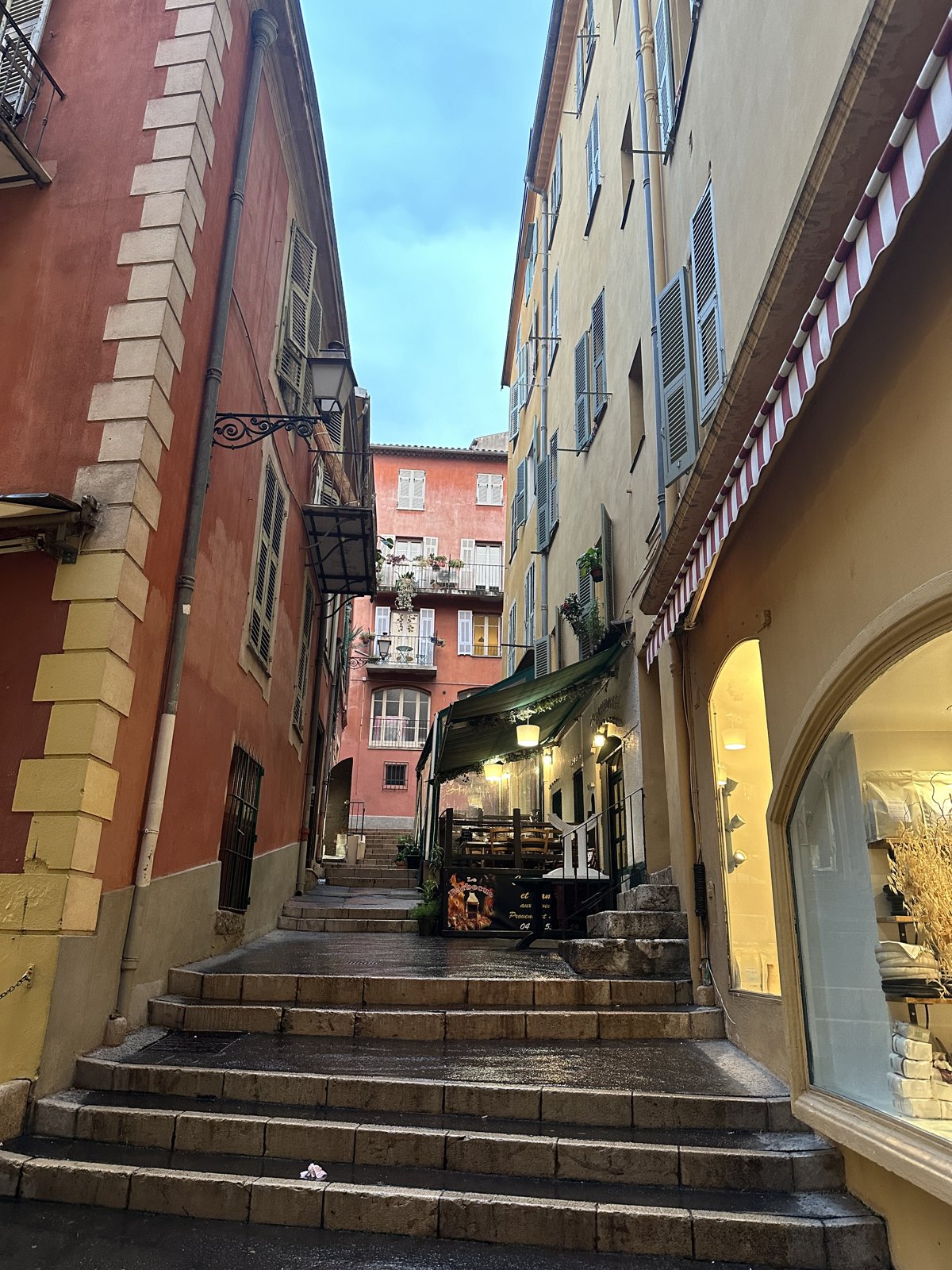
In the evening we wandered into Vieux Nice, the old town. It is a tangle of narrow lanes and stepped streets in ochre, pink and yellow, with little restaurants spilling out onto every flat bit of pavement.
A day in Èze
Once the sun came back, we gave a whole day to Èze, a short way east along the coast towards the Italian border.
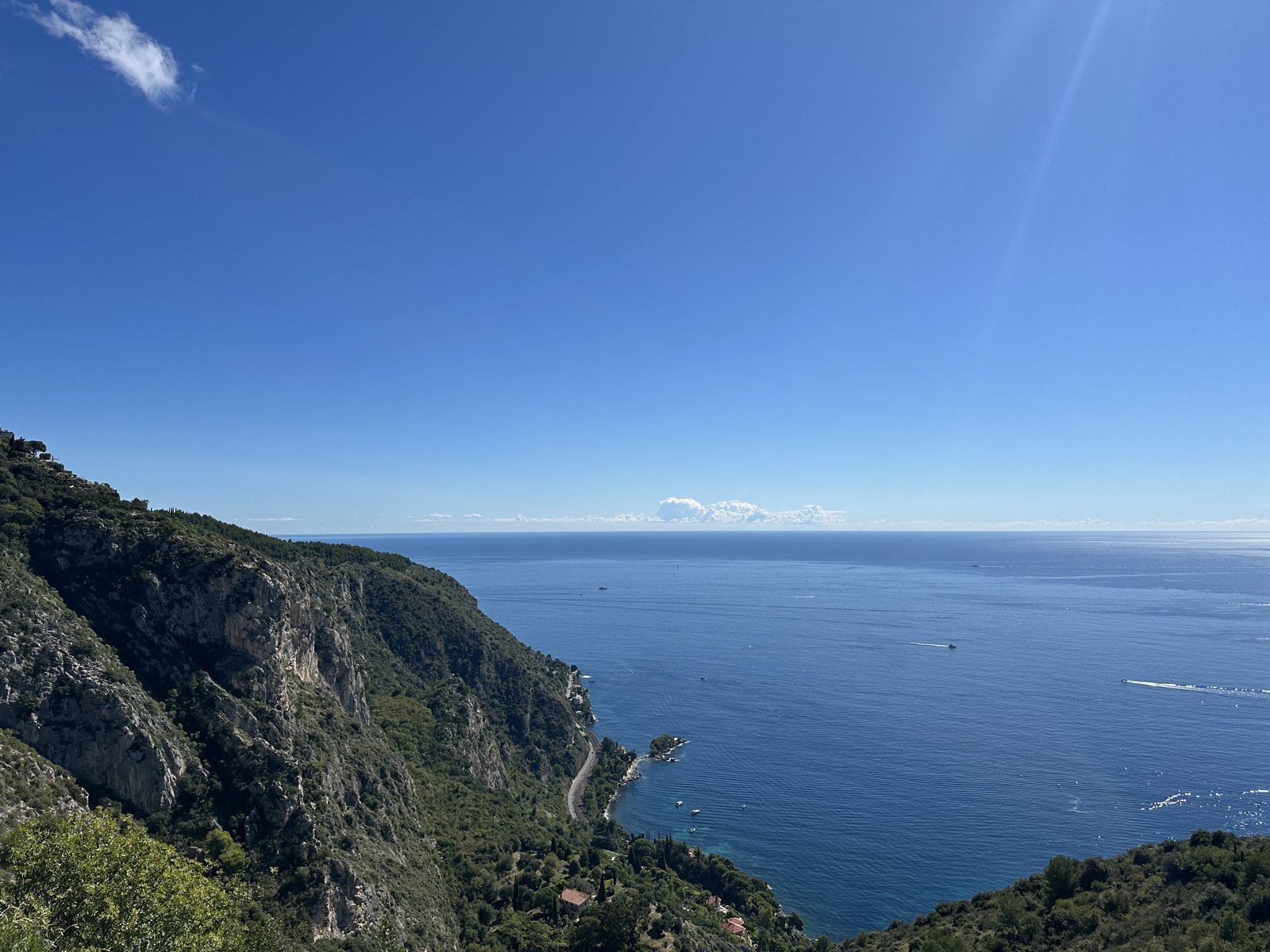
Èze is a medieval village perched on a rock about 400 metres above the sea, and it is every bit as beautiful as the photos. The village is a knot of stone lanes, arches and staircases, with no cars, and every corner seems to open onto another view straight down to the water.
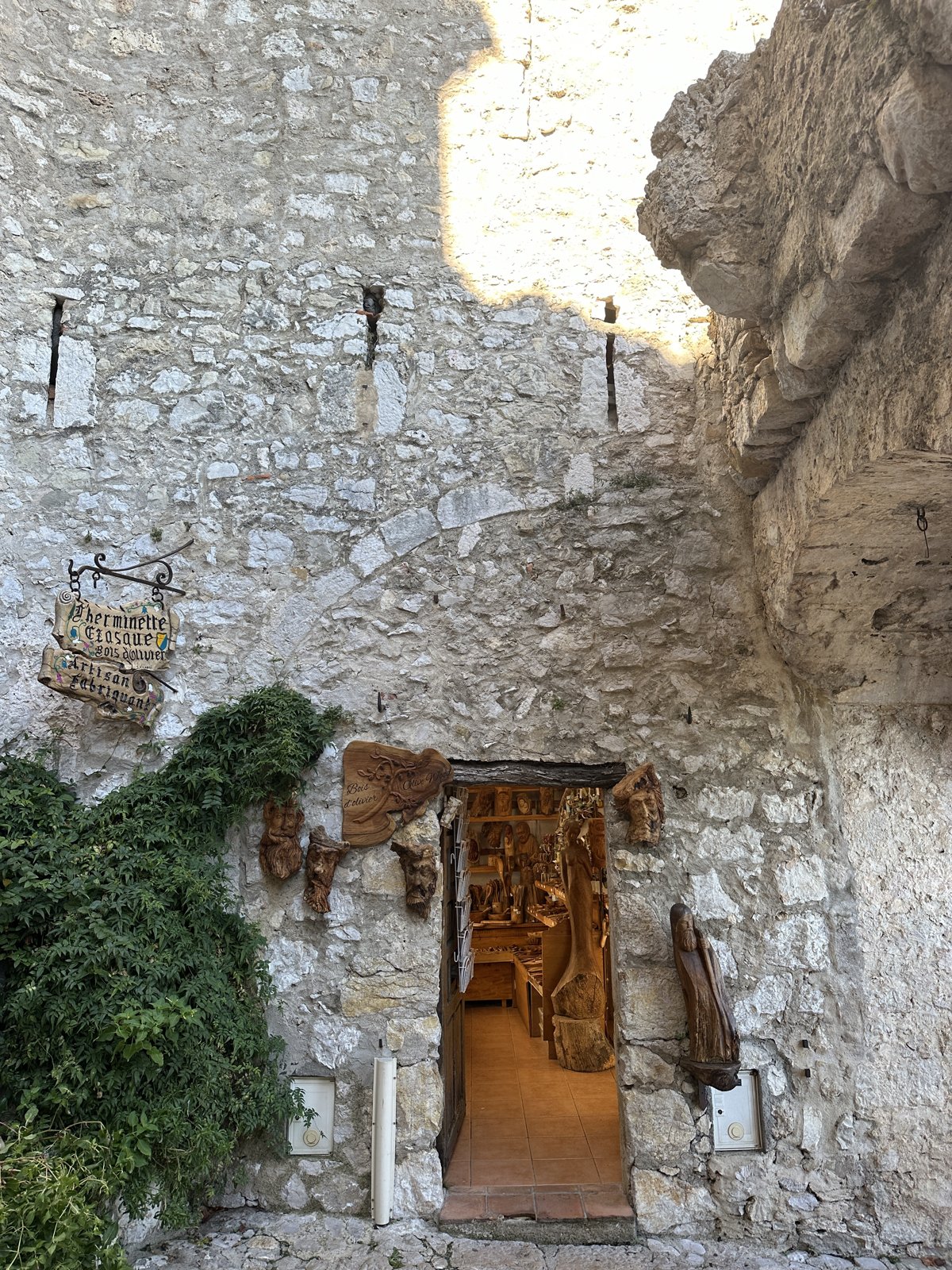
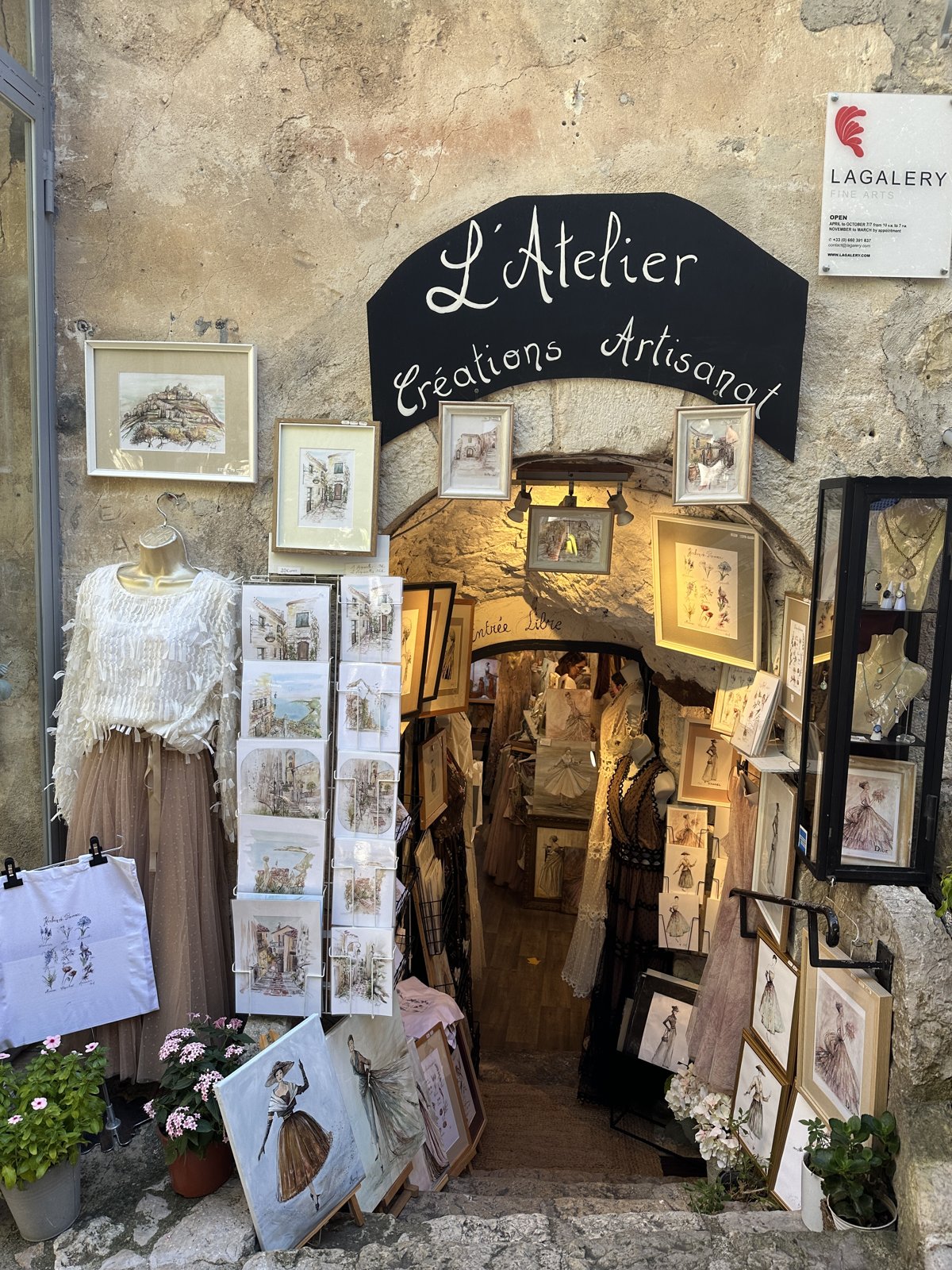
Most of the old houses are now galleries, perfume shops and little ateliers, which could feel touristy but somehow does not. At the very top is an exotic garden among the ruins of the old castle, with the best view of the lot.
Monaco and Menton
The next day we went further east again, to Monaco in the afternoon and on to Menton for the evening.
Monaco
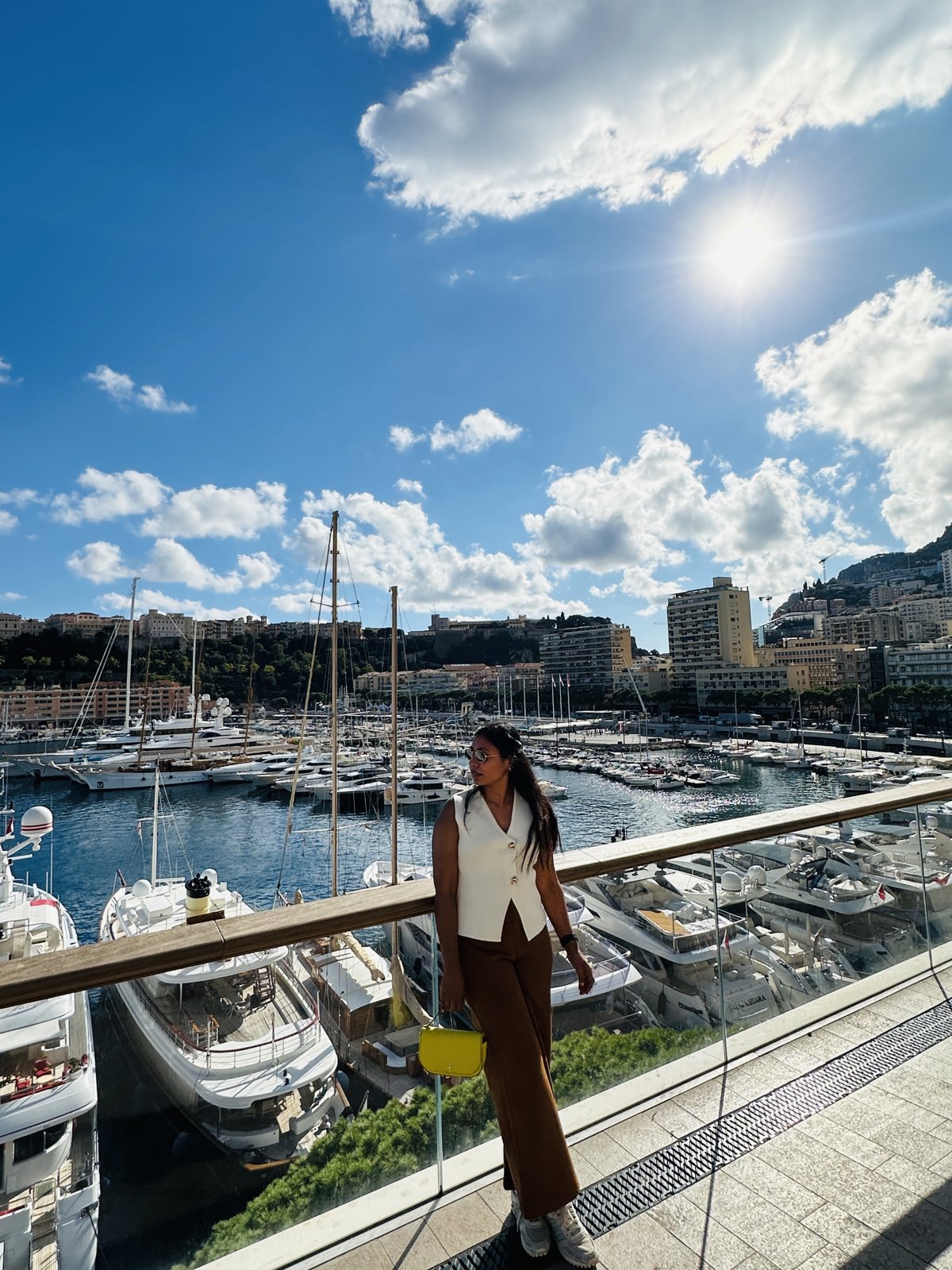
Monaco is the second-smallest country in the world, small enough to walk across in an hour or so. We stopped at Port Hercule, the main harbour, which is exactly what you imagine: rows of enormous yachts, apartment blocks stacked up the hillside behind, and an unusual number of people photographing other people’s boats. We did too.
Menton
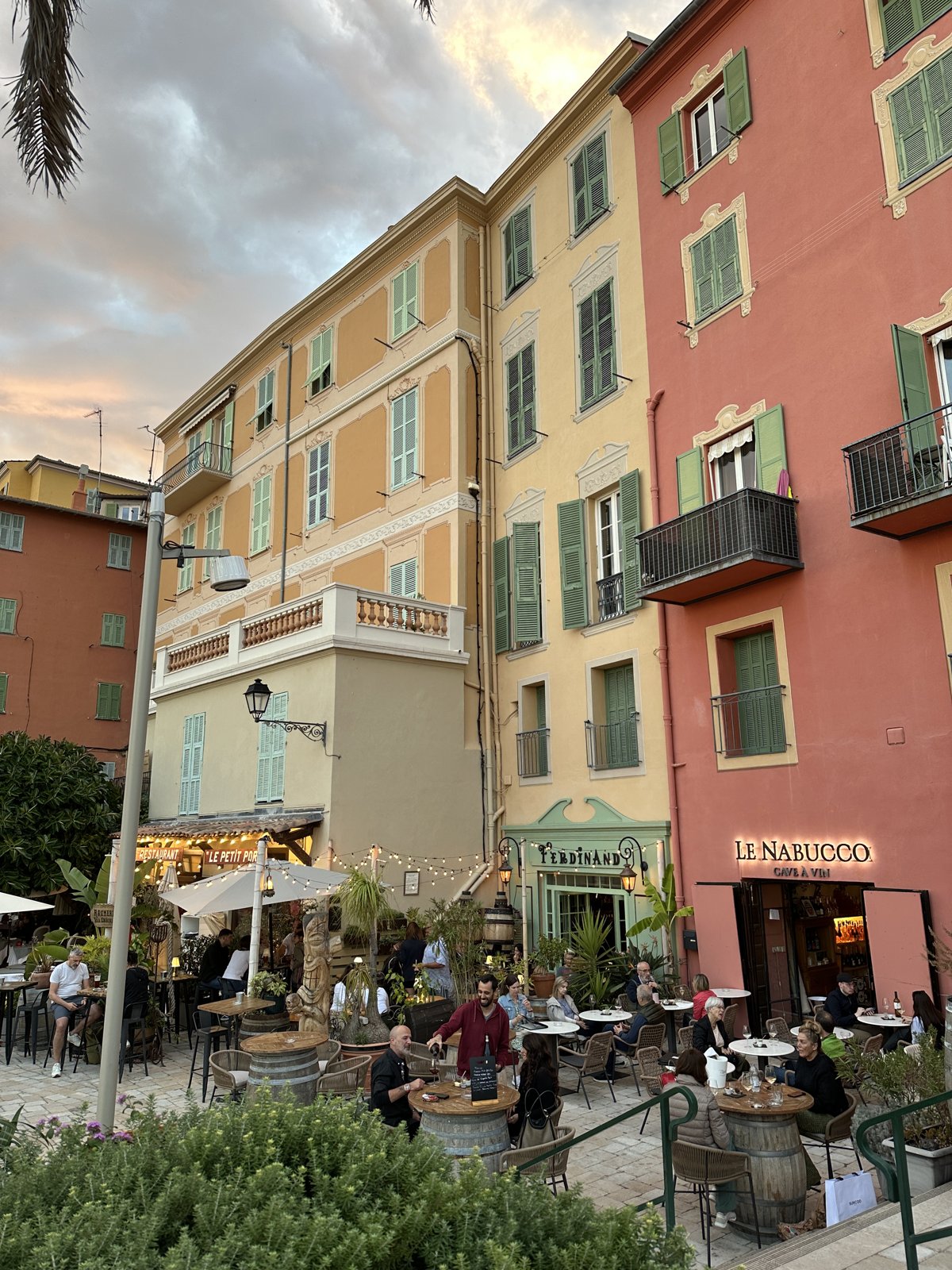
From Monaco we carried on to Menton, the last town before the Italian border, and it was a lovely place to finish the day. It is softer and quieter than Nice, all pastel façades and café terraces, with the bell tower of the Basilica of Saint-Michel rising out of the old town and the mountains right behind it. Menton is famous for its lemons, and it has its own microclimate, which is why it feels a little warmer and greener than the rest of the coast.
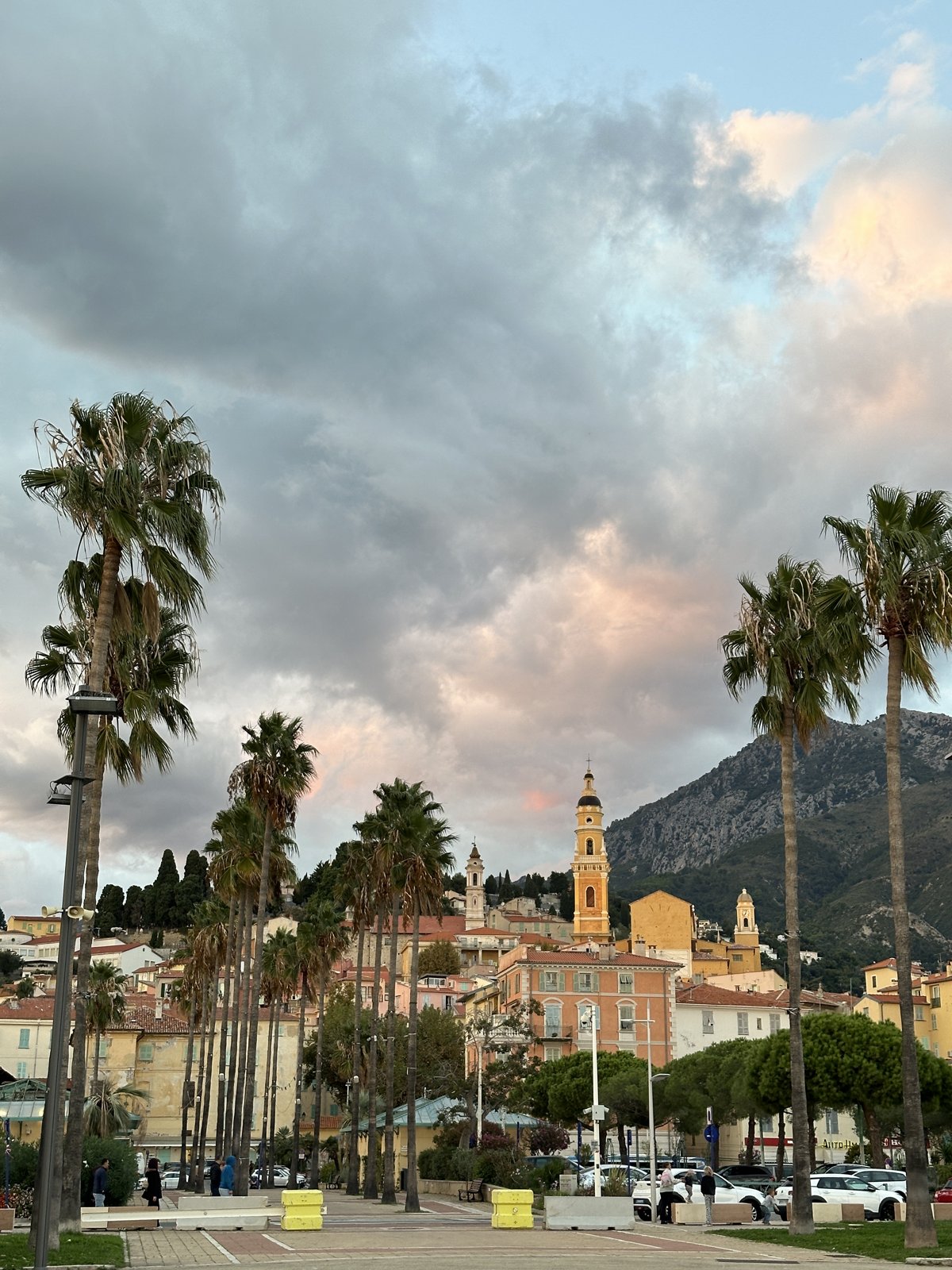
We stayed for sunset, and the sky did not disappoint.
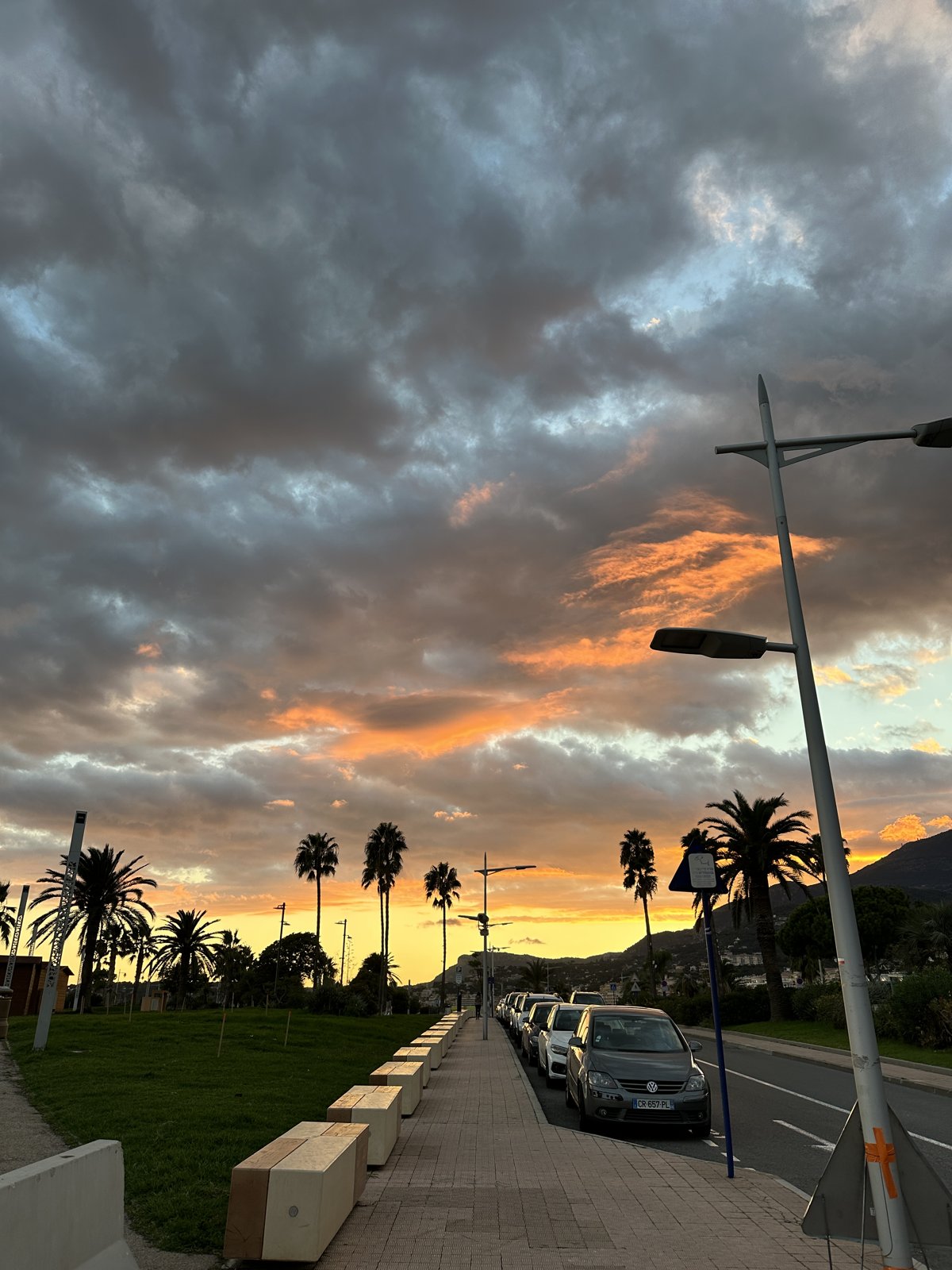
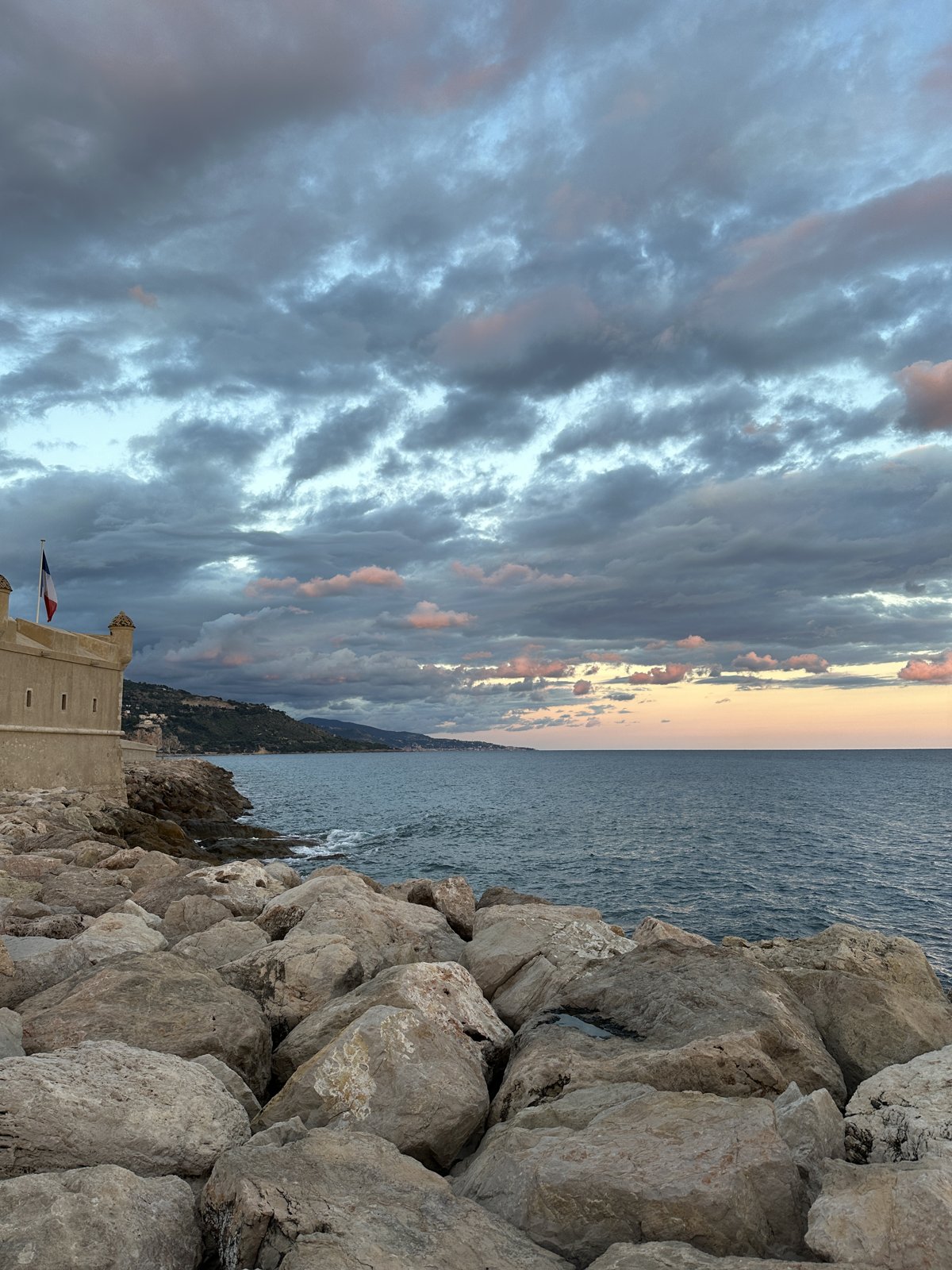
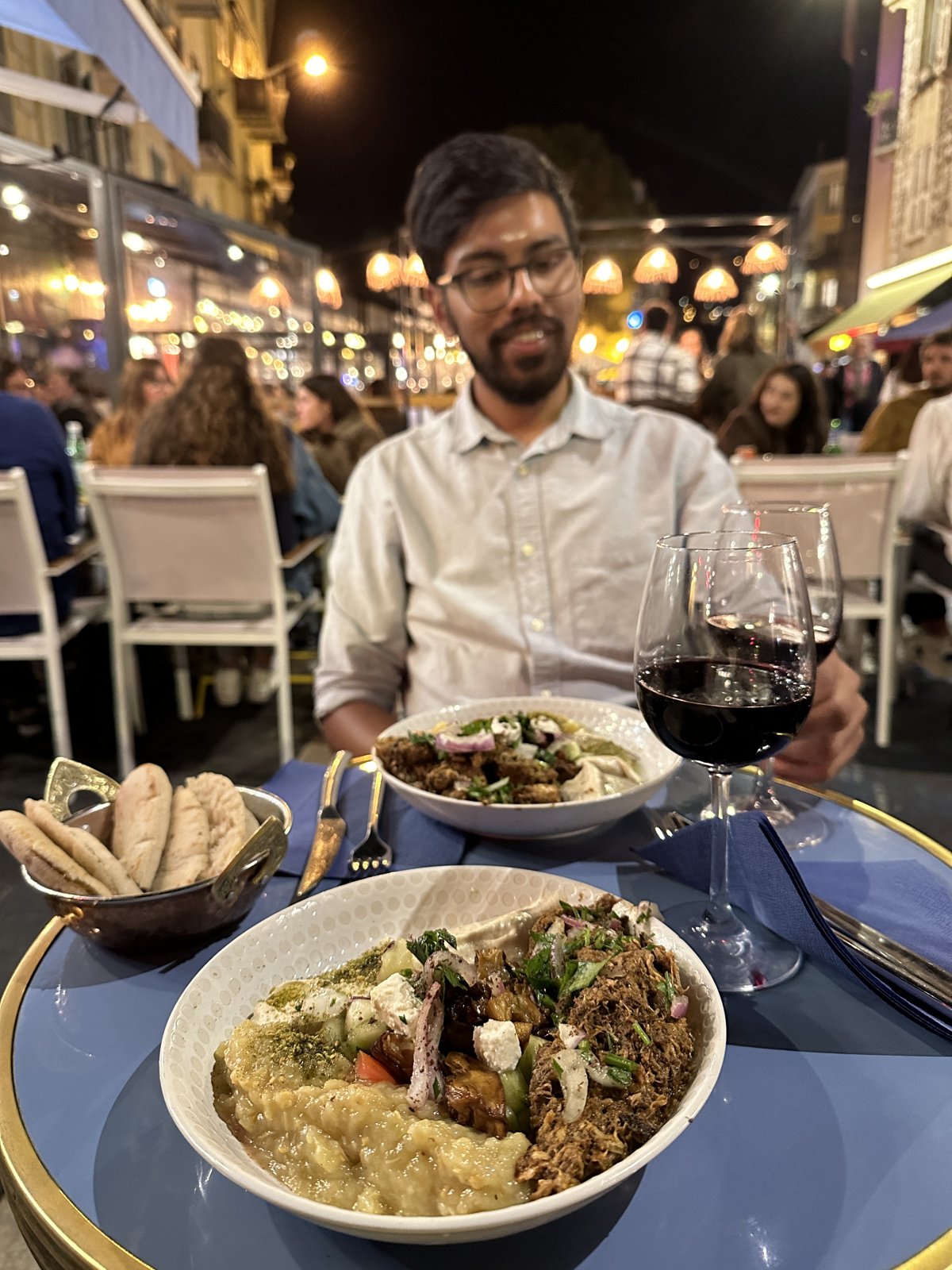
Then back to Nice for a late dinner on a busy terrace: Mediterranean plates, warm bread and a glass of red. A very good end to the day.
Antibes
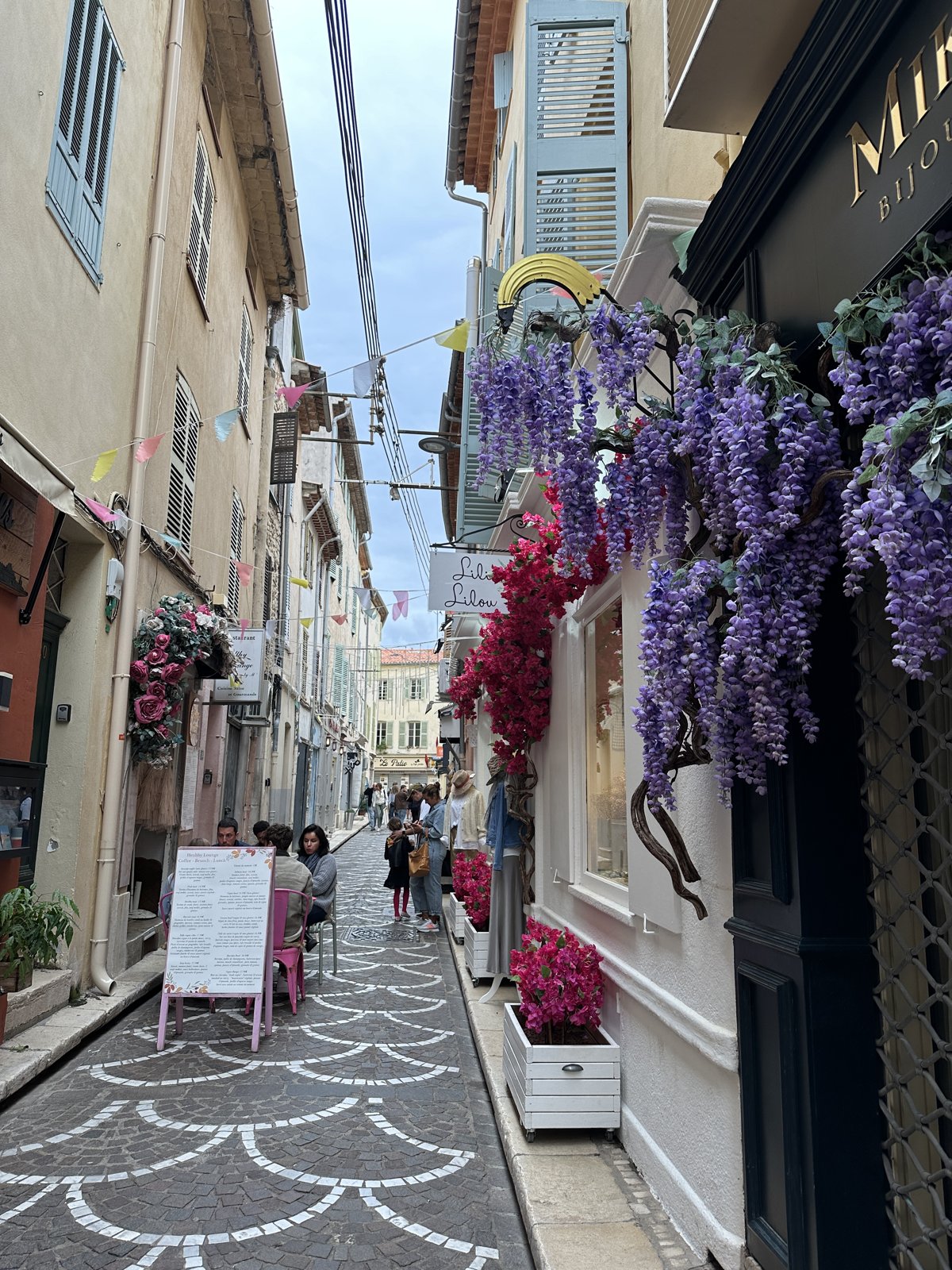
On our last day we went west to Antibes. The old town is a tangle of narrow, flower-draped lanes, quieter than Nice, and it sits right next to Port Vauban, one of the biggest yachting harbours in the Mediterranean.
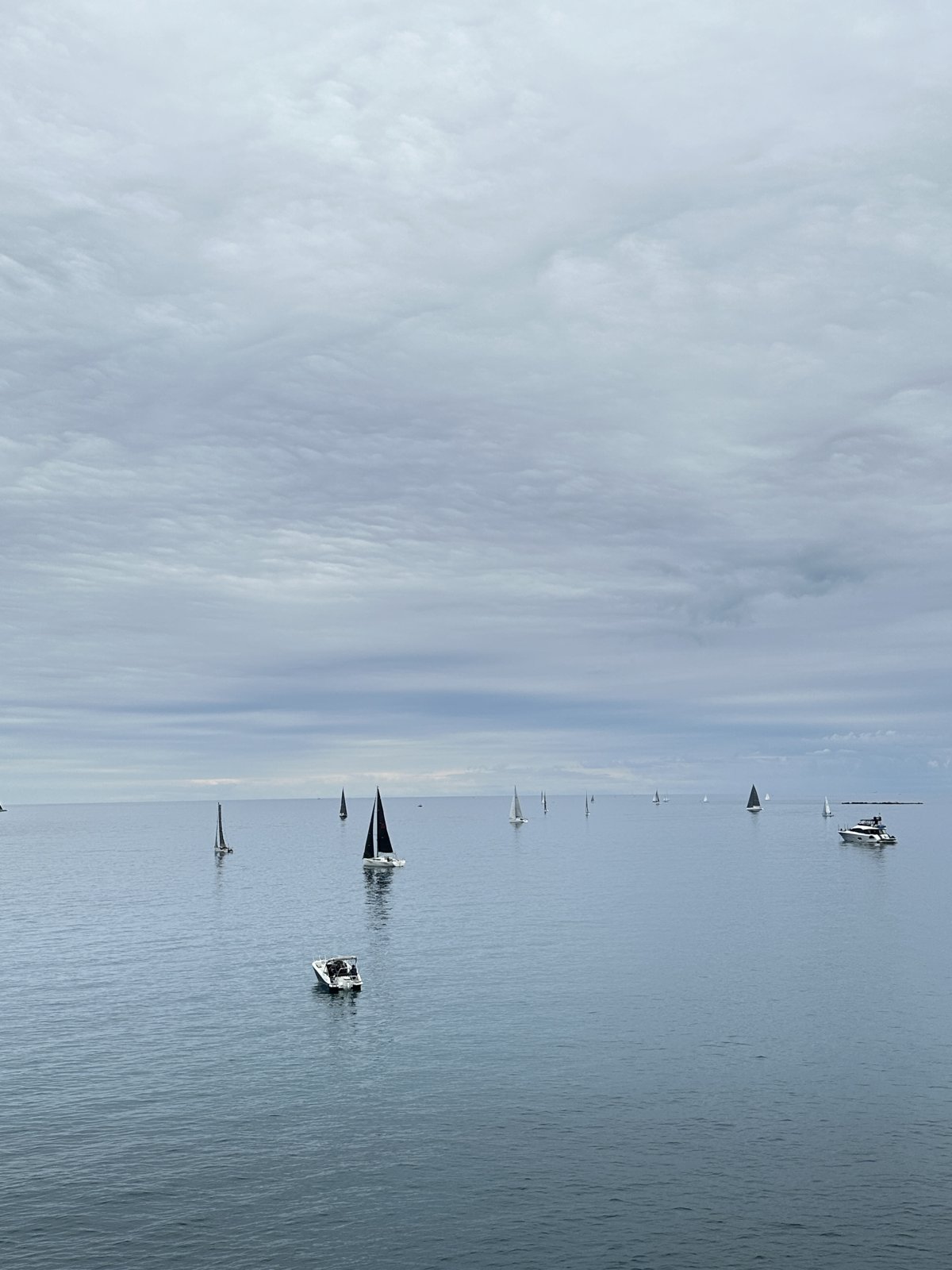
The sky was grey again by then, which suited the end of a trip. We stood on the seafront and watched the little sailing boats go out, and then it was time to go home.
Practical summary
When we went: early October. Warm on the sunny days, but we had a full day of rain in Nice, so pack a layer and an umbrella.
The route: the Calanques near Marseille, two days in Nice, a day in Èze, a day for Monaco and Menton, and a last day in Antibes.
Calanques: wear proper walking shoes, take water, and check for fire-risk closures in summer.
Èze: go early if you can. It is tiny, and it fills up quickly once the tour buses arrive.
Menton: stay for sunset.
Getting around: the coastal train links Nice with Monaco, Menton and Antibes, so you can easily do the whole coast without a car.
Two countries (Monaco counts), one rainy day and a lot of sunsets. The Riviera is not cheap, but it is a lot more than yachts.


Leave a Reply