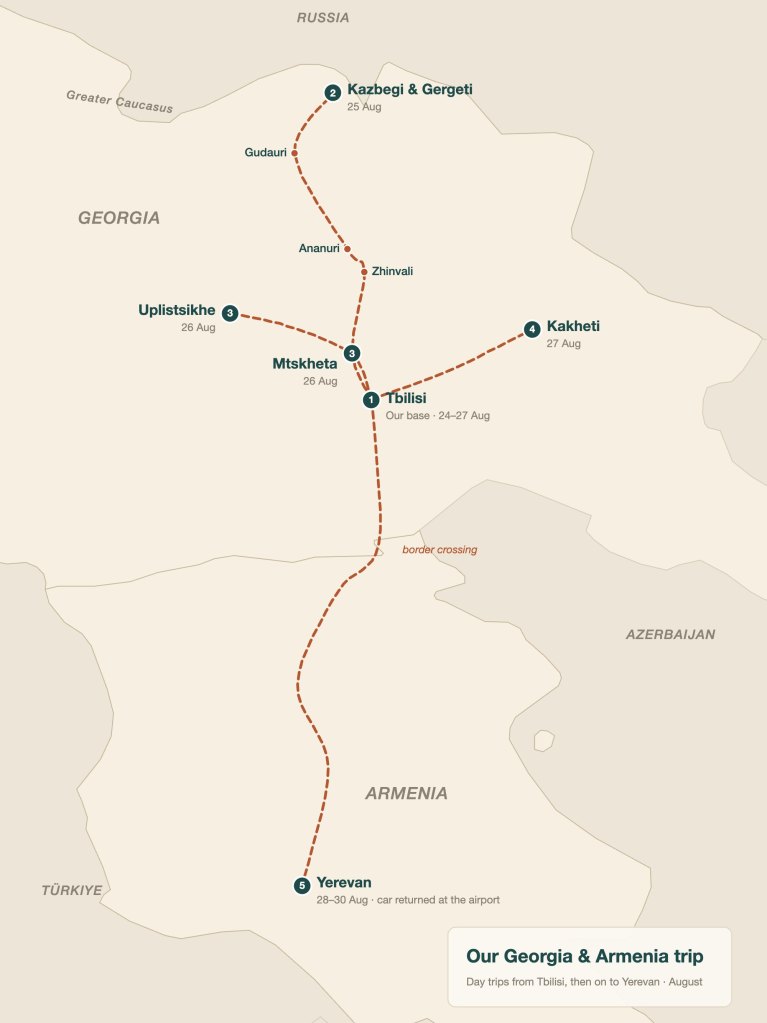
Georgia and Armenia sit side by side in the Caucasus, and they are easy to put in one trip. In a week at the end of August we did Tbilisi, the mountain road up to Kazbegi, a cave city, the old capital at Mtskheta, a day in the Kakheti wine country, and then crossed into Armenia for Yerevan. Two countries, two alphabets, two very different capitals, and a lot of very good food and wine.
We rented a car and kept Tbilisi as our base the whole time in Georgia, heading out on day trips and coming back to the city each evening. It made the trip easy: no packing and unpacking, and the freedom to stop wherever we liked along the way. At the end of the Georgian part, we drove the same car across the border to Yerevan and dropped it off at Yerevan airport.
The route
| Date | Where | What |
|---|---|---|
| 24 Aug | Tbilisi | Old town, carpet shops, the Gabriadze clock tower |
| 25 Aug | Georgian Military Highway | Zhinvali, Ananuri, Gudauri, Kazbegi and Gergeti Trinity Church |
| 26 Aug | Uplistsikhe and Mtskheta | The cave city, Jvari Monastery, Svetitskhoveli |
| 27 Aug | Kakheti, then Tbilisi | Qvevri wine and churchkhela, the Chronicle of Georgia |
| 28–30 Aug | Yerevan | Republic Square, the fountains, the Cascade |
Georgia
Tbilisi
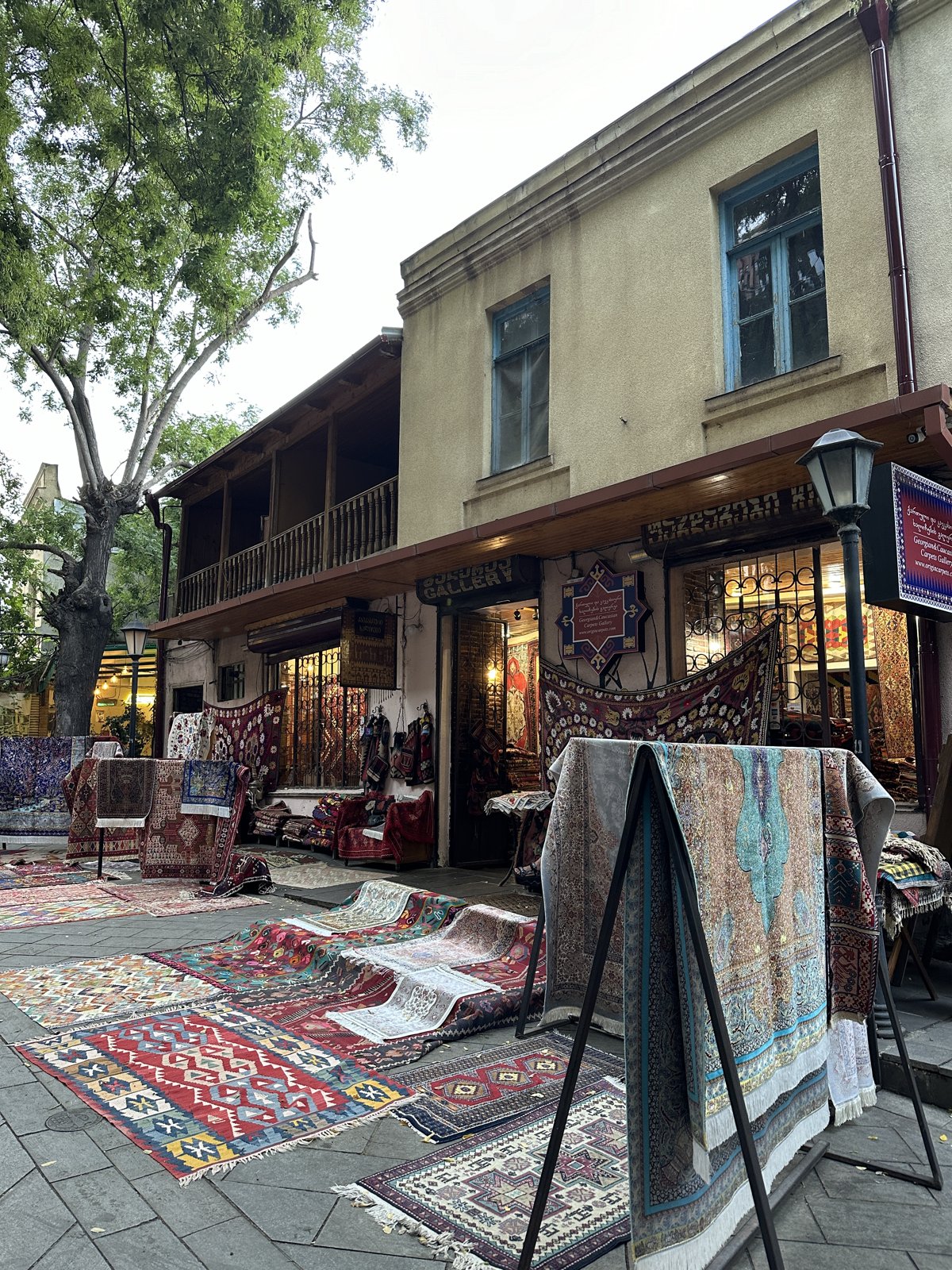
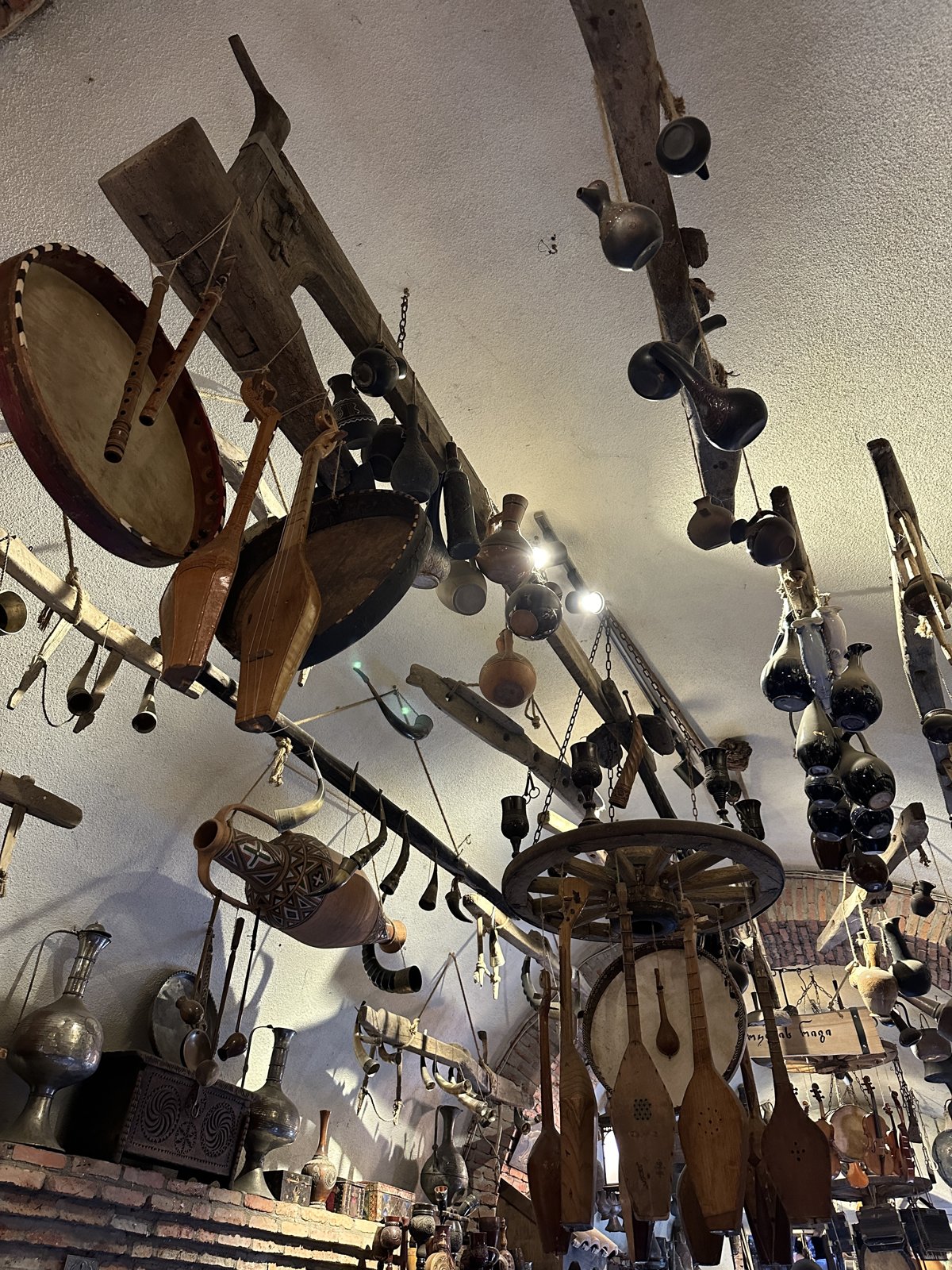
Tbilisi is a city of crooked old houses with carved wooden balconies, piled up the slopes on both sides of the Mtkvari river. The old town is the part to wander: sulphur baths under brick domes, the Narikala fortress up on the hill, and lanes full of carpet shops, wine bars and little galleries.
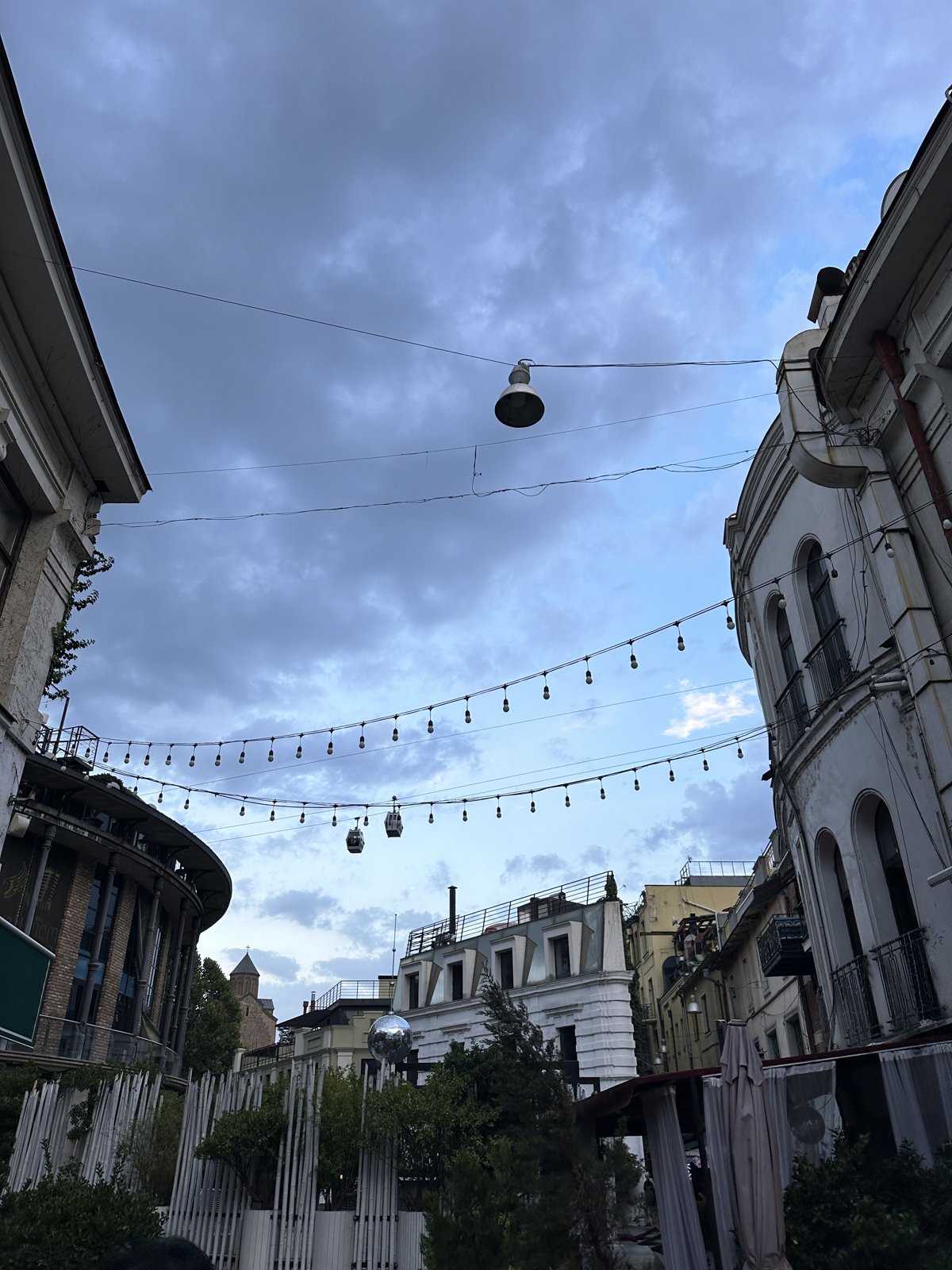
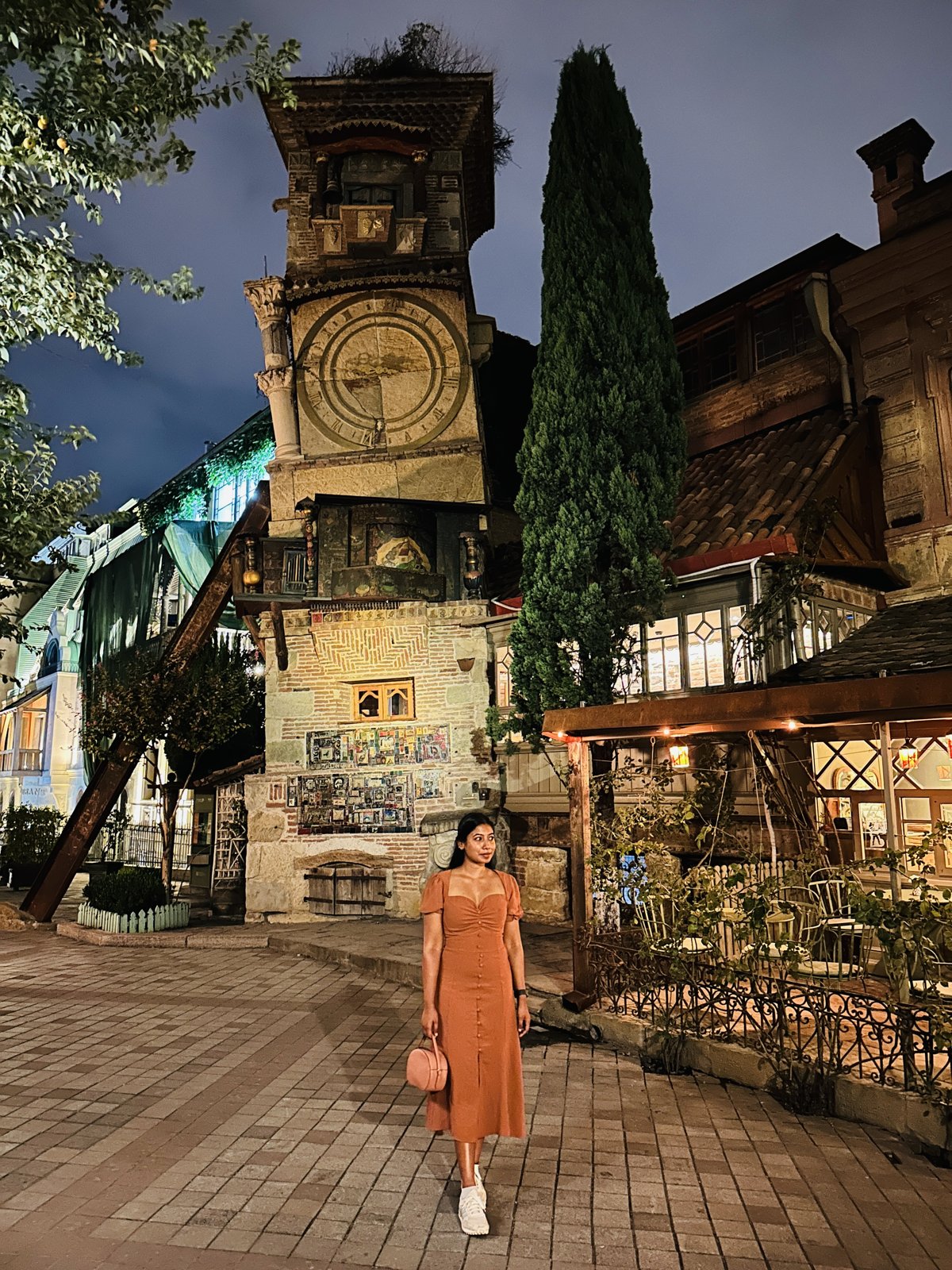
In the evening we found our way to the leaning clock tower by the Gabriadze puppet theatre. It was built by the puppeteer Rezo Gabriadze, and it looks like something out of a fairy tale, all wonky tiles and little windows. Every hour a little angel comes out at the top to ring the bell, and at noon and 7 pm there is a short puppet show in the window.
Up the Georgian Military Highway to Kazbegi
Our second day was the big one: the Georgian Military Highway, the old road north from Tbilisi through the Greater Caucasus towards the Russian border. It is a spectacular drive, and the stops come thick and fast.
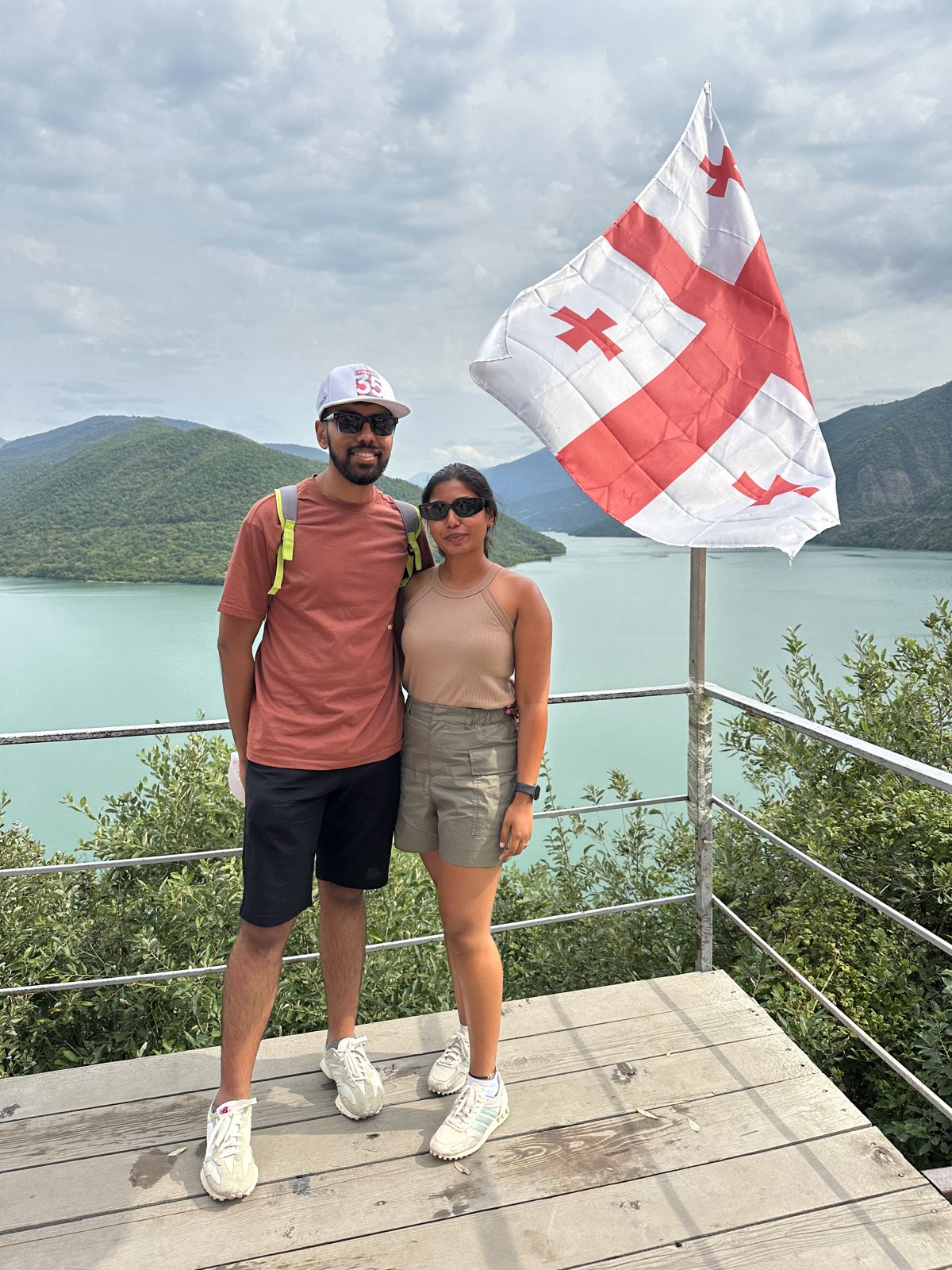
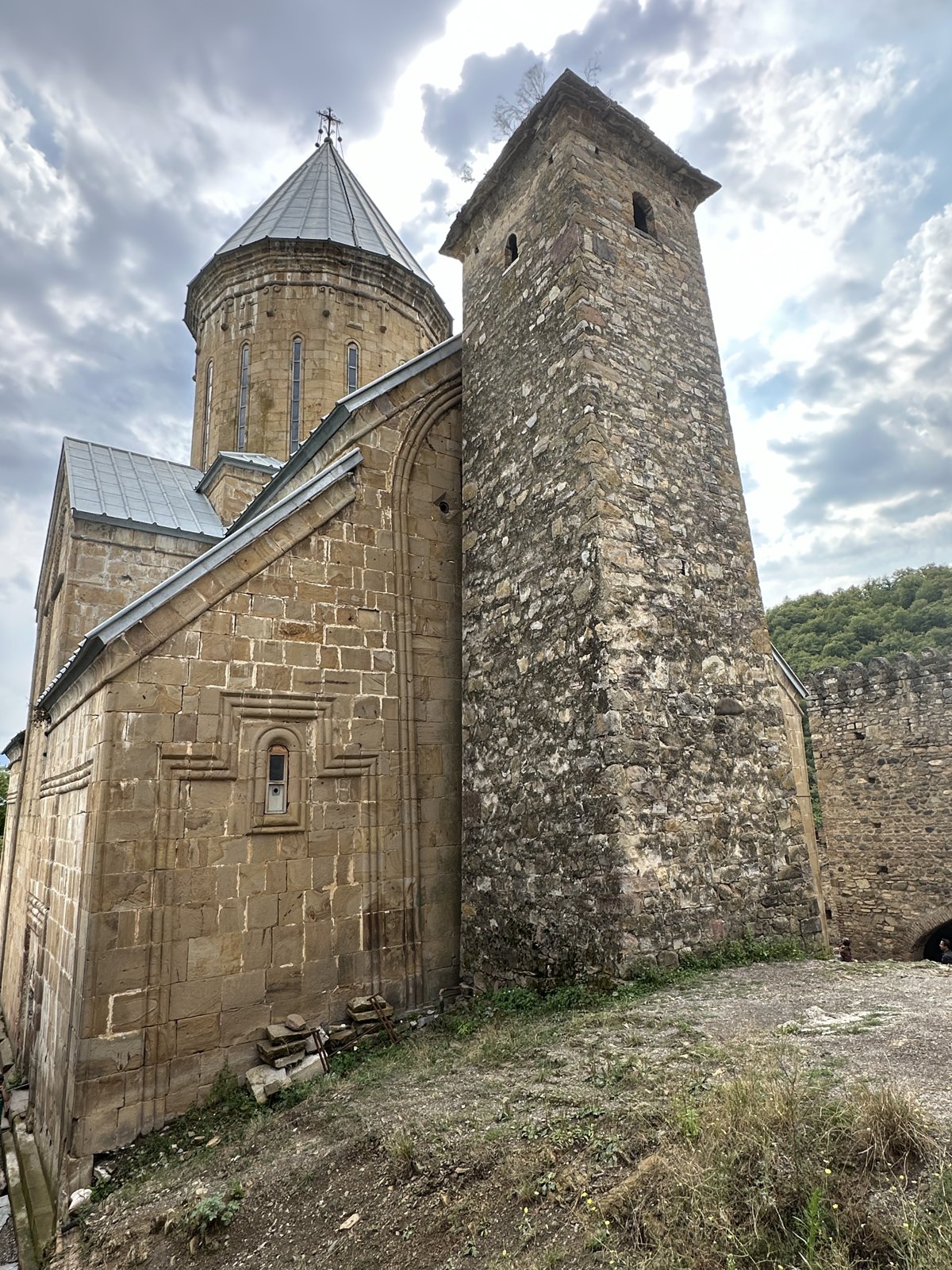
First the Zhinvali reservoir, which is a startling turquoise, and then Ananuri, a fortress and two churches on the edge of the water, with a tall square watchtower you can climb.
After that the road climbs hard, up through the ski town of Gudauri at well over 2,000 metres, where the views open out over huge green valleys.
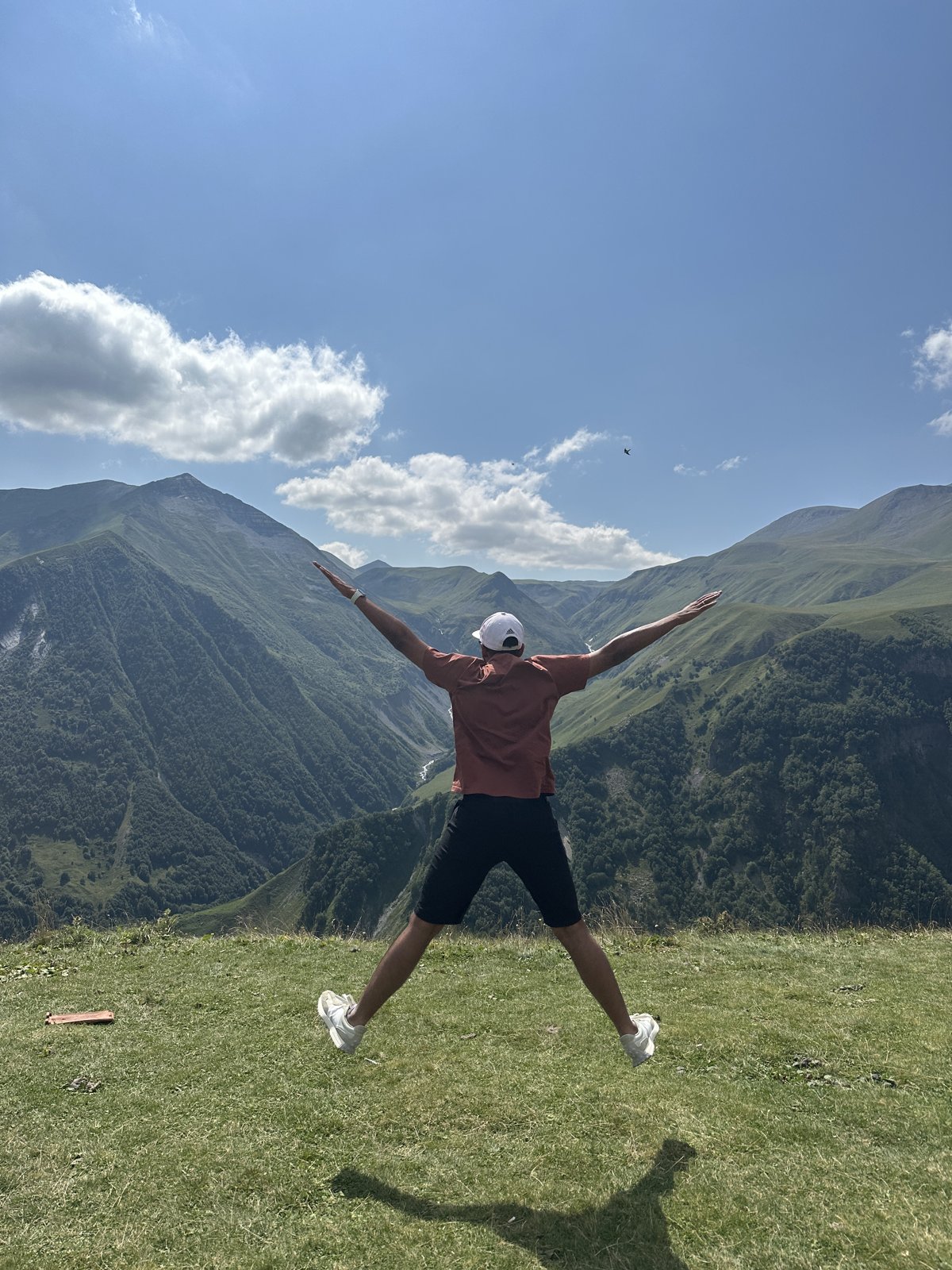
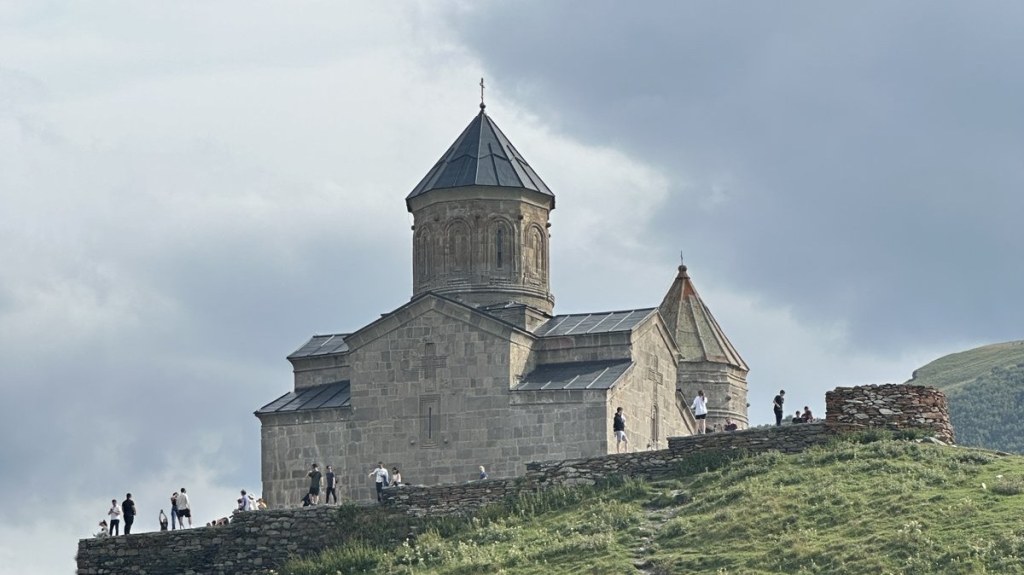
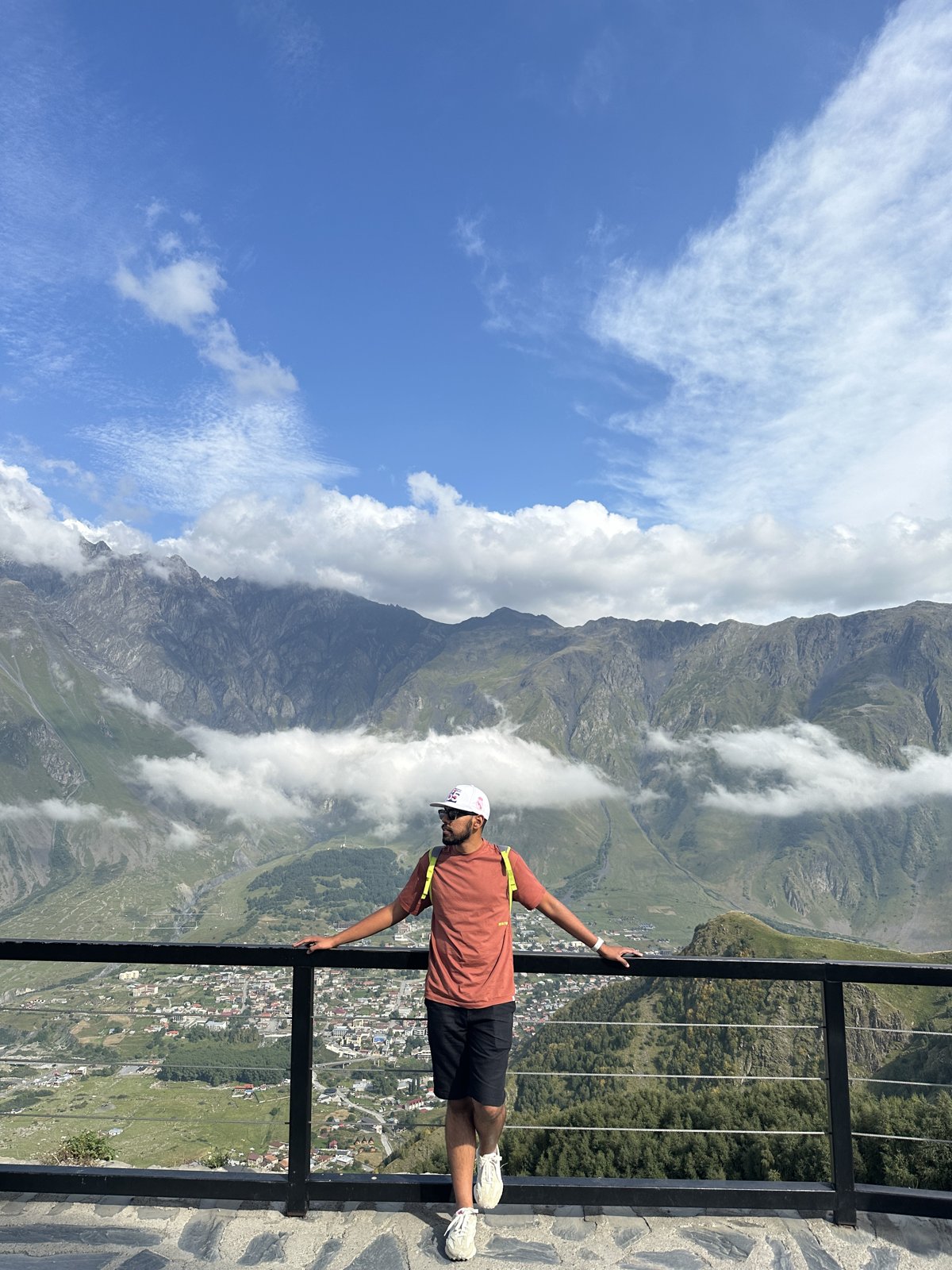
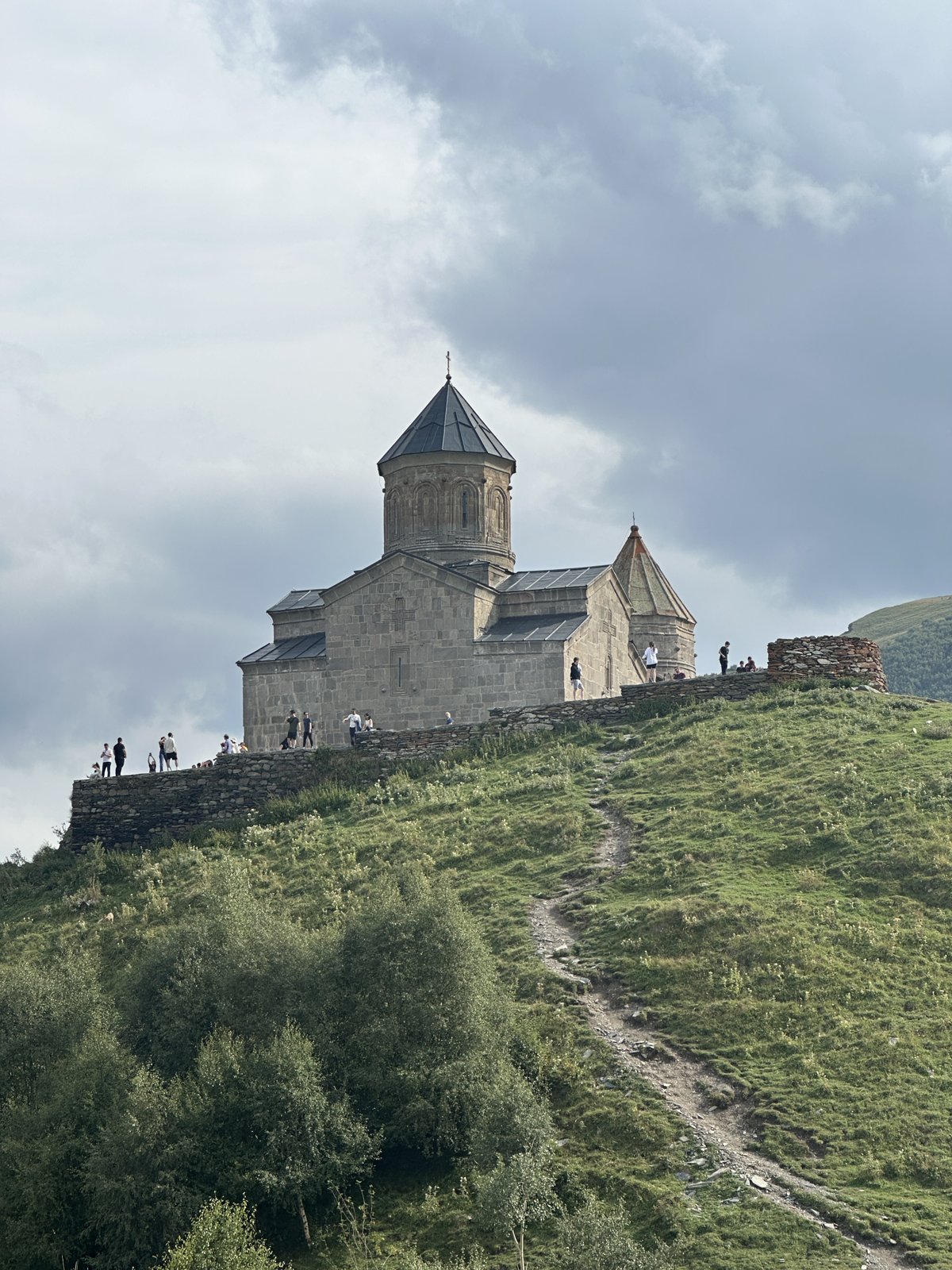
And then Stepantsminda, the town everyone still calls Kazbegi, and above it, on its own green ridge, the Gergeti Trinity Church. It is a 14th-century church at around 2,170 metres, set against the mountains, and it is the picture of Georgia you have probably already seen. Seeing it for real is still something else. On a clear day Mount Kazbek, over 5,000 metres, towers behind it.
Uplistsikhe, the cave city
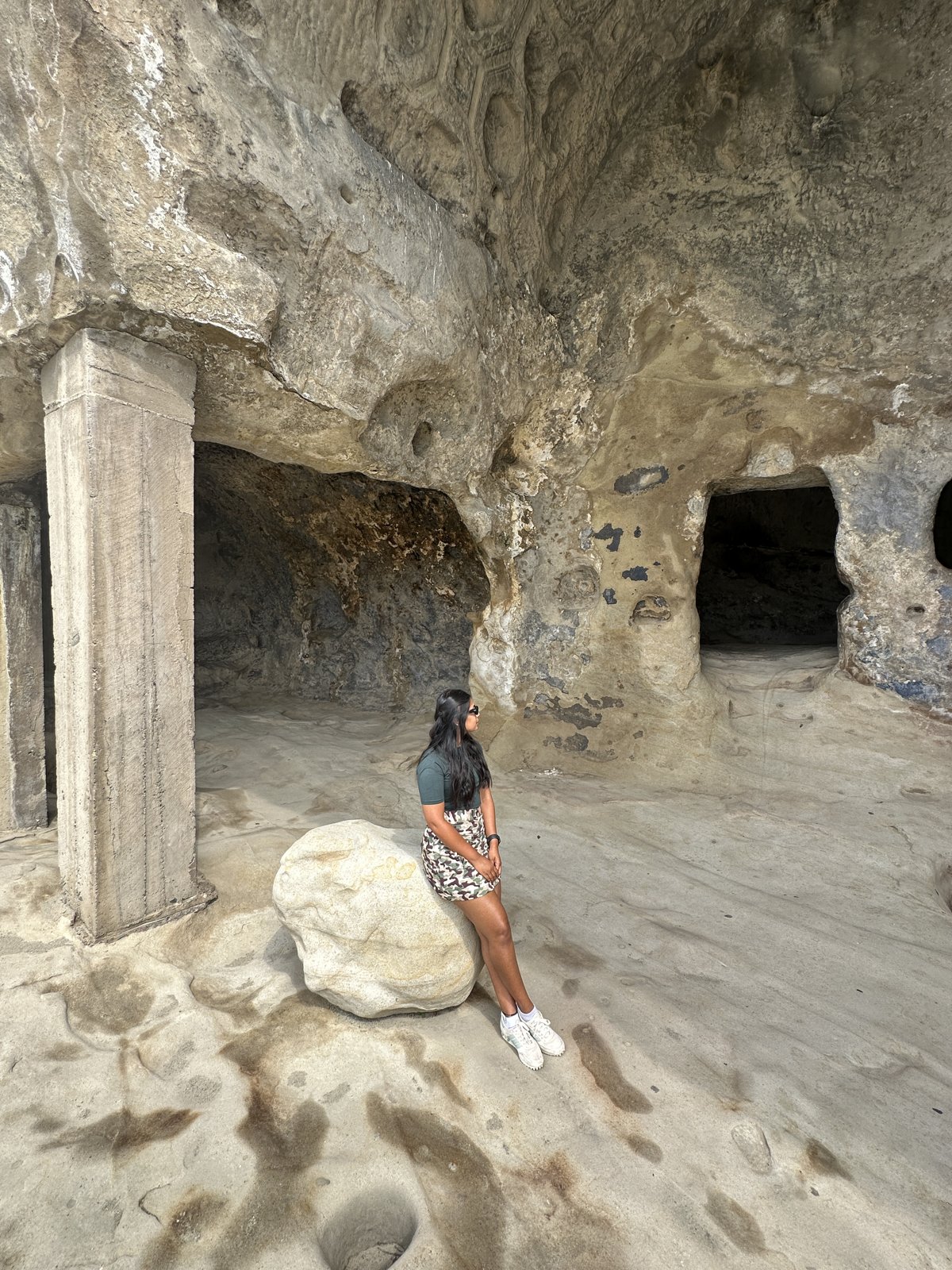
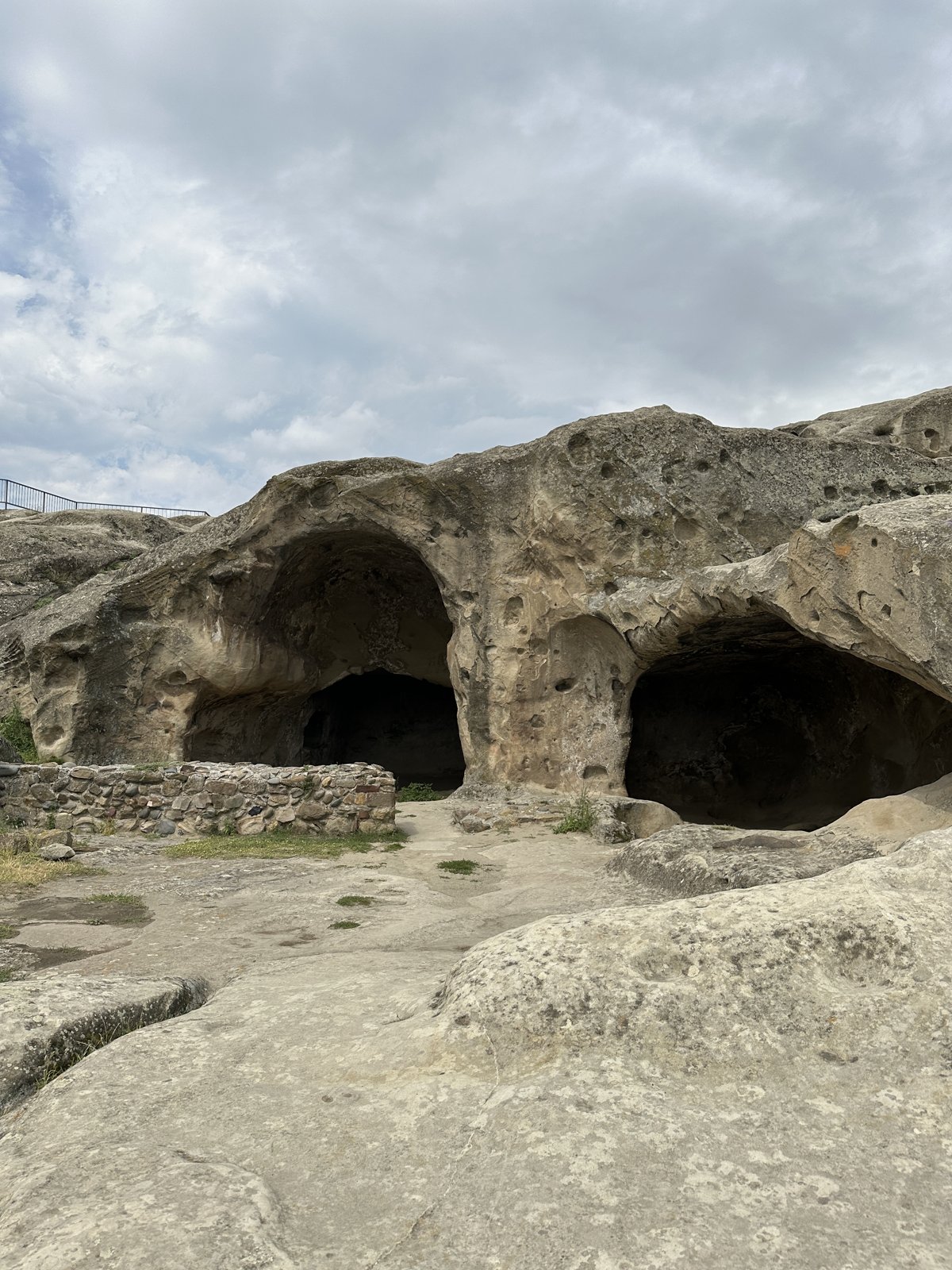
The next morning we headed west to Uplistsikhe, near Gori. It is a whole town carved into a sandstone hillside, with a history going back around 3,000 years, and for centuries it was an important stop on the trade routes through the Caucasus. You walk up through streets, halls, wine cellars and a theatre, all cut out of the rock.
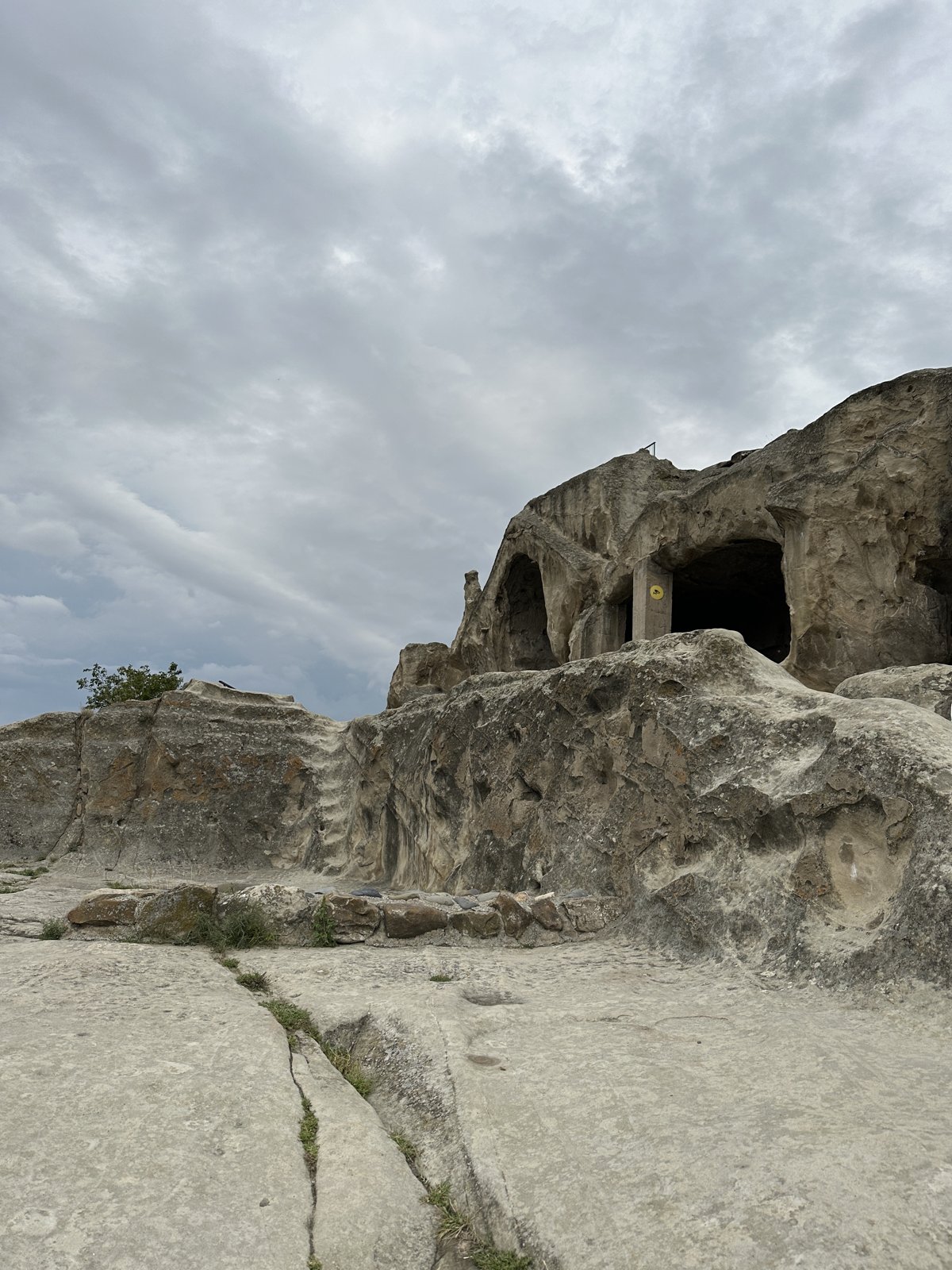
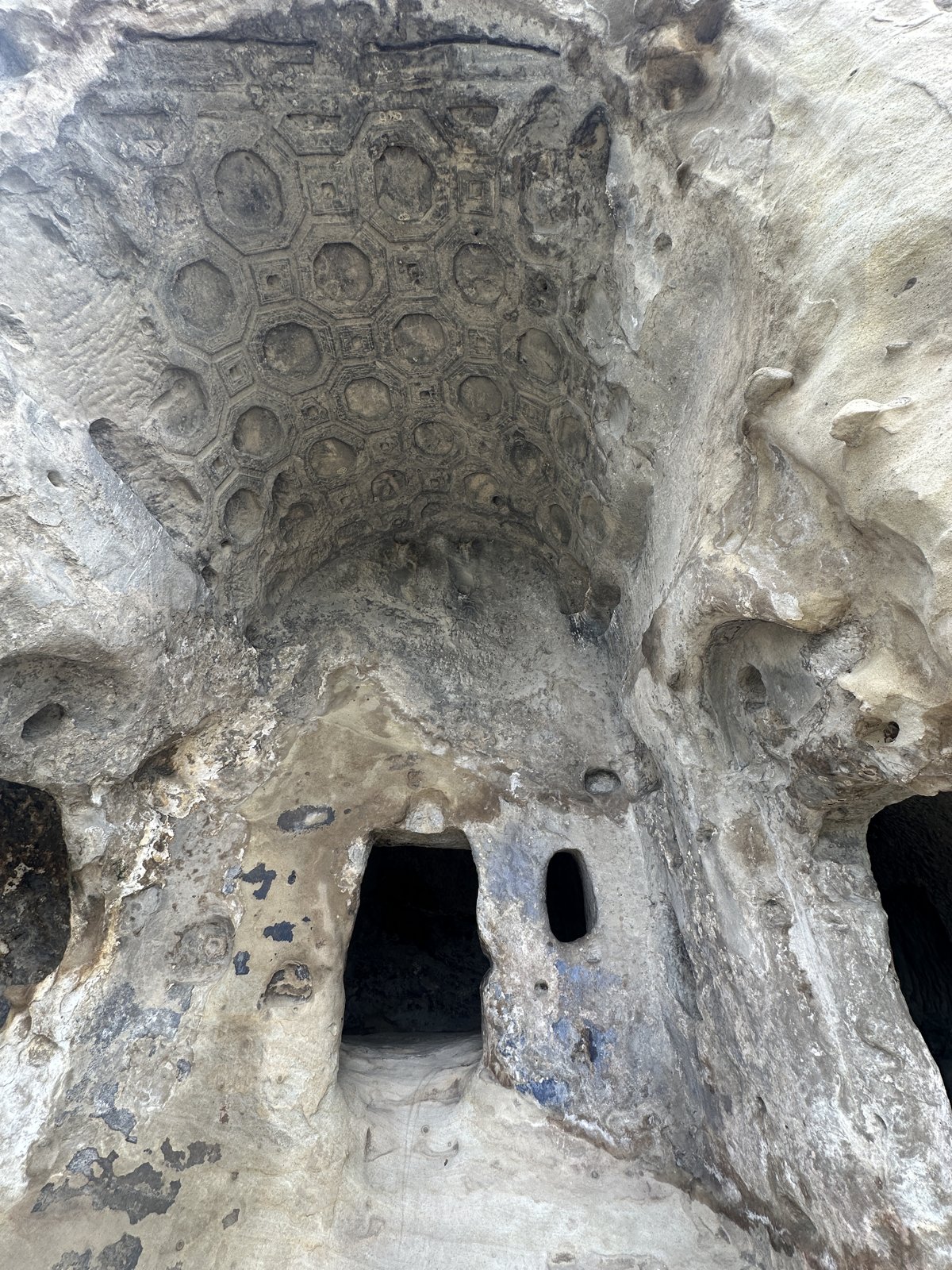
The detail is what gets you. Some of the halls have ceilings carved to look like timber roofs, in solid rock, thousands of years ago.
Mtskheta
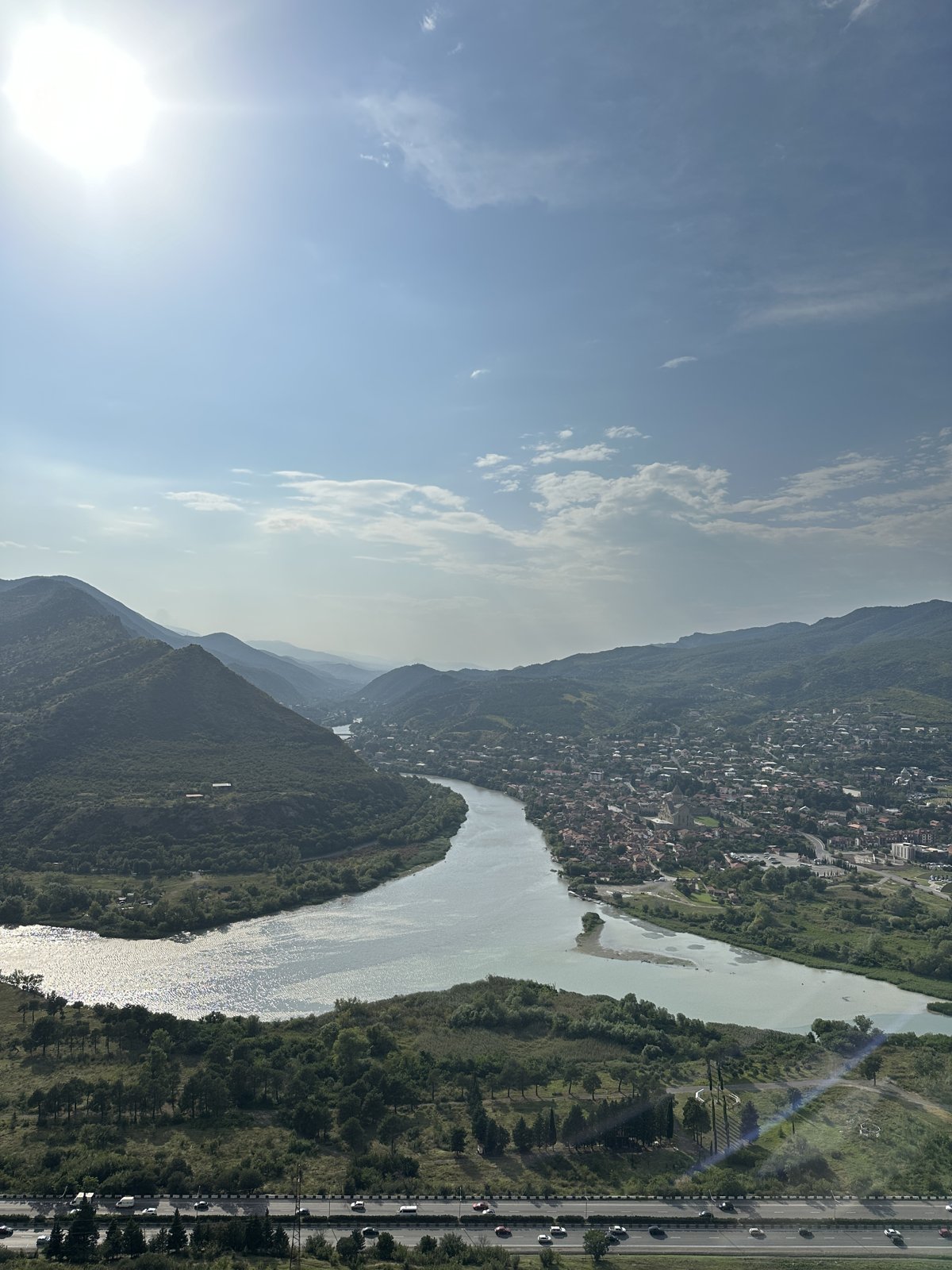
In the afternoon we went to Mtskheta, Georgia’s ancient capital and the heart of the Georgian Orthodox Church, now a UNESCO World Heritage Site. Up on the hill above the town is Jvari Monastery, from the 6th century, looking straight down on the point where the Aragvi and Mtkvari rivers meet. The two rivers are often different colours, so you can see exactly where they join.
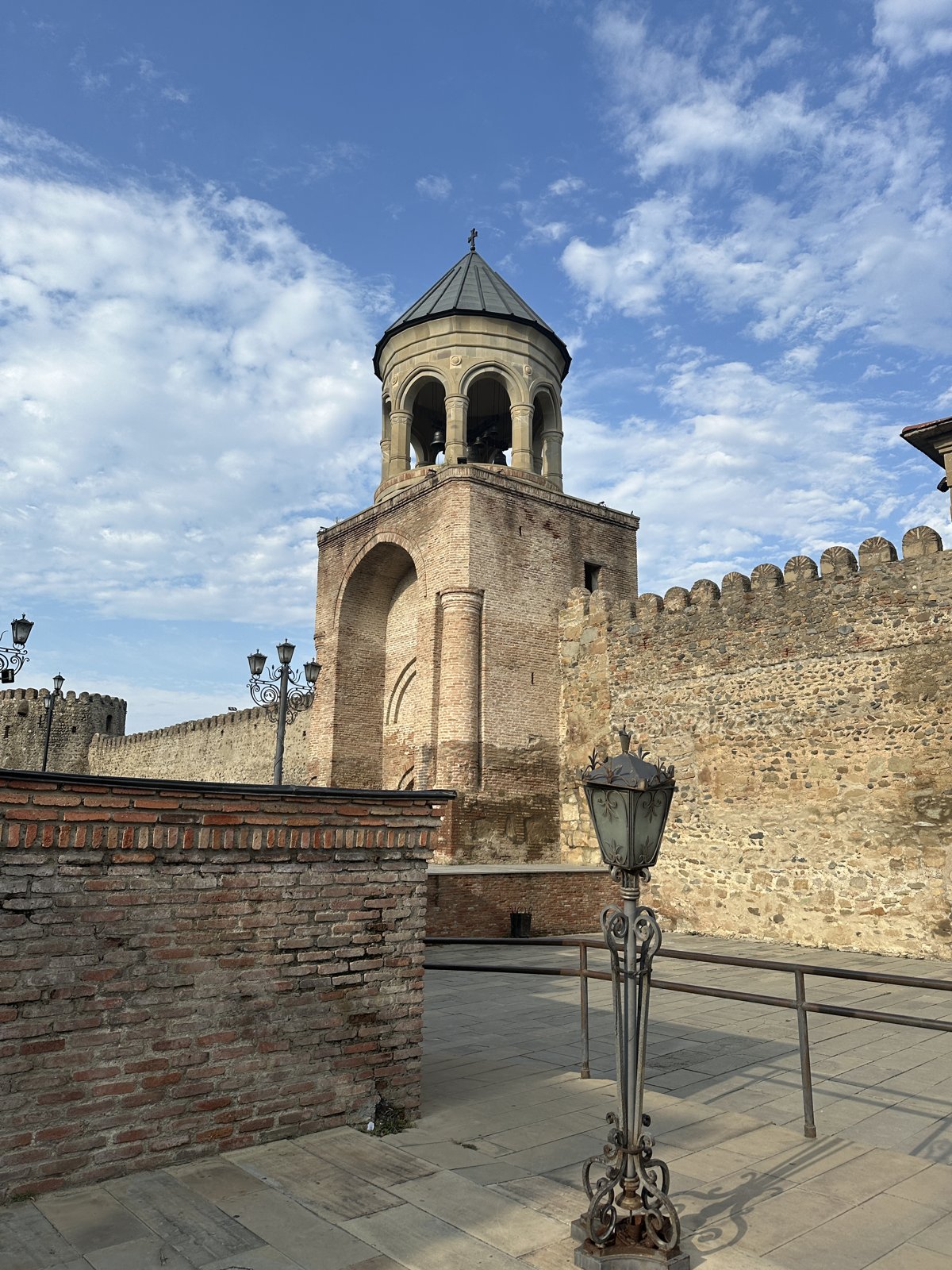
Down in the town, Svetitskhoveli Cathedral sits inside its fortified walls. It dates from the 11th century, and tradition says Christ’s robe is buried beneath it.
Kakheti: wine in a clay pot
Georgia is one of the oldest wine-making countries in the world, and Kakheti, in the east, is its heartland. We spent a day out there.
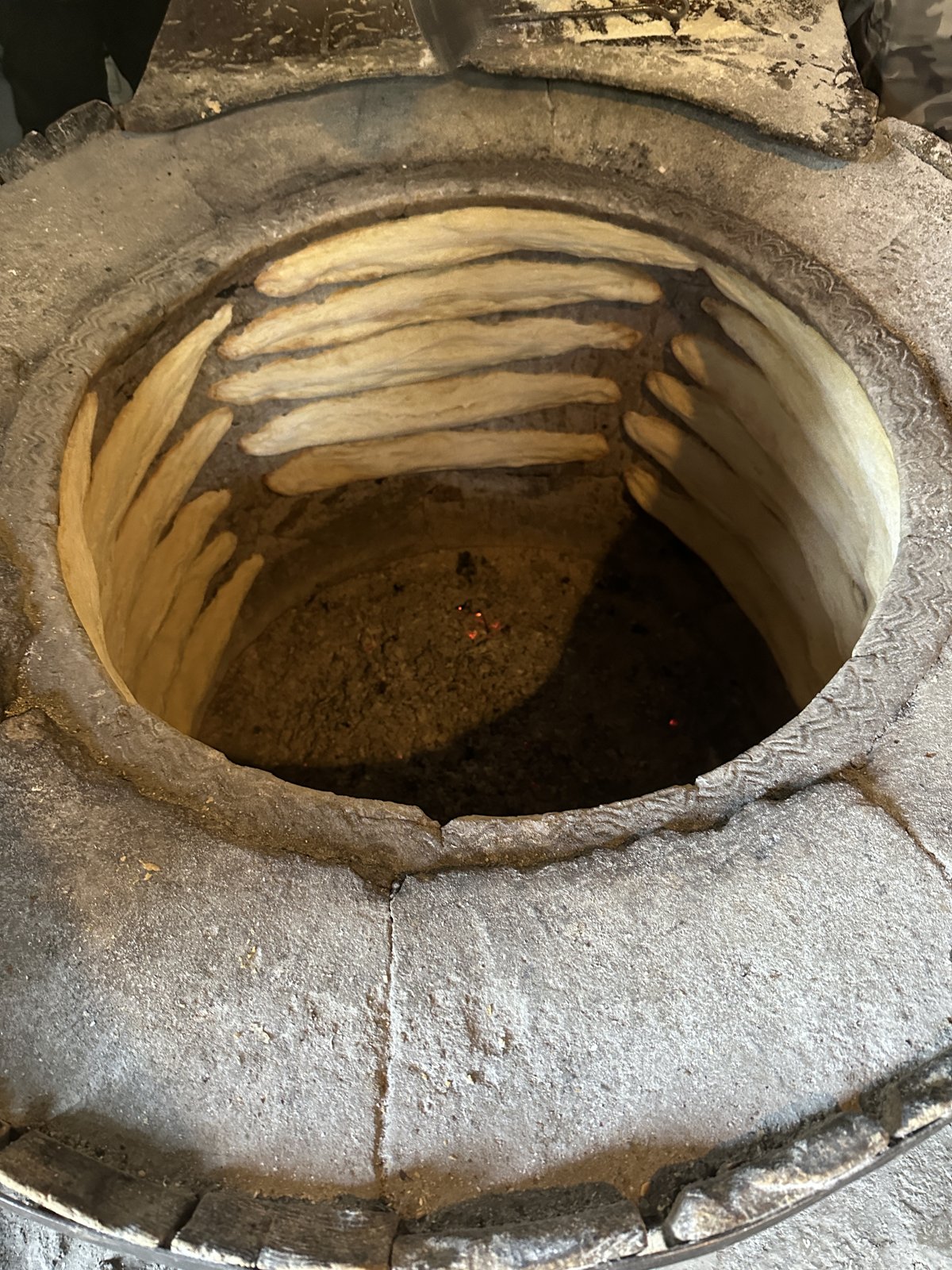
The traditional way is the qvevri: a huge clay vessel buried in the ground, where the grapes ferment with their skins and seeds. The method goes back thousands of years and is on UNESCO’s list of intangible cultural heritage. The wines it makes, especially the amber whites, taste like nothing else.
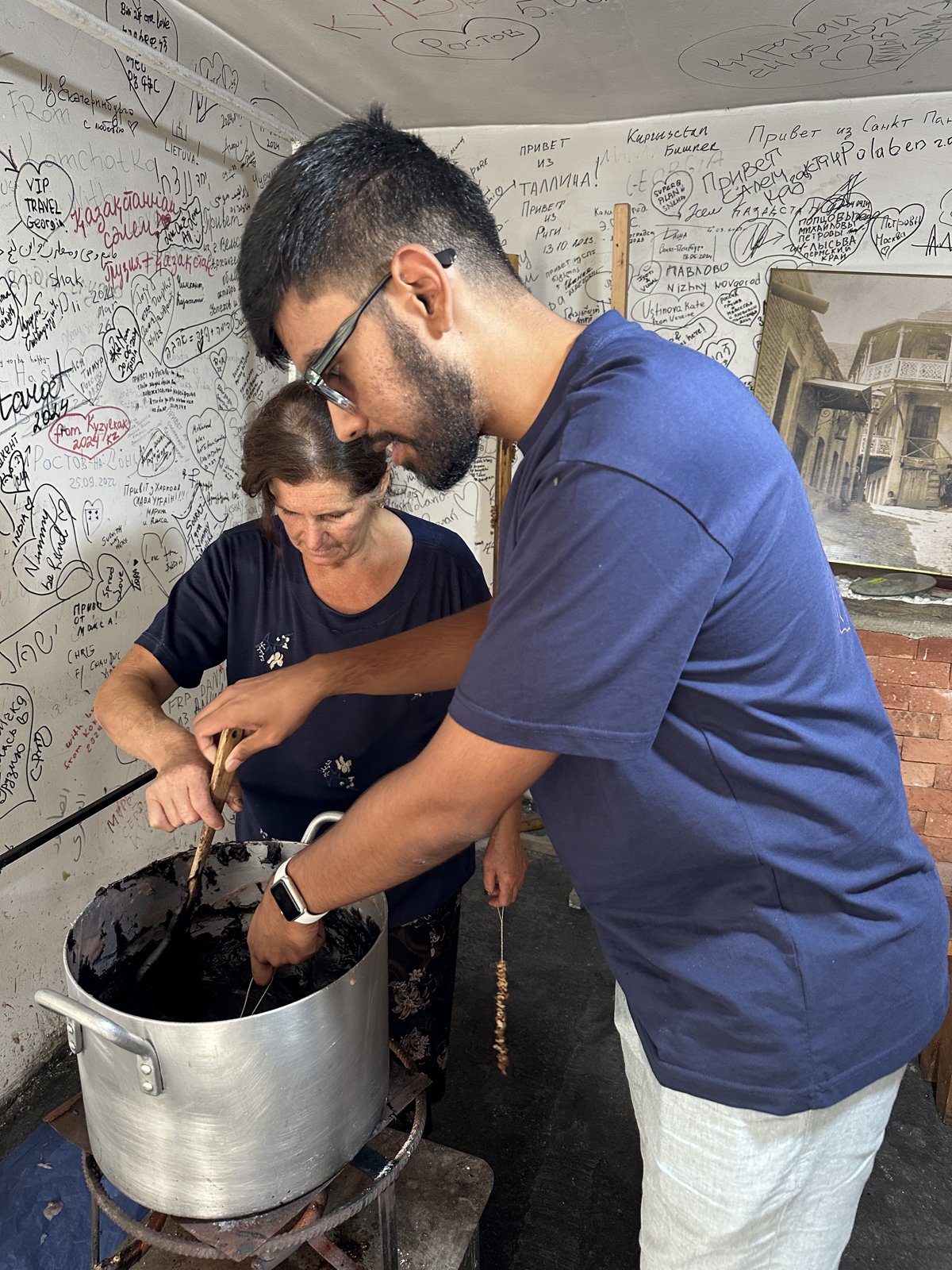
We also got to make churchkhela, the Georgian sweet you see hanging in every market: strings of walnuts dipped again and again in thickened grape juice, then hung up to dry. It is messy, sticky, and a lot of fun.
The Chronicle of Georgia
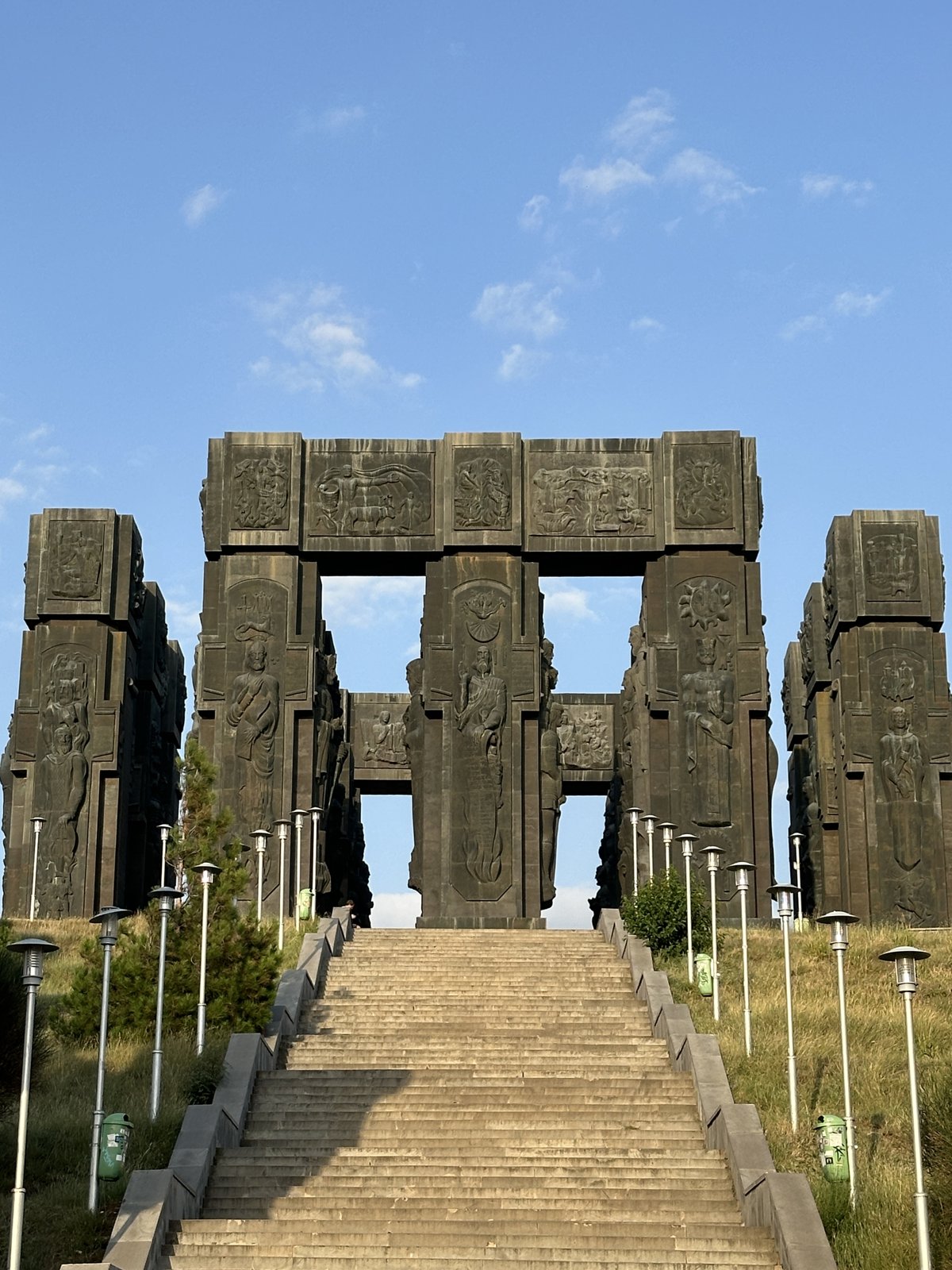
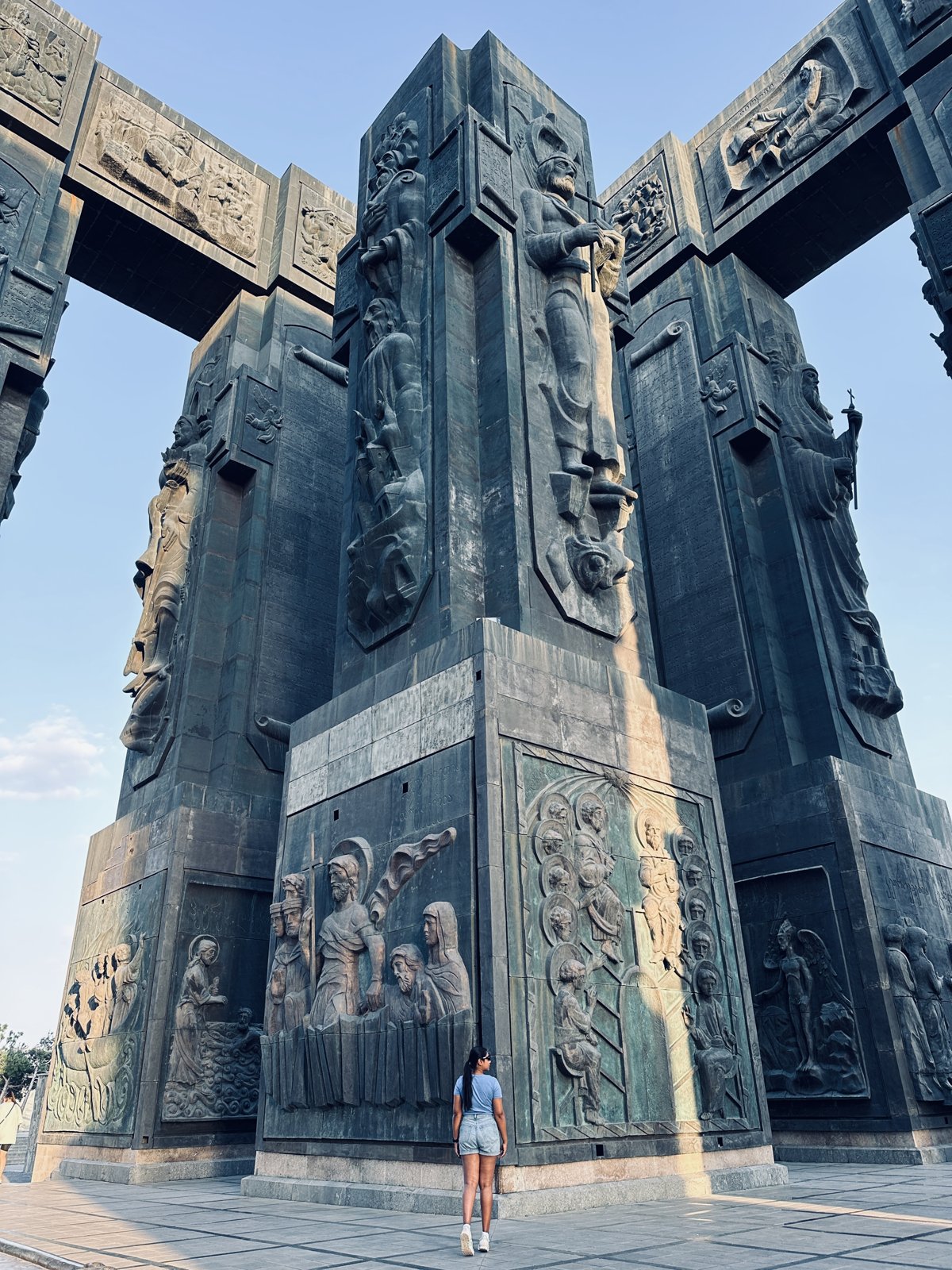
Back near Tbilisi that evening we went up to the Chronicle of Georgia, a giant monument on a hill above the Tbilisi Sea. It was designed by Zurab Tsereteli, and its huge bronze-coloured pillars are carved with scenes from Georgian history and the life of Christ. It is enormous, slightly surreal, and far quieter than the old town.
Armenia
Yerevan
On 28 August we drove across the border into Armenia and arrived in Yerevan in the evening. The border crossing in the rental car was easy and well organised, and we returned the car at Yerevan airport. We rented from Europcar, and the one-way fee for picking up in Tbilisi and dropping off in Yerevan was around 200 euros. Yerevan is a very different capital from Tbilisi: broad avenues and grand squares, and buildings faced in volcanic tuff stone in shades of pink and apricot, which is why it is called the Pink City. It is also one of the oldest continuously inhabited cities in the world, founded as the fortress of Erebuni in 782 BC.
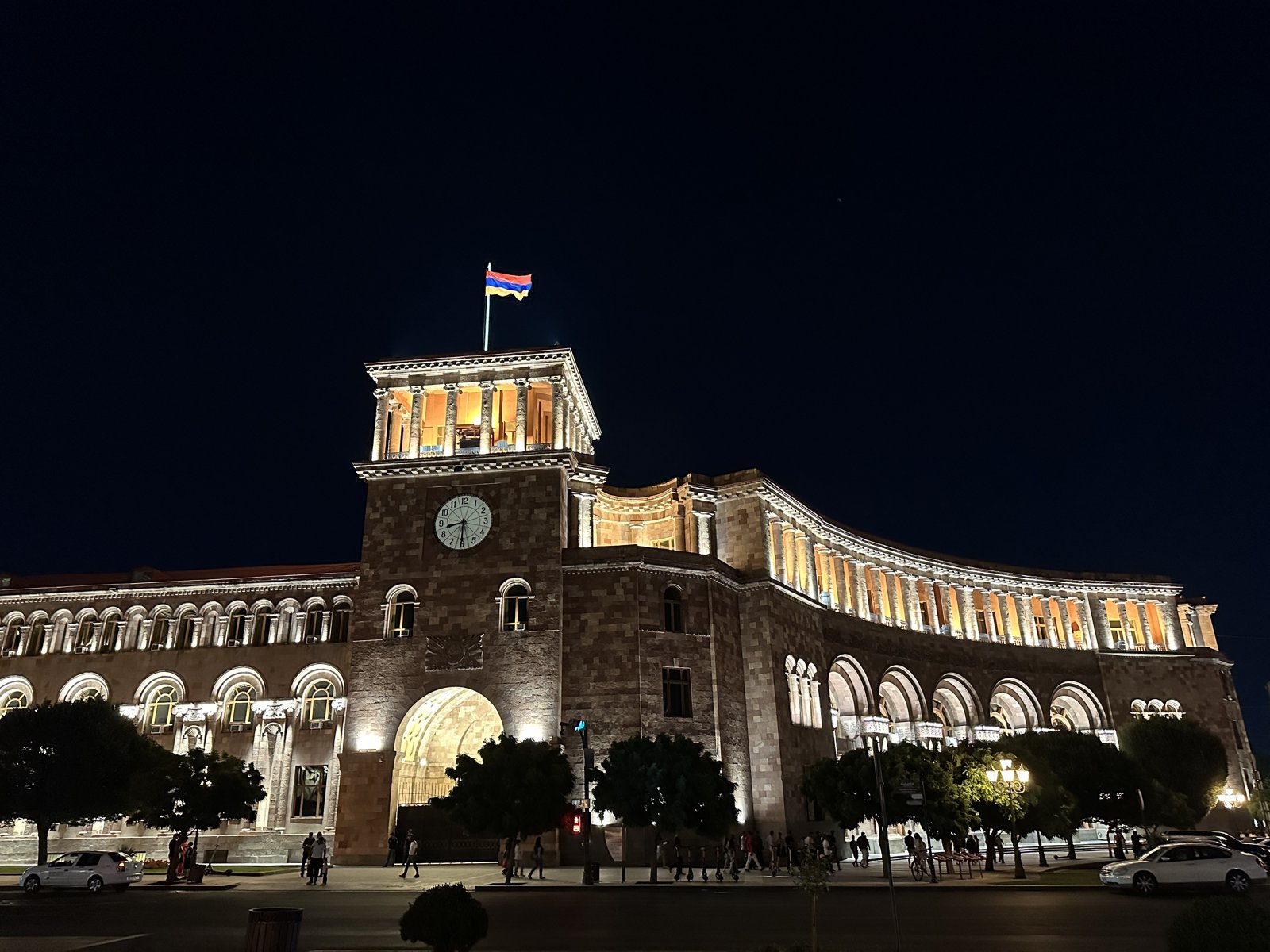
Our first stop was Republic Square, which is at its best after dark, when the buildings around it are lit up in gold.
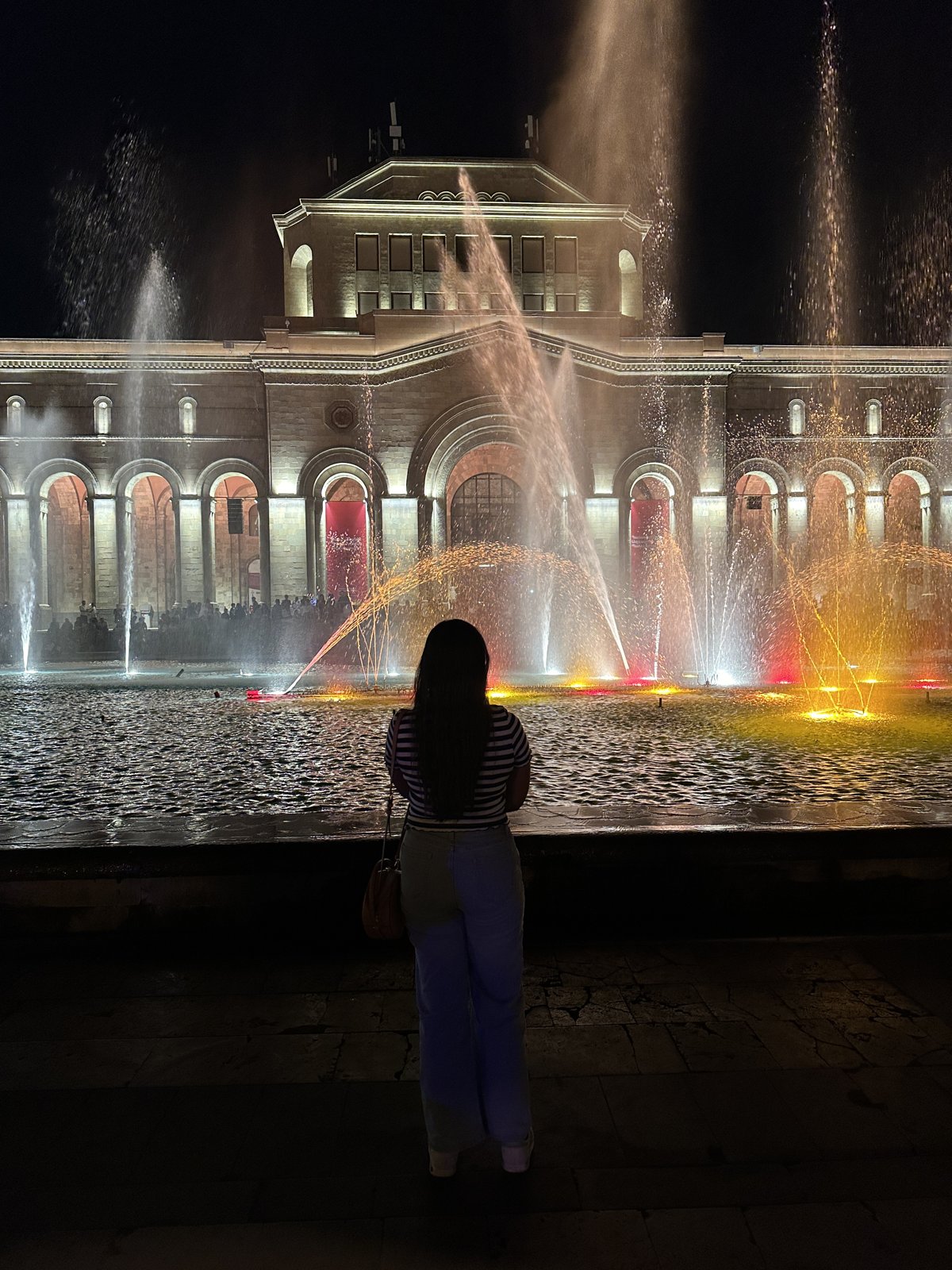
In front of the museum on the square are the singing fountains, which put on a show of music and coloured lights on summer evenings.
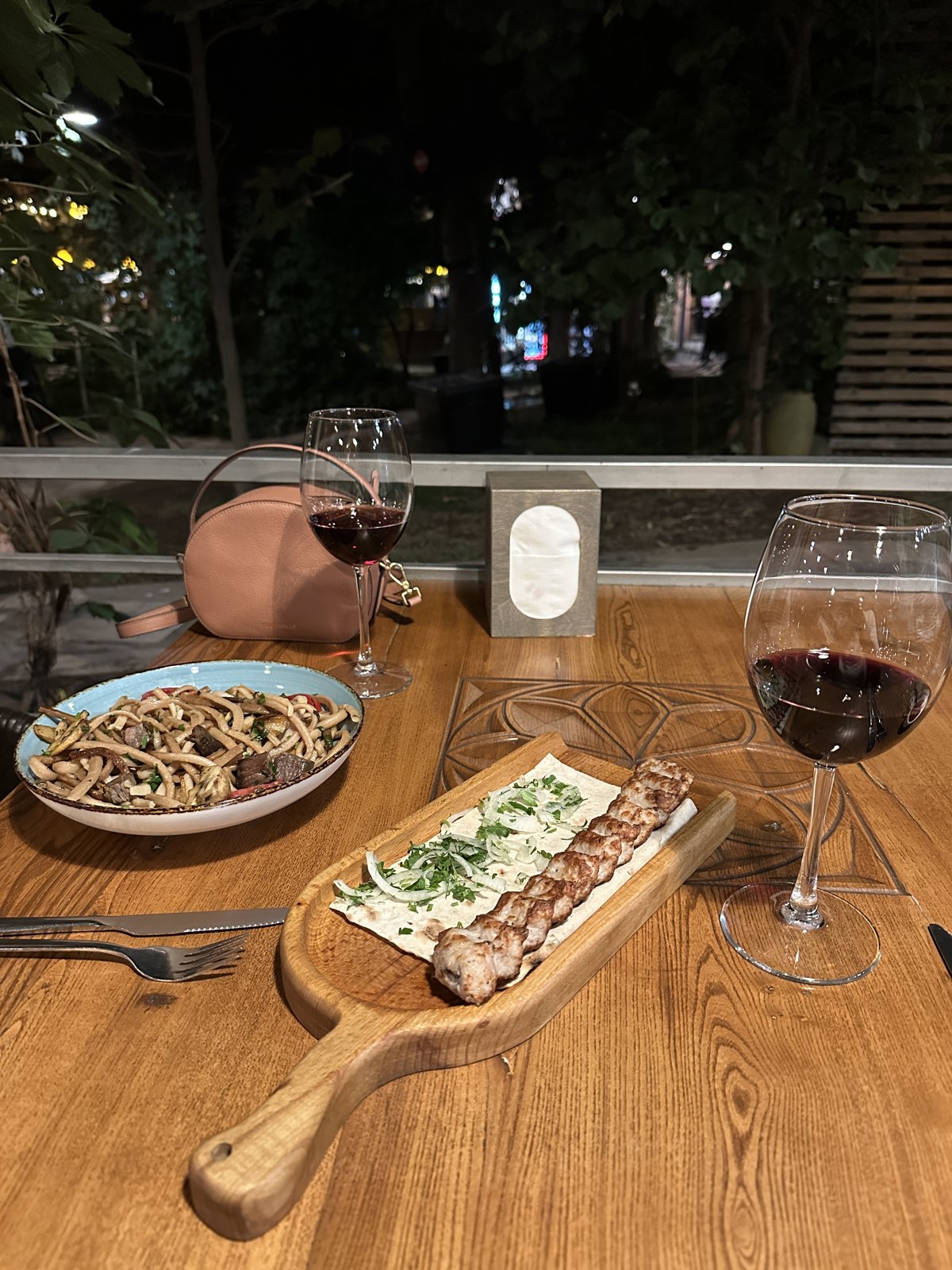
Then there is the food: khorovats, the Armenian barbecue, lavash bread, fresh herbs and local red wine, best eaten outside on a warm late-summer evening.
The best thing we drank on the whole trip, though, was Armenian pomegranate wine. Pomegranates are something of a national symbol here, and the wine is deep red, fruity and surprisingly elegant, not sweet and sticky the way you might expect. Order a glass with dinner, and bring a bottle home.
The Cascade
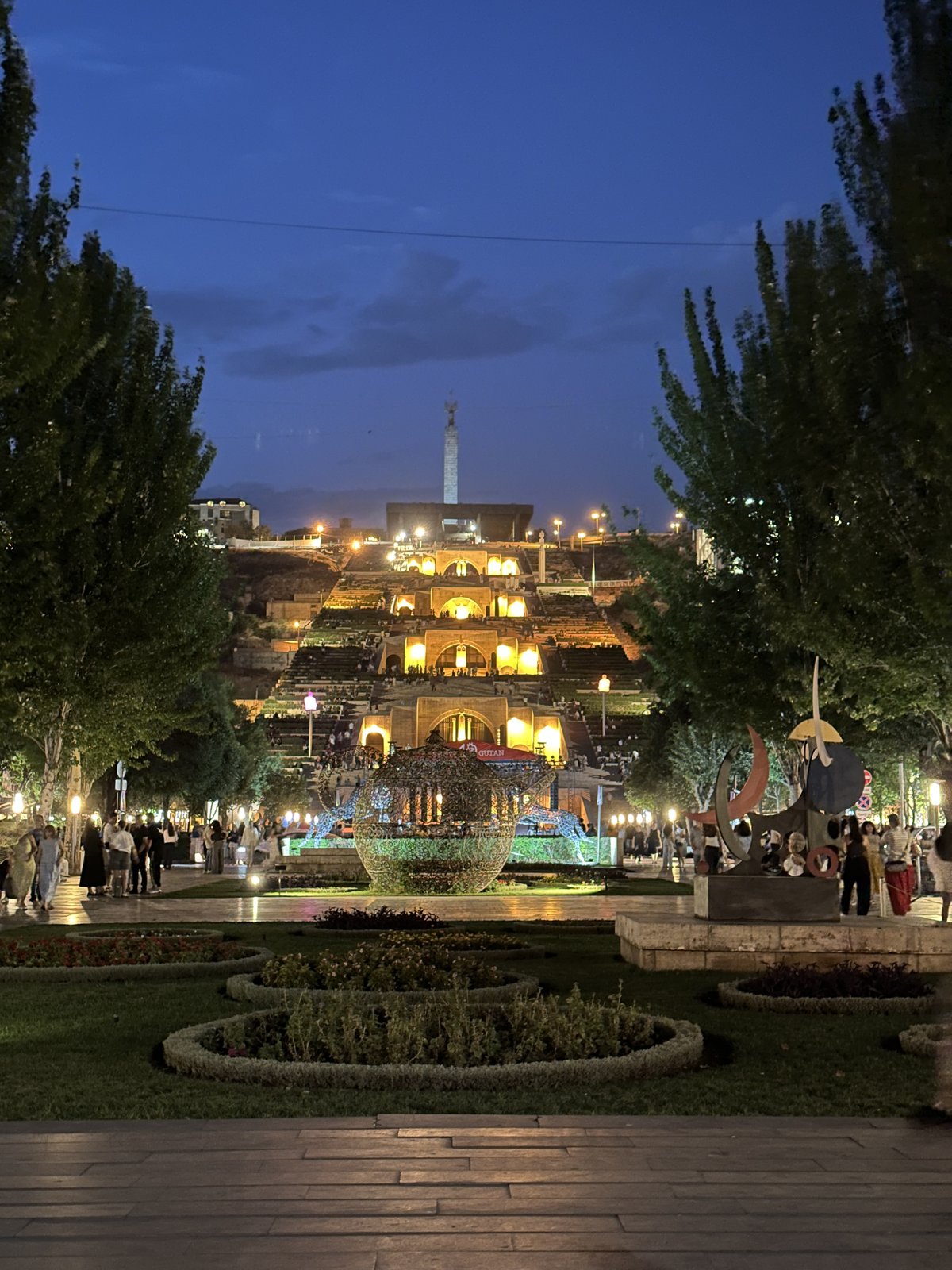
The Cascade is a giant white stairway that climbs the hill on the north side of the centre. At the bottom is a garden full of modern sculptures, part of the Cafesjian Center for the Arts, and a statue of Alexander Tamanyan, the architect who planned modern Yerevan. From the top, on a clear day, you can see Mount Ararat.
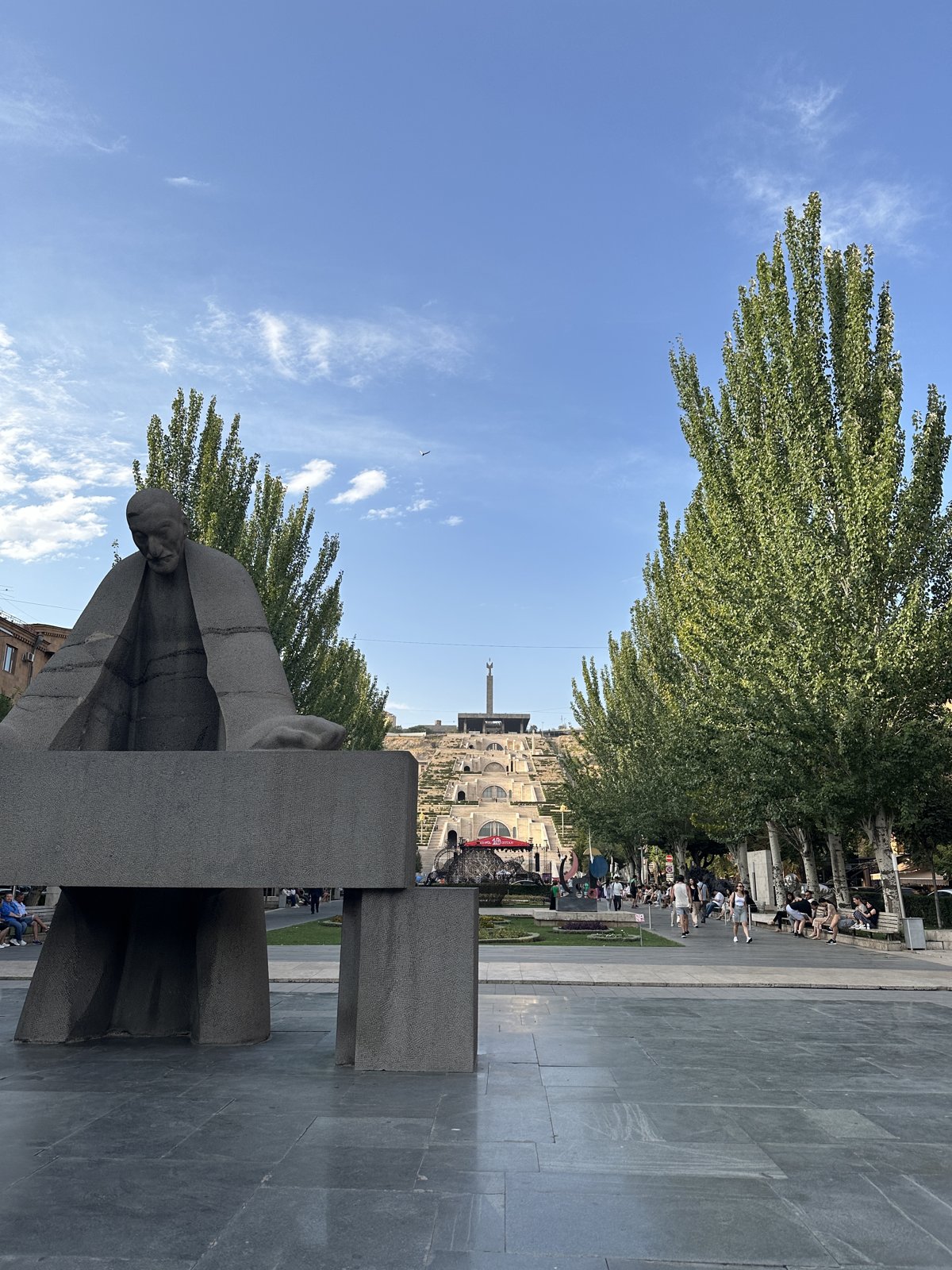
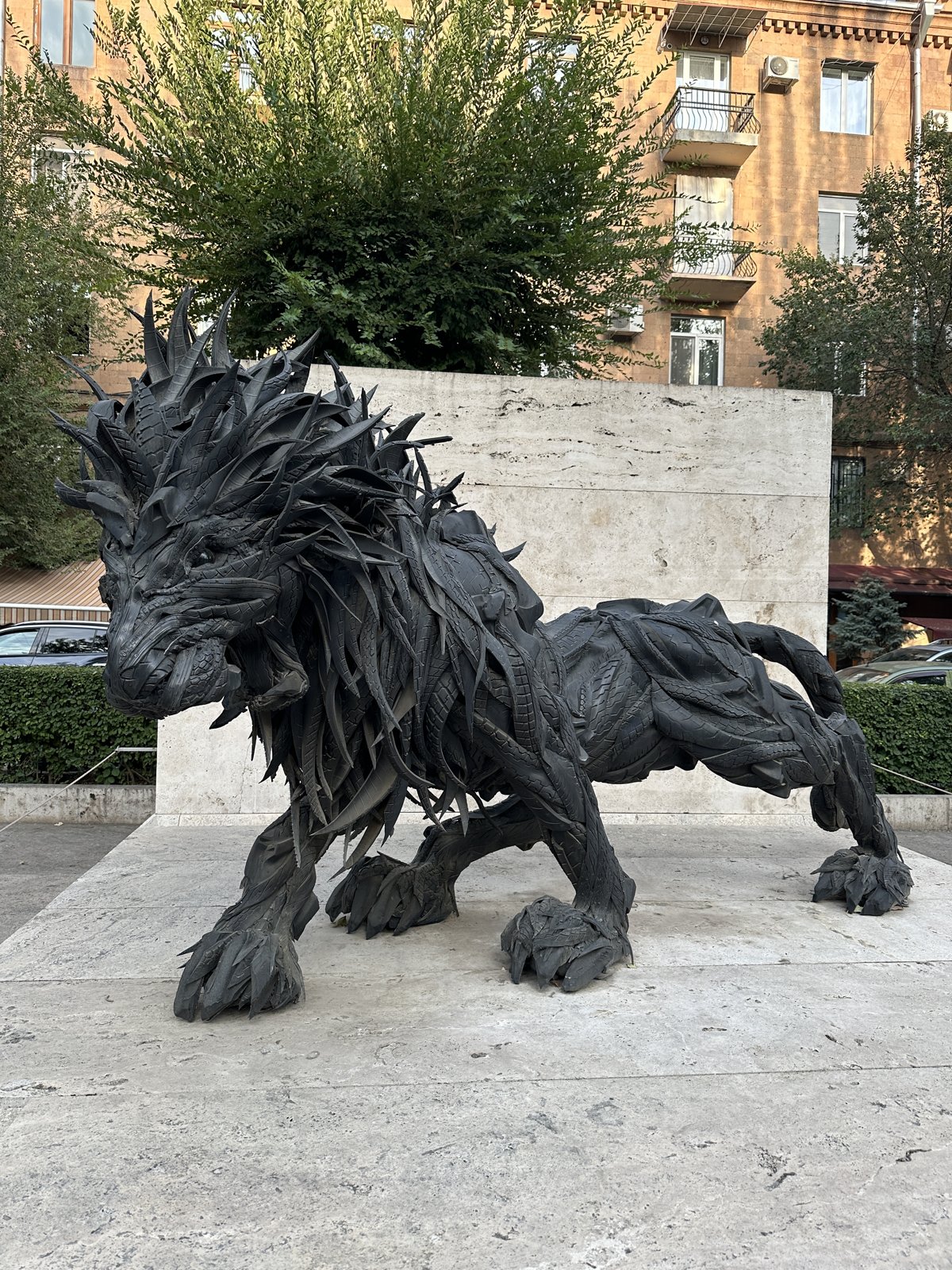
We came back in the evening, when the Cascade is lit up and the gardens fill with people.
Practical summary
When we went: 24 to 30 August. Hot in the cities and much cooler up in the mountains around Kazbegi, so bring a layer.
The route: Tbilisi, a day up the Georgian Military Highway to Kazbegi, a day for Uplistsikhe and Mtskheta, a day in Kakheti, then on to Yerevan.
Getting around: we rented a car and stayed in Tbilisi throughout, doing Kazbegi, Uplistsikhe and Mtskheta, and Kakheti as day trips from there. We then drove the car to Yerevan and returned it at Yerevan airport. We rented from Europcar, the one-way fee was around 200 euros, and the border crossing by car was easy.
Kazbegi: it is a long day there and back from Tbilisi, with lots of stops, so start early.
Kakheti: try qvevri wine, especially the amber whites, and buy churchkhela to take home.
Yerevan: go to Republic Square after dark, walk up the Cascade, and do not leave without trying pomegranate wine.
Two countries, a week, a church on a mountaintop, a city cut out of rock, and wine made the way it has been made for thousands of years. The Caucasus deserves far more attention than it gets.


Leave a Reply